admin
admin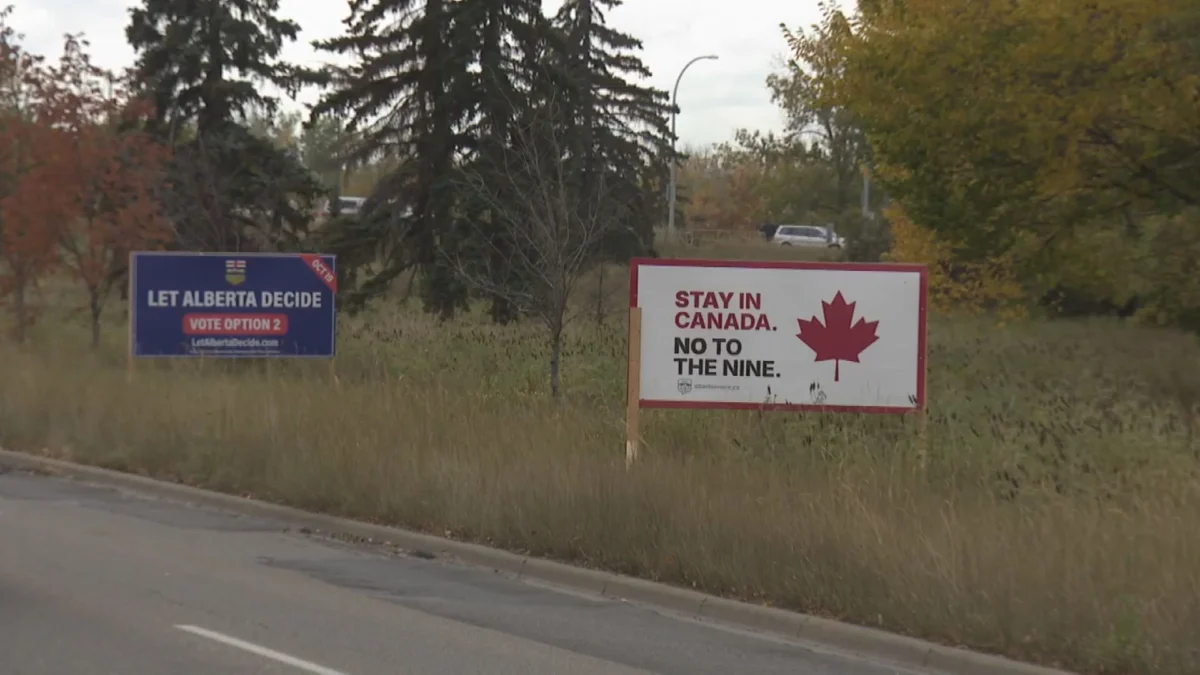
Alberta Premier Danielle Smith’s ambitious proposals for constitutional reform, set to go before Albertans in a province-wide vote next month, have met with a notably reserved reception from her counterparts across Canada. As the October 19 referendum approaches, most provincial and territorial leaders are carefully avoiding taking a definitive stance on the significant changes Smith advocates, highlighting the sensitive and complex nature of amending Canada’s foundational legal framework.
The Core Proposals and Their Constitutional Implications
Premier Smith’s government is presenting Albertans with ten questions on the ballot, four of which delve into major constitutional amendments. These four proposals are: the abolition of the Senate; granting Alberta the sole authority to select its provincial King’s Bench and Court of Appeal judges; allowing Alberta to opt out of federal programs while retaining the associated funding; and establishing the paramountcy of provincial laws over federal laws in areas of jurisdictional dispute.
Implementing three of these four proposals—provincial judicial appointments, opting out of federal programs with funding, and provincial law paramountcy—would likely necessitate the support of at least seven provincial legislatures representing over half of Canada’s population, commonly known as the 7/50 rule, in addition to parliamentary approval from Ottawa. The fourth proposal, the abolition of the Senate, presents an even higher constitutional hurdle, requiring unanimous consent from all provinces and the federal Parliament, as well as the unlikely self-dissolution by the Senate itself. The Alberta government’s own referendum website acknowledges that the abolition of the Senate is, realistically, a non-starter in the current political climate.
Despite the daunting constitutional requirements, Premier Smith’s office expresses optimism, suggesting that "targeted" amendments to Canada’s legal and administrative structure are attainable. This belief underpins the rationale for seeking a strong mandate from Albertans, which they hope will empower them to pursue these changes. Ryan Fournier, a communications adviser to Premier Smith, articulated this sentiment, stating, "Provinces across the country are tired of federal overreach and want more authority within Confederation, not less. We believe this conversation is a vital step towards a fairer Confederation."
Background: Alberta’s Enduring Grievances and the Quest for Autonomy

Alberta’s current push for constitutional reform is deeply rooted in a long-standing narrative of Western alienation and perceived unfair treatment within the Canadian federation. For decades, many Albertans have felt that their province, a significant contributor to the national economy through its energy resources, lacks commensurate political influence and is disproportionately impacted by federal policies, particularly concerning energy and environmental regulations.
This sentiment gained significant traction in recent years, culminating in the establishment of the "Fair Deal Panel" by former Premier Jason Kenney in 2019. The panel was tasked with exploring ways to increase Alberta’s autonomy and strengthen its position within Canada. Its 2020 report recommended a series of actions, including withdrawing from the Canada Pension Plan, establishing a provincial police force, and seeking greater control over immigration and judicial appointments – many of which echo Smith’s current proposals. Premier Smith, a vocal proponent of provincial autonomy, has further amplified this agenda since taking office, notably through the introduction of the Alberta Sovereignty within a United Canada Act, a controversial piece of legislation asserting the province’s right to refuse to enforce federal laws deemed unconstitutional or harmful to Alberta. The current referendum questions are seen as a logical extension of this broader strategy to redefine Alberta’s relationship with Ottawa.
Chronology of Key Developments
The path to the upcoming referendum has been a gradual process, building on years of discussions around provincial autonomy:
- 2019: Former Premier Jason Kenney establishes the Fair Deal Panel to explore ways to strengthen Alberta’s place in Confederation.
- 2020: The Fair Deal Panel releases its report, recommending actions like a provincial police force, withdrawal from the CPP, and greater control over judicial appointments.
- March 2023: Premier Smith, alongside Saskatchewan Premier Scott Moe, Ontario Premier Doug Ford, and former Quebec Premier François Legault, sends a joint letter to Ottawa requesting that all provincial Appeal Court and Superior Court judges be appointed from pre-approved lists submitted by the provinces. This directly foreshadows one of the current referendum questions.
- Spring/Summer 2023: Premier Smith’s government announces its intention to hold a referendum on a series of questions, including constitutional amendments and immigration policies.
- October 19, 2023: Albertans are scheduled to cast their votes on the ten referendum questions, including the four constitutional proposals.
Muted Responses from Across the Country
The Canadian Press reached out to premiers nationwide to gauge their support for Alberta’s proposals. The general response, however, has been one of extreme caution and non-committal statements, indicative of the political sensitivities surrounding constitutional discussions. Many premiers simply did not respond to inquiries, while others offered diplomatic but vague answers.
Saskatchewan Premier Scott Moe’s office, despite having co-signed the letter regarding judicial appointments, explicitly stated they would not be commenting on the broader referendum. Northwest Territories Premier R.J. Simpson’s spokesperson remarked, "This is a matter for Albertans to consider through their referendum process," effectively deferring to Alberta’s internal democratic exercise without endorsing or rejecting the substance of the proposals.

Nunavut Premier John Main offered a slightly more nuanced perspective, emphasizing the territory’s own resource-rich economy and its need for "external supports to bring those resources to market." Main stated, "We intend to make our mark in partnership with other governments and private industry, and support measures that build a stronger Canada," a statement that, while not directly addressing Smith’s proposals, suggests a preference for collaborative approaches within the existing federal framework rather than radical restructuring.
Yukon Premier Currie Dixon expressed his anticipation for "hearing what Albertans have to say" on the Constitution but notably refrained from offering his own opinion on the reforms. He did, however, voice strong support for Alberta remaining within Canada, directly addressing the separate question on succession also included in the referendum. "While I know Albertans have a number of grievances with the federal government, it’s my hope that Alberta will continue to stay in Confederation," Dixon asserted, adding, "Canada, including the Yukon, would be negatively affected if Alberta were to leave." These remarks suggest a concern about the potential destabilizing effects of Alberta’s autonomy push, particularly if it veers towards separation.
Federal Justice Minister Sean Fraser has already shut down the judicial appointment proposal, asserting that Ottawa is not considering changes to the current process. He pointed to the existing advisory committees across the country, which include provincial appointees, as evidence that provinces already have significant input into the selection of judges. This firm stance from Ottawa indicates a strong federal resistance to ceding control over a fundamental aspect of the justice system.
Constitutional Hurdles and Expert Analysis
Constitutional law expert Gerard Kennedy from the University of Alberta acknowledges that Premier Smith’s office might be correct in anticipating some level of inter-provincial support for two of the proposals: allowing provinces to pick provincial judges and enabling provinces to opt out of federal programs without financial penalties. "It’s extra provincial power. Why wouldn’t they want it?" Kennedy posited, highlighting the inherent appeal of increased autonomy for provincial governments.
However, Kennedy quickly identified the primary obstacle: federal parliamentary agreement. "To me, the big problem is going to be getting the federal Parliament to agree, because the federal government would have to be agreeing to reduce its own power for nothing in return." This underscores the zero-sum nature of these particular proposals from Ottawa’s perspective.
The proposal concerning the paramountcy of provincial laws over federal laws in jurisdictional disputes is seen as particularly problematic by experts. Kennedy stated unequivocally that "there was no federation in the world with that setup," indicating its radical departure from established constitutional principles. Canada’s current constitutional framework, primarily outlined in Sections 91 and 92 of the Constitution Act, 1867, delineates federal and provincial powers, with the doctrine of paramountcy ensuring that valid federal laws prevail in cases of conflict with provincial laws, reflecting the principle of federal supremacy in its areas of jurisdiction. Overturning this fundamental principle would necessitate a complete re-imagining of Canadian federalism.

Furthermore, Kennedy cautioned that even if some provinces are amenable to certain changes, opening the Constitution is fraught with peril. "The problem if you open up constitutional negotiations is that some other provinces are going to have their pet projects and they’ll say, ‘well, we won’t agree to amend the Constitution on terms favorable to Alberta unless they’re also amended on terms that are favorable to New Brunswick or Quebec,’" he explained. This "can of worms" scenario often leads to unwieldy packages of amendments, where too many provinces find objectionable clauses, ultimately leading to the collapse of the entire process, as seen in historical attempts like the Meech Lake and Charlottetown Accords.
Kennedy also discussed a "third way" for constitutional amendment: Section 43 of the Constitution Act, 1982, which allows for amendments applying to one or more but not all provinces, with the consent of Parliament and the affected province(s). An example is the 2001 amendment changing "Newfoundland" to "Newfoundland and Labrador." However, Kennedy noted that attempting to grant Alberta special privileges not extended to other provinces via this route would likely face legal challenges, as it could violate the constitutional presumption of inter-provincial equality.
Political Strategy and Criticisms
Despite the Premier’s office hinting at a commitment to lobby other provinces if the proposals gain majority approval, some political observers express skepticism about the government’s true intentions and capacity to follow through. Calgary-based political scientist Duane Bratt of Mount Royal University suggests that the constitutional questions might be an "afterthought" in the broader context of the referendum.
Bratt points to the government’s messaging and its $4-million ad campaign, which he observes are far more focused on Premier Smith’s five immigration-related proposals also on the ballot. "She’s not really talking about the Constitutional questions," Bratt stated, referring to recent speeches by the Premier. Instead, he notes a greater emphasis on issues like federal immigration policy being blamed for strain on Alberta’s health and education systems, leading him to conclude, "It’s immigrants who are the scapegoats and the villains here."
Bratt questions the government’s capacity and genuine commitment to pursuing these complex constitutional changes. Given the immense work involved in lobbying other provinces and Ottawa, combined with other pressing provincial priorities such as pipelines and healthcare reform, he doubts Smith’s government will dedicate the necessary energy to the constitutional file post-October 19. "Where is their energy? Is their energy (on) building pipelines, restructuring the health-care system, or constitutional change? Because I don’t think they could do all of that," Bratt remarked.
Opposition NDP Leader Naheed Nenshi echoed this sentiment, suggesting that Smith’s true objective might not be to achieve these reforms but rather to perpetuate a narrative of federal obstruction. "She doesn’t want to get those things," Nenshi told reporters, referring to the constitutional reforms. "She wants to complain about not getting those things. She wants the other provinces to say no." This critique implies a strategic use of federal-provincial friction as a political tool to rally support and deflect criticism from provincial issues.

Broader Implications for Canadian Federalism
The Alberta referendum, regardless of its outcome, highlights ongoing tensions within Canadian federalism. The proposals touch upon fundamental aspects of the federation: the balance of power between federal and provincial governments, the nature of fiscal transfers, the independence of the judiciary, and the very structure of parliamentary institutions.
Should Albertans vote in favour of the constitutional reforms, Premier Smith will have a mandate to push these demands. However, the path to actual implementation remains exceptionally challenging, requiring significant political will, negotiation, and compromise from multiple levels of government. The historical record of constitutional reform in Canada demonstrates the immense difficulty of achieving consensus on such profound changes. The cautious responses from other provincial leaders suggest a collective reluctance to engage in a potentially destabilizing constitutional debate, particularly one initiated by a single province. The federal government, meanwhile, has shown little inclination to diminish its own powers or fundamentally alter the structure of national institutions.
Ultimately, the referendum serves as a powerful expression of Alberta’s desire for greater autonomy and a perceived fairer deal within Confederation. Whether this expression translates into tangible constitutional change, or primarily serves as a political statement, will depend on a complex interplay of provincial resolve, inter-provincial cooperation, and federal willingness to engage in a dialogue that could reshape the very foundations of Canadian governance.