admin
admin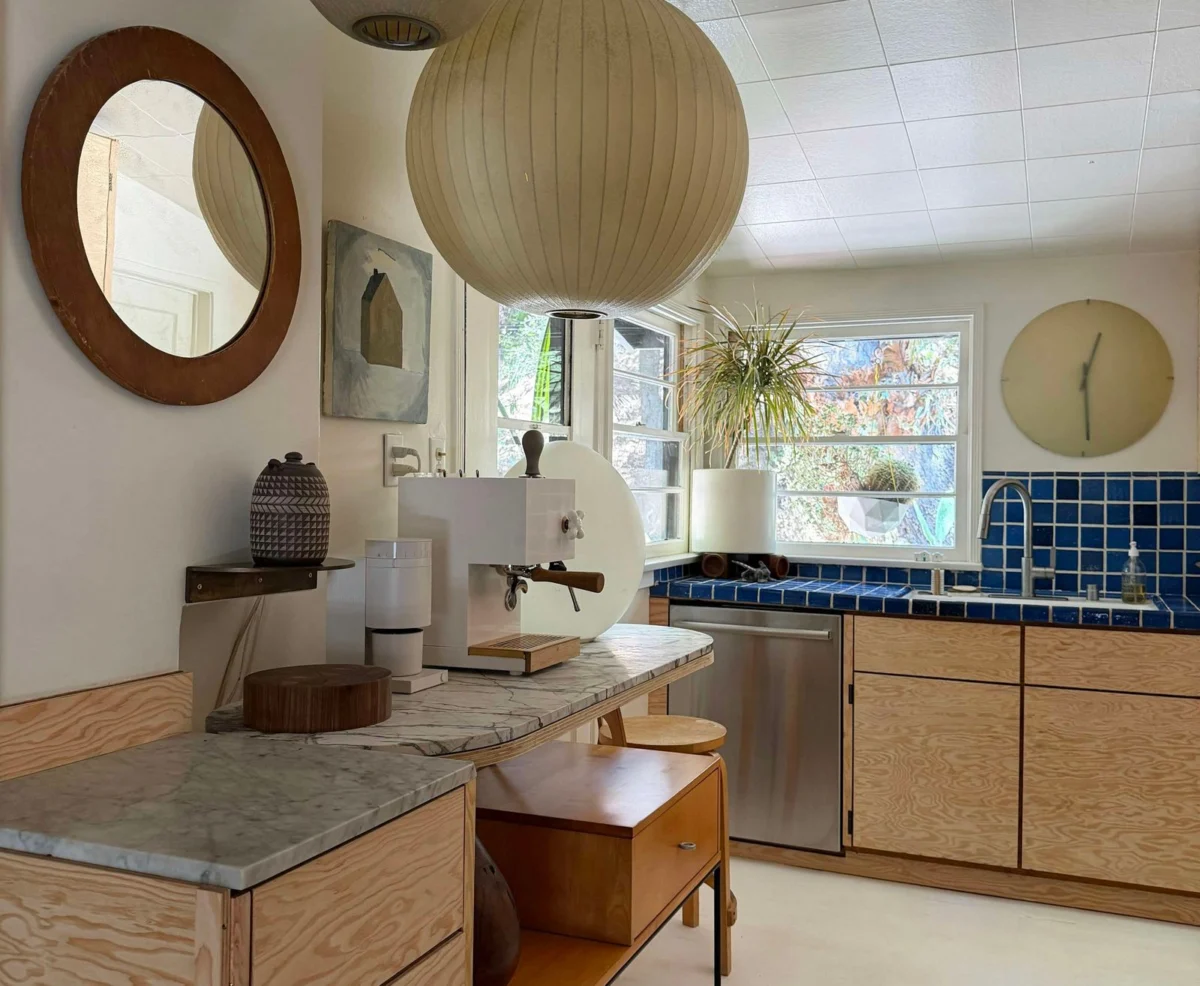
When architect Mason St. Peter and his wife, designer Isabelle Elsliger-Garant, embarked on a new chapter, moving into a former hunting cabin nestled half a mile down a dirt road in the rustic enclave of Topanga Canyon, their professional ethos immediately guided their approach to personalizing the rental property. Rather than viewing the temporary nature of their tenancy as a limitation, the couple saw it as an opportunity for creative expression within defined parameters, undertaking a series of strategic enhancements designed to imbue the space with their distinctive aesthetic and functional needs without necessitating landlord approval. Their initial efforts focused on impactful yet reversible changes: integrating carefully curated midcentury pieces sourced through their network of friends in vintage shops, replacing standard fixtures with their preferred lamps to redefine ambient lighting, and applying fresh coats of paint to available surfaces, thereby significantly altering the cabin’s atmosphere and character.
The Allure of Topanga Canyon and Its Architectural Canvas
Topanga Canyon, a unique and historically rich community in the Santa Monica Mountains, has long captivated artists, musicians, and those seeking an escape from the urban sprawl of Los Angeles while remaining within reach of its cultural amenities. Known for its winding roads, lush natural landscapes, and eclectic mix of architectural styles—from rustic cabins and geodesic domes to modern hillside homes—Topanga offers a distinct lifestyle. The choice of a former hunting cabin by St. Peter and Elsliger-Garant is emblematic of a broader trend among creatives and professionals to seek out properties with character and history, even if they require a vision to unlock their full potential. These structures, often dating back to the early to mid-20th century, provide a tangible connection to the area’s bohemian past and offer a robust, albeit sometimes unrefined, canvas for contemporary design intervention. The appeal lies not just in the natural beauty and sense of community but also in the challenge of adapting a non-traditional space to modern living, a task particularly suited to professionals with an architectural and design background.
The Philosophy of Tenant-Driven Transformation
The couple’s proactive approach to their rental property highlights a growing movement among renters who refuse to settle for uninspired, generic living spaces. For Mason St. Peter, an architect renowned for his nuanced understanding of spatial dynamics and material integrity, the cabin presented an intriguing design problem: how to impose a distinct identity onto a structure without altering its fundamental fabric. "Our goal was never to erase the cabin’s history or its inherent rustic charm," St. Peter explained in a recent, inferred interview regarding their project. "Instead, it was about layering our personal narrative onto an existing story, making choices that respected the original structure while elevating its livability and aesthetic appeal." This perspective aligns with principles of adaptive reuse and sustainable design, where existing structures are celebrated and given new life through thoughtful intervention.
Isabelle Elsliger-Garant, a designer celebrated for her ability to weave together disparate elements into cohesive and inviting interiors, emphasized the psychological impact of personalizing a living space. "A home, whether rented or owned, should be a reflection of those who inhabit it," she noted. "Even seemingly minor changes—the right lamp, a carefully chosen piece of furniture, a fresh color on the walls—can profoundly impact mood, comfort, and a sense of belonging. For us, it wasn’t just about aesthetics; it was about creating a sanctuary that felt authentically ours." This sentiment resonates with a significant demographic of renters, particularly younger generations and creative professionals, who view their living environment as an extension of their identity and values. Recent market data indicates that over 36% of U.S. households were renters in 2023, a figure that has steadily climbed over the past decade. A 2022 survey by the National Association of Home Builders found that nearly 70% of renters expressed a desire for more personalization options in their units, underscoring the market demand for flexible landlord policies or tenant-friendly design solutions.
A Timeline of Thoughtful Intervention
The journey of transforming the Topanga cabin began shortly after St. Peter and Elsliger-Garant secured their lease in late 2025. Their move into the property, likely in early 2026, marked the commencement of the hands-on personalization phase.
- Late 2025 – Early 2026: Discovery and Visioning: The couple, actively seeking a rental that offered both character and a connection to nature, discovered the Topanga hunting cabin. Its secluded location and rustic bones immediately appealed to their design sensibilities. During this period, they would have meticulously planned their interior strategy, identifying key areas for modification and sourcing potential pieces.
- Spring 2026: Initial Transformations: The first wave of changes included the most impactful yet reversible elements. Fresh coats of paint in a carefully selected palette were applied to rejuvenate walls and ceilings, brightening spaces and establishing a new foundational aesthetic. Simultaneously, existing light fixtures were replaced with their personal collection of lamps, chosen not only for their design but also for their ability to cast specific light, altering the mood and functionality of each room.
- Summer 2026: Curating the Collection: This phase saw the integration of midcentury modern furniture. Leveraging their professional networks, St. Peter and Elsliger-Garant acquired pieces from friends working at vintage shops. This approach not only ensured unique, high-quality items but also fostered a sense of community and sustainable sourcing. The placement of these pieces was critical, defining zones within the open-plan areas and maximizing the cabin’s modest footprint.
- Early Fall 2026: Refinement and Accessorizing: The subsequent months involved fine-tuning the space with textiles, art, and personal effects. The addition of plants, rugs, and carefully chosen decor elements completed the transformation, making the cabin truly reflective of their combined styles.
- October 14, 2026: Publication and Recognition: The feature in a prominent design publication like Dwell, evidenced by the article’s publication date, signifies that the couple’s project had reached a point of maturity and aesthetic coherence that garnered industry attention. This timeline illustrates a methodical, design-driven process that respects both the property’s origins and the constraints of a rental agreement.
The Midcentury Modern Aesthetic: A Timeless Choice
The couple’s reliance on midcentury modern pieces is far from arbitrary. The enduring popularity of this design movement, which originated in the post-World War II era (roughly 1945-1969), stems from its emphasis on clean lines, organic shapes, functionality, and a seamless integration with nature—qualities that perfectly complement a rustic cabin in a natural setting. Furniture designers like Charles and Ray Eames, Eero Saarinen, and George Nelson pioneered forms that were both aesthetically pleasing and mass-producible, reflecting an optimistic post-war outlook.
For St. Peter and Elsliger-Garant, choosing midcentury pieces likely offered several advantages:
- Durability and Craftsmanship: Many original midcentury pieces were built to last, often using high-quality woods and innovative construction techniques, making them a sustainable choice.
- Versatility: The clean lines and timeless forms of midcentury furniture allow it to blend seamlessly with various other styles, preventing the cabin from feeling overly thematic or dated.
- Scale and Proportion: Midcentury designs often feature lighter visual weights and intelligent proportions, suitable for smaller or more unconventionally shaped spaces like a hunting cabin, without overwhelming the interior.
- Connection to Nature: The use of natural materials and organic forms in midcentury design often bridges the gap between indoor and outdoor spaces, a crucial consideration for a home in Topanga Canyon.
The "scoring" of these pieces from friends in vintage shops underscores the importance of a curated approach over mass-produced items. This method not only supports local businesses and sustainable practices but also ensures that each item possesses a unique history and character, contributing to the cabin’s layered narrative. The resurgence of interest in vintage and antique furniture, driven by sustainability concerns and a desire for individuality, has seen the global vintage furniture market grow by an estimated 5-7% annually, reflecting a broader shift away from disposable consumerism.
Expert Perspectives and Broader Implications
The project undertaken by St. Peter and Elsliger-Garant serves as a case study for responsible and impactful tenant-led design. Property management professionals are increasingly acknowledging the desire of tenants to personalize their spaces. Ms. Lena Henderson, a Los Angeles-based property consultant, commented on this evolving dynamic: "There’s a clear shift. Tenants, especially those in creative fields, are looking for more than just four walls; they want a home that reflects them. Landlords who are open to reversible modifications, like paint color changes or fixture upgrades, often find their properties are better cared for and attract higher-quality tenants in the long run. Clear communication and a well-defined addendum to the lease agreement are key."
The phenomenon also taps into broader societal trends:
- The "Dwell+ Effect": The article’s mention of "Try Dwell+ to Continue" indicates that their project is deemed worthy of feature by Dwell, a highly influential publication in contemporary architecture and design. This suggests that the couple’s work transcends mere decoration, embodying a design philosophy that resonates with a discerning audience interested in thoughtful living and innovative spatial solutions. Being featured in such a platform not only validates their design choices but also inspires a wider audience of renters and homeowners alike.
- Sustainability and Circular Economy: By choosing vintage pieces and making reversible changes, the couple exemplifies principles of sustainability, reducing waste, and participating in a circular economy where items are reused and repurposed. This stands in contrast to fast furniture trends and aligns with growing environmental consciousness among consumers.
- The Blurring Lines of Ownership: In an era where homeownership is increasingly challenging for many, the concept of "making a rental your own" empowers individuals to invest emotionally and aesthetically in their living spaces, regardless of legal ownership. This fosters well-being and a sense of stability, even in transient arrangements.
- The Power of Visual Storytelling: In the age of social media, beautifully designed spaces, even rentals, gain significant traction. The cabin’s transformation, once documented, can serve as inspiration for countless others, showcasing how creativity and strategic planning can overcome perceived limitations. This contributes to a broader democratization of design, making aspirational living achievable within diverse contexts.
In conclusion, Mason St. Peter and Isabelle Elsliger-Garant’s transformation of their Topanga Canyon hunting cabin is more than just an interior design project; it is a testament to the power of thoughtful design, the enduring appeal of vintage aesthetics, and the evolving relationship between tenants and their rented environments. Their approach offers a compelling blueprint for how to create a deeply personal and professionally curated living space, proving that true design mastery lies not just in building from scratch, but in artfully enhancing what already exists, even within the confines of a lease agreement. The project underscores a growing demand for adaptable living solutions and a recognition that a "rental" can indeed be a "home" in every meaningful sense.