admin
admin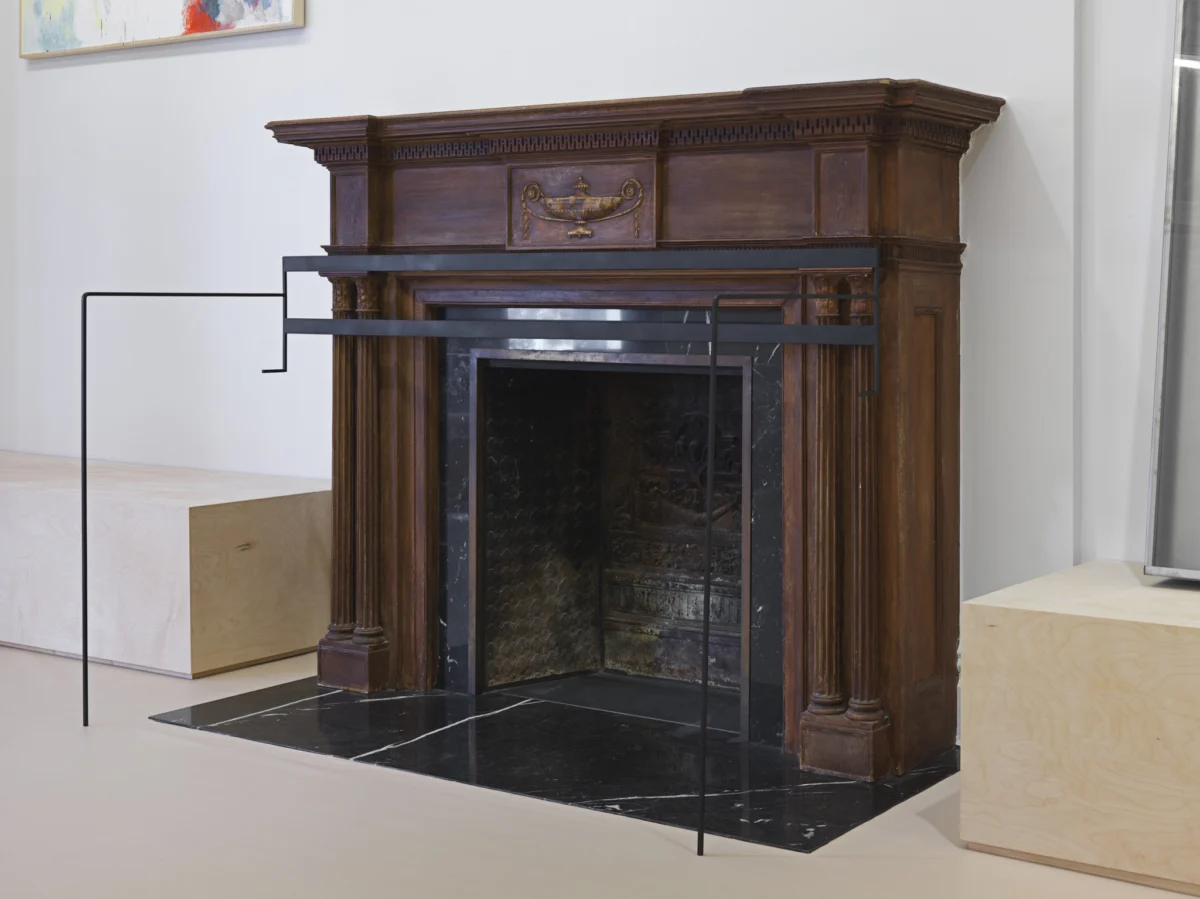
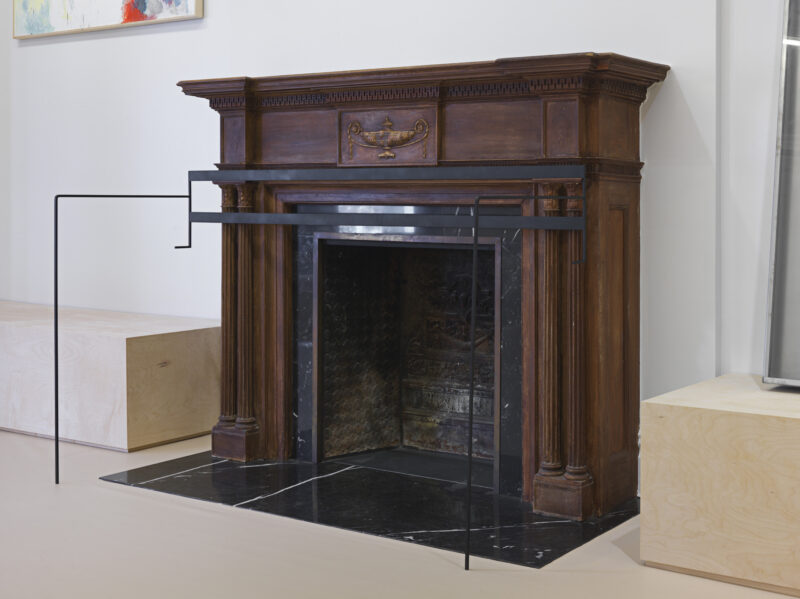
The Berlin-based Georgian artist Thea Djordjadze has marked a significant milestone in her career with the opening of "A well of night" at the Sprüth Magers gallery in New York. This exhibition represents Djordjadze’s first solo presentation in the city in over a decade, signaling a long-awaited return to one of the world’s primary art capitals. Situated within the gallery’s New York location—a space characterized by its historic neo-Renaissance architecture—the installation is not merely a collection of objects but a profound dialogue between contemporary sculpture and the built environment. Known for her ability to integrate artistic interventions into existing architectural frameworks, Djordjadze has transformed the gallery into a site-specific environment that challenges the boundaries between the artwork and the room it inhabits.
The Convergence of Architecture and Sculpture
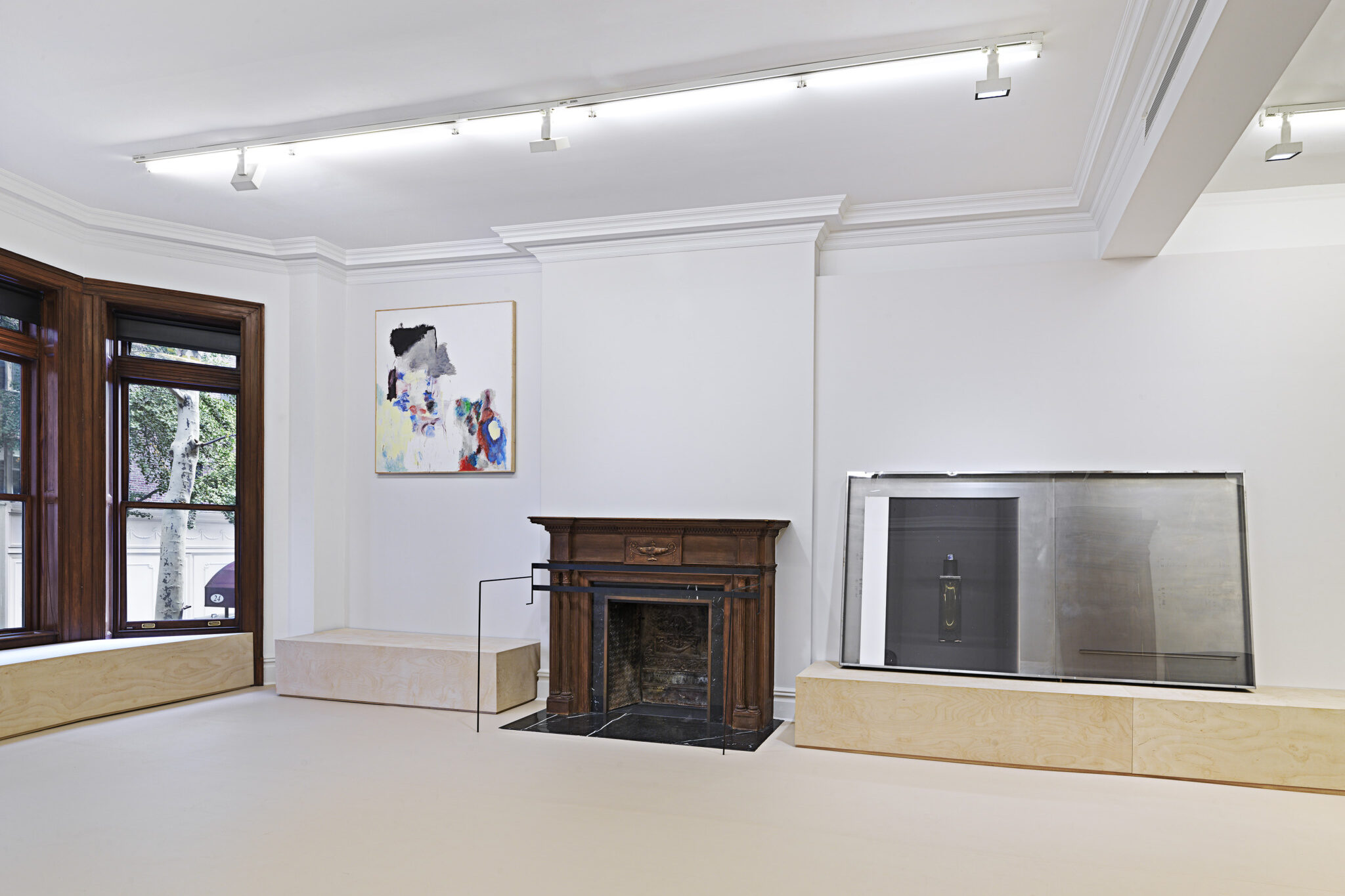
At the heart of Djordjadze’s practice is a deep-seated sensitivity to space. For the artist, the physical characteristics of a building are not obstacles to be overcome but essential components of the creative process. In "A well of night," the neo-Renaissance features of the Sprüth Magers townhouse—including its ornate moldings, dark hardwood floors, and classical proportions—serve as the primary interlocutors for her sculptural forms. This approach aligns with her long-standing reputation for creating "total environments" where the distinction between the exhibition container and the contained art becomes blurred.
The artist’s methodology is famously intuitive. Rather than arriving at a gallery with a rigid plan, Djordjadze often spends significant time within the space, allowing the architecture to dictate the placement and scale of her works. In a 2024 interview with Elephant, she described this process as a three-way conversation between herself, the sculpture, and the building. This "listening to the void" allows her to respond to the specific light, volume, and history of the site, ensuring that the installation feels like an organic extension of its surroundings rather than an external imposition.
Materiality and the Synthesis of Mediums
"A well of night" showcases a sophisticated juxtaposition of industrial and organic materials. Djordjadze utilizes steel and aluminum as structural elements, often creating skeletal frameworks that lean against walls or bisect rooms. These rigid, metallic forms are contrasted with new sculptural paintings that represent a significant evolution in her oeuvre. These works, often referred to as "painterly reliefs," occupy the liminal space between two-dimensional painting and three-dimensional sculpture.
The process of creating these reliefs involves working rich pigments into porous, creamy plaster grounds. By building up layers across the surface, Djordjadze creates a textured, 3D abstraction that captures the tactile qualities of the materials. This technique allows her to explore the depth of color and the physical weight of the plaster simultaneously. The resulting works are both delicate and robust, reflecting a material honesty that is central to her aesthetic. By uniting these mediums, the artist challenges the traditional categorization of art, forcing the viewer to reconsider the definition of a "painting" when it possesses the physical presence of a wall or a floor.
Historical Context and Georgian Roots
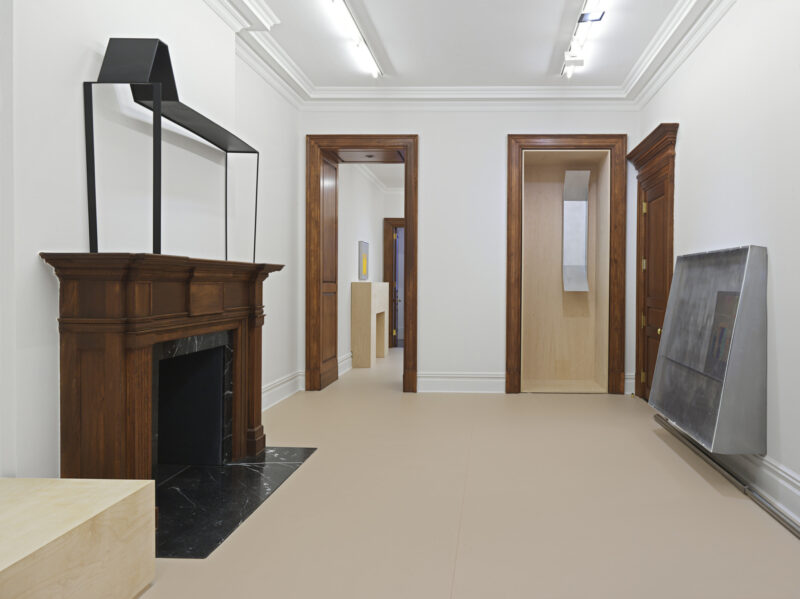
While Djordjadze’s work is firmly rooted in contemporary practice, it frequently references her Georgian heritage and the history of Soviet-era design. A prominent feature of the current exhibition is the use of steel vitrines, a form she first introduced into her lexicon in 2017. These vitrines are direct homages to the mid-century display cases designed by the Georgian anthropologist Alexander Javakhishvili and the painter Avtandil Varazi for the Tbilisi Archaeological Museum.
The Tbilisi Archaeological Museum, a landmark of Georgian Soviet Modernism, has long been a source of inspiration for Djordjadze. The museum’s interior design, which sought to present ancient artifacts within a modern, minimalist framework, resonates with her own interest in how objects are contextualized and displayed. By reconfiguring these vitrine forms in a New York gallery, she bridges the gap between the historical specificities of Tbilisi and the globalized contemporary art market. The vitrines in "A well of night" often feature prints or Polaroids sealed behind plexiglass, which reflects the surrounding gallery space, effectively incorporating the viewer and the architecture into the display itself.
Spatial Alteration and the "Well of Night"
The title of the exhibition, "A well of night," evokes a sense of depth and darkness, yet the visual reality of the installation provides a stark contrast. In a deliberate play on spatial perception, Djordjadze has clad the gallery’s traditional dark hardwood floors with light-colored vinyl. This intervention serves several purposes: it reflects light into the room, creates a sense of weightlessness, and visually de-anchors the sculptures from the historical weight of the building.
This modification of the floor is a hallmark of Djordjadze’s interest in the "unfinished" nature of art. She views her pieces as works in progress, capable of being re-evaluated and re-contextualized in every new setting. The vinyl floor acts as a temporary stage, a tabula rasa that allows the sculptures to exist in a state of flux. By altering the most fundamental aspect of the room—the ground upon which the viewer stands—she disrupts the usual experience of the gallery, making the act of walking through the space a conscious part of the artistic encounter.

A Chronology of Global Influence
Thea Djordjadze’s return to New York comes after a period of intense international activity. Since her last major solo presence in the city, she has participated in several high-profile exhibitions that have solidified her standing as a leading voice in contemporary sculpture. Her career trajectory illustrates a consistent focus on the intersection of materiality and space:
- 1990s: Djordjadze began her studies at the Tbilisi State Academy of Arts before moving to Germany to study at the Kunstakademie Düsseldorf under the mentorship of the influential artist Rosemarie Trockel.
- 2000s: She gained international recognition for her participation in major group shows and biennials, including the Venice Biennale (2015) and Documenta 13 (2012).
- 2012: Her solo exhibition at MoMA PS1 in New York was a critical success, introducing her site-specific approach to a broader American audience.
- 2017–2023: Major solo exhibitions at the Pinakothek der Moderne in Munich, the Saint Louis Art Museum, and the Gropius Bau in Berlin showcased her ability to handle large-scale institutional spaces.
- 2024–2026: The current exhibition at Sprüth Magers, New York, serves as a culmination of her recent explorations into plaster relief and the re-use of historical display forms.
Institutional and Market Implications
The decision by Sprüth Magers to host a large-scale solo exhibition for Djordjadze in their New York space reflects a growing institutional and market interest in artists who defy easy categorization. In an era where the art world is often dominated by highly polished, mass-produced works, Djordjadze’s emphasis on the handmade, the "unfinished," and the site-specific offers a compelling alternative.

Industry analysts suggest that the return of such a significant European-based artist to New York is a strategic move for the gallery, which has represented Djordjadze for many years. By placing her work in the context of a 71st Street townhouse, the gallery highlights the adaptability of her practice. The exhibition demonstrates that her work is equally at home in the white cubes of Berlin or the historic residences of the Upper East Side. Furthermore, the duration of the show—running through December 2026—indicates a commitment to providing the public with an extended opportunity to engage with her complex spatial configurations.
Broader Impact on Contemporary Sculpture
Djordjadze’s work contributes to a broader dialogue in contemporary art regarding the role of the object in the digital age. By focusing on the "porous" nature of plaster and the "cold" reality of steel, she reasserts the importance of physical presence and phenomenological experience. Her work asks the viewer to slow down, to notice the way a shadow falls across a metal rail or how the texture of a wall changes as the light shifts.

Moreover, her practice offers a nuanced way of thinking about national identity and cultural heritage. Instead of utilizing overt symbols of Georgian culture, she incorporates the structural logic and design history of her home country into her work. This creates a subtle but powerful link between her personal history and the universal language of abstraction.
"A well of night" is more than an exhibition; it is an investigation into the stability of the art object. By treating her sculptures as entities that "make decisions" and "tell her where to go," Djordjadze abdicates a degree of authorial control, allowing the environment to complete the work. This humility toward space and material is what continues to make her practice one of the most respected and influential in the field of contemporary sculpture. As New York audiences re-engage with her work over the coming months, the installation at Sprüth Magers will likely stand as a definitive example of how art can transform, and be transformed by, the architecture of the city.