admin
admin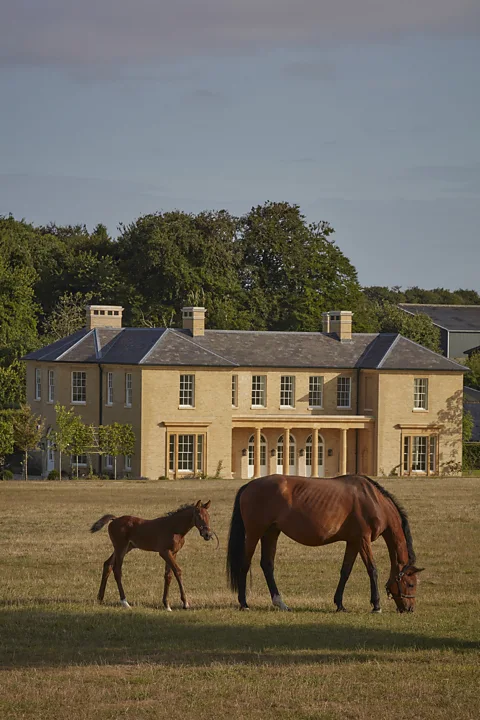
The visual profile of the contemporary high-end property market is undergoing a significant shift as a growing number of homeowners eschew the glass-and-steel aesthetic of modernism in favor of an older, more established look. Across the rolling hills of the United Kingdom and the expansive estates of the United States, a new generation of grand mansions is rising. To the untrained eye, these buildings appear to be relics of the 18th or 19th centuries, complete with Palladian porticos, sash windows, and meticulously manicured topiary. However, beneath the hand-carved cornices and limestone facades lies 21st-century infrastructure. These "new-old" houses have become a focal point of architectural debate, praised by some as timeless masterpieces and dismissed by others as inauthentic pastiche.
This trend toward classical revivalism represents a departure from the avant-garde designs that dominated the late 20th century. For many affluent buyers, the appeal lies in the marriage of historical grandeur with modern efficiency. While a genuine Georgian manor might be haunted by the specter of astronomical heating bills and the restrictive regulations of heritage listing, a modern classical house offers the same aesthetic prestige without the structural decay. As demand surges, architects specializing in this niche are finding themselves at the center of a conversation about what constitutes "authentic" architecture in the modern era.

The Evolution of the English Country House: A Brief Chronology
The desire for classical proportions is not a new phenomenon but rather a cycle that has repeated throughout architectural history. To understand the current demand, it is essential to look at the timeline of the English country house.
- The Golden Age (1714–1830): The Georgian and Regency eras defined the "English look." Inspired by the works of Italian architect Andrea Palladio, British architects emphasized symmetry, perspective, and values drawn from ancient Greek and Roman temples.
- The Victorian and Edwardian Transition (1837–1910): Architecture became more eclectic, incorporating Gothic Revival and Arts and Crafts movements. Sir Edwin Lutyens emerged as a pivotal figure, blending traditional craftsmanship with imaginative layouts.
- The Modernist Break (1945–1980s): Following World War II, Britain and the US pivoted toward modernism. Concrete, steel, and glass became the primary materials. The focus shifted from ornament to function, leading to the rise of brutalism and minimalist "international style" residences.
- The Classical Resurgence (1990s–Present): A reaction against the perceived coldness of modernism led to a revival of traditionalism. This movement was bolstered by high-profile advocates such as King Charles III, whose development at Poundbury championed neo-traditional town planning. Today, this movement has matured into a robust market for bespoke classical country houses.
The Architectural Principles of Modern Classicism
For architects like George Saumarez Smith, author of The Romance of Classicism: Designing the English Country House for Today, the resurgence of traditional styles is a matter of longevity. Saumarez Smith argues that modernist materials, such as concrete and certain metal alloys, have not aged as gracefully as their proponents predicted. Exposure to the elements often leaves modernist buildings looking weathered and "dated" within decades.
In contrast, classical architecture relies on a 2,000-year-old rulebook established by the Roman architect Vitruvius. The Vitruvian Triad—firmitas, utilitas, venustas (strength, utility, and beauty)—remains the guiding light for modern traditionalists. According to Saumarez Smith, using materials like stone, marble, and natural slate ensures that a building "stands the test of time" and actually improves in appearance as it patinates.

Liz Smith, an architect at the firm Purcell, emphasizes that a successful modern classical house is more than just a collection of historical tropes. "It needs strong proportion, careful composition, high-quality materials, skilled craftsmanship and a deep understanding of setting," she notes. The process often begins with the landscape, using local materials—such as red brick in the home counties or Bath stone in the West Country—to ensure the house feels rooted in its environment from the day it is completed.
The Pastiche Debate and the "McMansion" Critique
Despite the popularity of these homes, the movement faces stiff opposition from architectural purists. The primary criticism is that these buildings are "pastiche"—theatre sets that mimic a vanished way of life. Oliver Cooke, director at Cooke Fawcett, argues that architecture cannot be divorced from the socio-economic conditions of its time. Traditional architecture was born in an era of cheap labor and abundant local craftsmanship; reproducing the look today without those underlying conditions can result in a "modern building dressed up as something it isn’t."
This critique often points toward the "McMansion" phenomenon as a cautionary tale. A term coined in the United States during the 1990s, "McMansion" refers to large, mass-produced homes that borrow classical elements—such as oversized porticos or columns—without understanding their functional or proportional logic. Saumarez Smith describes poorly executed classical houses as being akin to "terrible plastic surgery," where features are overblown and have no relationship with their context.

However, proponents argue that "pastiche" is a lazy label. They suggest that if a building is constructed with integrity, using traditional methods and high-quality materials, it is no more "fake" than a modern skyscraper that uses 1920s Art Deco motifs. The goal, they claim, is not to build a museum but to create a "timeless" home that bypasses the fleeting trends of contemporary design.
Transatlantic Trends: The American Interpretation
The demand for English-style country houses is not confined to the UK. In the United States, firms such as Ferguson & Shamamian and Period Architecture are seeing a significant uptick in requests for homes inspired by European traditions. Scott Sottile of Ferguson & Shamamian notes that American building traditions are deeply rooted in English design, though they have been adapted over centuries to fit local landscapes. For example, the scarcity of masonry in colonial America led to the use of timber to replicate classical forms, creating a distinct "American Classical" vernacular.
In the Northeastern US, the influence of Sir Edwin Lutyens remains particularly strong. Joseph Mackin Jr., co-founder of Period Architecture, highlights a growing trend of homeowners across the US—not just in the traditional colonial heartlands—requesting English-style gardens and houses with steeply pitched gables and stone masonry. This suggests a broader cultural rejection of the "disposable" nature of modern suburban housing in favor of something that feels permanent and inherited.

Supporting Data and Market Implications
While specific sales figures for bespoke classical builds are often private, broader real estate data suggests a "premium of tradition." According to various high-end estate agencies, properties with traditional architectural features often retain their value better during market downturns compared to highly stylized "ultra-modern" homes, which can fall out of fashion.
- Energy Efficiency: A key driver for new classical builds over renovating old ones is environmental performance. Modern insulation, double-glazed sash windows, and ground-source heat pumps can be integrated into a new build with ease, whereas retrofitting a Grade I listed Georgian mansion to the same standard is often legally and structurally impossible.
- Maintenance Costs: Modern classical homes use "self-finished" materials like stone and brick that require less painting and repair than the rendered finishes often found on modern minimalist structures.
- Investment Value: In the luxury sector, the "English Country House" remains one of the most stable asset classes. By building a new home that captures this aesthetic, owners are essentially creating a "future antique."
Interior Design: Living in the Modern Antique
The challenge of the modern classical house extends to the interior. Interior designer Nicholas Hodson Taylor suggests that the secret to avoiding the "theatre set" feel is the "complete and utter avoidance of trends." His approach involves layering traditional upholstery—such as Howard-style sofas with low, recessed arms—with a mix of modern and classic lighting.
The objective is to create a space that feels like it has been furnished over generations, rather than purchased in a single weekend from a showroom. Saumarez Smith agrees, noting that the best houses reflect the personality of the inhabitants by blending inherited family pieces with new acquisitions. This "storytelling" through decoration helps bridge the gap between the brand-new structure and the centuries-old style it emulates.

Institutional Recognition and Future Outlook
Organizations such as The Georgian Group have begun to recognize the value of new classical design. Anya Lucas, director of the group, states that while their primary mission is protecting 18th-century structures, they celebrate new designs that operate in the spirit of that period through their architectural awards. This institutional validation suggests that classicism is no longer viewed as a stagnant historical category but as a living, breathing language of design.
As the architectural world continues to grapple with the balance between innovation and tradition, the modern English country house stands as a testament to the enduring power of symmetry and craft. Whether viewed as a regressive longing for the past or a sophisticated pursuit of longevity, these houses are reshaping the landscape. In an era of rapid technological change and "fast architecture," the appeal of a home that looks like it has always been there—and promises to remain for centuries to come—is a powerful one. By taking inspiration from the extremes of history and the comforts of the present, architects are creating what many homeowners consider to be the ultimate luxury: a timeless sanctuary.