admin
admin
While the Pacific Northwest has historically dominated the American hop industry, a quiet but powerful agricultural revolution has taken root in the Midwest, specifically within the state of Michigan. Currently ranking first in the Great Lakes region and fourth nationally in total hop acreage, Michigan’s success is increasingly attributed to a demographic of growers and specialists who have traditionally remained behind the scenes: women. From greenhouse propagation and integrated pest management to land stewardship and harvest orchestration, women are driving the operational and scientific advancements necessary to sustain Michigan’s position in the global craft beer supply chain.
Despite the significant contributions of these professionals, visibility remains a hurdle. Industry veterans note that brewers and consumers alike are often surprised to learn that women manage many of the state’s most prominent hop operations. This lack of recognition persists even as Michigan’s hop industry faces a critical juncture defined by market contraction, labor shortages, and the escalating effects of climate change.
The Geography of Growth: Why Michigan Dominates the Great Lakes
The success of hop cultivation in Michigan is not accidental; it is the result of a unique intersection of geography and geology. Hops (Humulus lupulus) are notoriously temperamental perennials that require specific environmental triggers to produce the alpha acids and essential oils prized by brewers. The primary factor is the 45th parallel north, which bisects Michigan’s Lower Peninsula. This latitude provides the precise photoperiod—long, sunny summer days—required for hop flowering, followed by the cold winter temperatures necessary for the plants to enter a healthy state of dormancy.
Beyond the climate, Michigan’s soil composition provides a distinct advantage. The state’s "well-drained" soil is a legacy of the Wisconsin Glaciation, which receded approximately 10,000 years ago, leaving behind sandy loam and gravel deposits. Because hops are susceptible to root rot and "wet feet," these porous soils are essential.
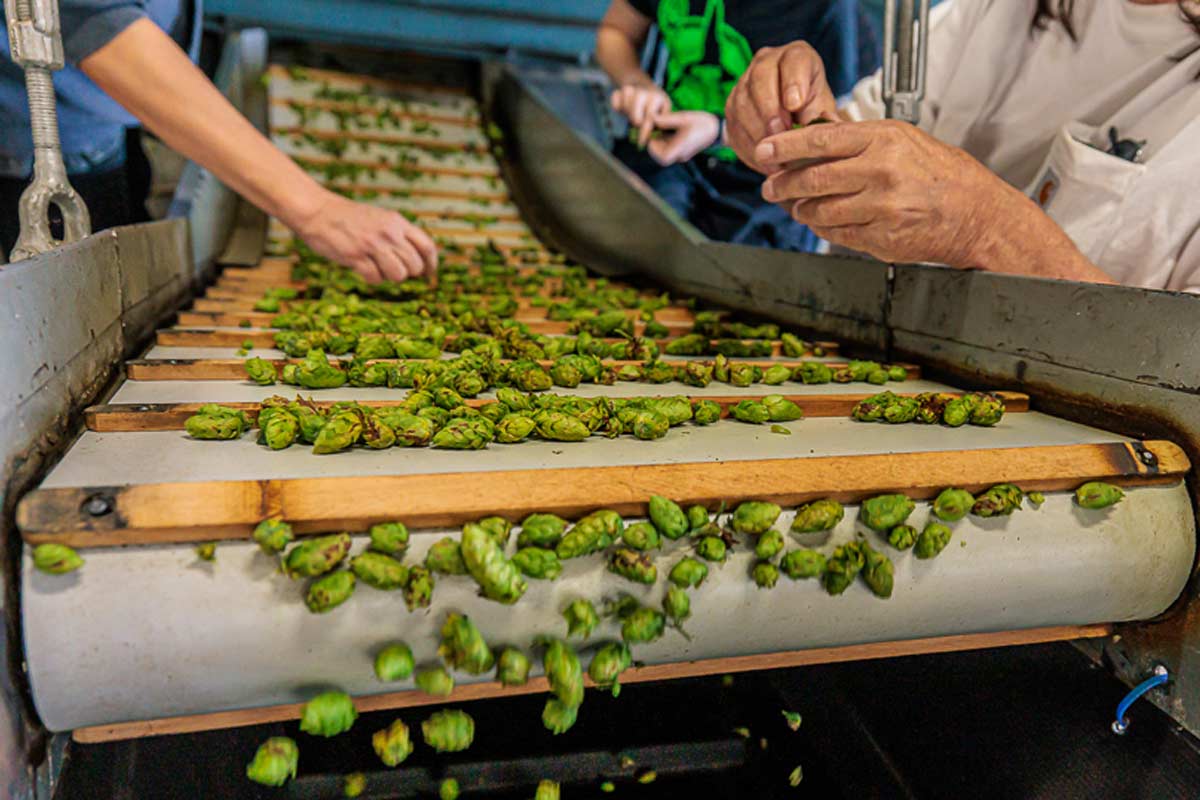
Furthermore, the biological growth pattern of the hop plant differentiates it from many other climbing crops. Unlike grapes, which are vines that use tendrils to climb, hops are "bines." They utilize stiff, downward-pointing hairs along their stems to wrap clockwise around support structures, such as coconut coir twine. In the peak of the Michigan growing season, these bines can grow up to 12 inches in a single day, eventually reaching heights of 20 to 25 feet. Managing this vertical jungle requires both delicate handling during the early "training" phase and significant physical and mechanical force during the late-summer harvest.
Institutional Foundation: The Role of Michigan State University
The resurgence of the Michigan hop industry, which began in earnest around 2008, would likely have stalled without the intervention of Michigan State University (MSU) Extension. As the industry grew, so did the complexity of the threats facing it, including Downy Mildew, Potato Leafhoppers, and Two-Spotted Spider Mites.
Erin Lizotte, MSU’s integrated pest management (IPM) coordinator and senior statewide educator, has emerged as a pivotal figure for Michigan growers. Lizotte’s work involves bridging the gap between laboratory research and field application. By providing real-time data on pest emergence and disease pressure, the MSU Extension team allows farmers to make informed decisions regarding chemical applications and biological controls. This scientific oversight is particularly critical as climate change alters the traditional timelines for pest migration and fungal growth. Growers frequently cite Lizotte’s responsiveness and the resources of the MSU Plant and Pest Diagnostics lab as the "safety net" that allows small and independent farms to compete with larger West Coast operations.
Technical Innovation in Propagation: Sandy Ridge Farms
Before a hop bine ever reaches a trellis, it begins as a cutting in a controlled environment. Julie Kane of Sandy Ridge Farms in Zeeland, Michigan, has spent over two decades specializing in this foundational stage. When the Michigan hop boom began in the late 2000s, Sandy Ridge became the state’s first commercial hop propagator.
Kane’s work is centered on the "Clean Plant" protocol, a rigorous biosecurity measure designed to prevent the spread of viruses and viroids that can devastate an entire region’s crop. By starting with virus-free mother plants from the National Clean Plant Network, Kane ensures that the starter stock provided to farmers is resilient. This process involves strict sanitation of tools, preventative fungicide regimens, and annual testing in collaboration with MSU.
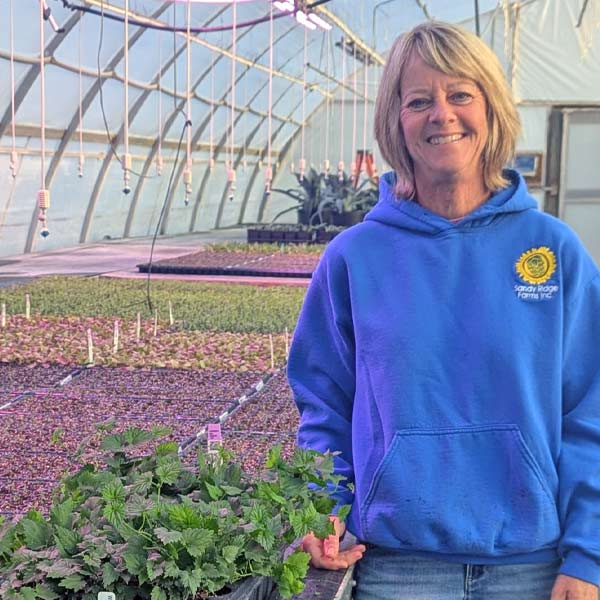
The necessity of this precision has been underscored by recent weather extremes. During the summer of 2024, Michigan experienced prolonged heat waves where greenhouse temperatures exceeded 100 degrees Fahrenheit. Kane’s ability to adapt—utilizing specialized shade cloths and adjusting irrigation and nutrient delivery in real-time—prevented mass crop failure. Her expertise has helped dismantle gender-based barriers in the field; while she recalls early professional conversations being directed away from her, the consistent quality of her output has established her as an indisputable authority in hop propagation.
Stewardship and Sensory Science: The Bell’s Brewery Model
While many hop farms are independent contractors, some of Michigan’s most influential brewing institutions maintain their own agricultural operations. At Bell’s Brewery in Comstock, land steward Bonnie Steinman and her colleague Elizabeth Mullins manage a two-and-a-half-acre hop yard that serves as both a production site and an educational hub.
Steinman, a veteran horticulturist, emphasizes the sensory aspect of hop farming—a skill that is often undervalued in industrial agriculture. Under the mentorship of industry legends like John Mallett, Steinman developed a rigorous daily protocol of "rubbing and smelling" cones to track the transition of aromatic profiles. For instance, the Michigan Chinook variety often transitions from a grassy scent to one of pineapple and citrus before developing the sticky, resinous oils that signify peak ripeness.
This commitment to the plant’s lifecycle extends to environmental stewardship. The Bell’s yard includes an apple orchard, a butterfly waystation, and "The Hideaway," a lush gathering space designed to immerse visitors in the hop-growing environment. By hosting organizations like the Pink Boots Society—a group dedicated to supporting women and nonbinary professionals in the beverage industry—Steinman and Mullins are actively working to diversify the talent pipeline for the next generation of Michigan agriculturists.
Operational Excellence and Engineering on the Farm
The transition from a "backyard hobby" to a professional hop farm requires more than just agricultural knowledge; it requires industrial-grade quality control. Mel Trowbridge of Top Hops Farm in Goodrich brought 40 years of experience as an automotive engineer to the field, treating the harvest process with the same precision as a manufacturing plant floor.
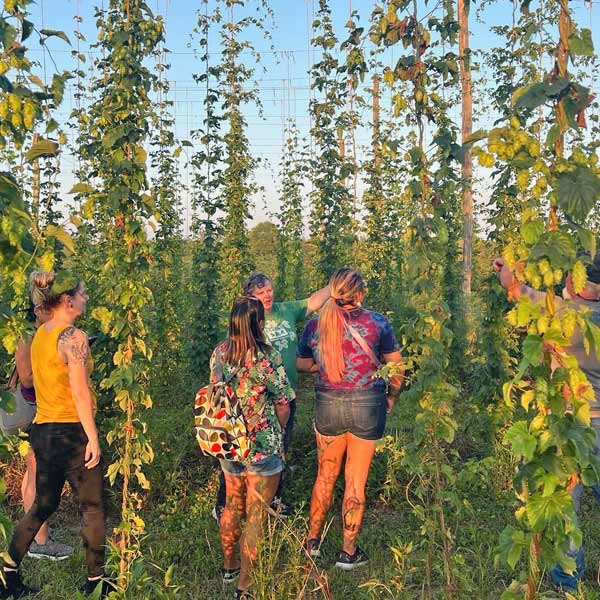
Trowbridge’s approach to hop farming is defined by process-driven operations. At Top Hops, every workday ends with a team debrief to analyze efficiency and identify bottlenecks. During the high-pressure harvest window, Trowbridge acts as an orchestrator, managing the complex logistics of harvesting, stripping, drying, and pelletizing hops within a narrow timeframe to prevent oxidation and spoilage. Her background illustrates a broader trend in Michigan agriculture: the integration of professional management standards into family-owned farm structures.
The Michigan Chinook: Defining a Regional Terroir
A central goal for Michigan’s hop industry is the establishment of a unique regional identity, distinct from the Yakima Valley in Washington. The "Chinook" variety has become the standard-bearer for this effort. While Chinook grown in the Pacific Northwest is known for its aggressive pine and resin notes, the Michigan-grown version is celebrated for its bright fruit and pineapple characteristics.
This distinction is highlighted annually through the "Chinook Cup," an event organized by the Hop Growers of Michigan. Rose Stahl, co-owner of Mr. Wizard’s Hops, has been a key figure in organizing this competition, which uses blind sensory analysis to crown the best harvest in the state. Stahl’s entry into the industry was born of necessity; after a catastrophic flood destroyed their corn crop in Monroe, she and her husband John pivoted to hops on the suggestion of their son. A decade later, Mr. Wizard’s Hops stands as a testament to the resilience of Michigan’s small-scale growers.
Analysis of Implications and the Path Forward
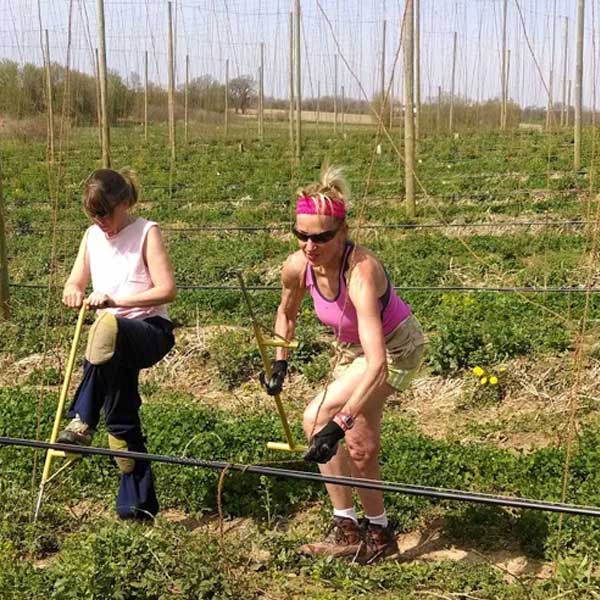
The future of the Michigan hop industry is inextricably linked to the visibility and leadership of its female professionals. As Amy Tennis of the Michigan Hop Alliance notes, women have long performed the "unseen labor" of farming—managing irrigation, applying for grants, handling bookkeeping, and performing manual labor—while men often served as the public face of the operation.
However, as the industry matures, several critical challenges remain:
- Market Contraction: The rapid expansion of hop acreage in the mid-2010s has led to a global surplus, causing prices to fluctuate. Michigan growers must focus on quality and "terroir" to justify their place in a crowded market.
- Climate Adaptation: Increased humidity and erratic temperature swings require more intensive management of fungal diseases like Downy Mildew.
- Economic Sustainability: Small farms must diversify their offerings, exploring agritourism and direct-to-brewer sales to remain viable.
The narrative of Michigan hops is no longer just about survival; it is about identity. Researchers like MSU’s Nicole Shriner emphasize that for Michigan to thrive, it must move beyond being a "secondary source" for the brewing industry. The goal is a market where brewers specifically request Michigan hops for their unique chemical profiles. Through the combined efforts of researchers, propagators, and stewards, the women of the Michigan hop industry are ensuring that when a consumer drinks a craft beer, the "Michigan-grown" label represents a standard of excellence, scientific rigor, and a commitment to the land.