admin
admin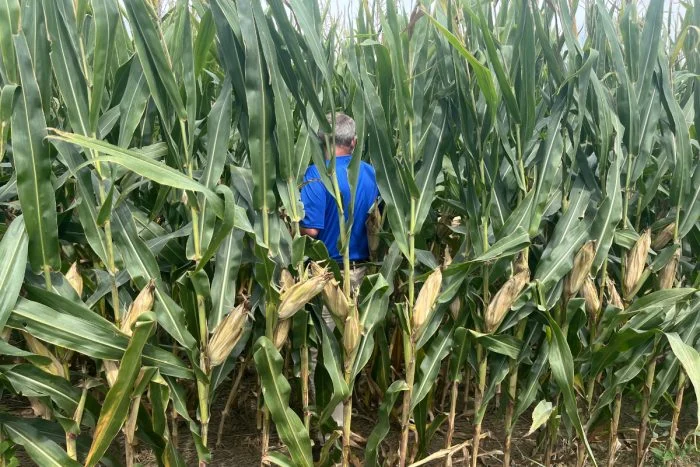
This flexibility in interpretation is at the heart of a burgeoning movement in agriculture, one that promises to heal degraded soils, sequester carbon, and enhance biodiversity, but also one that faces challenges in standardization and broad adoption. Across the vast Chesapeake Bay, two Maryland farmers, Tommy Shireman and Trey Hill, exemplify this diverse landscape. Both are committed to monitoring soil health, experimenting with techniques, and continuously improving their land. They minimize tilling to protect the subterranean ecosystem, plant cover crops to retain nutrients and suppress weeds, and utilize solar energy for their operations. Yet, despite both identifying their approach as "regenerative farming," the realities of their farms and the specific practices they employ diverge significantly, highlighting the ongoing debate about what truly constitutes regenerative agriculture.
The Regenerative Movement: A Response to Ecological Imperatives
The concept of regenerative agriculture has gained considerable traction in recent years as a vital response to pressing global environmental challenges. Decades of conventional farming practices, characterized by intensive tillage, synthetic chemical inputs, and monocropping, have led to widespread soil degradation, biodiversity loss, water pollution, and significant greenhouse gas emissions. According to the United Nations, a third of the planet’s soil is acutely degraded, impacting food security and accelerating climate change. Regenerative agriculture aims to reverse these trends by focusing on a set of principles designed to restore and enhance ecosystem health. These core tenets typically include minimizing soil disturbance (no-till or reduced-till), maximizing crop diversity (rotations, intercropping), keeping the soil covered with living roots for as long as possible (cover crops), integrating livestock, and minimizing synthetic chemical inputs.
The rise of interest in regenerative practices is not merely academic; it is driven by a confluence of environmental urgency and economic incentives. Climate scientists increasingly point to soil as a critical carbon sink, with regenerative practices offering a pathway to draw down atmospheric carbon dioxide. Farmers, meanwhile, are recognizing potential benefits such as reduced input costs, increased drought resilience, and improved yields over time. This growing awareness has led to a diverse range of stakeholders, from small organic producers to large commodity growers and even major food corporations, exploring and adopting various elements of regenerative farming. However, without a universally agreed-upon definition or certification, the term "regenerative" risks becoming a nebulous marketing buzzword, creating confusion for consumers and potentially diluting its transformative potential.
The Chesapeake Bay Imperative: A Regional Context
For farmers in Maryland, the adoption of environmentally sound practices carries particular significance due to the proximity of the Chesapeake Bay. This iconic estuary, the largest in the United States, has suffered for decades from nutrient and sediment pollution primarily originating from agricultural runoff and urban development. Excess nitrogen and phosphorus from fertilizers can lead to algal blooms, creating dead zones that suffocate aquatic life and disrupt the delicate ecosystem. State and federal agencies, including the Maryland Department of Agriculture, have implemented programs to incentivize practices that protect the bay, such as the widespread adoption of cover crops. These initiatives have played a crucial role in encouraging farmers like Trey Hill to explore and adopt practices that, in turn, laid the groundwork for their broader regenerative journeys. The bay’s health serves as a tangible, local barometer for the success of these agricultural shifts, making the impact of regenerative practices directly observable and measurable within the regional ecosystem.
Third Way Farm: A Tapestry of Biodiversity
On the western shore of the Chesapeake Bay, Tommy Shireman and his wife Michelle operate Third Way Farm, a 60-acre diversified operation that began in 2015. Shireman, originally pursuing a path in pastoring, envisioned the farm as a means to integrate his faith-based commitment to environmental stewardship and community mentorship with practical climate action. For Shireman, "regenerative really means to bring life back or to add life to something," a philosophy that permeates every aspect of Third Way Farm.
His approach is deeply rooted in biodiversity. Instead of monocultures, the farm is a vibrant mosaic of intercropped vegetables (peppers, carrots, potatoes), fruits (pear, plum, fig, jujube, blackberry, raspberry, elderberry, mulberry), and cut flowers. This rich plant diversity fosters a complex ecosystem, attracting beneficial insects like butterflies and promoting natural pest control. Beyond crops, livestock integration is key. Heritage crossbreed pigs forage in wooded areas, while Red Devon cattle rotationally graze pastures. Chickens follow the cattle, scratching for pests and seeds, and further enriching the soil with their manure. This intricate dance between plants and animals is designed to mimic natural ecosystems, enhancing nutrient cycling and soil fertility.

Shireman’s "north star" is an unwavering commitment to keeping soil covered and undisturbed. He famously states, "Tarps are our tiller." Instead of mechanical tilling, black tarps are used to suppress weeds and break down previous crop residues. After two weeks, the soil beneath is clear, ready for compost application and direct seeding, thus preserving the delicate microbial life and structure of the soil. When fields are fallow or winter approaches, a mix of cover crops ensures living roots are always in the ground, preventing erosion and building organic matter. The farm operates without synthetic pesticides or fertilizers, relying instead on hand-weeding, protective netting, and nutrient inputs from on-farm vermicomposting and the grazing animals.
One of Shireman’s most remarkable achievements is the transformation of a previously degraded hayfield. After years of intensive hay production, the land was left fallow and overgrown. Shireman’s team cleared the woody debris, seeded diverse perennial grasses, and implemented a strict regenerative grazing system. Cattle move daily to fresh pasture, followed by chickens days later, allowing ample recovery time for the grasses. Within three years, shoulder-height grasses flourish, and young trees—black locust, honey locust, mulberry, apple, persimmon, and hazelnuts—are establishing themselves. This deliberate integration of trees and pasture, known as agroforestry and silvopasture, significantly boosts carbon sequestration, provides animal shade, and diversifies farm income. This holistic, biodiverse approach at Third Way Farm embodies a vision of regenerative agriculture that prioritizes ecological complexity and self-sufficiency, often aligning with organic principles.
Harborview Farms: Scaling Regenerative in Commodity Production
Across the bay on Maryland’s eastern shore, Trey Hill represents the third generation on Harborview Farms, a sprawling 3,000-acre operation dedicated to commodity corn and soybeans, primarily for the region’s industrial poultry industry. Hill’s journey into regenerative practices began about two decades ago, driven initially by state incentives to address Chesapeake Bay pollution. Maryland’s payment for cover crop adoption was the catalyst, prompting Hill to plant them not just to prevent nutrient runoff but also to observe their broader benefits.
As he witnessed positive changes—improved soil structure, increased earthworm activity, and a noticeable surge in beneficial insect and bird populations—Hill began to actively seek more information and experiment further. By 2016, his entire acreage was under cover crops, and he had adopted "planting green," a no-till system where cash crops (corn, soybeans, wheat) are planted directly into living winter cover crops. This maximizes the principle of "living roots" in the soil at all times. After planting, Hill uses a combination of herbicides and a roller crimper – a heavy machine that flattens and kills the cover crop without disturbing the soil – to manage the cover crop biomass, creating a natural mulch for the subsequent cash crop.
Hill’s system, while embracing no-till and cover cropping, operates within the constraints and realities of large-scale commodity production. Unlike Third Way Farm, Harborview still utilizes synthetic chemical pesticides and fertilizers. However, Hill has made significant strides in reducing their application. Through the integration of the roller crimper and the adoption of "see and spray" technology (sprayers that identify and target individual weeds rather than blanket-spraying entire fields), he has cut herbicide use by more than half. While he still plants seeds treated with insecticides, he rarely applies additional insecticides, noting a significant increase in ecological diversity within and around his fields. "Before ‘regenerative’ was a word, I liked ‘ecological,’" Hill reflects, "because I was increasing ecological diversity around the field. It’s really easy to see. You can hear my beans singing to us now with the crickets and the bugs. You can hear the birds."
Hill acknowledges the tension between his practices and a strict interpretation of regenerative agriculture that would exclude all synthetic inputs. He experiments annually with chemical-free fields, but finds the Mid-Atlantic’s high pest and weed pressures make organic commodity production challenging without increased tillage, a trade-off he deems counterproductive to soil health. For Hill, the observable benefits—cleaner water runoff, increased soil organic matter (evidenced by abundant earthworm castings), and thriving biodiversity—demonstrate a tangible societal good. His ultimate goal is to pass down land that is not degraded but improved, a commitment that underscores his pragmatic approach to regenerative practices within a demanding economic framework.
The Definitional Divide and Broader Implications
The contrasting approaches of Third Way Farm and Harborview Farms vividly illustrate the spectrum of regenerative agriculture and the ongoing debate surrounding its definition. On one end, Shireman’s farm represents a holistic, highly diversified, organic-aligned system that prioritizes ecological complexity and on-farm input cycling. On the other, Hill’s operation demonstrates how regenerative principles like no-till and cover cropping can be integrated into large-scale commodity production, even with continued reliance on some synthetic inputs.
This definitional ambiguity has significant implications for consumers, policymakers, and the agricultural industry alike. For consumers, the lack of a clear standard can lead to confusion and skepticism, making it difficult to differentiate genuinely impactful practices from "greenwashing." Major food corporations, recognizing the growing consumer demand for sustainable products, are increasingly investing in and promoting regenerative agriculture within their supply chains. Companies like General Mills, Cargill, and Danone have announced ambitious goals to transition millions of acres to regenerative practices. However, without a robust, third-party verified standard, the specifics of what constitutes "regenerative" in these corporate initiatives can vary widely, from merely adopting cover crops to full-scale agroecological transitions.

From a policy perspective, the broad interpretation presents both opportunities and challenges. It allows for flexibility in designing incentive programs, as seen with Maryland’s cover crop subsidies, which can encourage incremental adoption across diverse farm types. However, it also complicates the development of targeted support or certification schemes that could reward farmers for deeper, more transformative changes. Agricultural economists and environmental advocates often argue that while any step towards reduced tillage or increased cover cropping is positive, the full ecological and climate benefits of regenerative agriculture are realized through a more comprehensive suite of practices, including reduced synthetic inputs and greater biodiversity.
The scalability of different regenerative models is another critical point of analysis. Shireman’s diversified model, while highly effective ecologically and providing premium products, is often labor-intensive and may not be easily scalable to thousands of acres. Hill’s model, by contrast, demonstrates how large commodity farms can integrate significant regenerative practices while maintaining conventional market access and efficiency. This suggests that a multifaceted approach may be necessary, with different regenerative pathways suitable for different farm sizes, types, and regional contexts.
Economic and Environmental Benefits, and Lingering Challenges
The economic benefits of regenerative agriculture are a key driver for farmer adoption. Reduced tillage can decrease fuel and labor costs. Cover crops can suppress weeds, reducing herbicide needs, and improve soil health, potentially lowering fertilizer requirements over time. Increased soil organic matter improves water infiltration and retention, making farms more resilient to drought and heavy rainfall events, which are becoming more frequent with climate change. Studies by organizations like the Rodale Institute have shown that organic, regenerative systems can achieve comparable or even higher yields than conventional systems after a transition period, often with higher profit margins due to reduced input costs and premium prices. However, the transition period can be challenging, involving upfront investment in new equipment, learning new management techniques, and potential yield dips.
Environmentally, the evidence for regenerative agriculture’s benefits is compelling. Soil carbon sequestration is a major focus, with estimates suggesting that widespread adoption could contribute significantly to climate change mitigation. A 2018 study by the National Academies of Sciences, Engineering, and Medicine highlighted the potential for agricultural soils to store substantial amounts of carbon. Beyond carbon, regenerative practices improve water quality by reducing nutrient runoff and sediment erosion, enhance biodiversity by creating healthier habitats for soil microbes, insects, and wildlife, and increase the nutrient density of food.
Despite these clear advantages, significant challenges remain. The lack of a clear, standardized definition continues to be a hurdle. Research and data collection on long-term impacts, particularly across different regions and farm types, are still evolving. Furthermore, shifting from conventional paradigms requires substantial knowledge transfer, technical assistance, and financial support for farmers during the transition phase. The existing agricultural infrastructure, from seed suppliers to commodity markets, is largely built around conventional practices, making it difficult for farmers to fully embrace and profit from alternative models without systemic changes.
The Path Forward: Policy, Research, and Farmer Adaptation
The journeys of Tommy Shireman and Trey Hill underscore that regenerative agriculture is not a monolithic concept but a dynamic, evolving framework. It demands continuous experimentation, observation, and adaptation to specific farm contexts. The future success of this movement will depend on several critical factors:
- Clearer Definitions and Standards: While maintaining flexibility, the industry may benefit from tiered certification programs or clearly defined standards that differentiate various levels of regenerative commitment, providing transparency for consumers and guiding corporate investment.
- Enhanced Research and Data: More robust, long-term scientific research is needed to quantify the environmental and economic benefits of different regenerative practices across diverse agroecosystems, informing best practices and policy.
- Policy Support and Incentives: Government programs, like those for cover crops, need to be expanded and refined to support farmers in adopting a wider range of regenerative practices, including transitions to reduced synthetic inputs and increased biodiversity. Financial assistance for equipment, training, and during transition periods is crucial.
- Farmer-to-Farmer Learning: Networks that facilitate knowledge exchange among farmers, like those Hill and Shireman have engaged with, are invaluable for sharing practical experiences and overcoming challenges.
- Market Demand and Supply Chain Integration: Continued consumer demand for regeneratively produced food, coupled with proactive engagement from food processors and retailers, will be essential to create viable markets and supply chains that reward farmers for their stewardship.
Ultimately, the stories of Third Way Farm and Harborview Farms reveal that regenerative agriculture is a spectrum of possibilities, not a rigid dogma. It is a testament to the ingenuity and commitment of farmers who are striving to improve their land, protect the environment, and build more resilient food systems, one field at a time. The ongoing dialogue, experimentation, and adaptation across this diverse landscape will shape the future of food production and our planet’s health.