admin
admin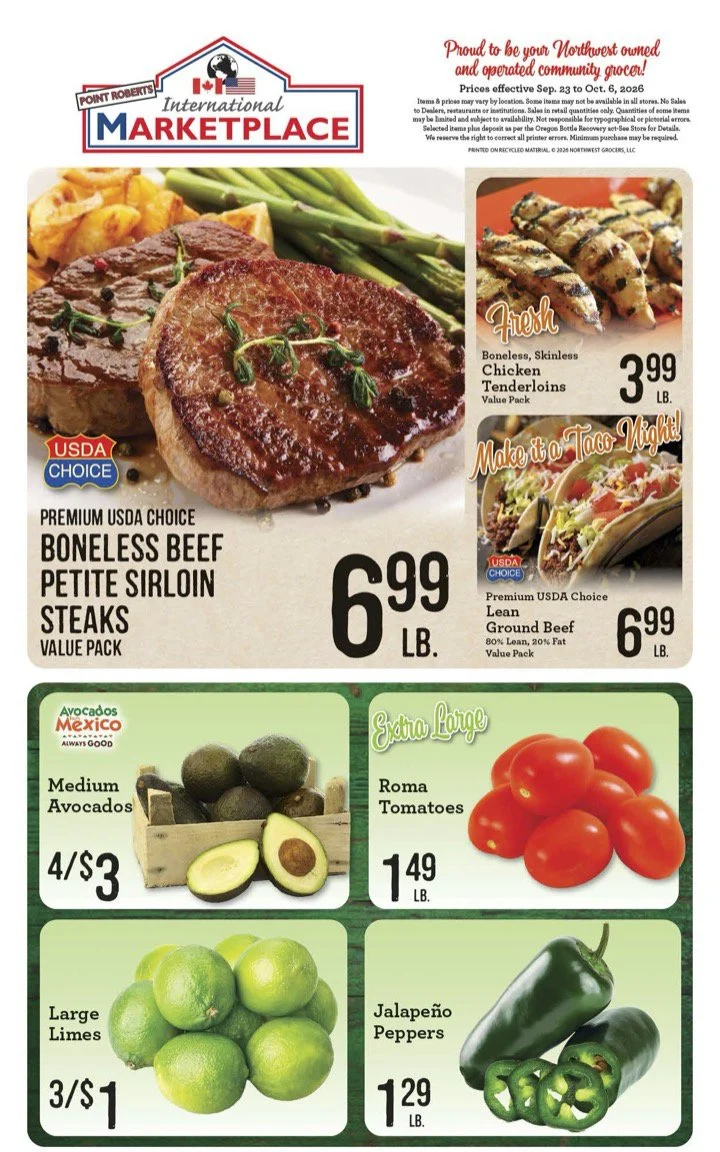
When Ali Hayton, owner of the International Marketplace grocery store in Point Roberts, Washington, met with Democratic Senator Patty Murray and state business owners in the spring of 2025, she delivered a stark and urgent message: escalating trade tensions with Canada were pushing her business to the precipice of closure. This outcome, she warned, would not only eliminate the area’s sole grocery store but also severely jeopardize the food security of its 1,200 year-round residents, a population geographically isolated and historically reliant on cross-border commerce. Hayton’s appeal underscored the profound and often overlooked vulnerabilities of unique border communities caught in the crossfire of international trade disputes.
A Unique Geography, A Fragile Economy: Point Roberts’ Reliance on Canada
The tiny five-square-mile U.S. enclave of Point Roberts, affectionately known by residents as "the Point," occupies a peninsula hanging down into U.S. territory, officially part of Washington State, yet physically accessible by land only through Canada. Located just twenty miles south of Vancouver, British Columbia, its unique geographical predicament was etched into existence by the stroke of a pen in 1846, when the U.S. and Great Britain established their shared border along the 49th parallel. This historical anomaly has rendered the community economically intertwined with its northern neighbor, making it closer to Canada in practical terms than to the contiguous United States. For generations, the Point’s businesses, from gas stations to local eateries and its vital grocery store, have relied heavily on the steady stream of Canadian visitors and shoppers to maintain solvency. As Hayton succinctly put it, "Canadian customers are part of who we are and part of who we have always been." This symbiotic relationship, built over decades, formed the bedrock of the community’s economic and social fabric.
The Escalation of Trade Tensions: A Chronology of Disruption
The friendly cross-border relationship, a model of North American integration, began to unravel significantly with the inauguration of President Donald Trump in January 2025. His administration embarked on a systematic imposition of tariffs on Canadian goods, coupled with inflammatory rhetoric, including a startling threat to annex Canada as the 51st U.S. state. This aggressive posture, unprecedented in modern U.S.-Canada relations, threw the long-established equilibrium into disarray. The "51st state" rhetoric, while perhaps intended to exert pressure, was widely perceived in Canada as deeply disrespectful and a profound affront to national sovereignty, fostering a climate of resentment and distrust that actively discouraged cross-border travel.
The trade war intensified throughout 2025 and into 2026. In July 2026, President Trump signed executive orders dramatically increasing tariffs by 50 percent on a broad spectrum of Canadian goods, including essential foodstuffs like beer, wine, honey, fruit, and dairy products. These tariffs were not merely punitive measures but direct attacks on key sectors of the Canadian economy, designed to force concessions. The following month, August 2026, crucial trade talks aimed at mitigating these tariffs collapsed without resolution, signaling a deepening impasse and further exacerbating tensions.
Canadian consumers and businesses responded with a strong display of national unity and economic nationalism. A February 2026 Bank of Canada survey starkly illustrated the impact, revealing a staggering 10 million fewer trips to the U.S. by Canadians in 2025 compared to 2024—a precipitous drop of 25 percent. This significant reduction in cross-border traffic, driven by a combination of retaliatory tariffs making U.S. goods more expensive, a weakened Canadian dollar, and a collective sentiment of protest against U.S. policies, directly impacted businesses like Hayton’s, which depended on this flow of customers. The economic consequences for border communities, particularly those as isolated as Point Roberts, were immediate and severe.
Economic Fallout: Businesses on the Brink
The fallout from this international trade war has left Hayton’s International Marketplace—and the broader Point Roberts community, including its food bank and residents—in a profoundly precarious position. Her business has seen a decline of almost 50 percent, a figure that represents not just lost revenue but a direct threat to its viability. The once bustling parking lot of the Marketplace, whose front entrance symbolically displays side-by-side Canadian and American flags, would historically be filled with more cars bearing Canadian license plates than Washington ones on a summer weekend. Cross-border shoppers would routinely fill up on cheaper U.S. gas before stopping at the Marketplace for groceries like cheese and eggs. Now, on a typical weekend, the lot is barely half full, a visible testament to the economic drought.
The challenges for Point Roberts businesses are compounded by their unique supply chain logistics. Despite being a U.S. territory, the International Marketplace relies on a U.S.-based wholesaler whose inventory must traverse the U.S./Canada border, travel through Canada, and then re-enter the U.S. in Tsawwassen, British Columbia, before finally reaching the store. While goods moved "in transit" through Canada typically avoid duty, the sheer logistical complexity and the associated costs are substantial. Hayton laments, "I would love to have fresh produce delivered every single day, but when that truck costs me $1,000 to come across the border, I can’t do it." This logistical burden, combined with dwindling customer numbers, forces difficult choices. Hayton has had to limit food orders to every two or three days and reduce operating hours, measures that, while cutting expenses, also diminish convenience and selection for her remaining customers.
Beyond the grocery store, other local businesses are feeling the acute strain. Hansen, who owns The Pier restaurant and the Saltwater Café, reports a customer base decline of up to 40 percent. "It’s been a real struggle," she admits, detailing efforts to entice Canadians, such as accepting Canadian dollars at a favorable exchange rate, often 80 percent of the American dollar, depending on the current market. These local entrepreneurs are scrambling for survival, devising creative strategies to lure back the vital Canadian patronage that forms the bedrock of their economic existence.
Food Security Under Threat: The Lifeline of the International Marketplace
The International Marketplace is not merely a commercial enterprise; it is a critical pillar of Point Roberts’ infrastructure and a cornerstone of its food security. The enclave lacks any significant commercial agricultural production or market gardens, making the Marketplace the sole source of fresh produce and a wide array of other essential goods, from meat and dairy to frozen foods and greeting cards. Its deli section also serves as a crucial gathering place, fostering community cohesion.

Before the Marketplace’s first iteration opened in 1982, residents either relied on small corner shops or undertook the inconvenient journey to Canada or Bellingham, Washington, for groceries. The store eliminated the need for daily international border crossings for basic necessities, providing readily available food. Its potential closure would revert residents to a challenging scenario, forcing them to cross the border into Canada and either shop there or re-cross into the Washington mainland, a journey many would find inconvenient, costly, and time-consuming. Dave Lee, a permanent resident and president of the board of directors for the Point Roberts Food Bank (PRFB), emphasizes this concern, stating that losing the store would create a "significant barrier to food access."
The fate of the International Marketplace is also inextricably linked to the Point Roberts Food Bank. The PRFB serves close to five percent of the enclave’s population, providing assistance without requiring proof of income, reflecting the community’s ethos of mutual support. The food bank, like the grocery store, faces unique logistical hurdles, collecting food from Bellingham and transporting it across two border crossings to Point Roberts. While "in transit" rules prevent duties as long as manifests are double-checked, the operational complexities remain. Crucially, the food bank relies on the grocery store to share space in its fridges and freezers, enabling it to provide perishable items like cheese, eggs, and fresh vegetables to its clients. "If it went out of business, say next month," Lee worries, "we’d have to scramble and try and figure out what we’re going to do."
This uncertainty has prompted the PRFB to seek greater independence. In 2023, the organization purchased property, and in July [2027, inferred from timeline], began construction of a dedicated warehouse. This single building aims to improve oversight and management of the food bank’s inventory and, most importantly, lessen its dependence on the grocery store’s refrigeration capacity. While this initiative might secure PRFB operations, it does not address the fundamental challenge of bringing back the customers that other businesses in Point Roberts so desperately need to survive.
Community Resilience and Mitigation Efforts
The current trade dispute is not the first major economic shock to Point Roberts. Many of Hayton’s difficulties began earlier, during the COVID-19 pandemic, when the border was closed for an arduous 20 months. Although grocery items were deemed essential and supply trucks continued to cross, customer traffic from both sides of the border plummeted due to travel restrictions. "In 2024, things were starting to look up again," Hayton recalls, "Then all the rhetoric about the 51st state [started]." This sequence of events—a pandemic followed by a trade war—has created a double whammy for the community, leaving little time for recovery between crises.
Despite the daunting challenges, the community is actively working to rebuild its cross-border connections and attract visitors. Wayne Lyle, president of the Point Roberts Chamber of Commerce, highlights efforts to advertise in nearby Delta, B.C., as well as in the Bellingham and Seattle areas, aiming to draw both Canadian and American tourists. While Lyle expresses a degree of optimism about the community’s food supply, acknowledging that "there’s not really any locally sourced produce," he notes that food access has historically not been an issue, even through COVID. He points to the possibility of residents sourcing groceries from Tsawwassen, Canada, if the Marketplace were to close, although this option presents the very inconveniences residents seek to avoid.
Hayton, a year after her meeting with Senator Murray, continues her own brand of "on-the-ground diplomacy." After trade talks collapsed in August and Canada vowed to match U.S. tariffs dollar for dollar, the situation has remained stagnant, keeping Canadian customers largely on their side of the border. Hayton’s solution, unwavering since her initial plea, is to consistently demonstrate to Canadians that they are valued and welcomed. She has given clear instructions to her staff: "When [Canadians] come down, we show them that we’re the same people we’ve always been [despite political tensions]. We still treat everybody the way we want to be treated and provide the same excellent services." This personal, relational approach, she believes, is the most effective—perhaps the only—way to save her store and continue providing for the residents of Point Roberts.
Broader Implications and the Path Forward
The plight of Point Roberts serves as a microcosm of the broader implications of protectionist trade policies on highly integrated border communities. The U.S.-Canada relationship, one of the world’s largest trading partnerships, typically involves billions of dollars in goods and services crossing the border daily, supporting millions of jobs. When this flow is disrupted by tariffs and political rhetoric, the economic ripple effects are far-reaching, extending beyond specific industries to impact everyday citizens and the delicate ecosystems of communities like Point Roberts.
The crisis in Point Roberts underscores the need for federal policy to consider the unique vulnerabilities of such exclaves. While national trade disputes often focus on macroeconomic indicators and large industries, the human cost in small, dependent communities can be disproportionately severe. The long-term scarring from prolonged periods of reduced trade and strained relations can take years to heal, even if political tensions ease. Businesses that close may not reopen, and established customer patterns, once broken, are difficult to re-establish.
For Point Roberts, the path forward remains uncertain. While local efforts to entice Canadians and bolster food bank independence are commendable, they can only mitigate, not solve, a problem rooted in national policy. The community’s survival ultimately hinges on a de-escalation of trade tensions and a return to the stable, cooperative relationship that has historically characterized U.S.-Canada interactions. Without a shift in federal policy, the dedicated efforts of individuals like Ali Hayton, who are fighting daily to keep their communities fed and economically viable, may ultimately be overwhelmed by forces far beyond their control.
Conclusion: A Call for Stability
The story of Point Roberts is a poignant reminder that international trade disputes have tangible, immediate, and often devastating consequences for ordinary people and the unique communities they inhabit. Ali Hayton’s plea to Senator Murray in 2025 was not just about her grocery store; it was a desperate call for stability, predictability, and a return to the spirit of cross-border camaraderie that defined Point Roberts for generations. As the trade war continues to cast a shadow over the U.S.-Canada border, the resilience of "the Point" stands as a testament to its community spirit, but also as a stark warning of the fragility of economic lifelines when caught in the turbulent currents of geopolitical friction. The question remains whether federal policymakers will heed the lessons from this small, isolated exclave before its unique way of life is irrevocably altered.