admin
admin
What happens when you spit out your gum onto a city sidewalk? If it doesn’t get stepped on and carried away, that wad of sticky, sugary glue becomes a part of your neighborhood. We’ve all seen it: grayish pavement blotches that, over time, have been pounded into a petrified sidewalk polka-dot. As we learn in filmmaker John Wilson’s first feature-length documentary, The History of Concrete, released on September 18 and screening at select U.S. theaters, these blobs don’t need to be permanent—there’s a guy who specializes in their removal. Anthony Mule, the owner of New York–based business GumBusters, tells the camera he uses his specialized equipment to "vaporize" the gum blight in front of people’s houses and storefronts. It’s a neat trick, and an oddly compelling moment in the film; one dude has built a life around repairing one, tiny, inevitable nuisance of living in a concrete-coated urban environment. This seemingly trivial detail serves as an entry point into a far deeper, more expansive exploration by Wilson, known for his unique observational style in the HBO series How to with John Wilson, as he attempts to understand concrete—one of the most ubiquitous and foundational materials in the modern world—and in doing so, unearths profound insights into failing systems, the transient nature of existence, and the quiet resilience of those who maintain in the face of collapse.
Deconstructing the Ubiquitous: Wilson’s Journey into Concrete’s Core
Wilson’s documentary begins not with grand pronouncements, but with a deeply personal and relatable problem: his own housing woes. Having purchased his Brooklyn building below market value from his former landlord, Wilson has been able to offer affordable rent to his friends, a laudable act that nonetheless saddles him with the responsibilities of a landlord, particularly for repairs. His basement tenant is dealing with constant stormwater flooding, a pervasive urban issue often exacerbated by aging infrastructure. Wilson’s attempts to fix the root cause—cracks in the foundation—with a simple bag of Home Depot concrete prove futile. He quickly learns the hard way that he used the wrong product and incorrect techniques. This frustrating personal failure sparks an epiphany: "It’s embarrassing to know so little about something that occupies so much of your visual environment," he explains in his signature voice-over. This realization propels him to pick up books about our paved world, transforming a landlord’s chore into the genesis of his next film project.
From this mundane starting point, Wilson embarks on a sprawling investigation into the trillion-dollar concrete industry. His narrative style, familiar to fans of his HBO series, is characterized by its non-linear, meandering path. Wilson narrates behind the camera, filming long and short cuts as he journeys through New York, across the U.S., and even abroad. The GumBuster segment, with its focus on the removal of petrified gum blotches, encapsulates Wilson’s ability to find universal meaning in the hyper-specific. It highlights the pervasive, yet often ignored, imperfections of our built environment and introduces the idea that even seemingly permanent fixtures are subject to decay and, sometimes, meticulous maintenance. This initial foray into the minute details of urban blight sets the stage for a much broader critique of infrastructure, industry, and even the creative process itself.
A Global Expedition: From Ancient Rome to Lunar Ambitions
Wilson’s research process is anything but conventional. To understand the longevity of concrete, he travels to Rome, visiting historic sites like the Pantheon, whose remarkable dome, constructed with ancient Roman concrete, has withstood the ravages of time for nearly two millennia. This historical context underscores concrete’s potential for enduring structures, offering a stark contrast to the rapidly deteriorating modern constructions he encounters later. His journey then takes him to Ohio, where he examines America’s first concrete street, a poorly maintained testament to early innovation that now serves as a cautionary tale of neglect.
The exploration deepens as Wilson attends two major industry expos in Las Vegas and New Orleans. These conventions, typically showcasing the latest advancements and celebrating industry achievements, provide a fascinating, if sometimes unsettling, look at the contemporary concrete world. He observes a presentation by a company with ambitious plans to produce concrete on the moon, illustrating the industry’s futuristic aspirations. Yet, beneath the veneer of progress, Wilson subtly highlights the tension between innovation and environmental responsibility. He learns about the significant environmental cost of concrete, particularly the massive carbon footprint of cement production, which is responsible for approximately 8% of global CO2 emissions. While he encounters a handful of companies attempting to innovate their way out of embodied carbon through "green concrete" initiatives or carbon capture technologies, and even explores the potential of 3D printing as a future for sustainable buildings, his focus at these conventions often drifts to the more human, and sometimes absurd, elements: the party environments where company representatives and tradespeople celebrate their accomplishments through conga lines and friendly bricklaying competitions.
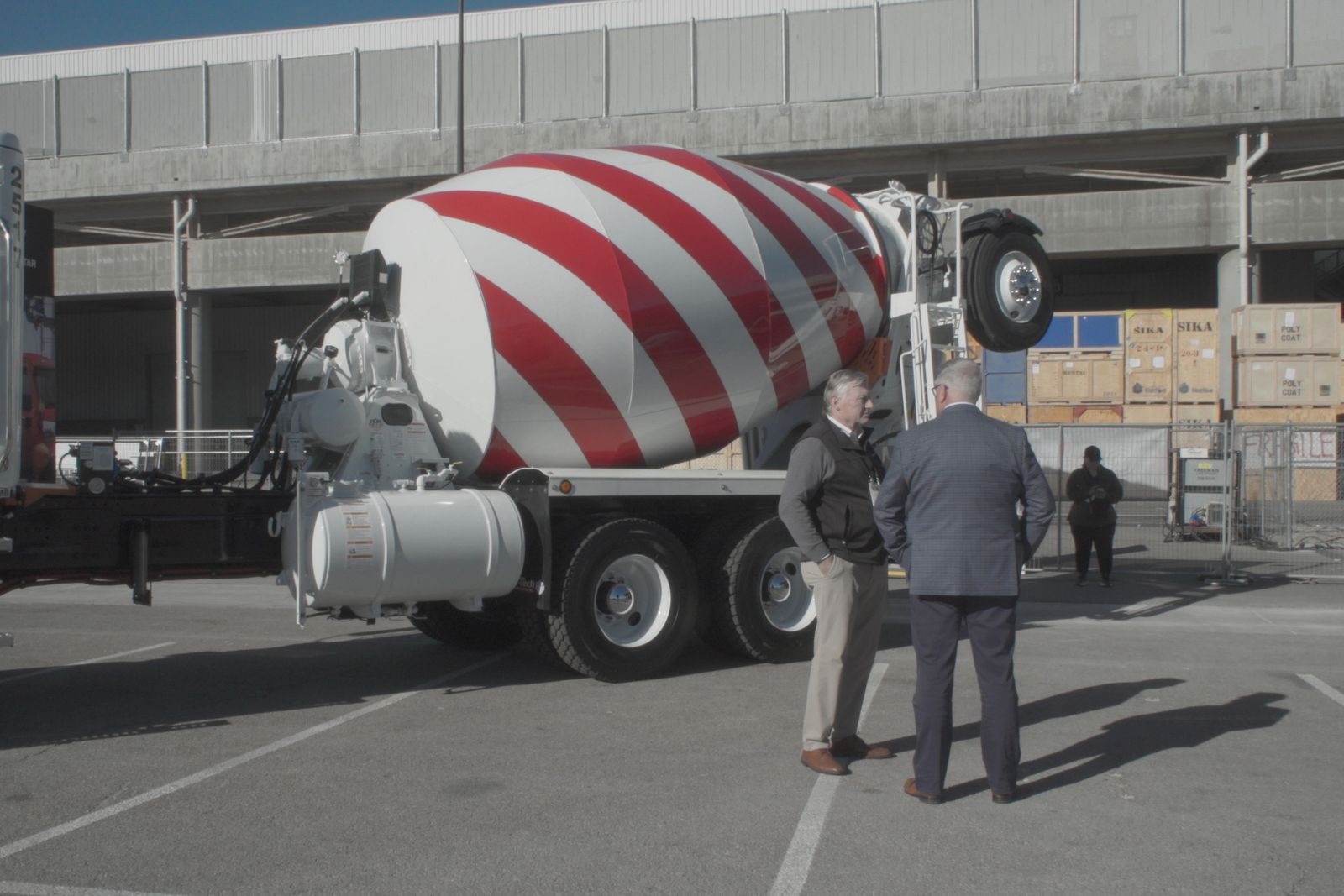
A crucial detail emerges here: Wilson’s agreement to film the convention stipulated that he portray the industry in a positive light. This contractual obligation forces him to rely on subliminal commentary and visual juxtapositions to subtly critique the continued reliance on carbon-intensive products and to question the true effectiveness and sustainability of certain "innovations" like 3D printing concrete. The contrast between the industry’s self-congratulatory atmosphere and the sobering environmental data underscores a broader societal challenge: how to reconcile economic growth and technological advancement with ecological preservation. Furthermore, the film implicitly touches upon the global demand for sand, a critical ingredient in concrete, whose unsustainable extraction leads to widespread environmental degradation and contributes to coastal erosion and riverbed destruction worldwide. This global perspective adds another layer to Wilson’s examination of concrete’s far-reaching impact.
The Unseen Struggles of Independent Filmmaking
Beyond the literal history of concrete, a compelling meta-narrative unfolds: Wilson’s seemingly doomed attempt to sell the very film we are watching. This struggle becomes a poignant commentary on the state of the modern film industry. Concrete, a material often perceived as mundane, is hardly the most compelling subject for major Hollywood studio executives, who are accustomed to funding high-grossing blockbusters like Marvel movies or prestige period pieces starring A-list talent such as Timothée Chalamet. These executives, operating under intense commercial pressures, attempt to force Wilson to incorporate big-name talent into his documentary to make it more palatable to wider audiences. One unnamed production house even bizarrely mandates in his contract that he feature a prominent musician, capitalizing on the booming popularity of music documentaries.
In response to these demands, Wilson, ever the independent spirit, goes back to his roots, venturing into DIY music venues hoping to discover an up-and-coming name to include in his documentary—a subtle act of rebellion against the corporate machine. Spoiler alert: he doesn’t find a big-name talking head. Instead, he discovers a creative industry that, much like the crumbling infrastructure he documents, has been "ground down to a stump." He befriends a musician named Jack Macco and attends his concerts in half-empty bars where Macco’s band plays a mix of covers and original songs. Macco’s dedication despite sparse audiences mirrors the efforts of countless artists striving for recognition in an increasingly commercialized landscape.
During his search, Wilson meets a concrete-salesman-slash-actor in one indie venue. Rather than discussing concrete, Wilson learns that the salesman is working on a low-budget short film and accompanies him on a shoot. The movie, titled Marty Supreme, looks, frankly, "bad" in a conventional sense, but Wilson feels a profound kinship with the crew. "You can feel the industry laughing at you for not having a script or a plot or actors in funny costumes," he says in voice-over, remarking upon the recent boom of high-budget movies that try to recreate "old" New York City, juxtaposing these observations with shots of Marty Supreme being filmed in downtown Manhattan. This segment is enriched by the knowledge that Josh Safdie and Ronald Bronstein, acclaimed for their gritty, authentic portrayals of New York in films like Uncut Gems and Good Time, are among the executive producers on Wilson’s documentary. Their involvement underscores a shared sensibility regarding independent filmmaking and a commitment to raw, unvarnished storytelling. Wilson’s poignant reflection, "It’s comforting to watch nostalgic visions of a city that no longer exists… But it seems like we often spend more money recreating the stuff that we miss than actually trying to preserve what’s currently disappearing," serves as a sharp critique of both the film industry’s commercial nostalgia and society’s broader failure to invest in genuine preservation and maintenance.
Cracks in the Foundation: Unmasking Urban Impermanence
What is so profound about how Wilson chases down the history of this quotidian construction material is how it relentlessly reveals our ingrained assumptions about what will last forever. We build highways from this miraculous material, but as Sam Schwartz, the former New York City Commissioner of Transportation, tells Wilson while standing underneath the ailing Brooklyn-Queens Expressway (BQE), even these monumental structures typically have only 40-year lifespans before requiring significant intervention. The BQE, in particular, is a prime example of America’s vast and rapidly deteriorating infrastructure, facing multi-billion-dollar repair or replacement projects due to decades of deferred maintenance and escalating costs. The film highlights how our built environment, once symbols of progress and permanence, are now stark reminders of fallibility.
The documentary further exposes this impermanence through examples of structural failures in seemingly robust contemporary buildings. The monumental 432 Park Avenue building in Midtown Manhattan, a symbol of ultra-luxury, is failing. Residents have reported numerous issues, including significant swaying, leaks, and malfunctioning elevators, primarily attributed to construction defects and, as Wilson suggests, the choice of an aesthetically pleasing white concrete that is more prone to cracking and structural issues than typical gray concrete. Similarly, the historic Hotel St. George in Brooklyn, now home to dorms, saw its hundred-year-old historic marquee collapse. Speaking with construction workers on the scene, Wilson learns that aging concrete was certainly to blame. These incidents collectively challenge the prevailing belief that our cities, constructed with the might of cement mixes and rebar, will last eternally. They serve as tangible evidence that even the most formidable structures are subject to the relentless forces of time, material degradation, and inadequate maintenance, mirroring how our cultural institutions, which we believe are still built around finding new voices and supporting novel ideas, have similarly decomposed under commercial pressures.
Philosophical Undercurrents: Samsara and the Acceptance of Change
Despite the seemingly bleak observations of decay and failure, The History of Concrete is not solely a "doom and gloom" film. Wilson’s dry delivery doesn’t reflect disgust; his tone feels more like a profound resignation, an acceptance. This philosophical core is explicitly explored through a segment on Buddhist principles. While researching sand, an essential ingredient in concrete, Wilson attends a Buddhist mandala ceremony. He watches monks meticulously pour fine, colored granules into an intricate, beautiful pattern, only to destroy it once it’s complete. This ritual, a powerful symbol of impermanence, highlights the significance in watching something end, in acknowledging the transient nature of all phenomena.
Later, the chanting of those monks is juxtaposed with footage from a press conference for former Mayor Eric Adams’s "City of Yes" initiative. This ambitious zoning amendment proposal seeks to facilitate the construction of 80,000 new homes in New York City, aiming to address the severe housing crisis. However, it has been vehemently protested by community groups and residents who fought hard against neighborhood development, fearing gentrification, loss of character, and increased strain on existing infrastructure. Wilson introduces the concept of Samsara, the Buddhist theory of the suffering we experience when we deny the inevitability of change. By linking the resistance to urban development with this ancient philosophical concept, Wilson suggests that much of human suffering stems from our attachment to the way things are, our unwillingness to accept that everything, from concrete structures to neighborhood demographics, is in a constant state of flux. This elevates the documentary from a mere investigation of a building material to a meditation on the human condition and our collective struggle with impermanence.
The Quiet Resilience of the Maintainers
Ultimately, The History of Concrete isn’t just a "change is inevitable" movie as much as it is, in all of its awkward goofiness and observational depth, a balm for those who live and work under fragile systems—which is to say, most of us. A significant portion of the film is devoted to failure: the crumbling expressways, the structurally unsound luxury towers, and the dilapidated historic buildings all speak to fallibility and impermanence. Meanwhile, we also witness a film industry that has been so optimized for blockbusters that the narrow window for funding independent and experimental projects churns out unsuccessful filmmakers, or at least those who struggle to find an audience within the mainstream.
Though Wilson wants us to understand collapse, he simultaneously wants us to see and appreciate those who are able to carve out a future for themselves under disintegrating conditions. These are the "maintainers": the folks like Jack Macco who keep playing to half-empty venues, driven by passion rather than commercial success; the guy who meticulously blasts gum off sidewalks, dedicating his life to a seemingly small, yet crucial, act of urban upkeep; and the low-budget film crew, united by a shared creative vision despite lacking the resources of major studios. These individuals, operating outside the grand narratives of progress and profit, embody a quiet resilience. They are the ones who try to keep the world afloat, even as gravity takes hold, reminding us that amidst systemic failures and the relentless march of impermanence, there is profound value in persistence, in the small acts of creation, and in the continuous effort of maintenance. Wilson’s unique lens transforms the seemingly mundane into a profound reflection on existence, challenging viewers to look closer at the world around them and find meaning in the cracks, the decay, and the unwavering human spirit that continues to build and mend.
Published
September 21, 2026