admin
admin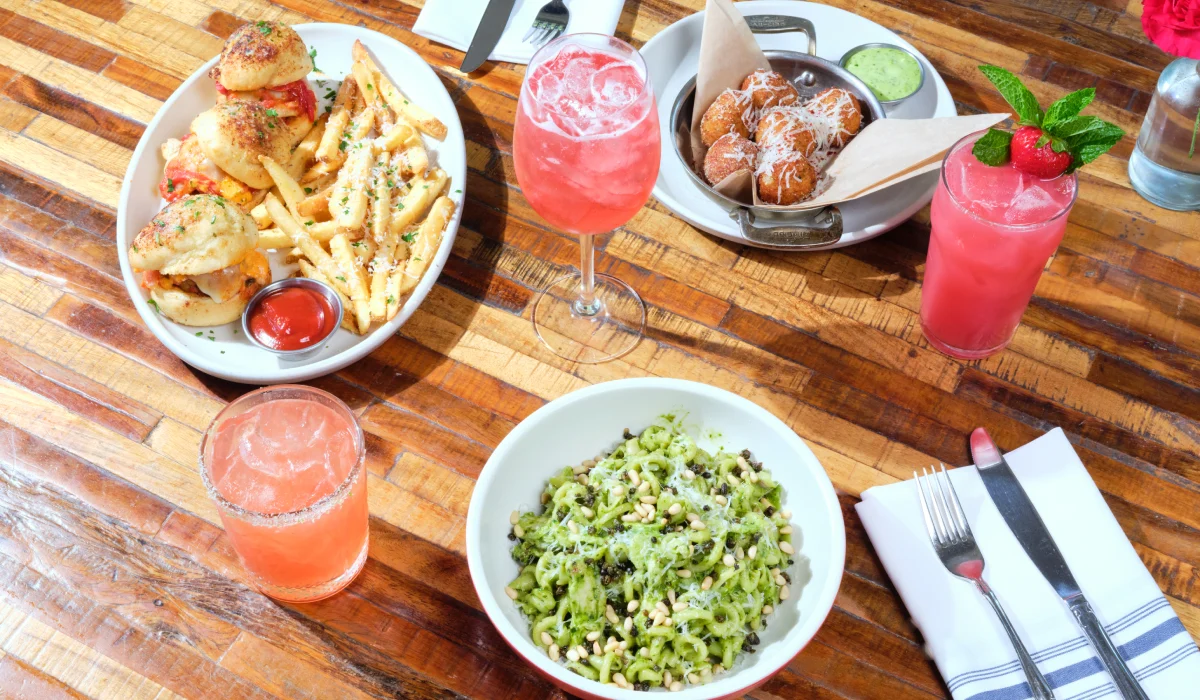
The Cheesecake Factory Incorporated is signaling a significant shift in its growth strategy as it prepares to accelerate the expansion of its fast-casual darling, Flower Child. During the Barclays Annual Global Consumer Staples Conference, Matthew Clark, Executive Vice President and Chief Financial Officer of The Cheesecake Factory, addressed a flurry of inquiries regarding the brand’s trajectory, emphasizing that while Wall Street remains hungry for rapid scaling, the company is prioritizing "quality growth" to ensure long-term sustainability. The brand, which was integrated into the company’s portfolio following the 2019 acquisition of North Italia and Fox Restaurant Concepts (FRC) for approximately $308 million, has emerged as a powerhouse in the fast-casual sector, boasting unit economics that rival the most successful quick-service chains in the United States.
A Strategic Integration and the Path to Fifty Units
The relationship between The Cheesecake Factory and Flower Child dates back to 2016, when the polished casual giant initially secured a minority stake in both North Italia and the broader Fox Restaurant Concepts incubator. At the time of the initial investment, North Italia operated just nine locations, while Flower Child, then only two years old, had five. The deal was structured to allow The Cheesecake Factory to observe the brands’ performance and cultural fit before committing to full ownership. By the time the full acquisition was finalized three years later, the potential for these brands to serve as secondary growth engines was clear.
Today, the portfolio has transformed. North Italia has expanded to 50 locations, while Flower Child has grown to 40. For context, the flagship Cheesecake Factory brand operates approximately 220 locations. Despite the smaller footprint, Flower Child has captured the attention of investors due to its exceptional sales density and resilience in a volatile consumer environment. Clark noted that the company is constantly "reeducating" the investment community on Flower Child’s path, explaining that site selection, labor management, and unit-level leadership are the primary focuses over mere unit count.
Analyzing Flower Child’s Industry-Leading Unit Economics
The financial metrics reported in the most recent quarter underscore why investor interest has reached a fever pitch. Flower Child posted same-store sales gains of 13 percent, representing a 17 percent increase on a two-year stack. Notably, this growth was driven primarily by a 10.5 percent increase in traffic and catering lift, with pricing adjustments contributing a modest 2.5 percent. This indicates a genuine increase in consumer demand rather than growth inflated by aggressive price hikes.

Flower Child’s annualized average-unit volumes (AUV) have spiked to $5.4 million, with adjusted mature store-level margins sitting at a healthy 20.1 percent. In certain high-performing legacy markets, individual restaurants are generating between $6.5 million and $7 million in annual sales. To put these figures into perspective, if Flower Child were ranked among the top 50 grossing quick-service restaurants (QSR) in the country by systemwide sales, its AUV would rank fourth nationwide. It currently sits ahead of McDonald’s ($4.088 million AUV) and just behind the cult-favorite In-N-Out Burger ($6.032 million AUV). Furthermore, it significantly outperforms other publicly traded fast-casual peers, such as Sweetgreen, which reports an AUV of approximately $2.677 million.
Clark highlighted that Flower Child boasts the best unit economics within The Cheesecake Factory’s entire suite of brands, offering approximately 33 percent cash-on-cash returns. The company believes the brand has a massive total addressable market (TAM) because its "health-forward" yet "craveable" menu resonates across diverse geographies, from dense urban centers to affluent suburban neighborhoods.
Defining the "Cheesecake Factory Fast Casual" Niche
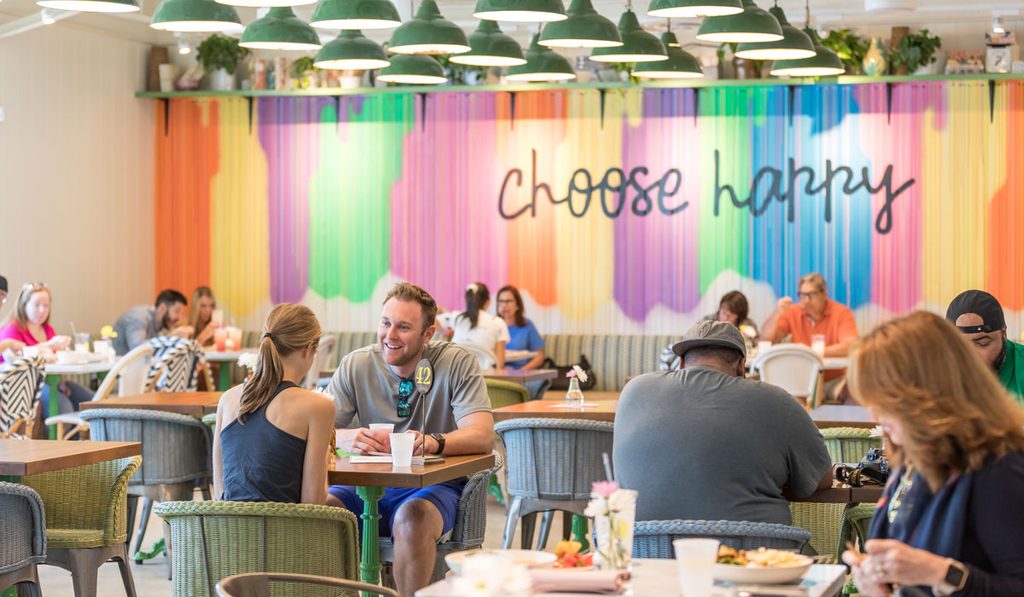
The success of Flower Child is attributed to what management internally calls the "Cheesecake Factory fast casual" model. Unlike the assembly-line format popularized by Chipotle, Flower Child utilizes a scratch kitchen and an open-concept design where guests observe their meals being prepared. The brand occupies a unique "defensible moat" by blending the price point and speed of fast casual with the experiential elements of full-service dining.
David Gordon, President of The Cheesecake Factory, noted that the brand meets multiple "need states" for consumers. Whether a guest is seeking a $13 "Mother Earth Bowl" for a quick lunch or a more substantial protein plate for a family dinner, the environment supports both. Flower Child distinguishes itself by serving food on real plateware and providing "high-touch" service, such as servers bringing food to the table and clearing plates. This experiential focus has resulted in a highly differentiated sales mix: nearly 40 percent of business occurs during dinner hours, and the split between off-premises and in-store dining is almost even—both of which are rarities in the fast-casual sector.
Portfolio Performance and the Billion-Dollar Milestone
The focus on Flower Child comes as The Cheesecake Factory reports record-breaking performance for its core brand. In the second quarter, the company generated over $1 billion in revenue for the first time in its history, with net income rising 25 percent to $68 million. Same-store sales for the flagship brand grew by 5.8 percent, outperforming the Black Box Casual Dining Index by 350 basis points.
The flagship brand’s AUV has surged past $13.5 million, with store-level margins hitting 20 percent—the highest in a decade. This performance was achieved without relying on deep discounting or short-term promotions. Instead, the company focused on operational execution, menu innovation, and the successful rollout of its first-ever rewards app. Management noted that while on-premises traffic remains 10 to 15 percent below pre-pandemic levels, the sheer volume of sales per visit has created a "good problem to have," as the infrastructure is already in place to handle future traffic recovery.
Navigating Consumer Trends: From GLP-1s to Social Media
Addressing the broader economic landscape, Clark noted that while the consumer remains discerning, there is a clear appetite for "experiential dining." This trend is particularly evident among younger demographics, who are returning to malls not just for retail, but for social events centered around dining.
The company also addressed the potential impact of GLP-1 weight-loss drugs on the restaurant industry. Drawing a parallel to the 2018 mandate to list calorie counts on menus, Clark dismissed fears that health trends would cannibalize sales. Data shows that while customers are more conscious of their choices, they still prioritize the "full experience" when dining out. The Cheesecake Factory’s "SkinnyLicious" menu, which features items under 590 calories, remains a stable percentage of sales, suggesting that guests are choosing to allocate their "calorie budgets" rather than abandoning indulgent dining altogether.
Social media has also played a pivotal role in the brand’s recent success. By embracing a "playful tone" and highlighting "ginormous" portions of chocolate cake on platforms like TikTok and Instagram, the brand has tapped into the "more is more" sentiment of Gen Z and Millennial diners. This organic engagement has helped the brand remain relevant and top-of-mind without traditional, high-cost advertising campaigns.
Challenges and the "Gating Factor" of Growth
Despite the optimistic outlook, management acknowledged several challenges to rapid scaling. Etienne Marcus, Vice President of Finance and Investor Relations, identified people as the primary "gating factor" for Flower Child’s expansion. The company refuses to open new units without a robust pipeline of internally trained managers who understand the brand’s specific culture and operational standards.

Furthermore, while Flower Child is thriving, North Italia faced some headwinds in the second quarter. Same-store sales for the Italian concept slid 3 percent, with margins compressed by commodity inflation and a later-than-usual implementation of price hikes. Management is currently working on "menu architectural work" for North Italia, including testing lower-priced pasta dishes and lunch specials to lower the barrier to entry for new guests.
Future Outlook: Technology and Development Pipelines
Looking ahead, The Cheesecake Factory plans to lean heavily into its development pipeline. For the full fiscal year, the company expects to open approximately 22 to 25 new restaurants across its portfolio, including seven Flower Child locations, six North Italias, and several other FRC concepts like The Henry.
Technology will also remain a focus. Following the successful launch of its rewards app in April, the company is seeing increased engagement at the critical 30-, 60-, and 90-day marks. Future iterations of the app are expected to include more personalized offers and streamlined reservation features. Additionally, the company is in the "early innings" of exploring AI for marketing efficiency and supply chain optimization, though management stressed that these initiatives are aimed at driving productivity rather than immediate headcount reduction.
As The Cheesecake Factory Incorporated moves into the latter half of the year, its strategy appears clear: leverage the massive cash flow and stability of its flagship brand to fuel the high-growth potential of Flower Child. By maintaining a balance between the "predictability" of a national chain and the "local vibe" of its emerging concepts, the company aims to capture a larger share of the experiential dining market. For now, Flower Child remains the crown jewel of that strategy, proving that even in a crowded fast-casual market, there is still room for a brand that prioritizes the "vibe" as much as the menu.