admin
admin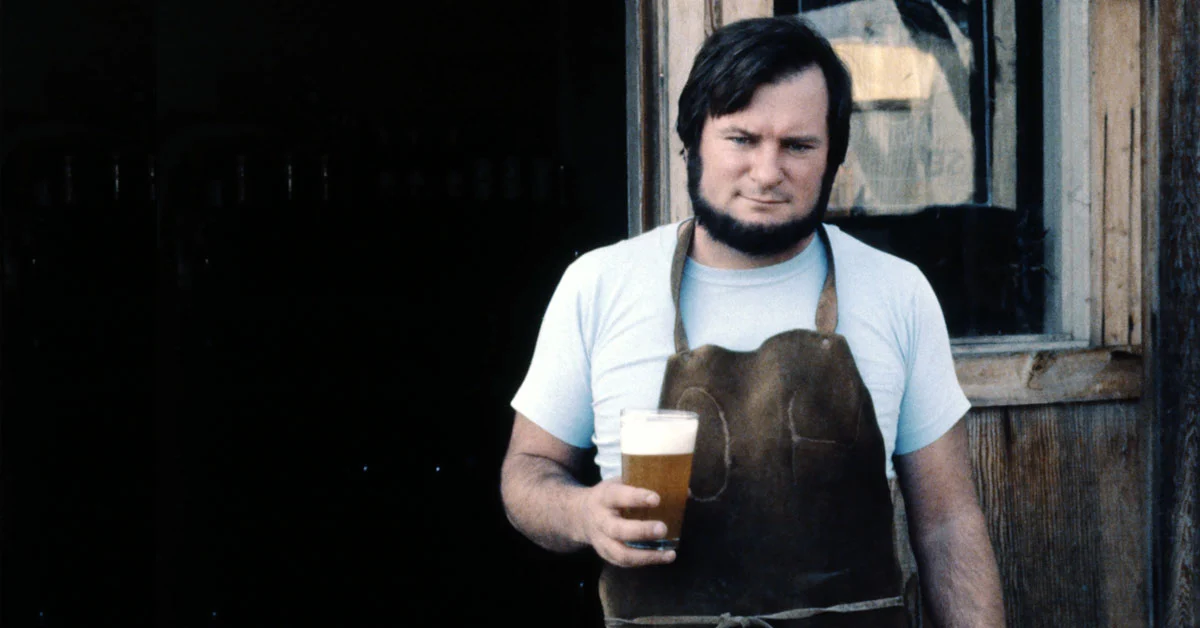
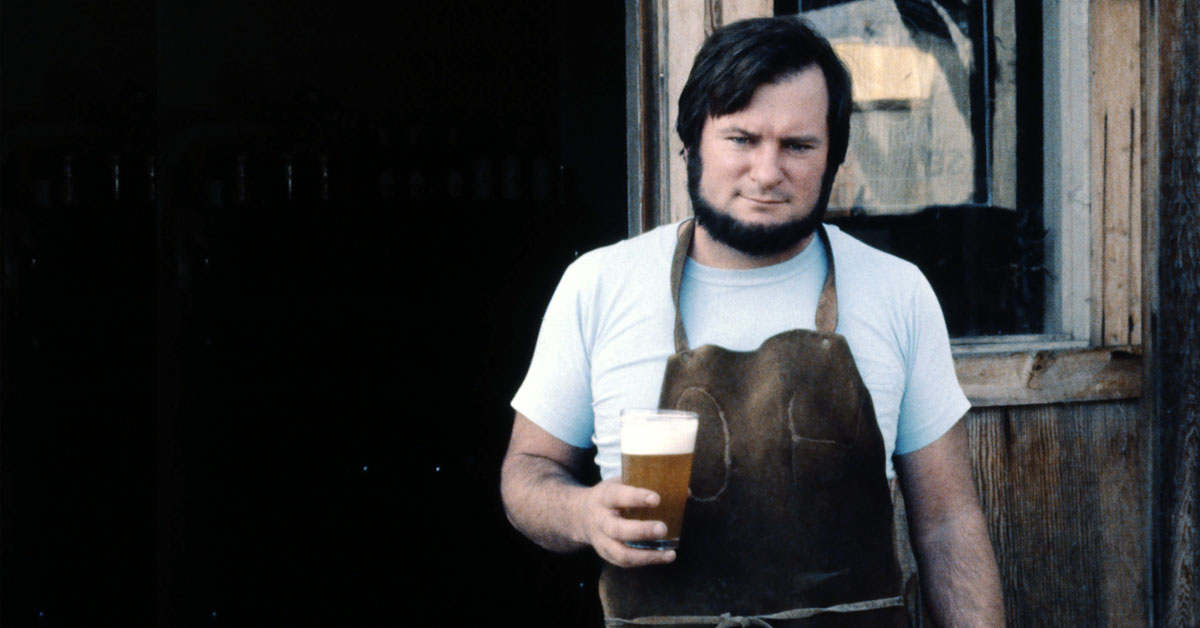
The passing of Jack McAuliffe at the age of 80 marks a significant moment of reflection for the global brewing industry, as he is widely credited with igniting the spark that became the modern American craft beer movement. While the landscape of American beer today is defined by more than 9,000 independent breweries and a diverse array of styles ranging from hazy IPAs to barrel-aged stouts, the environment in which McAuliffe founded New Albion Brewing Company in 1976 was starkly different. At that time, the American market was dominated by a handful of industrial giants producing nearly identical light lagers, a vestige of the post-Prohibition era that prioritized efficiency and mass distribution over flavor and regional variety. McAuliffe’s willingness to challenge this hegemony through small-scale, flavor-focused production provided the foundational blueprint for an industry that now contributes billions of dollars to the United States economy.
The Genesis of an Idea: From Scotland to Sonoma
The origins of New Albion Brewing Company can be traced back to McAuliffe’s service in the United States Navy during the 1960s. While stationed in Scotland, he was exposed to traditional British ales, specifically porters and stouts, which offered a complexity and depth of flavor entirely absent from the American commercial market. This exposure fundamentally altered his perception of what beer could be. Upon returning to California, McAuliffe transitioned from a consumer to a practitioner, engaging in homebrewing as a way to replicate the robust ales he had enjoyed abroad.
By the mid-1970s, McAuliffe’s hobby had evolved into a professional ambition. However, the obstacles were significant. In 1976, no new brewery had been successfully established in the United States since the end of Prohibition in 1933. The industry was in a period of intense consolidation; the number of operating breweries in the U.S. had plummeted from over 4,000 in the late 19th century to fewer than 100 by the mid-1970s. Undeterred by the trend of closures and the dominance of "Big Beer," McAuliffe partnered with Jane Zimmerman and Suzy Stern to launch New Albion. With a modest investment of a few thousand dollars, the trio rented a warehouse in Sonoma, California, and began the arduous process of building a brewery from the ground up.
Engineering the First Modern Microbrewery
Because there was no existing market for small-scale brewing equipment in the 1970s, McAuliffe was forced to rely on his ingenuity and technical skills. He repurposed discarded food-grade machinery to create a functional brewhouse, utilizing former dairy equipment and 55-gallon Coca-Cola syrup drums. This "DIY" approach became a hallmark of the early craft movement, as subsequent brewers followed his lead in adapting industrial tools for artisanal purposes.
New Albion’s production was modest, yet its impact was immediate. The brewery focused on three core styles: a pale ale, a porter, and a stout. These beers were bottle-conditioned and unfiltered, a radical departure from the crystal-clear, pasteurized lagers that defined the era. By reintroducing these traditional styles to the American palate, McAuliffe proved that there was a niche market for "bottle-conditioned" ales that emphasized malt character and hop bitterness.
A Chronology of the New Albion Era
The timeline of New Albion is brief but dense with historical significance:
- 1976: New Albion Brewing Company is incorporated in Sonoma, California, becoming the first "microbrewery" of the modern era.
- 1977: The first batches of New Albion Ale are released to the public, gaining a cult following among locals and beer enthusiasts.
- 1979: The brewery receives national attention, including a profile in The New York Times, which helps spread the concept of small-scale brewing beyond Northern California.
- 1980: Future industry giants, including Ken Grossman of Sierra Nevada, visit New Albion to study McAuliffe’s methods and equipment.
- 1982: Despite critical acclaim and a loyal following, New Albion ceases operations due to a lack of expansion capital and the immense pressure of competing in a market without a developed distribution tier for small producers.
- 1983: The equipment from New Albion is purchased by the founders of the Hopland Brewery (later Mendocino Brewing Company), which became California’s first brewpub since Prohibition.
Scientific and Agricultural Contributions: The Cascade Hop
One of McAuliffe’s most enduring contributions to the industry was his early adoption of the Cascade hop. Developed by the USDA breeding program at Oregon State University and released in 1971, the Cascade hop was initially rejected by major commercial brewers who found its citrusy, floral, and grapefruit-like qualities too aggressive for their light lagers. McAuliffe, however, saw the hop’s potential to define a uniquely American style of pale ale.
By utilizing Cascade hops in New Albion’s Pale Ale, McAuliffe set the stage for what would become the "West Coast" style of brewing. This decision influenced Ken Grossman, who would later use Cascade hops as the centerpiece of Sierra Nevada Pale Ale. Today, Cascade remains one of the most widely planted hops in the United States and is considered the "mother hop" of the craft revolution. The shift toward hop-forward beers, which now dominate the craft market, began in the repurposed dairy tanks of New Albion.
Statistical Growth and Economic Impact
The legacy of New Albion is perhaps best measured by the explosive growth of the industry it helped birth. According to data from the Brewers Association, the number of craft breweries in the U.S. has grown exponentially since McAuliffe’s experiment:
- 1976: 1 microbrewery (New Albion)
- 1985: 37 craft breweries
- 1995: 858 craft breweries
- 2010: 1,813 craft breweries
- 2023: Over 9,500 craft breweries
In terms of economic impact, the craft brewing industry contributed approximately $76.3 billion to the U.S. economy in 2022, supporting more than 460,000 jobs. What began as a three-person operation in a Sonoma warehouse has evolved into a major pillar of American manufacturing and hospitality. McAuliffe’s realization that a brewery could be "pint-sized" yet commercially viable paved the way for the "neighborhood brewery" model that defines the current industry.
Industry Reactions and Historical Analysis
The significance of McAuliffe’s life has been noted by the most prominent figures in American brewing. Jim Koch, the founder of Boston Beer Company, famously stated that McAuliffe was the "American original" who proved that starting a brewery from scratch was possible. Koch later collaborated with McAuliffe in 2012 to re-release New Albion Ale, using the original yeast strain which had been preserved at the University of California, Davis.
Ken Grossman of Sierra Nevada Brewing Co. has frequently cited his visits to New Albion as a pivotal influence on his own career. Grossman noted that McAuliffe’s willingness to share information and show his equipment to aspiring brewers created a culture of collaboration that remains a defining characteristic of the craft beer community today.
Historian Maureen Ogle, author of Ambitious Brew: The Story of American Beer, emphasizes that McAuliffe’s impact was as much about "adaptive reuse" as it was about liquid. By proving that old warehouses and agricultural buildings could be transformed into centers of community and production, McAuliffe established the "brick-and-mortar" core of the movement. Today, the repurposing of historic buildings into taprooms is a standard practice that has revitalized downtown districts across the country.
Broader Implications and the Future of Craft
The death of Jack McAuliffe comes at a time when the craft brewing industry faces new challenges, including market saturation, changing consumer preferences, and supply chain fluctuations. However, the "rule-breaking verve" that McAuliffe exhibited in 1976 continues to serve as a guiding principle. His career demonstrated that success is not always measured by the longevity of a single business—New Albion only lasted six years—but by the influence of the ideas it leaves behind.
The "New Albion model" showed that beer could be a local, artisanal product rather than a mass-produced commodity. It shifted the focus from marketing budgets to ingredient quality and technical proficiency. As the industry moves forward, the principles of resourcefulness and authenticity that McAuliffe championed remain the bedrock of the trade.
In his later years, McAuliffe was known for his sharp wit and his skepticism of the corporate structures that dominate modern life. He remained an iconoclast to the end, often preferring the company of his machines and his close circle of friends to the limelight of the industry he helped create. His life serves as a reminder that the most significant industrial shifts often begin with a single individual’s refusal to accept the status quo. For millions of beer drinkers who enjoy a diverse range of styles at their local taproom, the debt of gratitude owed to the sailor who returned from Scotland with a taste for porter is immeasurable. The American craft beer revolution did not start in a boardroom; it started in a warehouse in Sonoma, with a set of syrup drums and a vision of a better pint.