admin
admin
The Scientific Foundation of Gluten Development in Pizza Dough
At its core, pizza dough’s structural integrity is dictated by gluten, a complex protein network formed when two primary wheat proteins, gliadin and glutenin, hydrate with water and undergo mechanical mixing. Gliadin imparts extensibility, allowing the dough to stretch without tearing, while glutenin contributes elasticity and strength, enabling the dough to hold its shape and trap the carbon dioxide gases produced during fermentation. The synergy between these proteins is fundamental to achieving a crust that is simultaneously airy, resilient, and capable of withstanding the rigors of stretching, topping, and high-temperature baking. Insufficiently developed or compromised gluten, conversely, results in a weak, flimsy dough that struggles to retain its form and rise, often leading to a dense or brittle final product. Understanding the dynamics of gluten formation is therefore not merely an academic exercise but a practical necessity for consistent pizza quality.
Addressing Weak Gluten Structure in Neapolitan Pizza
A persistent challenge for many pizzaiolos, as highlighted by a reader’s query, involves achieving a strong gluten structure, particularly when crafting Neapolitan pizza. This reader, with two years of experience, described issues with flimsy dough balls, thin spots, and tearing on the oven deck, despite using a 65% hydration recipe with a poolish preferment and a kitchen mixer, augmented by slap and folds. This scenario is indicative of a common pitfall where adherence to a recipe may not account for the subtle but significant variables influencing dough performance.
Neapolitan Specifics: Flour Choice and Style Authenticity
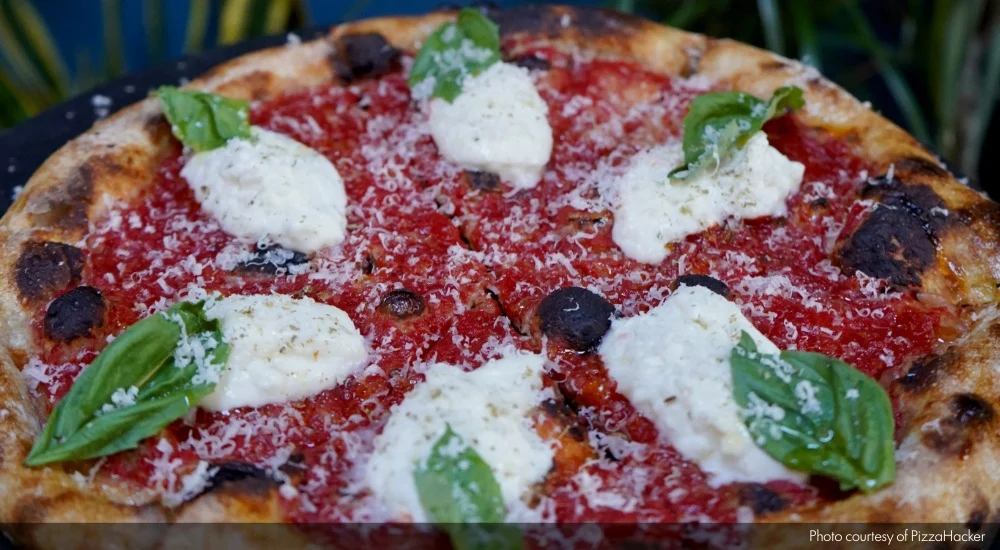
Meyer’s initial guidance underscores a crucial distinction for Neapolitan pizza: the typical recommendation to use "high-gluten flour" is often inappropriate for this traditional style. Authentic Neapolitan pizza, as defined by the Associazione Verace Pizza Napoletana (AVPN), traditionally utilizes finely milled "00" flour. This flour, characterized by its lower protein content (typically 10-12% compared to the 12-14% of bread flour or high-gluten flour), contributes to the classic Neapolitan crust: light, airy, with a delicate crispness and the distinctive leopard-spotted cornicione (edge) when baked in a blistering hot oven. Introducing excessive amounts of higher-protein flours, such as Manitoba — a strong wheat flour known for its robust gluten-forming capabilities — can indeed strengthen the dough. However, this risks altering the fundamental characteristics of Neapolitan pizza, pushing it towards a "Neo-Neapolitan" classification, which, while delicious, deviates from tradition. A minimal, judicious addition of Manitoba flour might offer a slight structural boost without compromising the integrity of the 00 flour’s characteristics, but precision and restraint are paramount.
Optimizing the Mixing Process for Enhanced Gluten Development
The mechanical action of mixing is indispensable for gluten development. While planetary mixers, such as those commonly found in home kitchens or smaller pizzerias, can effectively develop dough, Meyer notes the increasing prevalence and benefits of countertop spiral mixers. Spiral mixers are generally gentler, promoting more efficient gluten formation by continuously folding and stretching the dough, which minimizes friction and heat generation compared to the more aggressive stirring action of planetary mixers. This gentler approach helps preserve the dough’s delicate structure and prevents premature oxidation.
Beyond the type of mixer, two critical factors during the mixing stage are the speed of water addition and the total mixing time. Rapid incorporation of water can prevent the flour from fully hydrating, leading to a tacky and loose dough where gluten struggles to form a cohesive network. A slower, more gradual addition of water allows the flour particles to absorb moisture thoroughly, initiating the enzymatic processes essential for proper gluten development. Over-mixing, conversely, can also be detrimental, as it can cause the gluten network to break down, resulting in a dough that loses its elasticity and becomes slack. The objective is to achieve a dough that is smooth, elastic, and passes the "windowpane test" – where a small piece of dough can be stretched thin enough to see light through it without tearing.
The Strategic Advantages of Autolyse and Preferments
To further bolster hydration and gluten bonding, Meyer strongly advocates for the autolyse technique. This method involves mixing only the flour and water until just combined, followed by a resting period of 20 to 30 minutes before the addition of other ingredients like salt and yeast. During this quiescent phase, enzymes naturally present in the flour begin to break down complex starches into simpler sugars, and, crucially, the flour proteins fully hydrate. This leads to a dough that is not only more extensible and manageable but also develops a stronger, more organized gluten network with less mechanical effort during subsequent mixing.
Regarding preferments, the reader’s use of a poolish, a liquid starter typically with a 100% hydration ratio, is a valid approach. However, Meyer suggests considering a switch to a biga. A biga is a stiffer, drier preferment, usually prepared with a hydration between 45% and 60%. The lower hydration in a biga promotes the production of a higher proportion of acetic acid during fermentation, compared to the lactic acid predominant in wetter preferments like poolish. Scientific studies have demonstrated that acetic acid significantly strengthens the gluten network, leading to a dough with greater structural integrity and elasticity. This subtle shift in preferment type can provide a notable advantage in achieving the desired gluten strength for demanding pizza styles.
Temperature Control: The Unsung Catalyst of Fermentation
Precise temperature control throughout the dough-making process is a critical, yet often underestimated, factor. If the water used in the dough, or the preferment itself, is too warm, or if the ambient temperature of the kitchen is elevated, yeast activity can accelerate dramatically. This rapid proofing consumes the yeast’s food source (simple sugars) too quickly, potentially exhausting the dough’s rising power before it can undergo a controlled cold fermentation. Consequently, the dough may fail to achieve the necessary gas production for a strong rise and may develop a less complex flavor profile. Meyer advises meticulous monitoring of the dough’s final dough temperature (FDT) as it exits the mixer, aiming for a range that aligns with the intended fermentation schedule, often between 70-75°F (21-24°C) for doughs destined for longer cold ferments. This controlled temperature ensures a gradual, sustained yeast activity, allowing for optimal gluten development and flavor maturation.
The Strategic Role of Bulk Fermentation
Following the initial mixing, a bulk fermentation period is often overlooked but profoundly beneficial. Allowing the dough to rest at room temperature (ideally between 65-70°F or 18-21°C) for one to two hours before dividing and shaping individual dough balls provides a crucial window for preliminary gluten development and flavor formation. During this phase, the dough relaxes, becoming more pliable and easier to handle, while the yeast begins its metabolic work, producing carbon dioxide and organic acids that contribute to both structure and taste. This period also offers an opportune moment to perform additional slap and folds if the dough still exhibits a loose or underdeveloped texture.
The Art and Science of Shaping and Stretching
The final critical opportunity to build and reinforce gluten strength before baking occurs during the shaping process. Meyer emphasizes the importance of creating "taught" dough balls, characterized by a smooth, taut surface under tension. When gently pressed, a properly shaped dough ball should exhibit a resilient spring-back, without leaving a defined indent. Conversely, if the dough ball flattens on its tray, it signals insufficient gluten development. Some experienced pizzaiolos employ a technique of "nesting" dough balls close together on their trays, which encourages them to rise upwards rather than spread outwards, thereby maintaining their spherical integrity.
For dough that still feels weak at the stretching stage, Meyer offers a practical and effective workaround. Instead of striving for the full target diameter immediately, stretch the dough an inch or two smaller than usual, deliberately concentrating the stretches closer to the edges. This technique helps preserve the structural integrity of the center. Once the pizza is topped with ingredients, the added weight and surface tension often allow for a final, gentle stretch to achieve the desired diameter without risking tears. This strategic approach ensures the middle of the pizza is robust enough to support the toppings and prevents premature tearing on the oven deck, a common frustration for pizzaiolos.

Troubleshooting Sticky Dough and Insufficient Rise
A second reader’s predicament with sticky dough and poor rise, particularly when using same-day dough after altering their recipe (omitting oil, increasing salt) with 00 flour, active dry yeast, and 61% hydration (typically a 24-hour fermentation), highlights the intricate balance inherent in dough crafting. This scenario underscores how even minor recipe modifications can cascade into significant challenges.
Deconstructing Stickiness: Beyond Hydration Levels
While high hydration is frequently associated with sticky dough, a 61% hydration for 00 flour is not inherently excessive, suggesting other contributing factors. Meyer’s initial diagnostic questions—"How long are you mixing?" and "What is the dough temperature coming out of the mixer?"—point to potential culprits such as under-mixing (where gluten has not fully developed to absorb the water) or over-mixing (where the gluten structure has begun to break down). Additionally, an elevated dough temperature can accelerate enzymatic activity, leading to a gummy, tacky texture. Environmental factors, particularly high humidity, can also exacerbate stickiness, sometimes necessitating slight adjustments in hydration or increased flour dusting during handling.
Strategic Water Addition and Post-Mix Bench Rests
For doughs prone to stickiness, Meyer recommends a two-step water addition technique. Initially, approximately 80% of the total water is combined with the flour and other ingredients (excluding salt), mixed until partially incorporated. The remaining 20% of the water is then introduced towards the end of the mixing cycle, often along with or just before the salt. This method facilitates better initial hydration and gluten development before the full water content is introduced, frequently resulting in a less tacky and more manageable dough.
Another invaluable technique is the "bench rest" or "floor time" immediately after mixing. A 20-minute rest period allows the dough to cool down if it has warmed during mixing, and crucially, provides an opportunity for the gluten network to relax and fully absorb any remaining unabsorbed water. This relaxation significantly improves the dough’s handling characteristics, reducing stickiness and making it easier to divide and shape.
Autolyse Revisited: A Proactive Solution for Better Absorption
The autolyse technique, as previously discussed for gluten development, is equally beneficial in preventing stickiness. By allowing the flour and a majority of the water to rest for 20-30 minutes before adding other ingredients, the flour proteins achieve more thorough and uniform hydration. This proactive approach reduces the likelihood of a sticky texture developing post-mixing, as the water is more effectively bound within the dough matrix.
The Critical Influence of Dough Temperature and Humidity
Dough temperature exerts a direct and profound influence on both yeast activity and gluten development. If the dough emerges from the mixer at temperatures exceeding 75°F (24°C), the yeast will activate too rapidly, potentially leading to a "runaway" fermentation. This accelerated process can result in a dough that is excessively sticky, difficult to handle, and lacks the structural integrity necessary for a sustained rise. A primary method to mitigate this is to control the temperature of the water used in the mix, often by using colder water, to ensure the final dough temperature remains within the desired range. Environmental humidity also plays a subtle but discernible role; high humidity can make dough feel stickier, occasionally requiring minor adjustments in hydration or the use of more dusting flour during handling.
Unlocking Optimal Rise: Yeast, Fermentation Time, and Temperature
The reader’s issue with insufficient rise in same-day dough, particularly after shortening a fermentation schedule designed for 24 hours, is a classic illustration of improper yeast management. Yeast requires adequate time to metabolize the sugars present in the flour, a process that yields carbon dioxide—the gas responsible for the airy structure and rise of the dough. If the fermentation time is drastically truncated, the yeast simply hasn’t had sufficient opportunity to generate enough gas, irrespective of its initial quantity.
Yeast Selection for Tailored Fermentation Schedules
Meyer advises a critical evaluation of yeast type based on the intended fermentation schedule. While active dry yeast, requiring rehydration, possesses a slower activation profile, making it ideal for longer, cold fermentations where a sustained, gradual rise and complex flavor development are desired, it is less suitable for rapid processes. For shorter, same-day doughs, instant yeast is the preferred choice. Instant yeast, characterized by its finely granulated form, does not require rehydration and activates much more quickly, providing the rapid gas production essential for a swift rise. Conversely, using an excessive amount of yeast (over-pitching) for a given fermentation time can be counterproductive, as the yeast will quickly deplete its food source, leading to a dough that initially rises vigorously but then collapses or "runs out of steam."
The storage temperature of the dough is equally crucial. Storing dough at excessively cold temperatures in a refrigerator will significantly impede yeast activity, extending the required fermentation time. Conversely, storing it too warm will accelerate fermentation beyond desired parameters.
Broader Implications: Precision, Adaptability, and Continuous Learning in Pizza Craft
These reader inquiries and Meyer’s comprehensive responses collectively underscore a fundamental truth in pizza making: it is a dynamic, interconnected process where every variable interacts with profound consequences. Modifying a single element—be it hydration, yeast type, mixing duration, or the omission of an ingredient like oil—can trigger a cascade of effects on the final product. The absence of oil, for example, can reduce the dough’s extensibility and increase its tackiness, as oil acts as a lubricant within the gluten network, facilitating its movement. Similarly, increasing salt content, while enhancing flavor and tightening gluten, also influences yeast activity by drawing out moisture.
Mastering dough requires a harmonious blend of scientific understanding, acute observation, and systematic experimentation. As Meyer sagely advises, "always remember to change one thing at a time — and take notes!" This rigorous, scientific approach enables pizzaiolos to isolate variables, accurately understand their individual and cumulative impacts, and iteratively refine their processes. The ultimate objective transcends merely following a recipe; it is to develop an intuitive understanding of the "language" of the dough—recognizing its texture, elasticity, and behavior at each stage—and adapting techniques accordingly. This level of precision not only resolves common dough issues but fundamentally elevates the craft, leading to consistently superior pizza, whether it’s a rigorously traditional Neapolitan pie or a innovative contemporary creation. The ongoing dialogue between seasoned professionals and aspiring pizzaiolos, as fostered by industry platforms, remains indispensable for cultivating continuous improvement and innovation within the vibrant world of pizza.