admin
admin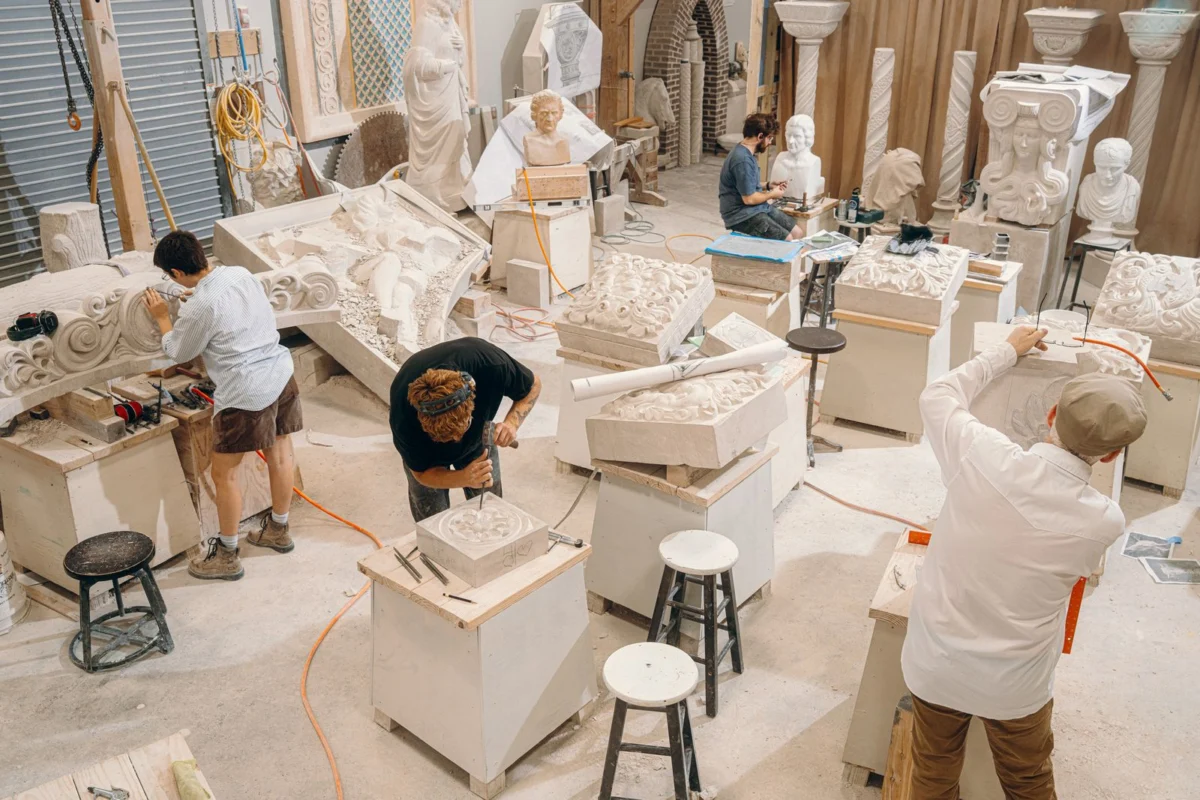
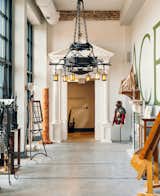
Nestled within the historic 1897 Charleston Trolley Barn, a structure that itself embodies the enduring spirit of classic architecture, the American College of Building Arts (ACBA) stands as a vibrant counter-narrative to the prevailing anxieties of modern higher education. Here, amid the industrious hum of workshops and the focused silence of design studios, a unique philosophy permeates the campus, particularly palpable during the buzz of finals week. High in the rafters, in an intimate, almost treehouse-like space filled with warmth, a single image captures the institution’s essence: a Frederic Remington-esque painting of an Old West gunslinger, overlaid with the powerful mantra, "SLOW IS SMOOTH / SMOOTH IS FAST." This isn’t merely a textural description; it’s a rhythm, a pedagogical approach emphasizing the deliberate application of knowledge to skill with meticulous attention and profound care, ultimately leading to mastery.
A Deep Dive into Classical Mastery
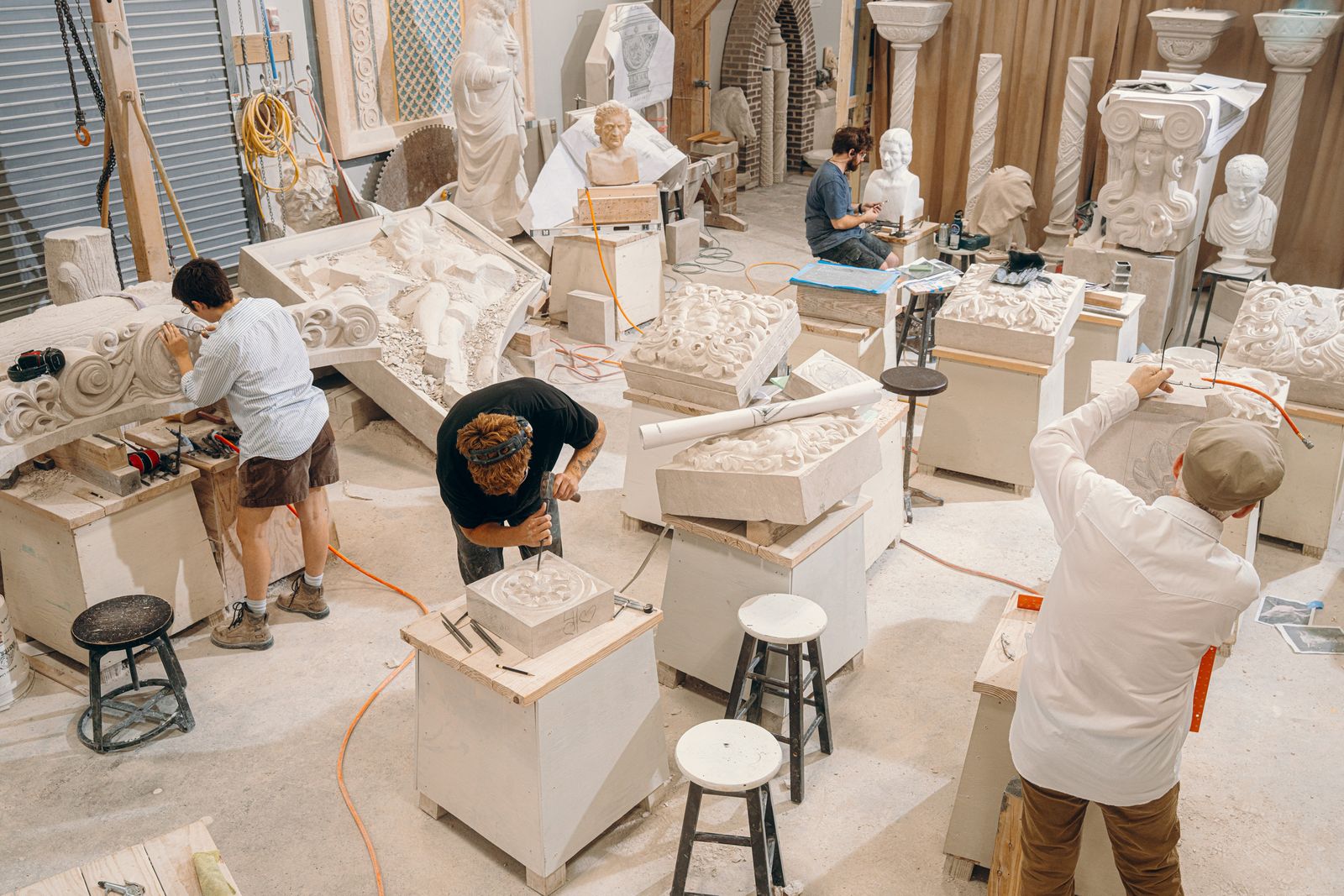
The adage "Slow is Smooth / Smooth is Fast" might well serve as the unofficial motto for ACBA, an accredited institution dedicated to training the next generation of artisans in the classical building arts. Unlike many contemporary educational models that prioritize speed and immediate results, ACBA champions a rigorous, time-intensive curriculum. Students commit thousands of hours to dedicated learning and thoughtful practice, culminating in cohorts of highly skilled experts across six foundational traditional crafts: blacksmithing, timber framing, architectural stone carving, plastering, architectural carpentry, and classical architecture and design. This intensive, hands-on methodology ensures graduates possess not just proficiency but true mastery in their chosen fields.
ACBA offers both two- and four-year degree programs, distinguishing itself by integrating extensive practical experience with a robust, tailored liberal arts education. Students spend countless hours working under the direct tutelage of seasoned experts, both within the college’s state-of-the-art workshops and through immersive externships with industry professionals. While many trade programs offer apprenticeship models, ACBA’s curriculum goes further, enriching practical skill with a comprehensive academic foundation. Students delve into the architectural, scientific, historic, and business components vital for success in their future careers. From the very first day of freshman year, when their major is declared, students are immersed in the demanding world of traditional building trades, a commitment underscored by the student body’s unofficial Latin motto: Aut disce Aut discede — "Either learn or leave." This ethos fosters a culture of unwavering dedication and self-reliance, producing graduates who are not only technically adept but also intellectually well-rounded and professionally astute.
The Genesis of a Unique Institution: Responding to a Crisis
The roots of ACBA are firmly planted in a critical moment of Charleston’s history: the devastation wrought by Hurricane Hugo in 1989. The Category 4 hurricane inflicted catastrophic damage on the historic Charleston peninsula, obliterating countless architectural treasures and leaving a desperate need for extensive restoration. However, as English, the chief advancement officer at ACBA, recounts, the city faced a profound shortage of skilled tradespeople equipped to handle such delicate and specialized historic preservation work. "We didn’t have tradespeople to do it, so we imported them from around the country," he explains. Provost Christina Butler, a working preservationist and professor at ACBA, notes that much of the subsequent restoration work, undertaken by less-specialized hands, proved subpar. This stark reality highlighted an urgent national challenge: a rapidly aging workforce in historic trades with an insufficient pipeline of new talent.
In response to this pressing need, ACBA was founded in 1999, initially operating as the School of Building Arts. Its early model focused on intensive workshops designed to impart specialized skills crucial for the meticulous restoration of Charleston’s architectural heritage. Recognizing the broader potential and academic rigor of its approach, the institution secured its license to operate as an accredited college in 2004, rebranding as the American College of Building Arts. This pivotal step allowed ACBA to offer formal degrees, attracting a wider demographic and further solidifying its academic standing.
Over the years, ACBA has experienced significant growth, expanding from an initial enrollment of 15 students to more than 150 today. This expansion, however, has been carefully managed to preserve the intimate, hands-on learning environment critical to its success. Classes are intentionally kept small, mirroring the close-knit dynamics of a professional job site. As Butler observes, "You can’t ignore someone different from you. You can find people like you, but in a small college or job site you can’t ignore people who aren’t." This intentional community fosters collaboration, mutual respect, and a shared commitment to excellence, preparing students not just for technical tasks but for the complexities of professional teamwork.

A New Generation of Artisans: Purpose Beyond Profit
The student body at ACBA has evolved since its early days, which primarily attracted "nontraditional" students with prior work experience. Today, the majority are recent high school graduates, many of whom describe feeling "different" or "odd ducks" in conventional academic settings. Architectural stone senior Davis Cowling, for instance, recalls how his parents’ decision to deny him a smartphone led him to spend his formative years working on cars, cultivating a hands-on inclination. Grace Majeska, a plaster junior, candidly admits, "School was never really for me." She sought work that engaged her hands, and ACBA provided that outlet while its academic component appeased her father. Cassandra Stilley, another architectural stone senior, initially pursued fields like law and economics in high school, driven by a desire for a "high-paying job," confessing, "There was nothing I cared about too much that I would be like, Oh, this is what I’d love to do."
These narratives underscore a common thread: ACBA attracts individuals yearning for tangible, purposeful work and a direct connection to the fruits of their labor. The college offers them a path to not just a career but a vocation rooted in craftsmanship and enduring value. This commitment is vividly displayed in their capstone projects, which are the culmination of months, sometimes years, of intensive planning and execution. These projects often serve private clients or become permanent installations within the school’s own collection.
For example, Albert Garone, a senior in architectural stone, meticulously shapes a piece of marble into a bust of Thomas Jefferson. This ambitious undertaking is a collaborative effort with a team from Monticello, Jefferson’s historic home. The students undertook extensive research, studying the work of 18th-century Italian sculptor Giuseppe Ceracchi, who carved a bust of Alexander Hamilton for Monticello. They analyzed precise measurements of existing busts and became fluent in historical techniques and styles before a single chisel touched the marble. This rigorous research exemplifies how ACBA’s liberal arts curriculum seamlessly integrates with practical trade work, providing students with a deep historical and theoretical understanding that informs their hands-on skills.
Bridging Academia and Craft: A Tailored Liberal Arts Approach
Provost Christina Butler emphasizes that ACBA’s general education (gen ed) curriculum is uniquely tailored to the building arts. Instead of generic world civics, students engage in architectural history; rather than conventional chemistry, they study building sciences. This specialized academic foundation ensures that every course directly enhances their understanding and practice of their chosen craft. The workload is substantial: while most traditional colleges require around 120 credit hours for a degree, ACBA demands 144. English notes that students dedicate at least 12 hours weekly to workshops, supplemented by significant time in classrooms studying math, foreign languages, material science, business, and creative skills. This holistic approach cultivates not just skilled hands but also discerning minds capable of innovative problem-solving and critical thinking within their specialized fields.
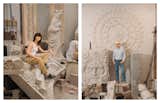
The impact of this integrated curriculum extends beyond individual projects. A significant partnership with architect Christian Sottile for the new Courier Square development in Charleston serves as a testament to ACBA’s practical efficacy. This massive 300-unit, mixed-use residential building sought to incorporate classical decorative elements. Sottile, who initially envisioned the project in 2022, found a perfect collaborator in ACBA. "We realized you can’t make a building a work of art without artists, and that led us through the doors of the ACBA," he explains. What he discovered was "nothing short of amazing." The Courier Square design team established a close working relationship with ACBA professors and students from various disciplines, who designed and crafted stonework details, cornices, portals, and other intricate classical elements. This real-world project provides students with invaluable externship experience, with many seniors continuing to work on the development during their summers after completing coursework.
Technology as an Ally, Not a Replacement
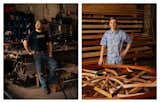
In an era where many prestigious universities heavily invest in cutting-edge technological prowess, ACBA employs technology differently. Rather than viewing it as a replacement for human skill, ACBA integrates technology as a tool to enhance traditional craftsmanship and foster innovation. Timber framing senior Trey DeWolf’s capstone project, two dining tables with bases of swirling, hand-cut mahogany branches, beautifully illustrates this philosophy. DeWolf could have used a computer numeric control (CNC) machine, which automates carving based on digital inputs, to create the intricate 3D forms. However, he chose to perform the work by hand, embracing the challenge of incorporating complex curves where woodworking tools are typically based on straight lines.

DeWolf spent months using CAD software to meticulously design each curved piece and determine how they would seamlessly join. He then innovated a new type of 3D-printed saw jig, allowing him to cut each wooden component into an exact joint, fitting them together like an intricate puzzle. His project was not merely about constructing tables but about pushing the boundaries of traditional tools and techniques through thoughtful integration of modern technology. Faculty and staff are even encouraging him to patent his ingenious jig, highlighting the innovative spirit fostered at ACBA.
This approach extends to the most fundamental tools. In their first year, blacksmithing students forge their own hammers, which they then use throughout their education and beyond. Riley White, a blacksmithing senior, reflects on this practice: "I will use this hammer for twenty or thirty years—or maybe my whole life. When it gets passed on to the next person, there’s history to that." This imbues the tool with a greater meaning, transcending its functional purpose to become a repository of history, skill, and personal connection. At ACBA, tools—whether a digital design program or a hand-forged hammer—are understood as extensions of the artisan’s will, not as substitutes for their inherent creativity and skill.
ACBA’s Resilient Model Amidst Higher Education Challenges
The broader landscape of higher education today is fraught with challenges. Faculty and administrators grapple with declining enrollments, significant cuts to federal funding, increasing concerns over artificial intelligence (AI) in classrooms, and mounting political pressures such as anti-diversity mandates. These issues have brought many academic institutions "to their knees," as the author notes. In stark contrast to the widespread anxieties about an uncertain future, the dozen ACBA students interviewed express a remarkably optimistic outlook on their post-graduation lives. The statistics back this confidence: an impressive 86 percent of ACBA graduates are employed in their specialized trades within six months of graduation.
This success is rooted in ACBA’s distinctive learning culture. While many universities articulate tenets like curiosity, inclusion, creativity, self-determination, and tenacity through administrative statements, at ACBA, these values are forged directly through the crucible of "difficult, backbreaking, and very, very slow work."
The discussion around AI in academia is particularly relevant. Many professors view AI tools as a form of cheating, enabling students to bypass critical thinking and original work. This raises fundamental questions about the purpose and future of higher education. Hollis Robbins, an English professor at the University of Utah, recently suggested to the New Yorker that AI might compel academics to lean into the "edges" of their fields, arguing that "specialists are going to be key to selling education as something the AI can’t do." ACBA’s entire course catalog, by virtue of its focus on rare and time-consuming skills, can be considered firmly at these "edges" of architecture and design, a direct refutation of AI’s potential to automate or trivialize complex human endeavors.
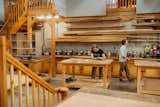
Lindsey Cockburn, a plaster senior, largely shrugs off concerns about AI replacing her craft. She notes its utility in business classes for tasks like scheduling, viewing it as "additive, like a secondary source," rather than a threat. Cockburn is far more focused on her capstone project: a delicate, neoclassical plaster ceiling relief, known as "Adam-style," for the school’s boardroom. The project demanded months of problem-solving, particularly in adapting the intricate design to the room’s low ceiling height. She collaborated closely with her design professor to shrink the design while maintaining perfect classical proportions, demonstrating the seamless integration of academic knowledge and skilled craftsmanship. The frequent overlap between general education professors and studio instructors ensures that the academic and practical aspects of their education are equally valued and deeply intertwined.
Building a Durable Future: Confidence and Purpose
The collaborative learning environment at ACBA also empowers students to navigate real-world challenges. Grace Majeska and Lindsey Cockburn, both women entering historically male-dominated professions, spoke with authority about their readiness to face potential harassment or discrimination on job sites. Majeska credits the supportive community and female faculty for fostering her resilience: "I think knowing how to stand your ground—you say, No, I deserve to be here, I do good work—and having the confidence in your work is really huge." This confidence, bolstered by working under expert faculty and applying their knowledge in externships, is a hallmark of ACBA graduates, further enhanced by the near certainty of employment post-graduation.
More profoundly, this confidence stems from an unwavering belief that they are physically carving, chiseling, molding, and hammering out a better world—one to which they are physically and durably connected. Casey Hebel, a former U.S. Marine and a 2025 ACBA graduate who now serves as an adjunct professor, was working on a massive portal arch for Courier Square when interviewed. Hebel, along with many students, sees his work as a direct refutation of contemporary throw-away culture. "Now that everyone can buy the same exact thing from Amazon, people are starting to see the value in handcraft," he observes. "Now that everything can be standardized, now we’re seeing the value of what we actually want." He describes clients exhausted by mass-produced options, greatly relieved to find an artisan who can create precisely what they envision, no matter how unique. The handmade product, imbued with "soul" and imagination, will endure for generations, far outlasting its mass-produced counterparts.
Cassandra Stilley echoes this sentiment, reflecting on the pervasive decline of modern construction: "All these things are breaking down, and we’re seeing that happen in real time. You go and look at all these buildings from when they first started building them cheaper, and they’re all falling apart. And it’s the same with everything, right?" Her priorities have shifted from merely seeking a high-paying job to a profound desire to create lasting value. "I want to make things that’ll last. I walk around downtown, I look at all the cool buildings there, and I think, That’s the thing I want to contribute to." This drive to contribute to a built environment that withstands the test of time is a powerful motivator for ACBA students, many of whom, as Butler notes, go on to work in new construction, applying classical principles to contemporary projects.
Looking Ahead: A Model for Resilient Education

Despite facing challenges, such as the recent federal funding cuts for a planned stone shop expansion—a surprising development given past political rhetoric favoring classical architecture—ACBA is pressing forward with a robust fundraising campaign. This tenacity, shared by administrators, faculty, and students alike, underscores a collective belief in the enduring value of their mission. They are not afraid of hard work, understanding that it will ultimately lead to an improved campus and a brighter future for generations of artisans.
The American College of Building Arts offers a compelling model for higher education in the 21st century. In a world increasingly dominated by speed, automation, and disposability, ACBA champions patience, precision, and the profound satisfaction of creating something beautiful and lasting with one’s own hands. It proves that specialized, hands-on education, deeply informed by a tailored liberal arts curriculum, can not only thrive but also produce highly sought-after professionals who are resilient, innovative, and deeply committed to their craft. For universities struggling to define their purpose and relevance in a rapidly changing landscape, ACBA offers a potent lesson: when practice is patience, tools serve creativity, and the rhythm of "slow is smooth" leads to true mastery, the future of education—and the built world—looks undeniably bright and enduring.