admin
admin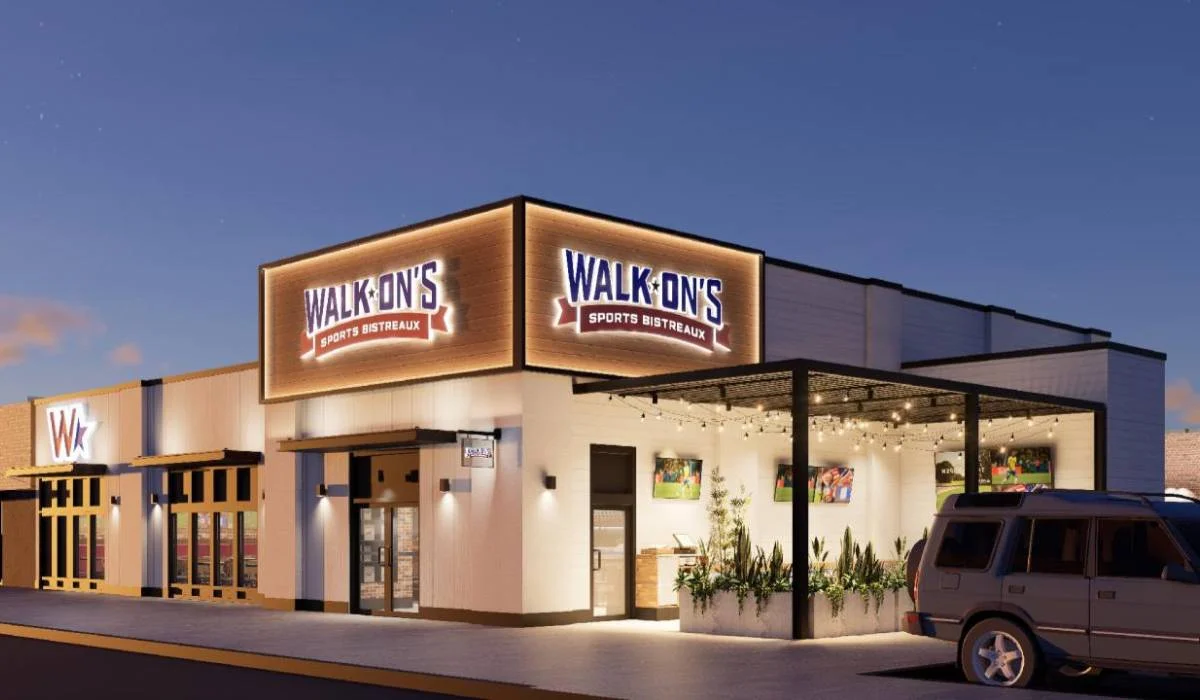
Walk-On’s Sports Bistreaux, the Louisiana-founded casual dining chain known for its "scratch-made" menu and immersive game-day atmosphere, has officially announced a strategic shift in its development model, centering on a smaller, more cost-effective restaurant prototype. This new evolution of the brand is slated to debut in early 2027 with a company-owned location in Baton Rouge, Louisiana. The project marks a symbolic "full-circle" moment for the organization, returning to the city where it was founded 23 years ago to pilot a format that the company believes represents the future of the American sports bar.
The upcoming Baton Rouge location will serve as the ninth Walk-On’s in its home city and the 20th in the state of Louisiana. Beyond expanding its local footprint, the primary objective of this new site is to demonstrate the viability of a leaner operational model. The prototype will occupy between 3,500 and 4,500 square feet, a significant reduction from the brand’s traditional footprint, which typically ranged from 7,000 to over 8,000 square feet. In some historical instances, older legacy locations reached as much as 12,000 square feet. By streamlining the physical space, Walk-On’s is targeting a total development investment of less than $2 million, a figure aimed at making the brand more accessible to a wider range of franchisees and real estate opportunities.
A Strategic Pivot in the Casual Dining Landscape
The decision to move toward a smaller footprint is not merely a response to rising costs but a proactive adaptation to changing consumer behaviors. Since the onset of the COVID-19 pandemic, the casual dining sector has witnessed a permanent shift in how guests interact with restaurant brands. While the "dine-in" experience remains the core of the Walk-On’s identity, the surge in demand for off-premises dining—including takeout, third-party delivery, and catering—has necessitated a rethink of traditional floor plans.
Brandon Landry, the founder and CEO of Walk-On’s, noted that the industry is currently contending with a confluence of economic pressures, including high construction costs, persistent labor shortages, and inflationary impacts on raw materials. "This isn’t a smaller Walk-On’s. It’s a smarter one," Landry stated. The CEO, who returned to the helm of the company in 2025 after a two-year hiatus from the role, emphasized that the brand spent the last two decades learning what truly drives the sports bar experience. The new model is the culmination of those insights, focusing on what Landry describes as "the essentials" of the guest experience while stripping away unnecessary overhead.
The smaller format allows the brand to pivot away from the requirement of large, freestanding parcels of land, which are often expensive and difficult to secure in high-traffic urban or suburban corridors. Instead, the 3,500-to-4,500-square-foot model enables Walk-On’s to occupy endcap and inline spaces in shopping centers and mixed-use developments that were previously unable to accommodate the brand’s massive scale.
Chronology of Innovation and Brand Growth
The journey to this new prototype began in 2003, when Landry and co-founder Jack Warner opened the first Walk-On’s near the campus of Louisiana State University (LSU). The brand quickly became a staple of the Baton Rouge community, eventually attracting high-profile investment from NFL legend Drew Brees in 2015.
Over the following decade, the brand experienced rapid expansion:
- 2014: Walk-On’s launched its franchising program, taking the Louisiana-inspired menu to neighboring states.
- 2020–2022: During the pandemic, the company observed that even when dining room capacities were restricted, sales remained resilient. This period provided the data necessary to conclude that the brand could maintain high volumes with fewer seats and a smaller physical footprint.
- 2023–2024: The company began testing "mini" versions of the concept in high-density areas. A notable success occurred at The Battery in Atlanta, where a 3,700-square-foot location generated approximately $4 million in sales in a single year, despite seating only 130 to 140 guests.
- 2025: Brandon Landry returned as CEO to spearhead a "simplification" initiative, focusing on kitchen efficiency and menu optimization.
- 2027 (Projected): The official "New Prototype" opens in Baton Rouge, setting the standard for all future franchise developments.
Data-Driven Efficiency and Kitchen Modernization
Central to the success of the new prototype is an overhaul of back-of-house operations. Walk-On’s has utilized extensive sales data to analyze which menu items are the most popular and which are the most labor-intensive to produce. This analysis has led to a refined menu that retains the brand’s signature Louisiana flair—such as gumbo, crawfish etouffee, and Voodoo shrimp—while improving the speed of service.
A key technological component of this efficiency drive is the system-wide implementation of clamshell grills. These specialized grills cook food on both sides simultaneously, significantly reducing ticket times and ensuring consistent quality across the board. The technology was initially piloted in franchise locations generating between $6 million and $7 million in annual sales. Operators who participated in the pilot reported that the grills were instrumental during peak Friday and Saturday night rushes, allowing for faster table turns and reduced stress on kitchen staff.
Furthermore, the new prototype prioritizes the "sightlines" of the sports fan. Despite the smaller square footage, the design ensures that every seat in the house has an unobstructed view of multiple high-definition screens. Improved acoustics have also been integrated into the design to manage noise levels, creating an environment that is energetic during big games but comfortable for family dining.
Implications for Franchisees and Market Expansion
The reduction of the development investment to below $2 million is expected to significantly lower the barrier to entry for prospective franchisees. In the current economic climate, securing financing for $4 million or $5 million restaurant builds has become increasingly difficult. By cutting the initial capital requirement, Walk-On’s positions itself as a more attractive option for multi-unit operators looking to diversify their portfolios.
Moreover, the smaller footprint opens the door to "Tier 2" and "Tier 3" markets. Previously, many smaller communities lacked the population density to support a 10,000-square-foot restaurant that required $5 million in annual sales to break even. The new, smarter model makes Walk-On’s viable in smaller towns, college markets, and high-density urban centers where real estate is at a premium.
Industry analysts suggest that this move mirrors a broader trend in the casual dining sector. Brands like Chili’s, Buffalo Wild Wings, and Applebee’s have all explored smaller-format stores to capture the growing "to-go" market and reduce labor costs. However, Walk-On’s is unique in its attempt to maintain a full-service, premium sports bar atmosphere within that smaller shell, rather than pivoting to a limited-service or "express" model.
Future Outlook and Strategic Goals
As of late 2024, Walk-On’s operates nearly 80 restaurants across the United States. The company has a robust pipeline of new openings scheduled through the end of 2026, including a highly anticipated entry into Lexington, Kentucky. The Lexington market is seen as a prime testing ground for the brand, given the city’s intense devotion to college sports and its sophisticated culinary scene.
The return of Brandon Landry as CEO signals a period of stabilization and focused growth. Under his leadership, the brand is emphasizing "hospitality first" while using technology and architecture to solve the logistical challenges of the modern era. The 2027 Baton Rouge project is not just an expansion of the brand’s footprint, but a live laboratory for the next generation of the franchise.
The success of this prototype will likely dictate the brand’s trajectory for the next decade. If the Baton Rouge location can replicate the high-volume success of the Atlanta model while maintaining the $2 million investment target, Walk-On’s could see a surge in franchise applications. By focusing on "smarter" rather than "bigger," the company is betting that the future of the American sports bar lies in efficiency, technology, and a return to the core values of the communities it serves.
As the industry continues to navigate the complexities of a post-inflationary world, the Walk-On’s model provides a potential blueprint for how legacy casual dining brands can reinvent themselves without losing the essence of what made them successful in the first place. The transition to the smaller prototype is a calculated move to ensure that the brand remains as agile as the "walk-on" athletes it was named after—prepared to compete, adapt, and win in an increasingly crowded marketplace.