admin
admin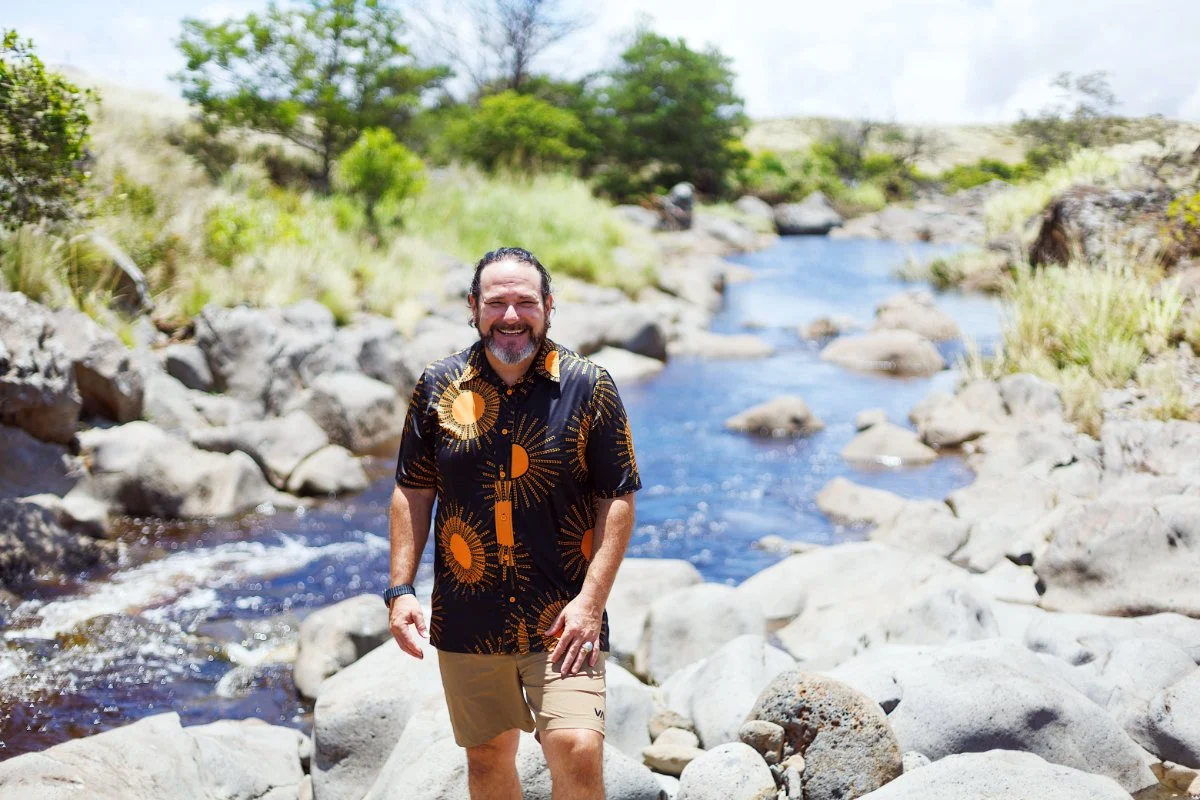
Kamanamaikalani Beamer, a prominent ʻŌiwi scholar, aloha ʻāina practitioner, and the newly appointed Dean of the University of Hawaiʻi at Mānoa’s Hawaiʻinuiākea School of Hawaiian Knowledge, stands as a pivotal figure in the movement to revitalize Native Hawaiian connections to land, community, and ancestral heritage. His life’s work, deeply rooted in the philosophy that love and commitment to the land (aloha ʻāina) possess the power to restore a fragmented past and secure a vibrant future, addresses critical issues ranging from water rights and food sovereignty to the preservation of Indigenous languages and governance structures. Beamer’s journey from a culturally rebellious youth to a leading voice in environmental and Indigenous policy reflects a profound political and personal awakening, underscoring the interconnectedness of ecological health, cultural identity, and societal well-being in Hawaiʻi.
An Ancestral Foundation: Early Life and Cultural Awakening
Born into the illustrious Beamer family, a lineage celebrated for its musicians, storytellers, and cultural practitioners, Kamanamaikalani Beamer’s early life was imbued with the rich tapestry of Hawaiian heritage. His grandmother, Winona Kapua Ilohia Manonokalani Desha Beamer, a revered kumu hula (master hula teacher) and the eldest grandchild of prolific composer Helen Desha Beamer, served as a foundational influence. Through moʻolelo (stories and teachings), his grandmother introduced him to loʻi kalo (irrigated taro terraces) and the foundational narrative of Hāloa, the first taro plant and ancestor of the Hawaiian people. While Beamer understood the symbolic importance of poi, the staple food central to Hawaiian life, the practical embodiment of these traditions, through his own hands, would come later. His father, Kapono, and uncle, Keola, continued the family’s musical legacy, shaping contemporary Hawaiian music with their mele (songs).
Despite this rich cultural backdrop, Beamer describes his youth as somewhat rebellious, a period during which he split time between his divorced parents. It was his grandmother who maintained a close bond, taking him across Hawaiʻi Island, introducing him to kūpuna (community elders), and bringing him to sacred sites like Kīlauea volcano, home of Tūtū Pele. These experiences, initially perceived as simple family outings, later revealed themselves as vital lessons in cultural preservation at a time when Hawaiian traditions faced immense external pressures. His grandmother’s unwavering dedication, strength, grace, and aloha in the face of political challenges became a profound model for his future activism.
The Call of ʻĀina: Political Awakening and the Waiāhole Struggle
A significant turning point in Beamer’s high school years was a talk by Uncle Calvin Hoe, a local mahiʻai (farmer), who spoke about the escalating struggle over water resources. At the time, communities in Waiāhole, on windward Oʻahu, were fiercely campaigning to restore water to streams and loʻi kalo. For over a century, the Waiāhole Ditch system had diverted an estimated 27 million gallons of water daily from the verdant Koʻolau Mountains to Oʻahu’s arid central plain, primarily for sugar cane irrigation. Uncle Calvin’s words resonated deeply: in ancient Hawaiian society, roles like aliʻi (leaders), koa (warriors), and mahiʻai were distinct, maintaining societal balance. Today, he asserted, a farmer must embody all three – fighting, leading, and influencing political discourse.
Beamer’s path initially led him to college in Kansas on a football scholarship, a stark cultural contrast to his island home. The absence of the ocean and mountains was a profound shock. A core group of friends, playing across the continent, shared his longing for Hawaiʻi and their commitment to the Waiāhole movement. They vowed to return home after football and kākoʻo (support) the movement. The tragic suicide of one of these friends profoundly impacted Beamer, opening his eyes to the then-unacknowledged crisis of mental health among young Native Hawaiians. This personal loss, coupled with the unfulfilled promise of their collective activism, continues to inform his work.
A knee injury ended his football career, providing the space for a deeper academic pursuit. He transferred to Occidental College, studying philosophy, where a new political awakening began. His attempt to fulfill a foreign language requirement with ʻōlelo Hawaiʻi (the Hawaiian language) was initially rejected, sparking a powerful realization about identity and justice. "I’m Indigenous," he argued, "English was forced upon us. If I have to study a language, it should be my mother tongue.” This incident, coupled with reading about George Helm’s pivotal fight against the U.S. military’s bombing of Kahoʻolawe, which galvanized the modern Hawaiian sovereignty movement, cemented his resolve to return home and engage with ʻāina (land).
Upon returning to Hawaiʻi and completing his undergraduate degree at the University of Hawaiʻi, Beamer found profound healing in restoring loʻi and immersing himself in mahiʻai culture. He joined a community of peers, including Uncle Calvin Hoe’s children, clearing overgrown ʻāina, hauling stones by hand, and learning to kūʻi-kalo (pound steamed taro into poi). This hands-on restoration, cultivating Hāloa, was liberating. His foray into music during his late 20s, including an album titled "Live from the Loʻi," captured his evolving connection to ʻāina and his activism. These experiences solidified his understanding: growing kalo was merely one facet of a holistic way of life where water, farming, governance, and culture were inextricably linked.
Waiwai: Water as the Foundation of Self-Determination
Beamer’s deep understanding of these interconnections is articulated in his book, Waiwai: Water and the Future of Hawaiʻi. The Hawaiian word wai means water, and its reduplication, waiwai, translates to "wealth." This linguistic connection highlights a core Hawaiian concept: water is not merely a resource but the ultimate source of prosperity and self-determination. Without water, food cannot grow, and communities cannot thrive.
Traditional Hawaiian society was meticulously organized through ahupuaʻa, land divisions that followed natural watersheds from the mountains (mauka) to the sea (makai). This system ensured that rainfall flowed through streams into loʻi kalo, loko iʻa (fishponds), reefs, and the ocean, creating an integrated, self-sustaining system. Water was the lifeblood, connecting every component, where the health of one segment directly influenced the health of the next. Given Hawaiʻi’s extreme isolation, its people developed one of the world’s most sophisticated agroecological food systems, integrating irrigation with aquaculture on an extraordinary scale. Historical estimates suggest that hundreds of loko iʻa produced over 2 million pounds of fish annually, and these systems sustained hundreds of thousands of people, demonstrating a profound understanding of adaptive management and resource replenishment.
This intricate relationship with ʻāina and wai began to erode with the assertion of Western political and economic systems. Large-scale sugar cultivation, particularly from the mid-19th century onwards, led to massive diversions of water from nearly every major watershed. Hundreds of millions of gallons daily were rerouted from streams that had sustained Native communities for generations, transforming water from a public trust into a commodity to be owned, controlled, and exploited. Beamer’s book, No Mākou Ka Mana: Liberating the Nation, further explores this tension, examining how Hawaiian aliʻi grappled with embracing modernization while protecting ancestral values, a delicate balance irrevocably disrupted by the illegal overthrow of the Hawaiian Kingdom in 1893.

The Waiāhole Ruling: Reaffirming Public Trust
The Waiāhole struggle, which had ignited Beamer’s activism in his youth, reached its zenith years after his return home. As Hawaiʻi’s sugar industry declined in the late 20th century, powerful landowners sought to maintain these extensive water diversions for new developments, including golf courses and resorts, rather than restore natural stream flows. Years of persistent organizing, community advocacy, and legal challenges by farmers and environmental groups culminated in the Hawaiʻi Supreme Court’s landmark 2000 decision. The Waiāhole ruling unequivocally reaffirmed that water is a public trust, not a private commodity, and that the state has an affirmative duty to protect it for the benefit of all. This decision marked a critical victory, setting a precedent for future water resource management in the islands. However, the legacy of immense water diversions persists, with remnants still visible across many of Hawaiʻi’s major watersheds.
Stewarding Water: Beamer’s Tenure on the Commission
Beamer’s commitment to these principles led him to serve on the Hawaiʻi Commission on Water Resource Management, a position he initially viewed as a risk. Established under the 1987 State Water Code, the commission’s mandate was to steward Hawaiʻi’s water resources, yet its history was marked by decisions that did not always prioritize the public trust. Beamer’s tenure, however, became a testament to his ability to bridge divides and foster consensus. He recognized that restoring streams was not merely about making a strong argument, but about understanding diverse worldviews and finding common ground. By connecting historical injustices, community needs, and the commission’s fiduciary duty to the public trust, he forged unlikely alliances and successfully advocated for stream restoration.
During his eight years on the commission, 45 streams across the islands had their flows restored. Witnessing parts of ʻĪao Stream on Maui flow again after nearly 150 years was, for Beamer, a deeply healing experience. It underscored the profound truth that streams are "the veins of life for our communities," recharging aquifers, reviving customary practices, and enabling simple joys like children hanging rope swings. More profoundly, Beamer recounts the immense honor of hearing from farmers and communities whose families had fought for justice for generations. Alleviating even a small part of this intergenerational burden became one of the most beautiful aspects of his work, reinforcing his belief that restoring water is synonymous with restoring connections to place, community, ancestors, and future generations. This philosophy, central to waiwai, highlights the fragmentation in modern water management—groundwater, surface water, stormwater, and wastewater are often siloed, despite originating from "only one wai." Beamer advocates for a holistic approach, mirroring the ancestral understanding that prosperity arises from keeping wealth, like water, in continuous circulation, replenishing communities rather than extracting from them.
The Red Hill Crisis: A Modern Test of Public Trust
The Red Hill fuel storage facility crisis emerged as the ultimate test of Hawaiʻi’s public trust doctrine. For years, warnings from the Water Commission, Native Hawaiian leaders, scientists, and community advocates about the Navy’s aging underground facility, situated 100 feet above Oʻahu’s primary aquifer and capable of storing 187 million gallons of fuel, went unheeded. In 2021, these dire predictions materialized when leaking fuel contaminated the Navy’s drinking water system, sickening thousands of families and impacting their schools and homes.
This environmental catastrophe galvanized an unprecedented coalition. Native Hawaiians, military spouses, scientists, and islanders from all backgrounds united under the collective responsibility of protecting water. This aloha ʻāina—a deep love and commitment to the land—proved powerful enough to challenge and ultimately force the permanent closure of Red Hill and the removal of nearly 90 percent of the fuel. However, accountability for the damage has been slow. Affected families continue to seek compensation, and regulators press the Navy to address widespread groundwater contamination and historical spills that predate the 2021 incident. Beamer has publicly characterized Red Hill as "the most egregious assault on a public trust resource in the history of Hawaiʻi," emphasizing that the stakes extend far beyond drinking water. The poisoning of this vital aquifer impacts everything downstream, illustrating that food sovereignty, cultural sovereignty, and water sovereignty are inseparable. Losing control of water means losing the ability to sustain oneself, leading to the erosion of language, ceremony, stories, and the intricate relationships that define a culture.
Rethinking Hawaiian Foodways and Global Indigenous Leadership
The urgency of these connections is particularly salient in contemporary Hawaiʻi, which imports roughly 85 percent of its food. The COVID-19 pandemic, coupled with increasing climate change impacts like more frequent wildfires, flooding, and intense hurricanes, has exposed the profound vulnerability of this dependency. Native Hawaiians, meanwhile, continue to experience disproportionately high rates of food insecurity and diet-related diseases, a consequence of traditional diets being supplanted by packaged, processed foods.
Beamer advocates for a paradigm shift, one that recovers the principles of resilience embedded in Hawaiʻi’s ancestral food systems. This vision entails promoting healthy watersheds, fostering thriving local agriculture, and establishing circular food and economic systems that keep food, wealth, and decision-making rooted in communities. It also challenges the modern concept of "waste," advocating for systems where byproducts are cycled back into local agriculture, echoing the ancestral circular economy. Rebuilding such systems demands political will—governance that prioritizes repair, reuse, and local resilience over extraction and disposal.
Beamer’s work has evolved to cultivate leaders capable of translating these ideas into effective government policies, legal frameworks, and public discourse. His teaching roles at the University of Hawaiʻi’s Hawaiʻinuiākea School of Hawaiian Knowledge and the William S. Richardson School of Law focus on integrating Indigenous knowledge into law and governance. As the new Dean of Hawaiʻinuiākea, the nation’s only Indigenous-serving college within a Carnegie R1 research university, Beamer envisions an institution with academic responsibility extending globally. The school aims to prepare Indigenous students worldwide to uphold their own knowledge systems as they assume leadership roles, fostering research that strengthens communities intellectually, culturally, and economically.
This vision also manifests in initiatives like the Piʻo Summit, an annual gathering that brings together Indigenous peoples from Hawaiʻi, Aotearoa (New Zealand), North America, and across the Pacific. These summits facilitate relationship-building and mutual learning, highlighting the shared struggles and solutions concerning land, law, and sovereignty among Native communities globally, exemplified by leaders such as Justice Joe Williams, the first Māori appointed to the New Zealand Supreme Court.
In a world grappling with climate change, industrial extraction, and geopolitical instability, Beamer hopes Hawaiʻinuiākea can play a vital role in "speaking truth to power while offering reason, and keeping hope for Indigenous peoples, and for everyone who cares about Mother Earth." Mentoring students, watching them discover their purpose, and return to better their communities, is a profound honor for him, a perpetuation of ancestral knowledge. As a father raising his keiki (children) to know their place and their kūpuna, Beamer finds that this personal commitment makes him a better human and a more effective advocate. The word ʻāina, often translated simply as "land," fundamentally means "that which feeds us." This deeper concept of reciprocity—we care for the ʻāina, and the ʻāina cares for us—is an interdependence that guides every aspect of life. To forget this relationship is to reduce land and water to mere commodities. To remember it, Beamer asserts, is to begin rebuilding the conditions necessary for communities and cultures to thrive for generations to come.