admin
admin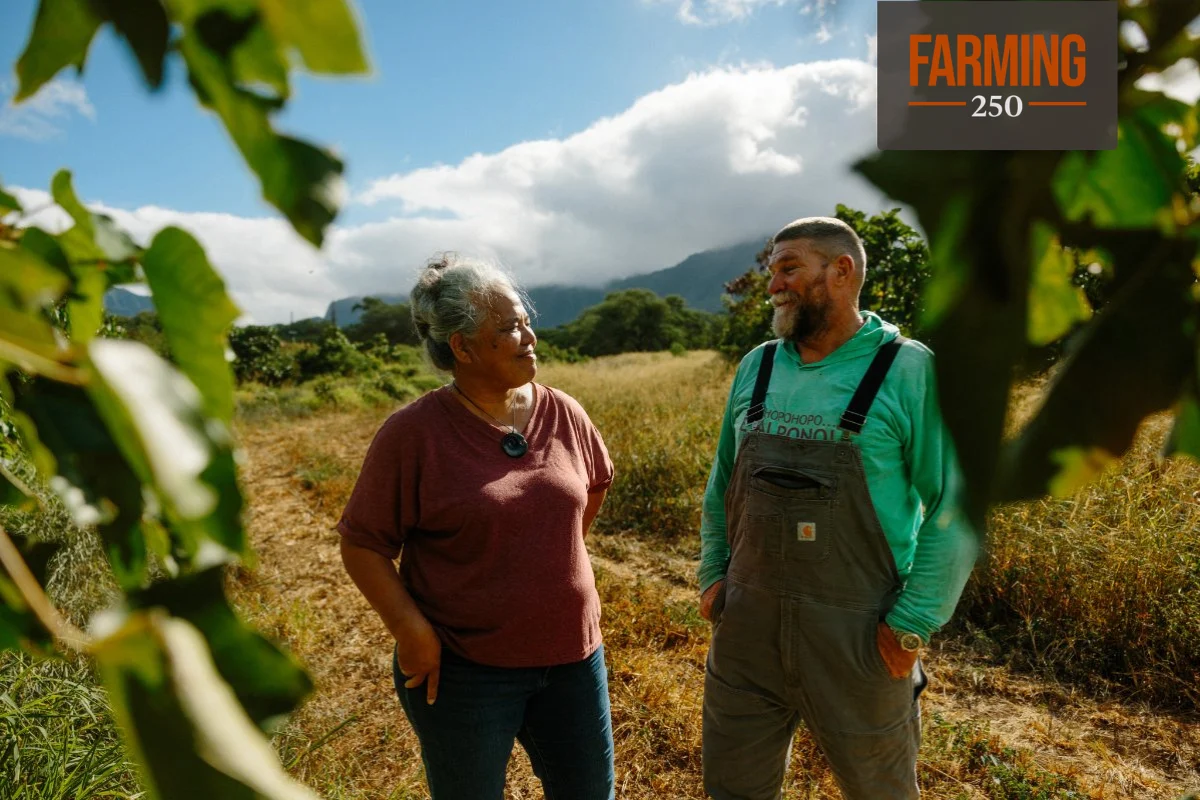
In the heart of Oʻahu’s Lualualei Valley, MAʻO Organic Farms stands as a pioneering institution, seamlessly blending sustainable agriculture with comprehensive youth development and the profound revitalization of indigenous Hawaiian cultural practices. Founded on the principle of "kuleana" – the deep-seated responsibility to the land and community – MAʻO provides a transformative pathway for young people, challenging them to address pressing societal problems while simultaneously supporting their educational aspirations and offering meaningful employment. This unique model, spearheaded by co-founders Kukui Maunakea-Forth and Gary Maunakea-Forth, has evolved into a nationally recognized exemplar of regenerative farming and holistic community building, demonstrating how an investment in land and youth can yield profound returns in food security, economic opportunity, and cultural perpetuation.
The Genesis of an Idea: Cultivating Kuleana

The inception of MAʻO Organic Farms was rooted in a visionary belief: that young people, often overlooked or underserved, hold immense potential to drive positive change if given the right tools, environment, and purpose. The founders envisioned an organization that would offer a tangible challenge – solving community food issues – while providing a robust support system for higher education and direct employment on the farm. From its very first iteration, MAʻO prioritized youth engagement, recognizing their pivotal role in shaping the farm’s identity and future. This commitment was not prescriptive; instead, it acknowledged that young participants would embrace this "kuleana" – this sacred responsibility – on their own terms. They expressed a desire for diversified farming rather than monoculture, seeking collaborative environments where peer-to-peer mentoring could flourish alongside guidance from experienced mentors. This emphasis on youth agency and communal learning became a cornerstone of MAʻO’s pedagogical approach.
Hawaiʻi’s Food Security Imperative: A Pressing Need
MAʻO Organic Farms operates within a critical context: Hawaiʻi’s profound vulnerability regarding food security. The state currently imports an estimated 85-90% of its food, a reliance that exposes its population to significant risks from supply chain disruptions, economic fluctuations, and environmental crises. This high dependency is a legacy of historical shifts, including the plantation economy that redirected agricultural land from diversified food production to export crops like sugar and pineapple. Following the decline of these industries, much of the agricultural infrastructure and knowledge base dwindled, leaving Hawaiʻi susceptible to external market forces. The geographical isolation of the islands further exacerbates this issue, making local, resilient food systems not merely an ideal but an urgent necessity. MAʻO’s commitment to growing organic produce locally directly addresses this systemic fragility, contributing to a more self-sufficient and secure food future for the islands.

Reconnecting with Ancestral Wisdom: The Ahupuaʻa System and Aloha ʻĀina
Central to MAʻO’s philosophy and practices is a deep reverence for pre-contact Hawaiian agricultural systems and values. Ancient Hawaiians achieved remarkable food self-sufficiency, sustaining a population estimated to be upwards of 800,000 to over a million people across the archipelago. This was accomplished through sophisticated engineered systems for cultivation, such as extensive taro (kalo) loi (irrigated terraces) and fishponds (loko iʻa), coupled with a profound ethical framework. A core tenet of this framework is "Aloha ʻĀina," which translates to the love of land or the love of the land that feeds us. It is a spiritual, deeply applicable concept that emphasizes reciprocity, stewardship, and an understanding of the interconnectedness of all living things.
Inspired by this ancestral wisdom, MAʻO also draws heavily from the "ahupuaʻa" system, a unique land management model developed by Hawaiians in the 1500s. An ahupuaʻa was typically a triangular land division that extended from the mountain (mauka) to the sea (makai), encompassing a complete watershed. This integrated approach recognized the intricate relationship between upland forests, freshwater sources, fertile valleys, and coastal marine ecosystems. Pre-contact Hawaiians meticulously managed their watersheds, understanding that deforestation in the mauka would compromise nutrient flow and ecological health downslope. By adopting such holistic perspectives, MAʻO aims to restore not just the productivity of the land but also the integral cultural values that underpin sustainable living. This reverence for the land guides every decision, from planting choices to water management, echoing the wisdom of generations past.

Nurturing the Next Generation: MAʻO’s Youth Development Model
At the heart of MAʻO Organic Farms lies its innovative Youth Leadership Training Program. This program is designed not just to teach farming skills but to cultivate leadership, responsibility, and a deep sense of connection to the land and community. Participants, often from underserved communities in West Oʻahu, are immersed in all aspects of farm operations. This includes learning to operate heavy equipment, mastering composting techniques, understanding soil science, and managing crop cycles – practical skills that are invaluable in agricultural and other fields. Beyond technical training, MAʻO provides crucial support for academic advancement, partnering with institutions like Leeward Community College to offer scholarships and pathways to higher education. This dual approach ensures that participants gain both hands-on vocational experience and the academic credentials necessary for long-term success.
The program fosters an environment where young people are encouraged to lead. The emphasis on "kuleana" means they are entrusted with significant responsibilities, developing problem-solving skills and a strong work ethic. The peer-to-peer mentoring component is particularly powerful, allowing younger participants to learn from and be inspired by slightly older peers who have navigated similar challenges and found success within the MAʻO framework. This creates a supportive, empowering community where youth not only learn to farm but also develop critical life skills, self-confidence, and a commitment to their community’s well-being. This model directly counters the "brain drain" phenomenon often observed in rural communities, offering compelling reasons for young Hawaiians to stay, learn, and lead within their home islands.

A Timeline of Growth and Impact
- 2001: MAʻO Organic Farms is founded by Kukui and Gary Maunakea-Forth in the Lualualei Valley, West Oʻahu. The initial vision is to create a farm that would serve as a training ground and employer for local youth, linking land stewardship with community development.
- Early 2000s: The farm begins with a relatively small parcel of land, focusing on rehabilitating degraded agricultural land through organic practices. Youth involvement is integrated from the outset, with initial programs focused on basic farming skills and environmental education.
- Mid-2000s: MAʻO formalizes its educational partnerships, particularly with Leeward Community College, establishing a clear pathway for youth participants to earn college credits and degrees while working on the farm. This unique earn-and-learn model becomes a hallmark of the organization.
- Late 2000s: The farm expands its acreage and diversified its crop production, increasing its capacity to supply local markets, including restaurants, grocery stores, and community-supported agriculture (CSA) programs. The "aloha ʻĀina" and "ahupuaʻa" principles become more deeply integrated into farming practices and educational curricula.
- 2010s: MAʻO gains significant recognition for its innovative model, attracting grants and partnerships from national foundations and agricultural organizations. The number of youth participants grows steadily, and alumni begin to emerge as leaders in various sectors. The farm becomes a significant local employer and a major contributor to Oʻahu’s organic food supply.
- Late 2010s – Present: MAʻO continues to expand its reach and influence, advocating for regenerative agriculture and local food systems at state and national levels. It explores new technologies and sustainable practices while remaining firmly rooted in its cultural mission. The organization actively engages in policy discussions aimed at strengthening Hawaiʻi’s agricultural sector and fostering youth leadership.
Quantifying Success: Data and Outcomes
The impact of MAʻO Organic Farms is measurable and multifaceted. Since its inception, MAʻO has engaged hundreds of young people from West Oʻahu in its leadership and agricultural training programs. Over 100 youth participants have successfully transitioned to higher education, many earning college degrees, often as first-generation college students, with MAʻO’s financial and mentorship support. A significant percentage of these alumni either return to work at MAʻO, pursue careers in sustainable agriculture, or become leaders in other community-focused fields, demonstrating a tangible retention of talent within Hawaiʻi.

The farm itself cultivates approximately 200 acres, producing over 30 varieties of certified organic fruits and vegetables, including popular items like kale, lettuce, eggplant, and various tropical fruits. This produce is distributed through multiple channels: MAʻO’s own CSA program serves hundreds of families, while wholesale partnerships supply leading grocery chains and high-end restaurants across Oʻahu. This local supply chain significantly reduces the island’s reliance on imported goods, enhances food freshness, and keeps economic activity within the community. In terms of economic contribution, MAʻO provides stable, living-wage employment in a region often characterized by limited opportunities, acting as a vital economic anchor for the Lualualei Valley. Furthermore, its regenerative practices contribute to measurable improvements in soil health, biodiversity, and water conservation, offering environmental dividends that extend beyond the farm’s boundaries.
Voices from the Field: Perspectives on MAʻO’s Influence
The profound impact of MAʻO Organic Farms resonates deeply within the community and among its participants. "Before MAʻO, I didn’t see a clear path for myself," shared Kiana Pukahi, an alumna of the program now pursuing an agricultural science degree. "They didn’t just teach me how to farm; they taught me leadership, responsibility, and showed me how powerful it is to grow your own food and care for the land. It’s more than a farm; it’s family."

Community leaders echo these sentiments. "MAʻO Organic Farms is an indispensable asset to West Oʻahu," stated Representative Sylvia Luke, a strong advocate for local food systems. "Their commitment to empowering our youth while simultaneously building a more resilient and sustainable food system for Hawaiʻi is truly commendable. They are a model for how to address complex challenges through innovative, community-rooted solutions." Educational partners, such as Dr. Erika Lacro, Chancellor of Leeward Community College, frequently highlight the success of their collaboration: "The MAʻO partnership is a prime example of experiential learning at its best. Students gain invaluable practical skills, earn college credits, and develop a profound connection to their cultural heritage, setting them on a path for lifelong success and community contribution." Agricultural experts often cite MAʻO as a leading example of successful indigenous land stewardship integrated with modern sustainable practices, demonstrating the viability of regenerative farming in a tropical island context.
The Regenerative Revolution: Farming for a Sustainable Future
MAʻO Organic Farms is a frontrunner in the regenerative agriculture movement, a paradigm that seeks not merely to sustain but to actively improve ecological health. Regenerative agriculture encompasses practices such as no-till farming, cover cropping, diverse crop rotations, and comprehensive composting – all of which are diligently applied at MAʻO. These methods enhance soil fertility, increase water retention, sequester atmospheric carbon, and boost biodiversity, creating a more resilient and productive ecosystem. The founders emphasize that while capital and equipment are necessary, the true engines of regenerative agriculture are education, exposure, and unwavering commitment. Young people at MAʻO are taught to view the land not as a resource to be exploited, but as a living entity, a "leader" that guides their practices and teaches them valuable lessons in stewardship. This forward-thinking approach positions MAʻO at the vanguard of agricultural innovation, demonstrating how farming can be a powerful tool for environmental restoration and climate resilience.

Broader Implications: A Model for Resilient Communities
The MAʻO Organic Farms model carries significant implications extending far beyond its acreage in the Lualualei Valley. It offers a compelling blueprint for other communities grappling with similar challenges of food insecurity, youth disengagement, and cultural erosion. Its success demonstrates that:
- Food Sovereignty is Achievable: By investing in local production and empowering local farmers, communities can reduce their reliance on external food sources, strengthening their resilience against global disruptions.
- Youth are Catalysts for Change: When provided with meaningful opportunities, education, and support, young people are not just beneficiaries but powerful agents of positive transformation within their communities.
- Indigenous Knowledge is a Foundation for Modern Sustainability: Reconnecting with ancestral wisdom and traditional land management practices offers invaluable insights for contemporary ecological challenges.
- Holistic Development Yields Lasting Impact: Integrating vocational training, academic support, and cultural education creates well-rounded individuals capable of leading across various sectors.
- Regenerative Agriculture is Economically and Ecologically Viable: MAʻO proves that farming practices that heal the earth can also create jobs, sustain livelihoods, and build robust local economies.
As Hawaiʻi continues to navigate the complexities of climate change, economic diversification, and cultural preservation, MAʻO Organic Farms stands as a powerful testament to the potential of integrated, community-led solutions. It is not merely a farm; it is a living classroom, a cultural hub, and a beacon of hope, demonstrating how the nurturing of land and people can cultivate a future that is both prosperous and profoundly sustainable.