admin
admin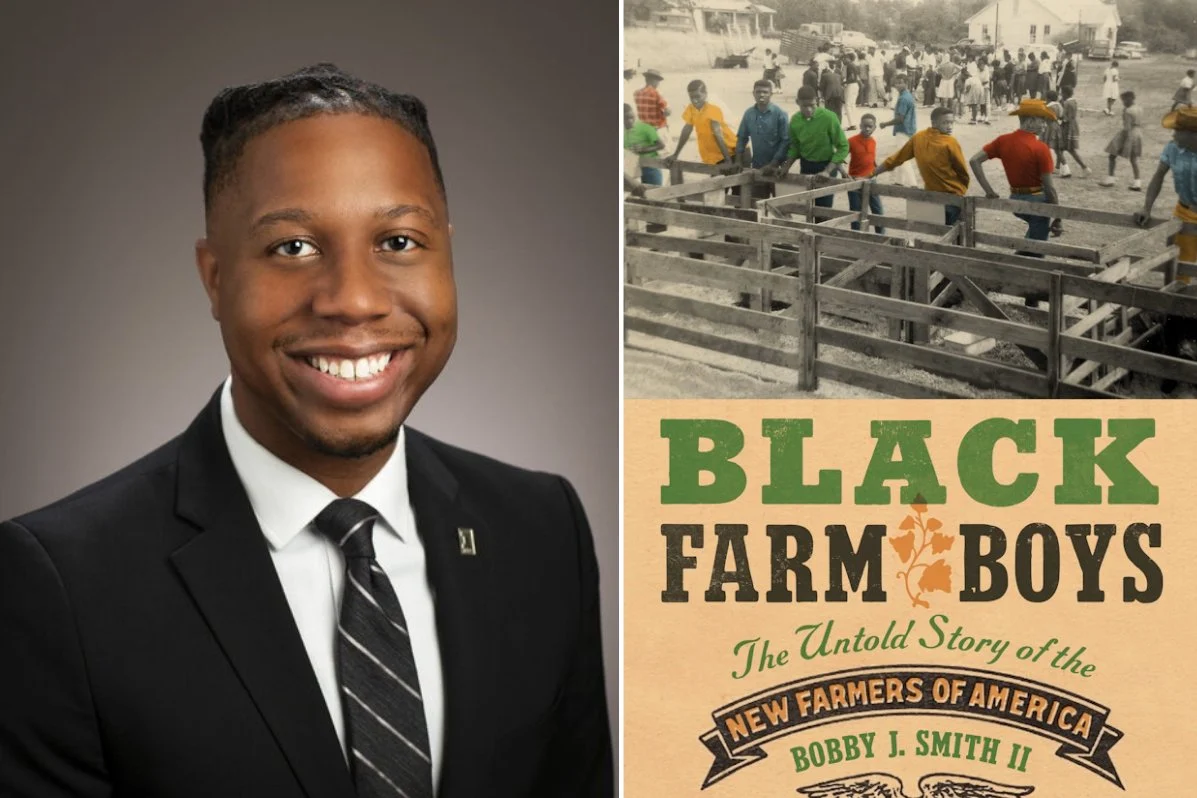
The titles, it turned out, were the only two ever written about the New Farmers of America (NFA)—the nation’s first organization for youth studying vocational agriculture at Black segregated public high schools across the South and up the East Coast to New Jersey. This stark revelation prompted Dr. Bobby J. Smith, a sociologist with a background in agricultural economics and a faculty member in the Department of African American Studies at the University of Illinois Urbana-Champaign, to embark on a monumental task: writing the definitive scholarly account of an organization he had never even heard of. His recently released book, Black Farm Boys: The Untold Story of the New Farmers of America, traces the remarkable yet largely forgotten history of the NFA, from its founding in 1935 to its eventual absorption by the predominantly white Future Farmers of America (FFA) three decades later.
"We’re talking about an organization that existed in 18 states and had an annual membership of 55,000 rural Black boys," Smith stated, expressing his astonishment at the scale and obscurity of the NFA. "I was amazed at how big the organization was and the fact that no [scholarly] book had ever been written about it. That’s when I knew it was time for me to write one." This profound absence in historical scholarship underscored a broader oversight: the rich and complex relationship between Black communities and agriculture, often overshadowed by narratives solely focused on exploitation and oppression. Smith’s work seeks to rectify this, presenting agriculture not merely as a site of historical trauma but also as a powerful tool for emancipation, leadership, and community uplift for generations of Black youth.
The Genesis of a Black Youth Farm Movement
The New Farmers of America did not emerge in a vacuum but was the culmination of decades of grassroots mobilization within Black communities. Its roots trace back to at least the mid-1920s, deeply intertwined with the establishment and mission of Black land-grant institutions across the South. These institutions, often referred to as 1890 land-grant colleges (established under the Second Morrill Act of 1890 to provide land-grant access to Black Americans), played a pivotal role in fostering agricultural education and community development during an era of profound racial segregation and economic hardship. While the Morrill Act of 1862 initially created land-grant colleges, it largely excluded Black students in the South, necessitating the 1890 Act to address this disparity, albeit under a "separate but equal" doctrine that ensured racial segregation.
The NFA’s founding in 1935 as a national organization was a strategic move to consolidate and amplify a nascent Black youth farm movement that had been active since the 1870s. This period saw Black people facing systemic displacement from their land and being actively discouraged from pursuing farming. Organizations like the NFA, alongside Negro 4-H clubs and other local initiatives, were purposefully designed to counter the pervasive narrative that agriculture was a backward or inherently oppressive pursuit for Black individuals. Instead, they championed agriculture as a viable and empowering path, encouraging rural Black communities to invest in their land, cultivate leadership skills, and build self-sufficient futures. By 1935, the collective momentum of these regional efforts demanded a national framework to mobilize resources, standardize programs, and expand their networks, leading directly to the NFA’s formal establishment.
Structure, Scope, and Segregation
The NFA operated within a rigid framework of racial segregation, which, paradoxically, allowed it to develop a distinct identity and foster a unique leadership pipeline. The organization was structured with state associations, each headquartered at its local Black land-grant institution. These state associations, in turn, oversaw thousands of local chapters, predominantly located in Black-only public high schools. For instance, Texas boasted the largest NFA association with over 1,000 chapters, headquartered at Prairie View A&M University, a prominent 1890 land-grant institution. In contrast, New Jersey, lacking a dedicated Black land-grant institution, housed its smaller association at a high school in Bordentown. This decentralized yet interconnected structure enabled the NFA to reach a vast network of young Black men across 18 states, from the Deep South to the Mid-Atlantic.
Within these segregated environments, the NFA was far more than a mere extracurricular club. It functioned as a vibrant brotherhood, where Black male youths were actively encouraged to step into leadership roles. Teachers in vocational agriculture programs served dual roles as classroom instructors and dedicated chapter advisors and mentors, providing guidance and fostering a sense of community. The NFA members organized their own community banquets, state fairs, and national conventions, demonstrating remarkable self-reliance and organizational prowess. They even participated in significant national events, such as attending the 1939-40 New York World’s Fair, an experience that broadened their understanding of global agricultural practices and innovations.
Summer camps were a cornerstone of the NFA experience, offering intensive learning opportunities in vital subjects like conservation, forestry, and agriscience. Beyond academic instruction, these camps provided invaluable opportunities for bonding through outdoor activities such as crabbing, boating, and swimming. "These boys not only went to high school together, they grew up together," Smith noted, highlighting the deep bonds of camaraderie and mutual support that characterized the NFA experience. This comprehensive approach ensured that NFA members developed not only practical agricultural skills but also robust leadership qualities, a strong work ethic, and a profound sense of community responsibility.
Agriculture as Emancipation: Challenging Dominant Narratives
One of the most compelling aspects of Dr. Smith’s research is its explicit advocacy for a narrative shift away from viewing agriculture solely "as an oppressive facet of Black existence." Growing up in a family of Black farmers and having studied agriculture at a Black college, Smith’s perspective is inherently different from mainstream academic narratives. He learned about agriculture through the lived experiences of Black people and from Black professors, offering a nuanced understanding often absent in broader historical accounts.
"When we think about the academic and systematic study of agriculture and how Black people took that up, it requires us to rethink the narrative that everything was bad in the past," Smith explained. He acknowledged the undeniable hardships of the agrarian past for Black people, including enslavement, sharecropping, systemic land confiscation, and discriminatory denial of credit. However, he emphasized the critical importance of recognizing stories where agriculture served as a foundation for building lives and communities, even on lands where Black people had previously been marginalized. The NFA provided a powerful counter-narrative, presenting agriculture as a pathway to self-sufficiency, economic independence, and professional advancement.
The "Black farm boys," as participants proudly called themselves, were not just trained to be farmers; they were groomed to become leaders across every facet of the agricultural industry. The NFA’s vision extended beyond subsistence farming, aiming to cultivate a generation of agricultural professionals. Alumni went on to become soil scientists, agricultural teachers, economists, engineers, veterinarians, and dairy or meat scientists. Many found careers with state departments of Agriculture, became farm credit agents, or even ascended to university chancellorships. The NFA effectively served as a vital pipeline for a generation of cooperative extension agents, crucial figures in disseminating agricultural knowledge and best practices within rural communities. This professional trajectory underscores the emancipatory potential that agriculture held for Black youth, offering avenues for social mobility and significant contributions to the broader economy and society.
The NFA in the Shadow of the Great Migration and Racial Terror
The NFA’s existence and growth were set against the tumultuous backdrop of the Great Migration, which saw millions of Black Americans leave the rural South for urban centers in the North, Midwest, and West, largely driven by racial terror, economic disenfranchisement, and the promise of better opportunities. Concurrently, Black farmers faced an accelerating loss of land due to discriminatory practices, violence, and economic pressures. Data from the U.S. Census of Agriculture reveals a drastic decline in Black land ownership: in 1910, Black farmers owned over 15 million acres of land, a figure that plummeted to just 2 million acres by 1969. This systemic dispossession threatened the very foundation of Black agricultural life.
Amidst these profound challenges, the NFA represented a radical and resilient force. It offered its participants a counter-vision, portraying agriculture as a means of self-determination and community uplift. By emphasizing vocational training, leadership development, and professional pathways, the NFA empowered young Black men to envision a future where they could not only sustain themselves but also contribute meaningfully to their communities and the nation through agricultural expertise. This ethos directly challenged the prevailing forces pushing Black people away from land and rural life, affirming the value and potential of Black agricultural engagement. The organization fostered a sense of pride and agency, providing a vital anchor for young Black men navigating a society rife with racial discrimination and economic inequality.
A Traumatic End: The 1965 Merger with the FFA
The vibrant history of the NFA came to what Dr. Smith describes as a "traumatic end" in 1965, when it was absorbed by the Future Farmers of America (FFA). This merger was a direct consequence of the broader Civil Rights Movement and the passage of landmark legislation like the Civil Rights Act of 1964, which mandated the desegregation of public institutions and federally funded programs. Vocational education, including agricultural programs, fell under this mandate, pressuring separate organizations like the NFA and FFA to integrate.
While ostensibly a move towards racial equality, the merger resulted in the dissolution of the NFA’s distinct identity, leadership structures, and unique cultural traditions. The FFA, founded in 1928, had historically been a predominantly white organization, reflecting the segregated educational landscape of the time. Integrating the NFA’s 55,000 members and hundreds of chapters into the FFA meant that the NFA’s rich legacy, its specific pedagogical approaches tailored to the needs of Black youth, and its established leadership pipeline were largely subsumed. Many NFA traditions, symbols, and even the "Black Farm Boys" identity were lost or marginalized in the process of integration. This loss represented a significant blow to the institutional memory and self-determination that the NFA had so carefully cultivated over three decades.
The implications of this merger were profound. While it formally ended segregation in youth agricultural organizations, it also erased a powerful, Black-led institution that had served as a vital source of empowerment and professional development. Former NFA members and leaders often found themselves in an organization where their unique history and contributions were not fully recognized or integrated. The narrative of "progress" through integration often overlooked the deep cultural and organizational losses incurred by the merging of historically Black institutions into larger, predominantly white counterparts. This historical moment serves as a complex reminder that while desegregation was a critical step towards equality, it sometimes came at the cost of distinct cultural identities and hard-won organizational autonomy.
Lasting Impact and Underserved Recognition
Despite its dissolution, the legacy of the NFA reverberates through the lives of its alumni and the broader agricultural landscape. The organization successfully created a robust pipeline for a generation of Black agricultural professionals who went on to hold influential positions across the industry. The skills, leadership training, and networks forged within the NFA proved invaluable, enabling its members to navigate a racially stratified society and make significant contributions to agricultural science, policy, and practice. From university chancellors and Extension agents to veterinarians and soil scientists, the "Black farm boys" became vital figures in shaping American agriculture, often against formidable odds.
Dr. Smith’s book Black Farm Boys is crucial for bringing this underserved history to light. It not only documents the NFA’s past but also challenges contemporary understandings of Black history and agriculture. The narrative shift advocated by Smith—from viewing agriculture solely as a symbol of oppression to recognizing its emancipatory potential—is essential for a more complete and accurate historical record. Even within the discipline of Black studies, Smith notes, this "other side of the story" often remains unrecognized. Providing "more airtime to the emancipatory aspects of our Black people’s historical and contemporary relationships to agriculture" is paramount for understanding the resilience, ingenuity, and agency of Black communities.
The book begins with a poignant quote from Dr. Alfred L. Parks, Smith’s beloved mentor and former college professor at Prairie View A&M, an NFA alumnus himself. Smith first encountered Dr. Parks in a summer program designed to interest high school students in agriculture, an encounter that profoundly altered his own life trajectory. "The moment I met Dr. Parks, I knew I wanted to be like him when I grew up," Smith recalled. This personal connection underscores the enduring intergenerational impact of institutions like the NFA and the mentors they produced, shaping not just individual careers but also the intellectual and cultural landscape of Black America.
Lessons for Today’s Organizers and Educators
The story of the New Farmers of America offers invaluable lessons for contemporary organizers, educators, and policymakers. It highlights the power of youth empowerment, community-based leadership development, and vocational training in fostering self-sufficiency and professional advancement, especially within marginalized communities. The NFA’s model of a "brotherhood" where young men took ownership of their organization and actively shaped their educational and community experiences provides a blueprint for effective grassroots organizing.
In an era where discussions around food justice, Black land ownership, and agricultural equity are gaining renewed urgency, understanding the NFA’s history is more relevant than ever. It demonstrates that Black communities have historically championed agriculture as a source of strength and opportunity, challenging the often-prevailing narrative of disengagement. The NFA’s ability to cultivate a pipeline of Black agricultural professionals, scientists, and leaders speaks to the inherent potential within these communities, which, given adequate resources and support, can thrive and innovate.
Moreover, the "traumatic end" of the NFA serves as a cautionary tale about the complexities of integration and the potential loss of distinct cultural identities and organizational strengths when historically marginalized institutions are absorbed by dominant ones. It prompts critical reflection on how to achieve genuine equity and inclusion without erasing invaluable legacies. Dr. Smith’s Black Farm Boys is not just a historical account; it is a call to action—a demand for a more inclusive historical narrative that honors the full spectrum of Black experiences and contributions to American society and its agricultural heritage. The NFA’s legacy continues to inspire a re-evaluation of history, reminding us that many stories of Black resilience and achievement still await their rightful place in the national consciousness.