admin
admin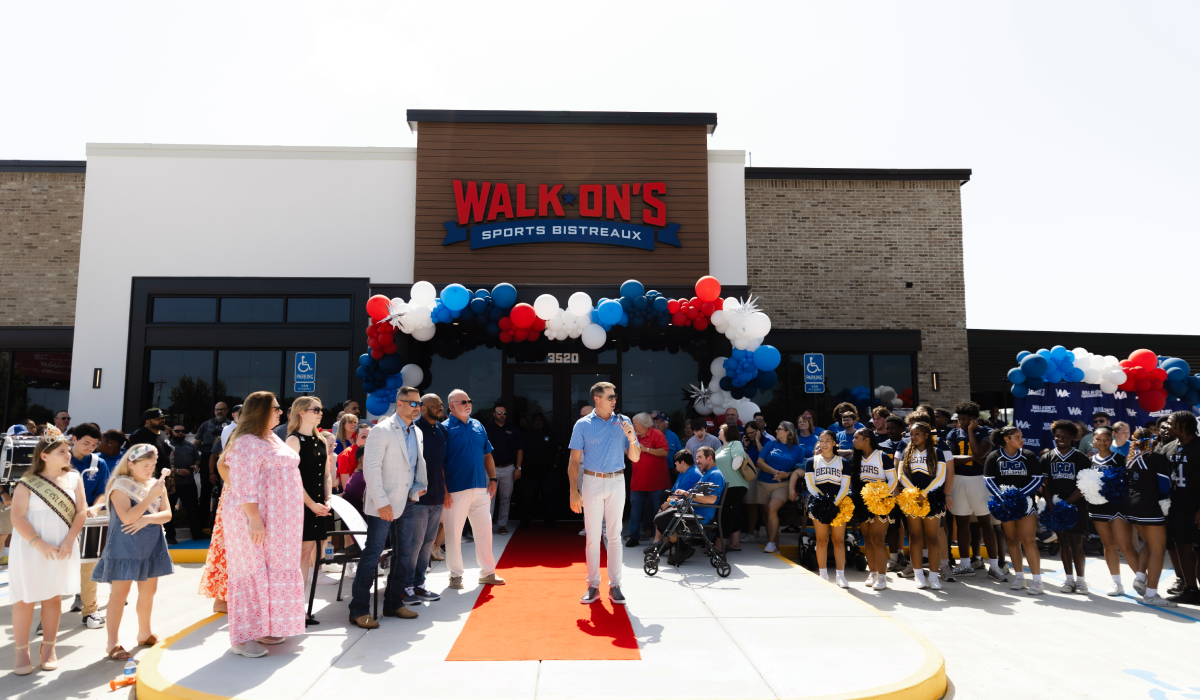
Walk-On’s Sports Bistreaux, the Louisiana-founded casual-dining chain, is undergoing a fundamental transformation of its business model to prioritize efficiency, real estate flexibility, and a streamlined operational core. Under the leadership of founder and CEO Brandon Landry, who returned to the helm in early 2025, the brand is aggressively moving away from the massive, multi-acre freestanding units that defined its early growth. Instead, the company is embracing a "less is more" philosophy, utilizing smaller prototypes that significantly reduce overhead while maintaining the high-energy, sports-centric atmosphere and scratch-made Louisiana cuisine that serve as the brand’s primary differentiators. This strategic shift is designed to unlock new markets, ranging from dense urban centers to smaller rural communities, which were previously inaccessible due to the high capital requirements of the original model.
The Shift to a Compressed Prototype and High-Efficiency Real Estate
For nearly two decades, Walk-On’s established itself as a destination for large-scale dining, with restaurants often spanning between 7,000 and 12,000 square feet. These locations typically required roughly two acres of land, a requirement that limited the brand’s expansion to suburban parcels with significant footprints. However, the company has successfully piloted a new model that nearly halves the square footage without a proportional sacrifice in revenue.
A primary proof-of-concept for this strategy is the Walk-On’s location at The Battery in Atlanta. This restaurant operates within a 3,700-square-foot footprint and accommodates approximately 130 to 140 seats. Despite its reduced size, the location generated roughly $4 million in sales last year, representing a sales-per-square-foot ratio that far exceeds the industry average for casual dining. By proving that a 4,000-square-foot "box" can deliver the same financial "punch" as its larger predecessors, Landry is repositioning the brand to occupy endcaps, renovated retail spaces, and mixed-use developments. This flexibility allows Walk-On’s to compete for premium real estate in high-traffic areas where large freestanding lots are either unavailable or prohibitively expensive.
A Chronology of Leadership and the Return of the Founder
The current strategic pivot follows a period of organizational volatility. Founded in 2003 by Brandon Landry and Jack Warner near the campus of Louisiana State University (LSU), the brand saw steady regional growth for over a decade. A major turning point occurred in 2015 when former New Orleans Saints quarterback Drew Brees joined the company as a co-owner, providing the brand with national visibility and a professional sports pedigree. In 2020, the private equity firm 10 Point Capital made a significant investment to accelerate franchising efforts.
However, the leadership structure became unstable in recent years. In 2023, Landry stepped down from the CEO role, believing that a professional management team could better navigate the brand’s next phase of growth. Over the subsequent two years, the company cycled through three different chief executives, a period Landry describes as a learning experience regarding the unique needs of a founder-led brand. In 2025, Landry resumed the CEO position, citing a need to return to the brand’s core values and operational discipline. His return has been met with optimism from the franchise community, as he has refocused the corporate strategy on simplifying the "back-of-house" operations and refining the brand story.
Operational Innovation and Menu Engineering
To support a smaller physical footprint, Walk-On’s has had to re-engineer its kitchen operations and menu. The brand is known for its scratch-made Louisiana-inspired menu, featuring items such as gumbo, etouffee, and hand-battered seafood. Maintaining this culinary standard in a smaller kitchen requires technological intervention.
One of the most significant changes is the system-wide installation of clamshell grills. This technology allows for simultaneous cooking on both sides of a protein, which significantly reduces ticket times and ensures product consistency. Data from high-volume franchise locations—those producing between $6 million and $7 million in annual sales—indicates that the grills have improved labor efficiency and increased table turns during peak periods like Friday and Saturday nights.
Furthermore, the brand is adopting a more disciplined approach to menu development. Rather than permanently adding items to the menu, Walk-On’s is utilizing limited-time offers (LTOs) to gauge consumer interest and operational feasibility. This "test-and-learn" approach prevents menu bloat, which can lead to increased food waste and slower kitchen speeds. For example, the culinary team is currently testing spring and summer items for the 2027 season, reflecting a long-term planning horizon that prioritizes execution over novelty.
Competitive Landscape and Market Analysis
Walk-On’s pivot comes at a time of significant upheaval in the sports-bar and "breastaurant" categories. Several legacy brands in the space have faced financial distress or stagnant growth:
- Hooters and Twin Peaks: Both brands have seen recent shifts in ownership and restructuring following bankruptcy proceedings or financial realignment.
- Buffalo Wild Wings: The category leader has struggled with net unit growth for nearly a decade. Its parent company, Inspire Brands, has shifted focus toward the "Buffalo Wild Wings GO" model—a quick-service restaurant (QSR) spinoff that prioritizes takeout and delivery over the traditional full-service experience.
In contrast, Walk-On’s is doubling down on the full-service "polished casual" experience but within a more efficient framework. Landry believes that while many competitors are retreating or pivoting to QSR models, there is a massive opening for a brand that delivers high-quality food and a communal atmosphere. The brand’s performance during the FIFA World Cup served as a recent indicator of this demand; matches involving the U.S., Mexico, and Canada drove double-digit sales gains, proving that the "communal sports experience" remains a powerful traffic driver despite the rise of off-premises dining.
Franchisee Expansion and Regional Growth Strategy
The simplified, less expensive model is attracting a new wave of franchise partners. The lower initial investment and the ability to operate in smaller towns have democratized the brand’s growth potential. Walk-On’s expects to open approximately 10 new restaurants in 2026, with a focus on both deepening its presence in existing markets and entering new territories.
A notable upcoming expansion is the brand’s entry into Lexington, Kentucky. This location is being developed by franchise partner Jamie Daniels in collaboration with partners affiliated with Kentucky Sports Radio. By entering a premier college sports market with local influencers, Walk-On’s is leveraging its "walk-on" underdog story to build immediate community rapport. This strategy of "injecting the brand into the community" is a cornerstone of the 2026 expansion plan, as the smaller footprint allows the company to fit into the social fabric of mid-sized college towns and suburban hubs more seamlessly.
Broader Economic Implications and Future Outlook
The transformation of Walk-On’s reflects a broader trend in the casual-dining industry toward "right-sizing." As labor costs, construction expenses, and interest rates remain elevated, the traditional 10,000-square-foot restaurant model is becoming increasingly difficult to justify for many operators. By optimizing the square footage and utilizing technology to maintain labor efficiency, Walk-On’s is insulating its franchisees from some of these macroeconomic pressures.
The brand’s reliance on scratch cooking remains its most significant operational challenge and its greatest competitive advantage. In an era where many casual-dining chains have moved toward pre-packaged, "heat-and-serve" components, Walk-On’s commitment to hand-battering and made-to-order meals provides a level of quality that justifies its price point in a cautious consumer environment.
Looking ahead, Landry’s goal is to transition Walk-On’s from a regional player into a household name within the next decade. Supported by high-profile partners like Drew Brees and the financial backing of 10 Point Capital, the company is positioning itself to fill the void left by struggling competitors. The 2026 roadmap serves as a critical test for the new prototype; if the smaller models continue to replicate the sales density seen in Atlanta, Walk-On’s could see a rapid acceleration in unit growth across the United States.
The return of the founder has clearly re-energized the system. Landry’s "baby," as he refers to the brand, is being refined for a more disciplined era of restaurant management. By focusing on the "sports bar simplified" version of the concept, Walk-On’s is betting that it can maintain its soul while shedding the physical and operational weight that once limited its reach. As the brand prepares for its Kentucky debut and the rollout of its 2026 pipeline, the industry will be watching to see if this smaller, leaner version of Walk-On’s can indeed take over the national sports-bar category.