admin
admin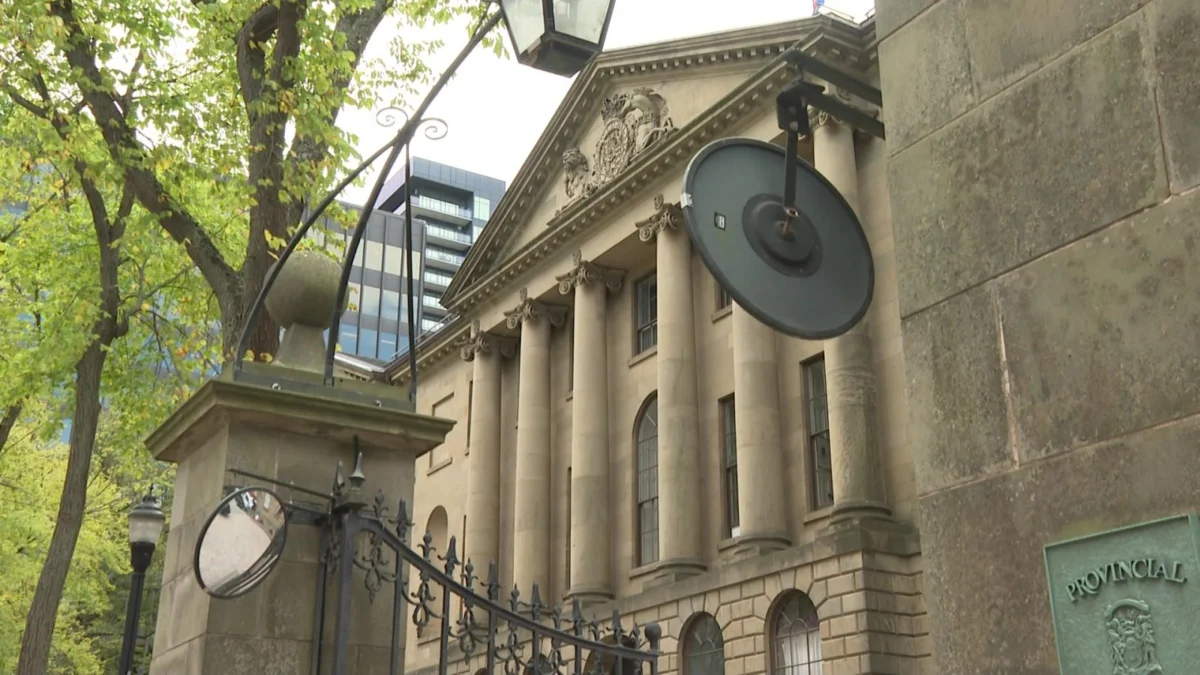
Thirty-six individuals have been prohibited from entering Nova Scotia’s Province House, a decision enacted by the Sergeant-at-Arms almost six months after a protest during the spring legislative sitting brought the budget vote to a halt through singing and shouts. This move has sparked considerable debate regarding the balance between maintaining parliamentary order and safeguarding the public’s right to peaceful demonstration and access to democratic institutions.
The Genesis of the Controversy: A Disrupted Budget Vote
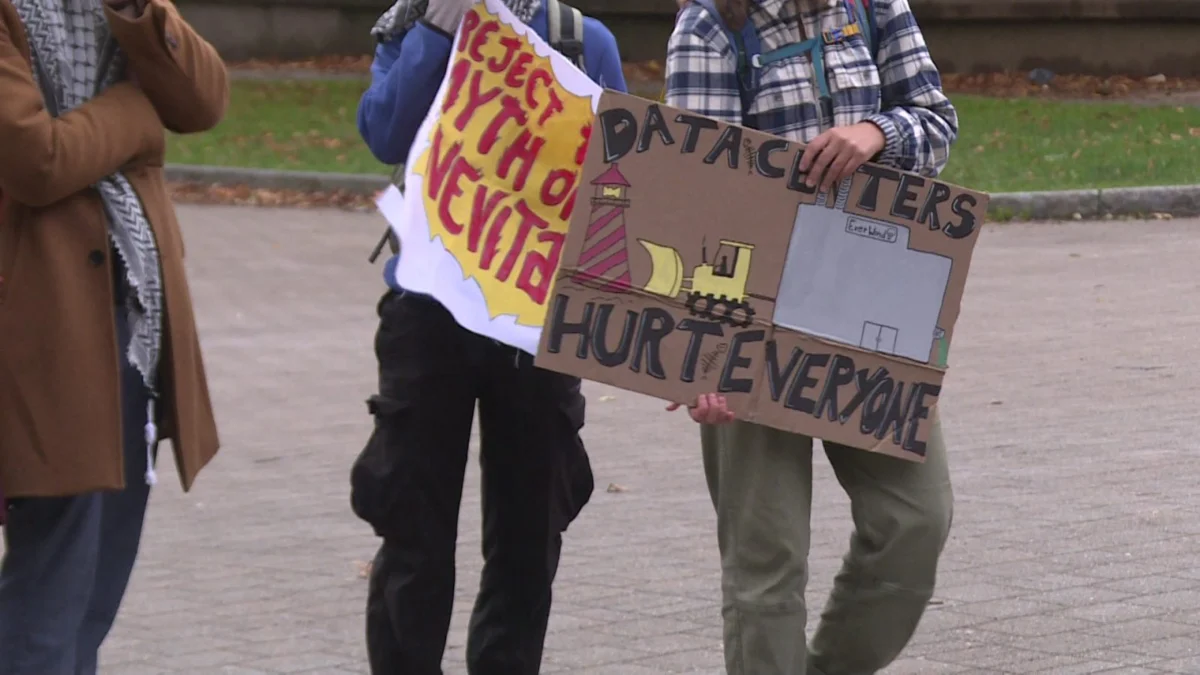
The events leading to the unprecedented bans trace back to March 24, when a session of the Nova Scotia House of Assembly was dramatically interrupted. On that day, a group of protesters, many affiliated with environmental and social justice causes, occupied the public gallery of Province House. Their vocal demonstration, characterized by singing and shouting, effectively disrupted the legislative proceedings, specifically the crucial budget vote for the province. The interruption prompted immediate action, leading to the closure of Province House to the public for a full week, a rare occurrence underscoring the severity with which the incident was perceived by legislative authorities.
The annual provincial budget is a cornerstone of governance, outlining the government’s fiscal priorities, spending plans across various departments, and projected revenues. Disruptions to this process are viewed seriously as they impede the legislative body’s ability to fulfill its fundamental duties. For the government of the day, passing the budget is a critical measure of its mandate and capacity to govern. For opposition parties and the public, the budget debate is a key opportunity to scrutinize government policy and advocate for alternative approaches. The March 24 protest, therefore, struck at the heart of this parliamentary function, drawing a firm line from legislative leadership.
Key Figures Among the Banned
Among the 36 individuals who received official letters notifying them of their bans are prominent community leaders and advocates. Christine Saulnier, the Nova Scotia director for the Canadian Centre for Policy Alternatives (CCPA), and Nina Newington, president of Save our Old Forests, both expressed astonishment upon receiving their letters last week.
Saulnier, whose ban is set for six months, commencing on September 1st and concluding on March 1st, 2026, voiced her surprise at the timing and nature of the prohibition. "I am surprised that it’s a ban going forward because if you count the many months that have passed, it could have been that," she commented, highlighting the nearly six-month delay between the incident and the issuance of the ban letters. The Canadian Centre for Policy Alternatives is a national research institute focused on social and economic justice, often providing critical analysis of government policies, including provincial budgets, from a progressive standpoint. Their advocacy frequently involves public engagement and policy recommendations aimed at addressing issues like poverty, inequality, and environmental sustainability.
Nina Newington received a similar six-month ban, explicitly citing her participation in the March 24th demonstration. Newington, a vocal environmental advocate through her leadership of Save our Old Forests, expressed strong disapproval of the measure. "Banning people from the legislature for singing when this government has shown the kind of disregard for democratic process that it has, that seems astonishing to me," she stated. Save our Old Forests is a grassroots organization dedicated to protecting Nova Scotia’s old-growth forests and advocating for sustainable forestry practices, a cause that has often placed them in opposition to government resource management policies. The organization frequently engages in public awareness campaigns, protests, and direct advocacy with policymakers. The context of their protest likely stemmed from concerns about the budget’s allocation or lack thereof for environmental protection, or its implications for forestry policies within the province.
Chronology of Events Leading to the Bans
The sequence of events underscores the deliberate, albeit delayed, nature of the legislative response:

- March 24: The protest unfolds in the public gallery of Province House during the budget vote, causing a significant disruption to parliamentary proceedings. The demonstration involves singing and shouting, effectively halting legislative business.
- Immediate Aftermath (March 24 onwards): Following the disruption, Province House is closed to the public for a week. This temporary closure signals the gravity with which the legislative authorities viewed the breach of decorum and security.
- April 2: The House of Assembly re-opens. Speaker Danielle Barkhouse, in her capacity to maintain order and decorum, indicates that consequences for the disruption would follow. This initial announcement set the expectation for accountability, though the specific nature and extent of the penalties remained unspecified at the time.
- "Last Week" (from the article’s context, implying late August/early September): Official letters are dispatched to 36 individuals, notifying them of their respective bans from Province House premises. This marks the formal implementation of the consequences foreshadowed in April.
- September 1: The six-month bans for individuals like Christine Saulnier and Nina Newington officially commence. Other bans, ranging from three to twelve months, also begin around this period, depending on the severity of the alleged infraction.
- September 8: The House of Assembly is scheduled to resume its sitting. The timing of the bans means that many of the prohibited individuals, especially those with six-to-twelve-month prohibitions, will be barred from attending the upcoming fall session and potentially the subsequent winter session, thus impacting their ability to directly observe and engage with legislative processes during these crucial periods.
Official Justification and Legislative Perspective
James Charlton, the House’s Chief Clerk, provided insight into the rationale behind the bans. He confirmed that the prohibitions were instituted to hold individuals accountable for disrupting the business of the House of Assembly. Charlton reiterated that the intention to impose consequences had been clearly indicated by Speaker Danielle Barkhouse on April 2, when the legislature re-opened following the protest.
In an email to Global News, Charlton elaborated that Speaker Barkhouse viewed these bans as a "moderate response." He noted that, within the current legislative framework, there are no other formal consequences for demonstrators beyond temporary prohibition from the legislature. This suggests that the Speaker’s office sought to implement a proportionate disciplinary action without resorting to more severe, potentially legal, measures that might be available in other contexts.
The duration and scope of the bans vary, reflecting a graduated response based on the level of involvement and conduct during the protest:
- Three-month bans: Issued to those who were present in the gallery but not actively involved in the demonstration, yet refused to leave when asked by authorities. This category suggests a focus on compliance with directives from legislative security.
- Six-month bans: Applied to individuals who actively participated in the demonstration, such as Saulnier and Newington, who were engaged in the singing and shouting that disrupted proceedings.
- Twelve-month bans: Reserved for participants who were not only involved in the demonstration but also verbally abusive toward Members of the Legislative Assembly (MLAs). This tiered approach indicates an attempt to differentiate between varying degrees of disruptive and disrespectful behavior.
Charlton also drew a comparison to other Canadian jurisdictions, noting that protests of a similar nature in places like Ontario could result in a lifetime ban from the legislative gallery, albeit with a mechanism for appeal after one year. This comparison implies that Nova Scotia’s response, while firm, is arguably less stringent than measures taken elsewhere in Canada for comparable infractions, framing it as a measured approach.
Speaker Barkhouse’s Stance on Maintaining Order
Speaker Danielle Barkhouse, although unavailable for a direct interview, issued a comprehensive statement defending her office’s actions. Her statement underscored a principle of universal accountability for disruptions within the legislative chamber. "The nature of the interruption is immaterial," Barkhouse asserted. "The motivation for the interruption is immaterial. That proceedings were interrupted is the only issue and for that, there should be consequences."
Her statement further contextualized the legislative environment by drawing parallels to other public and private settings where rules of conduct are enforced. "If you interrupt a court proceeding, if you interrupt a play, if you interrupt service at a fast-food restaurant, you’re going to encounter consequences. This is no different. If you don’t enforce the rules, then those rules don’t exist. There’s a time and place for protest and the gallery of the legislature isn’t one of them."
This perspective emphasizes the sanctity of parliamentary proceedings and the necessity of maintaining decorum to allow the legislative process to function unimpeded. It frames the gallery not as a primary venue for protest but as a space for observation, where specific rules of conduct must be adhered to. The Speaker’s role is to ensure the smooth operation of the House, and her statement reflects a commitment to upholding that responsibility through the enforcement of established rules.
Critiques and Concerns: "Overreach" and "Silencing Opposition"
The legislative bans have not been met without significant criticism, particularly from the affected individuals and civil liberties advocates who view them as an overreach of authority and a potential threat to democratic expression. Christine Saulnier characterized the bans as an "overreach," expressing profound concern over the implications for public oversight of government. "It’s very concerning to me that they think this justifies banning people from being able to go down there and show them who’s watching," she remarked. Her comment highlights the perspective that public presence in the gallery serves as a vital form of democratic accountability, allowing citizens to witness and scrutinize the actions of their elected representatives.

Nina Newington echoed this sentiment, describing the bans as "particularly sinister," especially given the timing. With the House of Assembly resuming on September 8, the six-to-twelve-month bans will effectively exclude her and Saulnier, among others, from observing both the fall and potentially the winter sittings. "I know we don’t have perfect democracy here, and there’s been plenty of backroom deals and all the rest of it, but this actually feels different. It feels really aggressively divisive," Newington stated, suggesting that the bans represent a more confrontational approach to dissent than previously observed.
Saulnier further argued that these recent bans represent another attempt by the Tim Houston government to "silence opposition." This critique places the incident within a broader narrative of government-public relations and the accessibility of avenues for public engagement. "I think people are raising very serious questions and they did over and over again," she explained. "But I don’t see a government that’s providing more opportunities for thoughtful engagement. And that this is sending the wrong message. Exactly the wrong message." This perspective suggests that rather than imposing bans, the government should seek to create more meaningful channels for public input and dialogue on critical policy issues.
Broader Implications for Democratic Participation and Free Speech
The Nova Scotia Province House bans ignite a critical discussion about the delicate balance between parliamentary privilege—the right of a legislative body to conduct its business without interference—and the fundamental democratic rights of freedom of expression and peaceful assembly. In a democratic society, citizens are generally afforded the right to protest and voice dissent, and the legislative gallery has traditionally served as a symbolic, if not always practical, space for such expressions.
Legal experts and civil liberties organizations often emphasize that while legislatures must maintain order to function, any restrictions on public access or expression must be proportionate, necessary, and minimally intrusive. The concern raised by the banned individuals is that these prohibitions, especially for extended periods, could have a "chilling effect," deterring other citizens from engaging in legitimate forms of protest or even from simply observing legislative proceedings for fear of reprisal. This could lead to a perceived shrinking of the democratic space, making government less accessible and less accountable to its constituents.
Furthermore, the comparison to other jurisdictions, while providing context, also highlights the varying approaches to managing legislative decorum across Canada. While Ontario might have stricter long-term bans, the immediate and widespread nature of Nova Scotia’s bans, applied retroactively after several months, raises questions about procedural fairness and the perception of a targeted response against specific advocacy groups.
The underlying issues that motivated the protest – such as environmental policy, as championed by Save our Old Forests, and broader social and economic justice concerns, as articulated by the CCPA – remain pertinent. When traditional avenues for engagement are perceived as insufficient, or when governments are seen as unresponsive, public demonstrations often intensify. The bans, therefore, do not resolve the policy disagreements but rather shift the battleground, potentially exacerbating tensions between the government and segments of the population.
Looking Ahead: The Resumption of the House and Future Engagement
As the House of Assembly prepares to resume its sitting on September 8, the legislative bans will undoubtedly cast a long shadow over public engagement. The absence of key advocates from the gallery will be noticeable, and the implications for how future public interactions with the legislature are managed will be closely watched.
It remains to be seen whether any of the banned individuals will pursue legal challenges or appeals against these prohibitions. Such actions could further clarify the legal boundaries of parliamentary authority versus citizens’ rights in Canadian law. Moreover, the incident serves as a potent reminder for both legislators and citizens about the importance of constructive dialogue and the need for clear, fair, and transparent rules governing public access and conduct within democratic institutions. The debate ignited by these bans is not merely about a single incident of disruption but about the evolving nature of public participation in governance and the enduring tension between order and dissent in a vibrant democracy.