admin
admin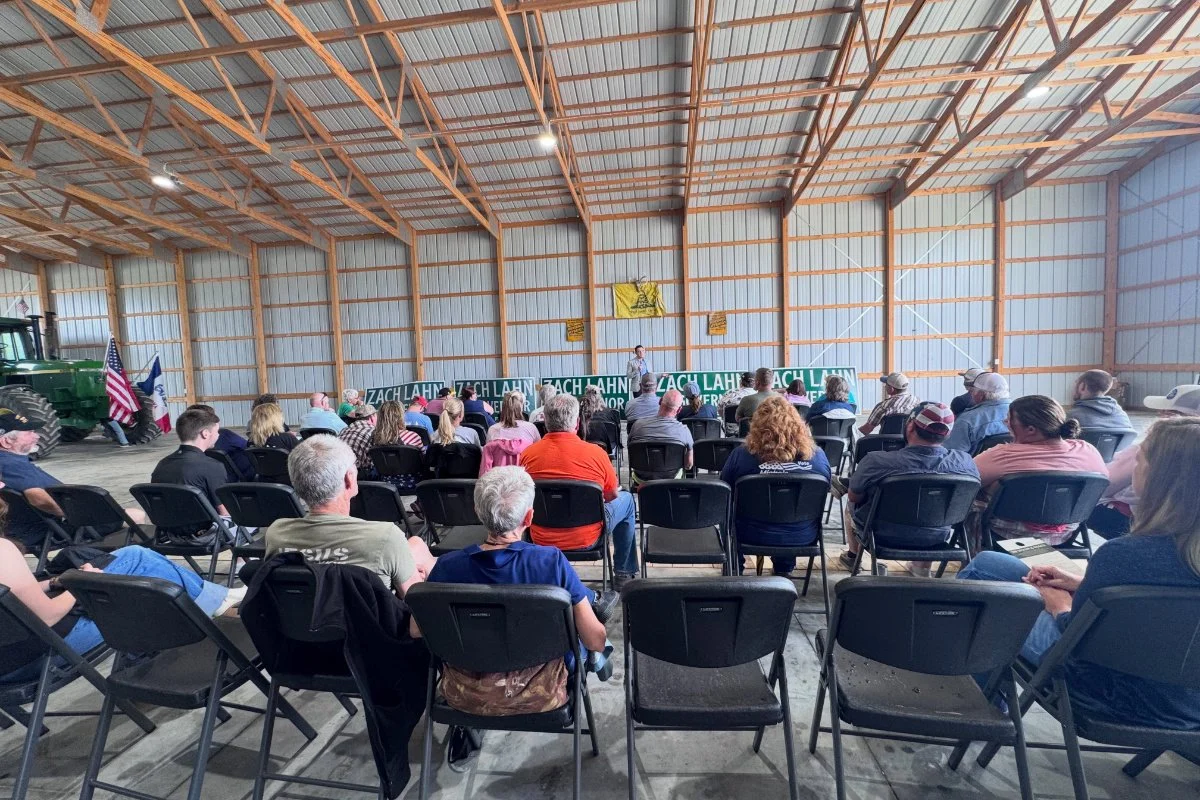
Republican gubernatorial candidate Zach Lahn, fresh off a decisive primary victory on June 2, has positioned himself as an "Iowa First" populist champion, vowing to dismantle corporate monopolies in agriculture and deliver a "fair deal" to farmers. His impassioned primary night speech in West Des Moines, where he declared Iowa would no longer belong to "the political class, lobbyists, special interests, and corporate giants," resonated deeply with a jubilant crowd, particularly his promise to "bust ’em up" when it came to "Big Ag cartels." Lahn’s campaign has notably bucked traditional Iowa Republican talking points, drawing attention to potential links between chemical pesticide and fertilizer use, water quality, and rising chronic disease rates in the state. This unconventional stance has garnered him national prominence and a coveted endorsement from Robert F. Kennedy Jr.’s Make America Healthy Again (MAHA) movement, MAHA Action.
However, Lahn’s populist rhetoric and anti-corporate pledges are increasingly facing scrutiny due to his extensive professional and personal ties to the Koch family, one of the nation’s most powerful pro-industry forces. Critics and political observers are highlighting a significant perceived contradiction between Lahn’s current campaign message and his past work for organizations funded by Charles and David Koch, whose vast network has consistently lobbied for deregulation and policies that empower large industrial sectors, often at odds with environmental protection and consumer advocacy. As Iowa grapples with critical issues like widespread water contamination, increasing cancer rates, and the growing influence of corporate power in its vital agricultural sector, voters are closely examining Lahn’s record and affiliations, questioning the authenticity and feasibility of his ambitious promises.
Zach Lahn’s Populist Platform and Primary Victory
Zach Lahn’s primary campaign tapped into a palpable sense of discontent among Iowans regarding the state’s agricultural landscape and environmental health. His "Iowa First" message championed the cause of local farmers, promising to challenge the dominant power of large corporations. During his primary victory speech, he explicitly condemned "corporate monopolies in Iowa agriculture," a sentiment met with enthusiastic shouts of "Bust ’em up!" from supporters. Lahn’s commitment to "break up their monopolies" and "get Iowa farmers a fair deal" struck a chord in a state where agricultural input costs have soared, and market consolidation has left many farmers feeling squeezed.
Beyond economic concerns, Lahn distinguished himself by publicly addressing the controversial topic of chemical agriculture. He pointed to potential connections between the heavy use of pesticides and fertilizers and pressing environmental and public health issues, including water quality degradation and an increase in chronic diseases. This nuanced approach contrasts sharply with the often pro-industry stances of many traditional Republican candidates in agricultural states. His alignment with MAHA Action, a movement advocating for health and environmental reforms, further cemented his image as an outsider willing to challenge established norms. The MAHA movement, gaining traction in recent years, focuses on issues like vaccine safety, environmental toxins, and corporate accountability, aligning with Lahn’s critique of industrial agriculture.
The timing of Lahn’s campaign is particularly salient. Pollution in Iowa’s drinking water has become increasingly widespread, with studies in 2025 showing pollutants nearly doubling over 50 years. Furthermore, while national cancer rates have seen a decline, Iowa has experienced a troubling rise in diagnoses, fueling public concern about environmental factors. In this context, Lahn’s direct engagement with these issues, positioning them as central to his gubernatorial bid, marks a significant shift in the state’s political discourse, making corporate impact on farmers, health, and quality of life more prominent than in previous election cycles.
The Koch Network: A Deep Dive into Influence
At the heart of the skepticism surrounding Zach Lahn’s candidacy are his deep-seated connections to the Koch family and their vast political and business empire. Koch Industries, one of the largest privately held companies in the U.S. with estimated annual revenues exceeding $125 billion, operates across diverse sectors including refining, chemicals, fertilizers, polymers and fibers, forest and consumer products, and financial trading. The company’s political advocacy arm, Americans for Prosperity (AFP), co-founded and funded by brothers David H. and Charles Koch, has been a monumental force in shaping conservative policy in the United States for decades.
AFP’s operational philosophy is rooted in a fervent belief in free markets and limited government intervention, often translating into lobbying efforts that champion deregulation across various industries. Historically, AFP has been a vocal proponent of policies that benefit fossil fuel and petrochemical industries, consistently opposing environmental regulations designed to curb pollution or mitigate climate change. For instance, AFP has actively lobbied against federal and state initiatives to promote renewable energy, advocating instead for continued reliance on traditional energy sources. Their policy corner frequently features arguments for "regulatory reform" that reduces government oversight, asserting that such measures drive "economic freedom." This consistent advocacy has positioned AFP, and by extension the broader Koch network, as a powerful counterforce to environmental protection and stringent corporate accountability.
The network’s influence extends far beyond direct lobbying. The Koch brothers, particularly Charles Koch, have built a sophisticated infrastructure of think tanks, advocacy groups, and academic programs that promote their libertarian-leaning economic and political ideologies. This "Kochtopus," as it’s sometimes called, works to influence public opinion, policy debates, and political outcomes at both federal and state levels, often with a long-term strategic vision. Their spending on political advocacy is immense, often rivaling or exceeding that of major political parties, underscoring their profound impact on American policy-making.
Lahn’s Career Trajectory and Early Political Stances

Zach Lahn’s political journey provides a chronological context for the current debate. His early public profile emerged in 2009 as an undergraduate student at the University of Colorado Boulder. During a town hall meeting hosted by then-President Barack Obama, Lahn gained national attention by challenging the public option for healthcare, arguing that it would disadvantage private insurance companies. This early stance showcased a consistent conservative economic philosophy that has underpinned much of the Koch network’s advocacy.
Following his graduation, Lahn moved to Washington D.C., working for prominent Republicans. He served first under then-Representative Cory Gardner of Colorado, who later became a U.S. Senator, and subsequently for Steve Daines of Montana, who also transitioned from the House to the Senate. These roles provided him with direct exposure to federal legislative processes and conservative political strategy.
In 2014, Lahn took a significant step by joining Americans for Prosperity as the director of its Montana operations. This period was crucial for AFP, as it was actively deploying political operatives nationwide to prevent states from expanding Medicaid under the Affordable Care Act (ACA). Lahn’s specific mandate in Montana was to lead the charge against Medicaid expansion. Despite AFP’s significant efforts, Montana voters ultimately rejected these attempts and voted to expand coverage, demonstrating the challenges even well-funded advocacy groups face in state-level politics. During his tenure, AFP Montana also consistently worked to promote the expansion of fossil fuel extraction within the state and to oppose environmental regulations on industry, aligning perfectly with the broader Koch network’s agenda.
These past affiliations raise serious questions, as noted by J.D. Scholten, an Iowa state representative and Democrat on the agriculture committee. Scholten, a vocal critic of corporate power in agriculture, acknowledged Lahn’s effective messaging but expressed profound distrust, stating, "I appreciate his messaging, but then I also don’t trust it when you work for Americans for Prosperity for so many years, on the other side. I think it does matter, because it’s a value system." This sentiment encapsulates the challenge Lahn faces in convincing voters that his newfound populist rhetoric is a genuine shift rather than a strategic repositioning.
The Pesticide Immunity Battle: A Critical Conflict
One of the most immediate and controversial points of contention linked to Lahn’s past ties to AFP is the ongoing debate over pesticide company immunity bills. These legislative efforts aim to shield pesticide manufacturers from lawsuits brought by individuals who claim to have suffered illness, such as cancer, due to exposure to their products. This issue has become a central battleground for the MAHA movement, which vehemently opposes such protections, advocating for individuals’ right to seek legal recourse against corporations for health damages. MAHA supporters have rallied outside the Supreme Court, successfully blocked federal legislation, and fought state-level bills designed to grant immunity.
Zach Lahn has publicly aligned himself with the MAHA position, unequivocally stating, "No company should ever have immunity from liability." He has further pledged to "veto any pesticide immunity bill that would come up." This firm stance appears to be a direct contradiction of his former employer’s actions. Iowa legislative records confirm that earlier this year, AFP deployed two lobbyists to the Iowa Capitol to actively push for a pesticide company immunity bill in the state legislature. This stark contrast highlights the ideological chasm between Lahn’s current public declarations and the historical advocacy of the organization he once directed. Lahn’s campaign has notably declined to respond to inquiries from Civil Eats regarding his past work with Americans for Prosperity or to provide comment on these specific issues. In a July PBS interview, Lahn briefly addressed his AFP relationship, stating his work focused on ACA loopholes, but he did not distance himself from AFP’s broader political agenda.
Further complicating this issue is the involvement of Lahn’s chosen running mate, Iowa Representative Derek Wulf. Political journalist Laura Belin reported that in 2024, Bayer’s Modern Ag Alliance, an industry group, ran an advertisement in the Des Moines Register listing Wulf among legislators "advocating for this crucial legislation." Wulf was also reported to have attended a concert outing sponsored by the Modern Ag Alliance. While Wulf has since denied supporting the legislation, stating he didn’t know how his name appeared in the ad and that he consistently helped kill such bills in committee, the perception of his alignment with agribusiness interests remains. Campaign finance records reveal Wulf received $1,000 from a Bayer PAC in both 2024 and 2025, alongside numerous other contributions from agribusiness giants, illustrating the deep financial ties between the agricultural industry and Iowa politicians.
Corporate Consolidation in Iowa Agriculture: The Koch Factor
Lahn’s campaign has consistently railed against "the entrenched interests of industry" and the "consolidation across a lot of industries" that he argues is detrimental to farmers. He has promised to "lead the charge to bring anti-trust suits against these companies and to give farmers a fair shake." This focus on agricultural monopolies resonates deeply with Iowa farmers, who have witnessed increasing market concentration across various sectors. Aaron Lehman, President of the Iowa Farmers Union, emphasized that this attention to monopolies is a "symptom of the discontent that we see with the amount of power that has been consolidated at the top."
A prime example of this consolidation, and a direct link to the Koch family, is in the nitrogen fertilizer industry. According to Farm Action, just four companies—CF Industries, Nutrien, Yara-USA, and Koch Industries—control an astounding 84 percent of production in the U.S. This oligopoly grants immense power to a few players, influencing prices and supply for farmers.
The issue became particularly acute in Iowa when, in 2023, Koch Industries purchased Iowa Fertilizer Co. for $3.6 billion. This acquisition was highly controversial because the Iowa Fertilizer Co. plant had been constructed with significant state taxpayer investment—approximately $100 million—with the explicit goal of fostering competition in the highly consolidated fertilizer market. J.D. Scholten articulated the concern: "The state of Iowa put in $100 million to create competition, and then for Koch to come and buy them 10 years later is exactly the thing it was supposed to be going against." This move effectively negated the state’s investment in promoting market diversity and instead further entrenched a major player, Koch Industries, in a dominant position. Lahn’s campaign has not responded to specific questions about whether he would have supported this sale as governor, leaving a significant gap in his stated anti-monopoly platform.

Beyond past employment, Lahn’s connection to the Koch family extends to more personal and ongoing ties. After his work with AFP in Montana, Lahn collaborated with Chase Koch, son of Koch Industries CEO Charles Koch, to found and operate "Wonder," a private school in Kansas. As recently as March 2025, Lahn and his wife, Annie (who was formerly married to Chase Koch), were listed as staff at the school; they now serve on its Board of Directors. This continued proximity to the Koch family, coupled with AFP’s active role in promoting "school choice" bills that divert public funds to private education, reinforces the perception of a sustained relationship with the Koch network’s ideological and financial orbit. Progressive blogger David Bradley has identified these relationships as "red flags," suggesting they "signal that he will try to cripple any regulatory power that state government has, giving businesses a green light to screw workers and consumers without much thought."
Iowa’s Environmental Crisis: Water Quality and Cancer Rates
Iowa faces a pressing environmental crisis, particularly concerning its water quality. Jennifer Breon, an Iowa City-based organizer with Food and Water Action, highlights the "real concern in Iowa with our drinking water, that nitrate pollution is contributing to our cancer rates." Nitrate levels in Iowa’s major rivers saw a dramatic surge in the summer of 2025, leading to 36 reported violations of safe drinking water nitrate levels throughout the year—a doubling from 2024. These alarming statistics underscore the urgency of addressing agricultural runoff and its impact on public health.
The agricultural industry, including fertilizer producers like Koch Industries, has a significant stake in debates at the Capitol regarding agriculture’s contribution to water pollution. The industry often favors voluntary conservation measures over stringent regulations. Lahn’s stance on this issue reflects a similar approach. During a May primary debate section dedicated to nitrate pollution, Lahn identified it as a top priority. However, when pressed on specific actions, he emphasized that "it doesn’t have to be as much about regulation as, I think, incentives."
This preference for incentives aligns with a long-standing debate in Iowa politics. For 13 years, the state has relied on a Nutrient Reduction Strategy that encourages farmers to voluntarily adopt conservation practices. However, many critics argue that this voluntary approach has largely failed to move the needle on pollution levels. Data from December 2025 showed nitrate levels in Iowa water remaining stubbornly high. While some groups assert the strategy is slowly making progress, others, like the Iowa Environmental Council, have labeled it a failure, citing a lack of significant improvement in water quality. The Koch network’s philosophy typically favors market-based solutions and minimal regulation, making Lahn’s emphasis on incentives consistent with their broader ideology, but potentially at odds with the urgent need for more impactful solutions to Iowa’s environmental challenges.
Reactions and Implications: Trust, Policy, and the Future of Iowa
Zach Lahn’s campaign presents a fascinating case study in the evolving landscape of American politics, particularly the rise of populist, anti-establishment rhetoric within the Republican Party. His success in winning over MAHA supporters, as evidenced by his post-primary webinar with MAHA Action founder Tony Lyons, showcases his ability to connect with a constituency deeply concerned about corporate influence and public health. Kelly Ryerson, a MAHA-affiliated activist, expressed optimism, believing Lahn is "fully committed to shifting agriculture to better serve farmers and health, not corporations." She hopes to see him champion policies like banning paraquat, a pesticide linked to Parkinson’s Disease, and restricting pre-harvest desiccation, practices that federal regulators have been slow to address.
However, Lahn’s embrace of MAHA has not translated into universal trust among other food system advocates and environmental groups in Iowa. Jennifer Breon of Food and Water Action articulates a common sentiment: "The interesting thing about Zach Lahn is that he talks about the issue, but then he stops short of any policy solutions that would regulate the industry." Given his past history "essentially for industry groups," she distrusts his commitment. Breon views Lahn’s promises as mirroring a national political trend where some Republican administrations verbally acknowledge MAHA concerns while simultaneously slashing environmental regulations, approving new pesticides, and siding with large agribusiness and chemical companies. This perceived hypocrisy at the national level fuels skepticism about Lahn’s ability or willingness to enact meaningful change.
For many, genuine progress on Iowa’s water quality and agricultural issues necessitates robust regulatory action. Breon argues that voluntary measures, while well-intentioned, often place farmers who adopt them at an economic disadvantage. "It would level the playing field if everyone was required to do this," she said, "and that’s the only way we’re going to get clean water in Iowa." Iowa Farmers Union President Aaron Lehman echoes the sentiment that farmers themselves are still discerning whom to trust. He emphasizes that despite resonating language on corporate power, "it takes real commitment across the board to deal with corporate control of our family farm system."
The implications of Lahn’s candidacy for Iowa are significant. Should he defeat Democratic candidate Rob Sand, his governorship would face the immediate challenge of reconciling his populist promises with the deep-seated influence of pro-industry forces, including the Koch network, to which he has such extensive ties. His policy choices on issues like pesticide liability, antitrust enforcement in agriculture, and water quality regulation will be closely watched. The central question remains whether Zach Lahn can, or will, translate his anti-corporate rhetoric into tangible policy reforms that genuinely challenge the powerful interests he once served, or if his campaign represents a strategic adaptation of conservative ideology to a new populist moment, leaving the fundamental structures of corporate power in Iowa largely untouched.