admin
admin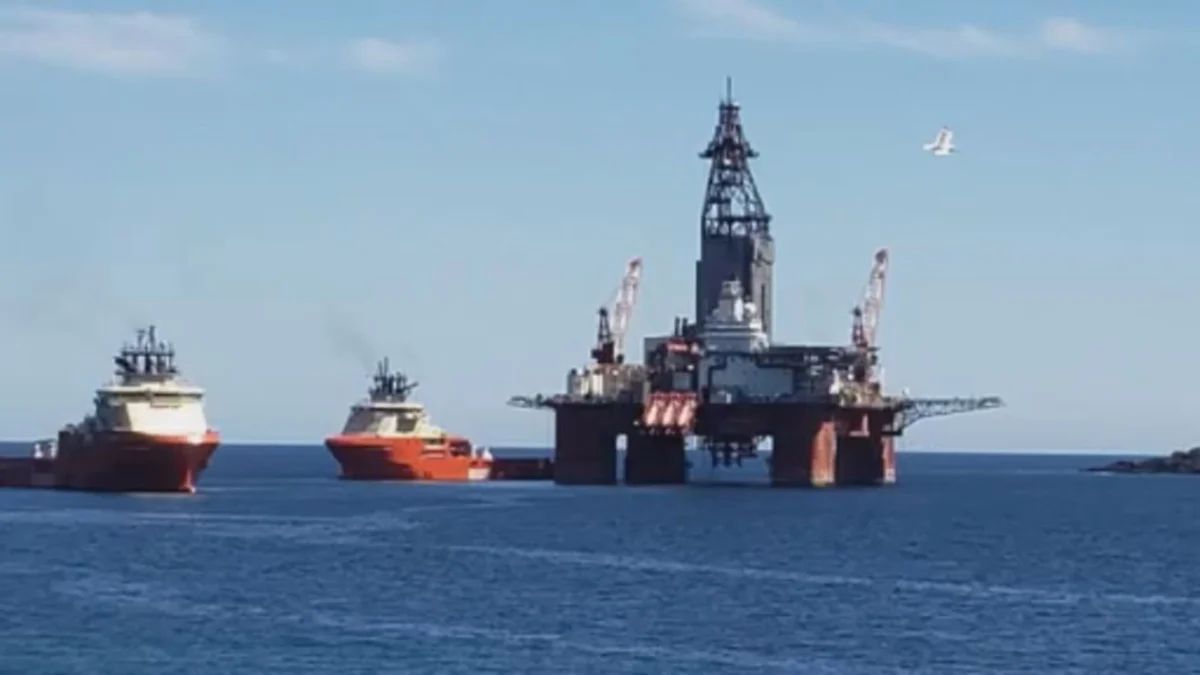
British oil company BP has formally announced its withdrawal from the proposed Bay du Nord offshore oil project situated off the east coast of Newfoundland, a strategic decision articulated as a move to optimize capital allocation and enhance investment discipline across its global portfolio. The revelation came as the London-based energy giant published its second-quarter financials on Tuesday, August 4, 2026, a period marked by profound disruptions in the global energy market yet yielding a robust $3.9 billion in profits, more than double its earnings from the same quarter last year. This significant financial performance underscores a broader trend among major oil companies benefiting from soaring crude and gasoline prices, exacerbated by ongoing geopolitical instability, particularly the fighting in Iran, which has severely upended global fuel supplies.
BP’s Strategic Realignment and Financial Strength
The decision to divest its interest in Bay du Nord, which was finalized last month through a sale to Equinor, the project’s Norwegian operator, is presented by BP as a testament to its evolving investment strategy. Meg O’Neill, BP’s chief executive officer, emphasized this strategic pivot in the company’s second-quarter report, stating, “We must keep challenging ourselves, using our balanced investment criteria to make decisions rooted in profitability, cash generation, and market realities. I am very clear on this, we need to compete in the weight class we are in.” This statement reflects a concerted effort by BP to streamline its operations and focus capital on projects deemed to offer the most compelling returns and strategic fit within its long-term vision. The divestment, therefore, is not an indication of financial distress but rather a calculated move to free up capital for other ventures or to strengthen its balance sheet, even as the company enjoys a period of exceptional profitability.
The $3.9 billion profit reported for the second quarter of 2026 represents a substantial increase from the approximately $1.9 billion reported in the second quarter of 2025. This surge is largely attributable to the volatile global energy landscape. Geopolitical tensions, particularly the escalating conflict in Iran and its impact on oil production and transit routes, have curtailed supply. Simultaneously, a post-pandemic rebound in global demand, coupled with underinvestment in new production capacity in previous years, has created a "perfect storm" for commodity prices. Brent crude, the international benchmark, has consistently traded at elevated levels throughout the quarter, directly translating into higher revenues and profit margins for oil producers like BP. This environment has seen numerous energy majors, including Shell, ExxonMobil, and Chevron, report similarly impressive earnings, collectively signaling a boom period for the fossil fuel industry despite global pressures to transition to cleaner energy sources.
The Bay du Nord Project: Ambition and Challenges

The Bay du Nord project itself is an undertaking of immense scale and complexity, poised to become Canada’s first deepwater oil development. Located in the Flemish Pass Basin, approximately 500 kilometers east of St. John’s, Newfoundland, the project site lies at water depths ranging up to an unprecedented 1,170 meters. Its proposed location, significantly farther from shore than any existing offshore oil project globally, presents unique engineering, logistical, and environmental challenges. The project envisions the extraction of an estimated 300 million barrels of oil from the harsh North Atlantic environment, utilizing a floating production, storage, and offloading (FPSO) vessel.
From a Canadian perspective, Bay du Nord has been heralded by some as a crucial pillar for Newfoundland and Labrador’s economic future, promising thousands of jobs during its construction and operational phases, as well as substantial royalty revenues for the provincial government. Proponents argue that the project would leverage Canada’s expertise in offshore resource development and contribute to global energy security, especially at a time of geopolitical uncertainty. However, the project has also been a flashpoint for significant environmental controversy. Critics, including various environmental organizations and Indigenous groups, have raised concerns about the potential for oil spills in deepwater, the immense carbon footprint associated with extracting and burning the oil, and the project’s alignment with Canada’s commitments under the Paris Agreement to reduce greenhouse gas emissions. The federal government’s initial approval of the project, subject to stringent environmental conditions, ignited a national debate about balancing economic development with climate action.
Chronology of a Major Offshore Development
The journey of the Bay du Nord project has been a protracted one, spanning over a decade of exploration, assessment, and regulatory scrutiny:
- 2013: Equinor (then Statoil) announces the discovery of the Bay du Nord oil field, marking a significant find in the Flemish Pass Basin.
- Mid-2010s: Further exploration and appraisal drilling by Equinor and its partners, including BP, confirm the commercial viability of the reservoir.
- 2018-2020: Equinor submits its Environmental Impact Statement (EIS) to the Canadian government, initiating a multi-year regulatory review process.
- March 2022: The Canadian federal government, through the Minister of Environment and Climate Change, issues its environmental approval for the project, subject to 137 binding conditions, sparking both relief from industry and strong condemnation from environmental groups.
- Early 2026: BP publicly signals its intention to review its global portfolio, hinting at potential divestments to streamline operations.
- July 2026: BP announces the sale of its entire interest in the Bay du Nord project to Equinor, making the Norwegian company the sole owner and operator. This transaction is subject to customary regulatory approvals.
- August 4, 2026: BP confirms its withdrawal from Bay du Nord in its second-quarter earnings report, citing investment discipline and portfolio simplification as key drivers.
- Early 2027 (Projected): Equinor is expected to make its final investment decision (FID) on whether to proceed with the Bay du Nord development.
At the time of its divestment, BP held interests across 10 licenses associated with the Bay du Nord project, with an average working interest of 37.2 percent. The sale to Equinor consolidates ownership, simplifying the project structure, but also concentrates the financial and operational risk solely on the Norwegian entity.
Official Responses and Market Reactions

BP’s official statement from CEO Meg O’Neill clearly frames the decision within the context of robust financial management and strategic focus. The company’s press release accompanying the Q2 results highlighted "portfolio optimization" as a key theme, suggesting that the Bay du Nord asset, while significant, might not have aligned perfectly with BP’s evolving capital allocation priorities, especially when compared to other high-return opportunities or its broader energy transition investments.
While BP’s announcement primarily focused on its financial performance and strategic rationale, reactions from other stakeholders are multifaceted. The Newfoundland and Labrador provincial government, which has been a staunch advocate for the project, is likely to express understanding of BP’s commercial decision but may also feel a degree of disappointment regarding the loss of a major international partner. Provincial officials have consistently emphasized the need for new offshore developments to sustain the region’s economy and energy sector expertise. The province’s energy minister, while not issuing an immediate statement on the day of BP’s earnings report, is expected to reiterate confidence in Equinor’s ability to move the project forward, contingent on a positive FID.
Equinor, now the sole proprietor of the Bay du Nord project, has reaffirmed its commitment to a thorough evaluation process leading up to its final investment decision. A spokesperson for Equinor stated, "We acknowledge BP’s strategic decision to divest from the Bay du Nord project. Equinor remains committed to the careful assessment of the project’s viability, considering market conditions, project costs, and the regulatory environment, ahead of our planned FID early next year." This suggests that Equinor will proceed cautiously, weighing the substantial capital expenditure required against the projected returns and the inherent risks of deepwater development. The consolidated ownership might, in some ways, simplify decision-making, but it also increases Equinor’s exposure to the project’s success or failure.
Environmental organizations, conversely, may view BP’s withdrawal as a partial victory, interpreting it as a sign of decreasing industry appetite for high-carbon, high-risk projects, even if BP’s stated reasons are purely financial. While BP’s departure doesn’t halt the project, it removes a significant international player from the consortium, potentially adding pressure on Equinor to reconsider or to implement even more stringent environmental safeguards. Activist groups will likely intensify their lobbying efforts directed at Equinor and the Canadian government to ultimately prevent the project from moving forward.
Broader Impact and Implications
BP’s withdrawal from Bay du Nord holds several significant implications for the global energy landscape, Canada’s energy sector, and the company itself.

For BP, the move reinforces its narrative of financial discipline and portfolio optimization. By shedding a capital-intensive, long-term deepwater project, BP gains financial flexibility, which it can deploy towards other high-return conventional projects or, critically, towards its stated ambitions in renewable energy and low-carbon solutions. While the immediate focus of the earnings report was on current oil and gas profitability, BP has been vocal about its long-term energy transition strategy, which involves shifting investments away from fossil fuels. Divesting from Bay du Nord, even if driven by pure financial metrics, aligns with a broader trend among European majors to rationalize their fossil fuel portfolios.
For Equinor, assuming full ownership of Bay du Nord presents both an opportunity and increased risk. The project could become a cornerstone of its international portfolio, leveraging its expertise in harsh offshore environments. However, it also means bearing the full financial burden and reputational risk associated with a controversial deepwater development. Equinor’s FID next year will be a critical juncture, influenced by prevailing oil prices, projected development costs, technological advancements, and the evolving regulatory and social license landscape for such projects. A decision to proceed would signal strong confidence in the project’s economic viability and Equinor’s ability to manage its environmental footprint.
For Canada and Newfoundland and Labrador, BP’s departure introduces a layer of uncertainty for a project that has been central to future energy plans. While Equinor is committed to evaluating the project, the loss of a major partner can sometimes signal broader industry hesitations. It raises questions about the long-term attractiveness of Canada’s deepwater frontier for international investment, particularly given the global push for decarbonization and the associated risks of stranded assets. The province will need to continue working closely with Equinor to ensure the project’s viability and to secure the economic benefits it promises. Furthermore, the decision highlights the ongoing tension within Canada’s energy policy between maximizing resource development and meeting ambitious climate targets.
More broadly, this development underscores the dynamic nature of the global energy market. Even amidst record profits driven by geopolitical events, major energy companies are making strategic, long-term portfolio decisions. These decisions are not solely based on immediate market conditions but also on a complex interplay of capital efficiency, risk management, future energy demand projections, and the evolving regulatory and investor expectations regarding climate change. The Bay du Nord project, once a symbol of Canada’s deepwater potential, now also serves as a case study in the strategic re-evaluation facing global energy giants as they navigate a volatile present and an uncertain future. Equinor’s upcoming final investment decision will be a crucial indicator of the project’s fate and the broader trajectory of deepwater oil development in a world grappling with both energy security and climate imperatives.