admin
admin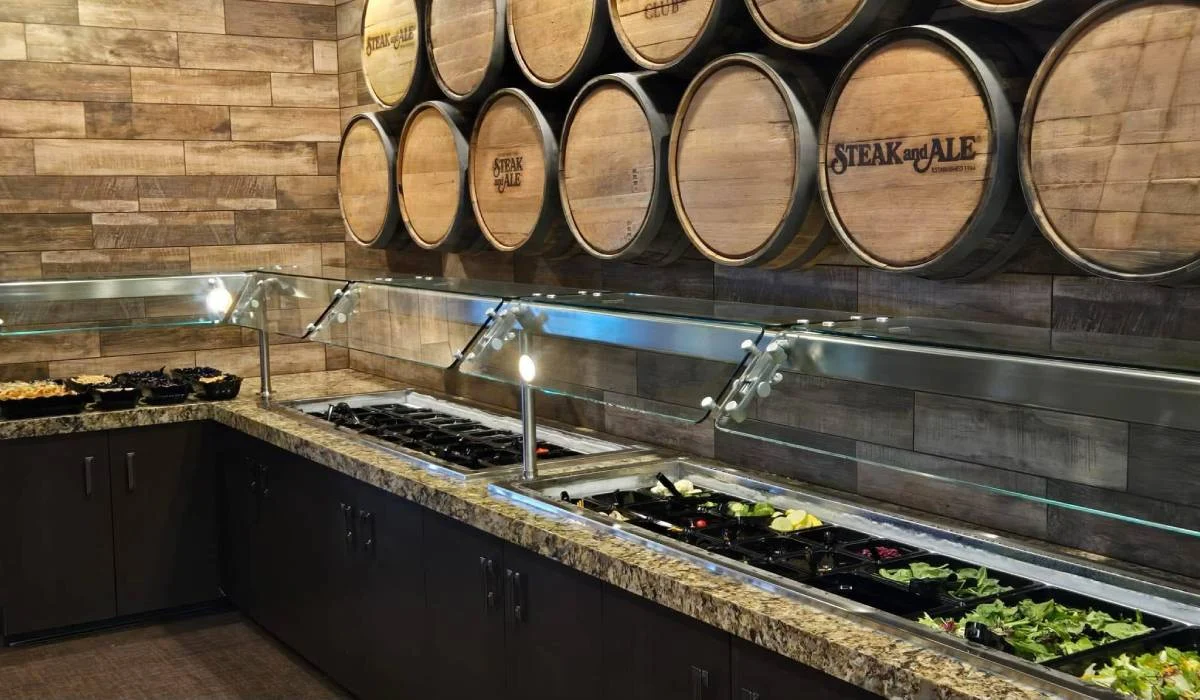
The narrative of American casual dining is often one of rapid expansion followed by inevitable consolidation, but rarely does it involve a three-decade love story that culminates in the resurrection of a legacy brand. John and Dixie Benca, a husband-and-wife duo with deep roots in the hospitality industry, have announced plans to bring Steak and Ale back to the Southern United States. The new location, slated for Anderson, South Carolina, marks a significant milestone in the comeback of a brand that once defined the polished casual steakhouse experience for millions of Americans.
For the Bencas, the project is more than a business venture; it is the closing of a circle that began more than 30 years ago. The couple first met while working as student employees at a Steak and Ale location in Athens, Georgia, while attending college. That experience did more than just foster a personal connection; it provided the professional foundation upon which they built a thirty-year career in restaurant management. Now, as experienced multi-unit operators in the Anderson market, they are tasked with reintroducing the brand to a region where its absence has been felt for nearly two decades.
A Legacy of Innovation: The Norman Brinker Era
To understand the significance of the Anderson announcement, one must look back to the origins of Steak and Ale. Founded in 1966 by legendary restaurateur Norman Brinker, the brand is widely credited with inventing the modern casual dining segment. Brinker, who would later go on to lead Chili’s Grill & Bar and founded Brinker International, envisioned a restaurant that offered the quality of a high-end steakhouse at a price point accessible to the middle class.
The original Steak and Ale concept was revolutionary for its time. It featured an environment inspired by the warmth and coziness of an English country inn, complete with dim lighting, Tudor-style architecture, and a focus on "Legendary" service. Perhaps its most enduring contribution to the industry was the introduction of the self-service salad bar, a novelty in the 1960s that soon became a staple of American dining.
At its peak in the 1980s, Steak and Ale boasted nearly 300 locations across the United States. It was the premier destination for anniversaries, graduations, and business dinners, occupying a unique space between fast food and fine dining. However, the brand struggled as the market became increasingly crowded with competitors like Outback Steakhouse and Texas Roadhouse, which adopted and modernized many of Brinker’s original innovations.
The Path to Insolvency and the 16-Year Hiatus
The decline of Steak and Ale was punctuated by a series of corporate transitions and economic challenges. By the early 2000s, the brand was owned by S&A Restaurant Corp., a subsidiary of Metromedia Restaurant Group. In July 2008, amid the onset of the Great Recession, S&A Restaurant Corp. filed for Chapter 7 bankruptcy protection.
The filing was a "liquidation" bankruptcy rather than a "reorganization," meaning the company did not intend to keep the restaurants open while restructuring debt. Overnight, all 58 remaining Steak and Ale locations were shuttered, along with hundreds of company-owned Bennigan’s locations. For 16 years, the brand existed only in the memories of its loyal "inner circle" of fans and former employees.

The intellectual property for Steak and Ale remained in limbo until 2015, when Paul Mangiamele, the CEO of Bennigan’s, and his wife, Gwen Mangiamele, completed a 100 percent acquisition of the brands under their new entity, Legendary Restaurant Brands LLC. Their mission was clear: to revitalize these iconic names through a strategy Mangiamele describes as "new-stalgia"—blending the beloved elements of the original concepts with modern culinary standards and operational efficiencies.
The Strategic Choice of Anderson, South Carolina
The selection of Anderson, South Carolina, for the first Southern franchise location is a calculated move based on both demographic trends and the Bencas’ local expertise. Located in the "Upstate" region of South Carolina, Anderson sits along the high-growth Interstate 85 corridor, positioned strategically between the major metropolitan hubs of Atlanta, Georgia, and Charlotte, North Carolina.
The market is bolstered by its proximity to Greenville—one of the fastest-growing cities in the Southeast—and major educational institutions such as Clemson University and Anderson University. Furthermore, the presence of Lake Hartwell brings a consistent flow of seasonal tourists and secondary residents to the area.
"Anderson represents everything we love about the South," the Bencas noted. "It’s a growing community that has never lost its sense of warmth, hospitality, and hometown pride."
By partnering with the Bencas, Legendary Restaurant Brands is leveraging "boots-on-the-ground" experience. The couple has operated multiple independent restaurants in the Anderson area for decades, giving them an intimate understanding of local consumer behavior and labor markets. This local focus aligns with Paul Mangiamele’s philosophy of "smart growth" over "fast growth," prioritizing the selection of "brand stewards" who are deeply invested in their specific communities.
Redefining the "Polished Casual" Experience
The Anderson location, targeted for a first-quarter 2027 opening, will not be a mere replica of the 1970s model. While it will retain the signature elements that fans remember—such as the high-quality steaks, the unlimited salad bar, and the warm, wood-heavy aesthetic—the "new era" of Steak and Ale focuses on an "upscale makeover."
The menu innovation strategy involves maintaining "legendary favorites" while introducing contemporary flavors and plating techniques. This approach aims to satisfy the nostalgia of older generations who frequented the original restaurants while appealing to younger Millennial and Gen Z diners who prioritize ingredient transparency and "Instagrammable" dining environments.
The business model has also been streamlined. In an era of high labor costs and food inflation, the new Steak and Ale units are designed to be more efficient than the sprawling footprints of the past. The focus is on "intentional, sustainable growth," ensuring that each new location can maintain the high standards of service that Norman Brinker originally established—a set of standards the Bencas say they carry with them to this day.

Economic Impact and Industry Implications
The return of Steak and Ale to the South is expected to have a tangible economic impact on the Anderson region. New restaurant openings typically generate between 60 and 100 local jobs, ranging from front-of-house service staff to specialized culinary roles. Beyond direct employment, the establishment of a high-profile franchise can act as a catalyst for further commercial development in its immediate vicinity.
From a broader industry perspective, the revival of Steak and Ale is a test case for the viability of legacy brand resurrection. In a market where many "zombie brands" struggle to find relevance, Mangiamele’s "new-stalgia" approach suggests there is a significant market for "comfort brands"—restaurants that provide a sense of psychological safety and familiarity in an increasingly volatile world.
The success of the first new Steak and Ale, which opened in Burnsville, Minnesota, in 2024, has already provided a proof-of-concept. That location saw overwhelming demand, with wait times and reservation bookings signaling that the appetite for the brand had not diminished during its 16-year absence. The Anderson location will serve as the gateway for the brand’s re-expansion into the Southeast, a region historically known for its strong loyalty to steakhouse concepts.
Chronology of the Steak and Ale Revival
- 1966: Norman Brinker opens the first Steak and Ale in Dallas, Texas.
- 1980s: The brand reaches its peak with nearly 300 locations nationwide.
- 1990s-2000s: Ownership transitions and increased competition lead to a decline in store counts.
- July 2008: Parent company S&A Restaurant Corp. files for Chapter 7 bankruptcy; all remaining locations close.
- February 2015: Paul and Gwen Mangiamele acquire the brand, forming Legendary Restaurant Brands LLC.
- 2024: The first new Steak and Ale opens in Burnsville, Minnesota, ending a 16-year hiatus.
- Late 2024: John and Dixie Benca announce the first Southern franchise location in Anderson, South Carolina.
- Q1 2027: Projected opening of the Anderson, South Carolina, location.
A "Full Circle" Moment for the Hospitality Industry
The announcement of the Anderson franchise has been met with what the Bencas describe as an "overwhelmingly positive" response from the local community. For many, the return of Steak and Ale is a nostalgic homecoming. For the Bencas, it is a professional tribute to the institution that shaped their lives.
"It’s hard to put into words because it truly feels like life has come full circle," the couple stated. They emphasized that the "standards and discipline" they learned as young employees—often referred to in the industry as the "Brinker School of Hospitality"—will be the cornerstone of the new operation.
As Steak and Ale approaches its 60th anniversary, the Anderson opening stands as a symbol of the brand’s resilience. Paul Mangiamele views this not as a simple rebuilding effort, but as the launch of a "bold new era." By combining the emotional weight of a 60-year legacy with the operational rigor of modern franchising, Legendary Restaurant Brands and the Bencas are betting that the "secret sauce" of value, quality, and personal connection is a timeless formula.
In the coming years, the success of the Anderson location will likely dictate the pace of Steak and Ale’s expansion across the Sunbelt. For now, the focus remains on "one plate at a time," ensuring that the promise made by Norman Brinker in 1966 is kept for a new generation of diners in South Carolina.