admin
admin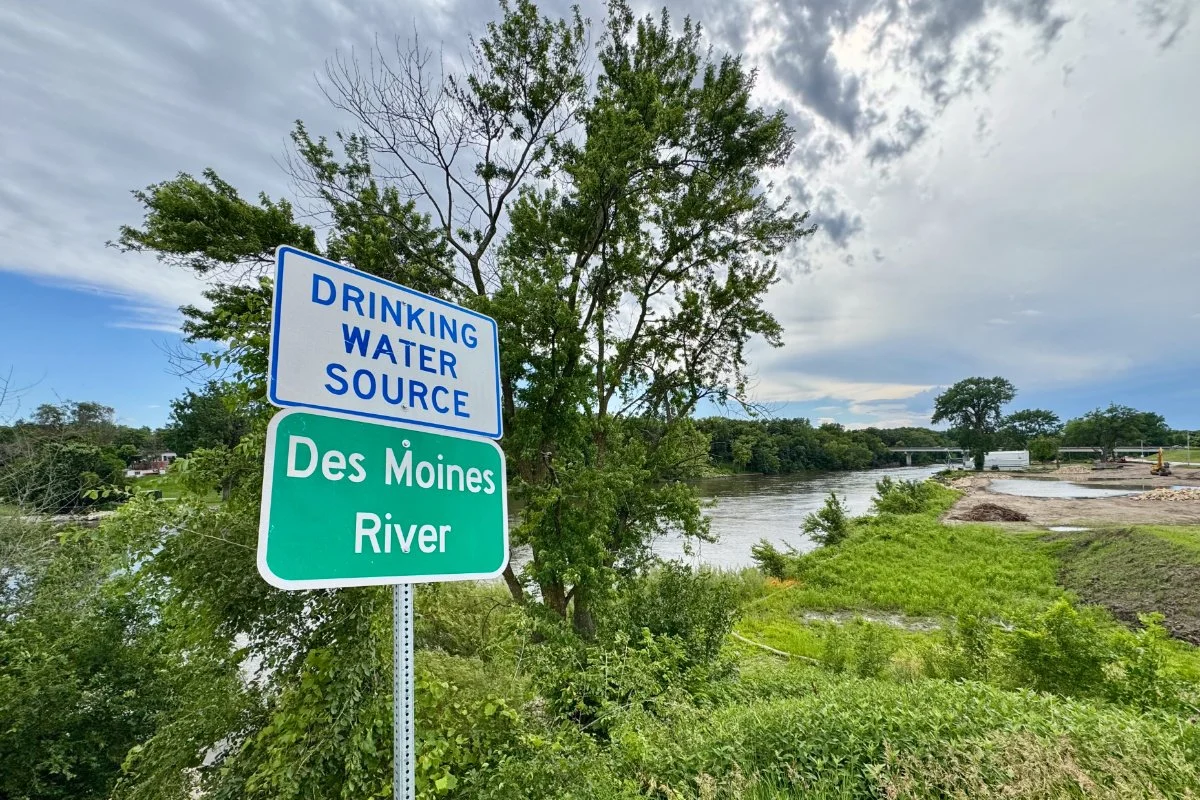
Iowa, a state synonymous with vast agricultural landscapes and productive farmlands, is grappling with a severe environmental and public health crisis that has dramatically reshaped its political discourse. With waterways ranking among the nation’s most polluted and cancer rates soaring, voters are increasingly prioritizing candidates’ plans to address this existential threat, transforming the upcoming November midterm elections into a referendum on environmental stewardship and public health.
A State Under Siege: The Health Crisis Unveiled
The gravity of Iowa’s situation is stark. The Raccoon River and Des Moines River, vital sources of drinking water for central Iowa, are not merely contaminated; they consistently rank in the top one percent of rivers nationwide for nitrate concentration. This alarming statistic is directly linked to a burgeoning public health crisis: Iowa now holds the unenviable position of having the second-highest rate of new cancer cases in the country, and it is one of only three states experiencing a rise in these rates.
A groundbreaking report published in March by the Iowa Environmental Council and the Harken Institute unequivocally attributes a staggering 80 percent of the rivers’ contamination to the agriculture industry. The report further solidifies the link between nitrate pollution and a spectrum of adverse health outcomes, prominently including various forms of cancer. While the U.S. Environmental Protection Agency (EPA) sets a 10 mg/L limit for nitrates in drinking water, scientific research indicates that increased risks of gastrointestinal cancers begin at exposure levels as low as 5 mg/L, and other cancers, such as ovarian, are linked to levels starting at 3 mg/L—significantly below the EPA’s current standard. This year alone, the Raccoon and Des Moines rivers have seen nitrate levels skyrocket to an alarming 17.58 mg/L, far exceeding even the EPA’s more permissive limits. The direct consequence for residents is evident: Iowa recorded 36 nitrate-related drinking water violations in 2025, a sharp increase from the 14 reported in 2024, according to the Iowa Department of Natural Resources (DNR). These figures paint a grim picture of a state where clean, safe drinking water is becoming a luxury, not a right.
The Agricultural Roots of the Problem

Iowa’s agricultural dominance, while economically significant, is at the heart of its water quality woes. The state’s corn and soybean fields, which cover an expansive 70 percent of its land, are routinely fertilized with nitrogen-based compounds to maximize yields. Often, these applications exceed what crops can absorb, leading to substantial runoff. Compounding this issue are Iowa’s 15,309 confined animal feeding operations (CAFOs), which collectively produce an astounding 107.6 million tons of nitrogen-rich manure annually. This manure is also spread across cropland, further saturating the soil with excess nutrients.
The widespread use of underground farm tiles, initially designed to drain fields and improve soil workability, inadvertently acts as an efficient conduit, channeling this nitrate-laden water directly into streams, rivers, and eventually, drinking water sources. This systemic pollution not only jeopardizes human health but also contributes to climate emissions and has far-reaching marine impacts, most notably the colossal "dead zone" in the Gulf of Mexico, an area thousands of square miles wide where marine life cannot survive due to oxygen depletion caused by nutrient runoff from the Mississippi River Basin.
A Decade of Voluntary Measures: The Iowa Nutrient Reduction Strategy
In response to growing concerns, Iowa introduced the Iowa Nutrient Reduction Strategy (INRS) in 2013. This framework of voluntary measures aimed to reduce nutrient runoff by 45 percent by 2035, specifically targeting the pollutants flowing into the Mississippi and Missouri rivers and ultimately the Gulf of Mexico. However, a decade into its implementation, the INRS has demonstrably fallen short of its objectives. The most recent data from the INRS dashboard, reflecting 2024, reveals some of the highest levels of nitrate pollution ever recorded, underscoring the strategy’s ineffectiveness.
Experts like Michelle Soupir, who heads Iowa State University’s Water Quality Research Lab, emphasize the immense scale of change required. "It’s not going to change at the current rate of implementation. We really need to ramp it up," Soupir stated. She highlighted that achieving INRS goals would necessitate an astronomical increase in infrastructure, such as expanding the number of bioreactors from 300 to over 100,000, alongside extensive development of wetlands, cover crops, and saturated buffers. The slow pace of adoption for these critical conservation practices has been a major impediment, with progress stalling due to a combination of economic pressures on farmers, insufficient incentives, and a political landscape heavily influenced by agribusiness interests.
Political Gridlock and Legislative Responses

The political response to Iowa’s water crisis has been characterized by downplaying the problem and offering largely insufficient solutions. For years, agribusiness companies have contributed heavily to political campaigns, wielding significant influence over state policy. This has historically translated into a preference for voluntary conservation measures over stringent regulations.
A clear illustration of this dynamic came in 2023 when state funding for the Iowa Water Quality Information System (IWQIS), a crucial network of real-time water quality monitors, was reallocated from academic institutions to the Iowa Department of Agriculture. Chris Jones, then a professor at the University of Iowa and coordinator of IWQIS, noted, "What aggravated the legislature was not so much the data collection itself, but that the data was so easily accessible by the public. That discredits what they’re hearing from politicians about the nutrient strategy working." The long-term future of these monitors, now reliant on short-term funding from county governments and environmental groups, remains uncertain, limiting public access to vital information.
In January, Governor Kim Reynolds’s "Condition of the State" speech notably addressed the state’s cancer rates at length but conspicuously omitted any mention of the water quality crisis. The following week, House Democrats introduced a comprehensive water quality package aimed at tackling the upstream sources of nitrate pollution. However, this package failed to even be assigned a bill number, illustrating the legislative body’s reluctance to confront the agricultural industry directly. State Rep. Austin Baeth (D-Des Moines) described it as "an offering to Republicans and to the ag industry as a starting place to start the conversation and try to find common ground."
In stark contrast, Republicans introduced their own legislation in February, House File 2527, which sought to protect polluters by limiting lawsuits against agricultural operations based on greenhouse gas emissions. This bill, championed by State Rep. Derek Wulf (who is now gubernatorial candidate Zach Lahn’s running mate), was signed into law in April, further signaling a legislative environment protective of agribusiness interests.
Only at the very end of the legislative session, in overtime on May 3, did Iowa lawmakers pass the "Farm to Faucet" water quality funding package (House File 2771). This package allocates $25 million to double the nitrate removal capacity of Central Iowa Water Works (CIWW), which already operates the world’s largest nitrate-removal facility and provides drinking water to Des Moines and surrounding areas. CIWW has had to run its nitrate removal system for a record number of days this year, incurring costs of $16,000 per day when all seven vessels are operational. The package also funnels an additional $320 million to other water quality investments over the next 12 years, including a mere $500,000 annually for the DNR’s single-check water quality monitoring system, where some monitors are updated monthly, while others have not been updated in decades.
"Farm to Faucet" has drawn criticism from both sides of the political spectrum for being a "Band-Aid fix" that focuses on downstream mitigation rather than addressing the root causes of pollution. Zach Lahn, a Republican gubernatorial candidate, while supporting incentives for practices like saturated buffers, conceded, "I’m happy the governor and the legislature allocated more funding to make sure Des Moines has clean water, but that’s a Band-Aid fix." Critics, including Sam Bernhardt of Food & Water Action, Baeth, and Jones, believe the package was a belated attempt by Republicans to appear responsive to voter concerns as the November elections loomed. Norlin Mommsen, a Republican who managed HSB 772 (which became Farm to Faucet), dismissed conspiracy theories, stating it was simply due to reviewing underutilized programs for fund redirection.

Voter Frustration and Shifting Political Tides
Public frustration in Iowa is palpable and growing. A Food & Water Action poll conducted in February revealed overwhelming voter sentiment: 82 percent of Iowans would be more likely to vote for an elected official who prioritizes clean water, and 72 percent are more concerned with rising cancer rates than the cost of living. Crucially, the poll also found that voters favor reducing pollution from industrial agriculture over limiting regulations to protect Iowa’s agricultural economy. "I think if we redid this poll right now, we would find even stronger numbers," said Sam Bernhardt. "I think there’s a jailbreak about to happen on water quality."
This growing discontent is translating into tangible actions by Iowans. The costs of nitrate removal facilities are shouldered by taxpayers through utility bills, prompting many to seek individual solutions. Schaal Plumbing, Heating, and Cooling, a central Iowa company, has seen a skyrocketing demand for home water treatment systems, installing 50 reverse osmosis systems by mid-June, up from 25 last year, and projecting over 100 for the year—a 400 percent increase. Home improvement retailer Menards has also reported an uptick in sales of these filtration systems across the state. Stephani Kilbride, a Des Moines suburb resident and former farm kid, exemplifies this trend, having bought a countertop reverse osmosis system due to concerns about her family’s drinking water. Her sentiment reflects a broader distrust: "I feel like we have representatives right now who don’t care."
Farmers like Ray and Susan Meylor, who own Cherry Glen Learning Farm—a watershed mitigation farm near Saylorville Lake—are actively demonstrating solutions. Their farm uses a water retention basin and solar-powered irrigation to clean nitrate-laden water from farm tiles before it reaches the drinking water network. Ray Meylor, frustrated by political inaction, asserts that with real sustainability and inclusive crop ecology practices, "we can have the state fixed in two or three years," rather than the "50 years" he projects with the current approach.
Key Electoral Contests: Governor and Secretary of Agriculture
The rising tide of public concern has injected unprecedented energy into Iowa’s political races. For the first time in 15 years, a Democrat gubernatorial candidate has a realistic chance of winning. Current State Auditor Rob Sand, the Democratic nominee, has distinguished himself by being the only gubernatorial candidate to issue an official, comprehensive water quality plan. Sand’s plan includes investing in real-time water quality monitoring, expanding conservation programs with income and property tax credits for farms using approved nutrient plans, establishing a notification system for high nitrate levels, and increasing the number of wetlands. He touts bipartisan praise for his plan’s impact and achievability, and endorsements from the UAW and even some Republican leaders. While largely self-funded, his campaign receives significant backing from his in-laws, the Lauridsen family, who head an agribusiness holding company.

On the Republican side, Zach Lahn secured the nomination by directly linking agricultural pollution to rising cancer rates, making it a cornerstone of his "Make America Healthy Again" (MAHA) platform. Lahn supports refundable tax credits for "deep banding" nitrogen (which keeps nutrients in deeper soil layers, limiting runoff) and financial incentives for saturated buffers. Lahn, who is largely self-funded, claims this frees him to be honest about the issue, accusing agribusiness giants of wielding undue influence. However, critics point to his past career as a state director for Americans for Prosperity, the flagship political arm of the Koch Industries Network, and his involvement with a Koch-funded private school, raising questions about his ties to powerful agribusiness interests that have historically opposed stricter regulations. Lahn’s campaign manager, Paul Cordes, maintains that Lahn has no current ties or funding from the Koch conglomerate. Farmers like DeAnn and Doug Pudenz, who have implemented conservation practices on their Carroll County farm, see Lahn as a candidate who will stand up for farmers and water quality, stating, "We farm and we want our water clean."
The state secretary of agriculture race is also heavily influenced by water quality. Incumbent Republican Mike Naig, whose career began as an agribusiness and agrichemical lobbyist for groups like CropLife and Monsanto, has focused on supporting voluntary, farmer-led conservation practices. His campaign recently announced the first phase of the Farm to Faucet plan, offering $25 per acre for cover crops and one-time payments for stream buffers in 22 counties, aiming to double cover-crop adoption across the Des Moines watershed.
Challenging Naig is Democrat Chris Jones, a retired research engineer and leading water quality expert from the University of Iowa. Jones was spurred to run by what he perceives as lawmakers’ inaction. He advocates for a two-pronged approach: taxpayer-funded "off-ramps" for farmers transitioning to sustainable practices, and enforceable pollution regulations for those who do not. Jones proposes diversifying crops away from ethanol-centric corn monocultures, suggesting a return to pasture for sustainable beef cattle, and criticizes Farm to Faucet as merely coping with the problem rather than solving it, accusing it of asking "nothing of the industry" and placing the burden entirely on taxpayers.
Economic and Environmental Ramifications and the Path Ahead
The stakes extend far beyond Iowa’s borders. The unresolved pollution issue contributes significantly to the Gulf Dead Zone, impacting Gulf Coast fisheries and ecosystems. Domestically, the economic burden on Iowans is substantial, from higher utility costs for advanced water treatment to individual expenses for home filtration systems. The current political trajectory, heavily influenced by powerful agricultural lobbies, suggests a continued reliance on voluntary measures that have proven insufficient.
The upcoming elections represent a critical juncture for Iowa. The governor’s race, currently rated a toss-up by the Cook Political Report, holds the key to future water quality policy, funding, and oversight by state agencies. A Democratic victory could lead to a shift towards more robust regulation, increased funding for real-time monitoring, and proactive upstream solutions. Conversely, a Republican win might reinforce the status quo of voluntary initiatives, potentially prolonging the crisis.

The deepening public frustration, evidenced by polling data and increased sales of home water filtration systems, suggests a potent electoral force. As candidates articulate their visions for addressing the polluted waterways and rising cancer rates, Iowans are poised to demand a fundamental shift towards sustainable practices and accountable governance. The outcome of these races will not only determine the health of Iowa’s residents and ecosystems but could also set a precedent for how agricultural states nationwide confront the complex interplay of economic interests, environmental protection, and public health. The "jailbreak" on water quality that activists predict may well manifest at the ballot box this November, forcing a long-overdue reckoning with the costs of unchecked industrial agriculture.