admin
admin
A seismic shift is underway in the historically demanding restaurant industry, as innovative pizzeria owners across the United States are redefining employee welfare, offering competitive pay, robust benefits, and unparalleled training opportunities to foster a culture of stability and growth. This movement, driven by personal conviction and a post-pandemic re-evaluation of business priorities, stands in stark contrast to the traditional industry model often characterized by high turnover, limited benefits, and a strenuous work-life balance. Owners like Marvin Kinney of R Town Pizza in Reno, Nevada, Zachary Black of Jasons NY Pizza in Bangor, Maine, and Jennifer Boehmer of Red Top Pizza by Penny’s in Royersford, Pennsylvania, are not just serving pizza; they are building sustainable, employee-centric enterprises that are setting a new standard for the sector. Their pioneering efforts demonstrate a compelling business case for investing in human capital, proving that a thriving workforce is the bedrock of a successful and resilient establishment.
A Personal Crusade for Change: Marvin Kinney’s R Town Pizza
Marvin Kinney’s journey into becoming a trailblazer for employee rights in the restaurant industry is rooted in decades of personal experience within a system he felt was fundamentally broken. For thirty years, Kinney toiled in professional kitchens, a common trajectory for many culinary professionals, without the fundamental protections of health insurance or the prospect of a secure retirement. This stark reality, where essential benefits were often an unattainable luxury, fueled his determination to establish a different kind of workplace when he launched R Town Pizza in Reno. "I didn’t have health insurance until I turned 44," Kinney recounted, emphasizing the profound personal cost of the industry’s traditional employment model. "And I had to build the damn company to do it."
At R Town Pizza, Kinney has meticulously designed a comprehensive benefits package that challenges industry norms. Employees working more than 32 hours per week are granted access to employer-sponsored health, dental, and vision insurance. Furthermore, after a mere 90 days of employment, staff are automatically enrolled in a 401(k) program, featuring immediate vesting and a generous 4% company match. The opt-in nature of the 401(k) is a deliberate strategy to encourage participation, underscoring Kinney’s commitment to his employees’ long-term financial well-being. This proactive approach to retirement planning and healthcare stands as a beacon in an industry where such provisions are often scarce, especially for hourly workers.
Kinney’s commitment is unwavering, even in the face of escalating operational costs. Last year, insurance premiums surged by 14%, with rumors of another potential 20% hike this year. Despite these financial pressures, he remains resolute. He acknowledges the alternative of increasing wages and letting employees purchase their own insurance but rejects it, citing critical instances where the employer-sponsored plan is a lifeline for individuals, including his own child. This demonstrates a deep-seated belief in collective responsibility and the social safety net that comprehensive benefits provide.
Beyond benefits, Kinney is tackling the pervasive culture of burnout and addiction that he believes has long plagued the restaurant world. He describes an environment where workers often come in sick, and instead of support, are sometimes "rewarded" with a six-pack of beer—a symptom of a deeper systemic issue. The COVID-19 pandemic served as a pivotal moment for Kinney, pushing him to the brink of leaving the industry altogether. Instead, he channeled his frustration into a mission for reform. "I got it in my head that I’ve spent the last 15 years badmouthing the way this industry treats its workers, and so this is my last hurrah," he reflected. "Either I’m going to do this, or I’m going to leave the industry." This resolve led to the creation of R Town Pizza, specializing in Detroit-style pies, as a proving ground for a new ethos.
Economically, Kinney has also raised the bar. While the minimum hourly wage in Reno is $12, R Town Pizza starts all employees at a base wage of $15 per hour. This is further supplemented by an evenly divided tip pool that typically adds an additional $7 to $12 per hour, pushing total hourly compensation significantly above market rates. All subsequent raises are strictly merit-based, fostering a culture of performance and professional development. The success of this model is evident in its expansion; Kinney recently opened Dough Cheese Sauce, a New York-style takeout pizzeria, with a manager from R Town Pizza not only transitioning to lead the new venture but also investing in the business—a powerful testament to the trust and belief inspired by Kinney’s leadership.
Jasons NY Pizza’s Post-Pandemic Epiphany: Prioritizing People
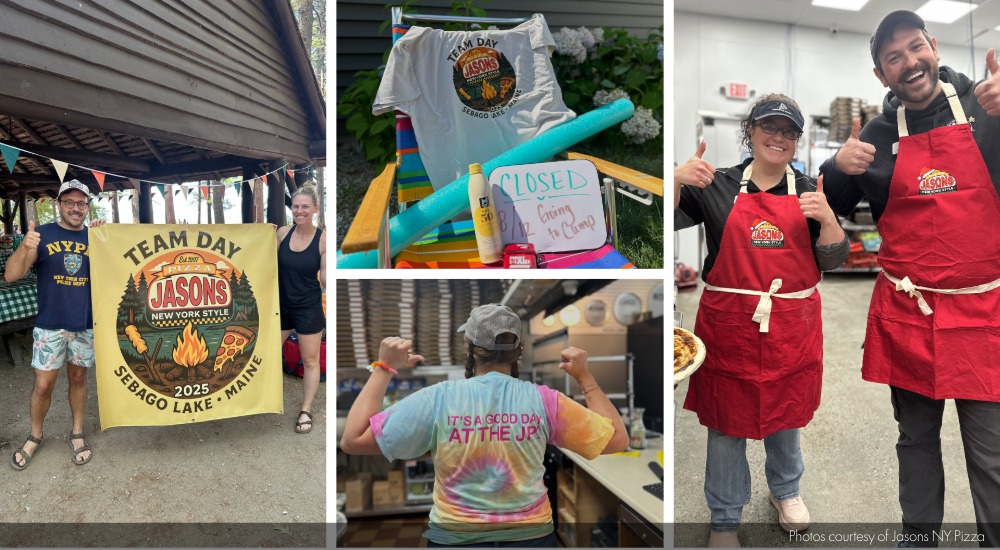
In Bangor, Maine, Jasons NY Pizza, a family-owned business operating since 1997 with five shops, underwent a profound transformation catalyzed by the COVID-19 pandemic. Zachary Black, the chief experience officer, described a moment of critical self-reflection when the company emerged from 2020 with a mere 10 employees across two stores. This dramatic reduction in workforce forced ownership to confront a sobering question: "We always thought we were a good place to work, but were we? Because people could make more money [with COVID-era unemployment benefits] as opposed to staying with us and working."
This realization spurred a complete reorientation of their business strategy, placing employees squarely at the center. Black articulated the fundamental truth they embraced: "Our business is completely dependent on our employees." Recognizing that every service-based business was vying for talent from the same constrained labor pool, Jasons NY Pizza committed to "come back stronger" by making substantial investments in its workforce. Their renewed priorities focused on ensuring employees received fair pay, access to benefits, a healthy work-life balance, clear career progression, and a supportive, respectful work environment.
Maine’s minimum wage currently stands at $15.25 per hour, but Jasons NY Pizza significantly surpasses this, with an average employee pay nearing $21 per hour. Beyond competitive wages, the pizzeria implemented a transparent pay structure, providing employees with a clear roadmap for potential raises, detailing eligibility criteria and expected increases, typically ranging from 3% to 7%. This transparency is crucial for employee motivation and retention. As Black explained, "How do you look forward as an employee if you don’t know that you could make more at this job? … We need these people to be here for years." This proactive approach addresses a common frustration in the industry where career advancement and financial growth often feel opaque or nonexistent.
Jasons NY Pizza has also tackled the pervasive issue of burnout, particularly among management. Managers are encouraged to cap their working hours at 42 per week, a policy designed to promote work-life balance. "They’ve got families and things to do outside of work," Black emphasized, highlighting the company’s recognition of employees as individuals with lives beyond the workplace. This policy, coupled with competitive pay, has been instrumental in retaining valuable leadership. Furthermore, all employees, from part-time hourly staff to full-time managers, are eligible for paid vacation time, with accrual increasing with longevity—a rare and significant benefit in the food service sector. The flexibility of managers to accommodate vacation requests reinforces the company’s mission to be a genuinely good place to work.
Beyond tangible benefits, Jasons NY Pizza cultivates a strong sense of community and appreciation. Annually, all locations close completely for a company-wide celebration, such as a lobster bake at a state park. This dedicated time ensures full employee participation, a marked improvement from previous attempts where events were held after shifts, leading to low attendance due to fatigue. "Attendance is up because people don’t have to stress about work at all," Black noted. During these gatherings, employees with at least two years of service are recognized with customized clothing and commemorative pins marking their tenure. This symbolic recognition, with updated pins awarded annually, fosters pride and loyalty. "It matters because it’s a conversation starter," Black said. "People like recognition, they like being thanked. It goes a long way."
Red Top Pizza: Cultivating Professionalism from the First Job
In Royersford, Pennsylvania, Jennifer Boehmer, owner of Red Top Pizza by Penny’s, a carry-out and delivery-only establishment, has positioned her pizzeria as a foundational training ground for young workers. Many teenagers gain their first professional experiences under Boehmer’s guidance, and she strives to make this transition as seamless and impactful as possible by instilling a strong work ethic and clear professional standards. Her method involves meticulous documentation and communication of duties and expectations for every role within the shop.
Boehmer employs "key result areas," which are detailed descriptions of responsibilities printed and distributed to employees, as well as prominently displayed throughout the pizzeria. For instance, the counter position’s "key result area" outlines specific tasks related to customer interaction, order accuracy, quality control, and workspace maintenance. Crucially, these lists don’t just state the tasks (e.g., "sanitize surfaces and equipment regularly"); they also explicitly define "what winning looks like" (e.g., "The counter area is always clean, stocked, and organized, leaving a positive impression on customers and supporting smooth service"). This granular approach removes ambiguity and empowers employees to understand not only what to do but also the standard to achieve.
This structured environment has earned Red Top Pizza a reputation in the community for developing responsible, capable workers. Boehmer’s system teaches employees self-sufficiency, enabling them to understand their responsibilities, utilize downtime productively, and function effectively as a team during peak hours. "If you see somebody’s busy and are not sure how to help, you can always grab their list," she explains, highlighting the system’s role in fostering teamwork and proactive problem-solving. Her overarching goal extends beyond pizza making: "My main goal is really just to help develop them as a good, respectable employee, no matter where they go." This focus on transferable skills and professional development is invaluable, particularly for young individuals embarking on their careers.

Strategic Cross-Training and Continuous Learning
Boehmer further enhances employee development through rigorous cross-training. Once new hires master their primary duties, she prioritizes teaching them different roles within the pizzeria. This ensures operational resilience—"If somebody calls out, the delivery driver also knows how to wash dishes, fold boxes, sweep the floor"—and elevates overall staff performance. For example, counter employees trained in pizza making can more confidently answer customer questions about ingredients or preparation.
Her training methodology is hands-on and adaptive: she demonstrates tasks, then has employees repeat the process. "There are so many different ways people learn," Boehmer notes, acknowledging the importance of diverse teaching approaches. The effectiveness of her system is exemplified by her full-time manager, who began working at the shop at age 14 and has remained with Red Top Pizza for 16 years, now at 30. Other positions, including pizza maker, oven tender, and dishwasher, also benefit from clear guidelines. Boehmer even introduced detailed checklists for opening and closing every station, addressing initial resistance from longtime employees with the pragmatic explanation, "Not everybody’s been here forever"—a simple but effective way to ensure consistency and ease onboarding for new staff.
Broader Implications and a Shifting Industry Paradigm
The efforts of Marvin Kinney, Zachary Black, and Jennifer Boehmer are not isolated incidents but rather symptomatic of a larger, evolving paradigm within the restaurant industry. The COVID-19 pandemic acted as a powerful accelerant, exposing the fragility of a business model that historically relied on low wages, minimal benefits, and high turnover. The "Great Resignation" or "Great Rethink" saw millions of workers re-evaluate their priorities, leading to unprecedented labor shortages in sectors like hospitality. In response, forward-thinking restaurateurs are recognizing that investing in their employees is not merely an act of benevolence but a strategic imperative for long-term viability and profitability.
Historically, the restaurant industry has been plagued by one of the highest turnover rates across all sectors, often exceeding 75% annually, and in some segments, even surpassing 100%. This constant churn incurs significant costs related to recruitment, onboarding, and training, estimated to be thousands of dollars per employee. By offering competitive wages, comprehensive benefits, and a supportive work environment, businesses like R Town, Jasons NY, and Red Top Pizza are directly addressing the root causes of this turnover. Reduced turnover translates into substantial savings, greater institutional knowledge, improved customer service, and a more cohesive team.
The provision of employer-sponsored health insurance, while a significant expense (averaging over $7,000 annually for single coverage and over $20,000 for family coverage for employers in the U.S. in recent years, according to the Kaiser Family Foundation), acts as a powerful differentiator in a competitive labor market. Similarly, 401(k) plans, paid time off, and transparent pay structures offer a sense of security and a clear path for advancement that is rare in the industry. These benefits not only attract talent but also foster loyalty and dedication, transforming jobs into careers.
The ripple effect of these initiatives extends beyond the individual businesses. When local chefs and restaurant owners seek advice from Kinney on how he manages to offer such comprehensive benefits, it signals a growing awareness and desire for change across the industry. This peer-to-peer exchange of best practices is crucial for scaling these progressive models. The emphasis on developing responsible, cross-trained employees, as championed by Boehmer, also contributes to a more skilled and adaptable workforce overall, benefiting the wider economy.
Ultimately, these pizzerias are demonstrating a new blueprint for success in the restaurant world: one where human capital is valued as much as culinary excellence. By prioritizing employee well-being, professional development, and fair compensation, they are not only creating better workplaces but also building stronger, more resilient businesses that are better equipped to navigate future challenges. Marvin Kinney’s hope that his employees carry these values into their next jobs or entrepreneurial ventures encapsulates the transformative potential of this movement, fostering a new generation of leaders committed to a more equitable and sustainable hospitality industry.