admin
admin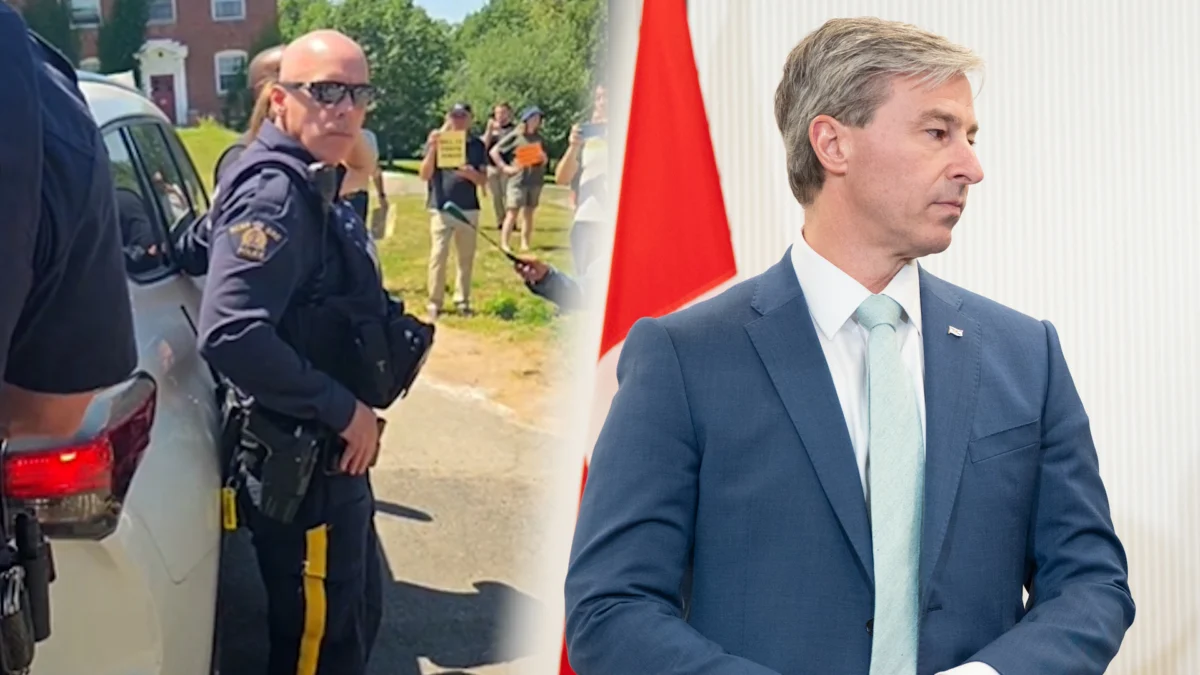
Nova Scotia’s Premier, Tim Houston, is continuing his scheduled speaking tour across the province, a day after a protest in Wolfville, N.S., escalated into a violent confrontation, an incident that political experts and municipal leaders are citing as a stark indicator of the increasingly volatile landscape of contemporary politics. The Royal Canadian Mounted Police (RCMP) have launched an investigation into the Wednesday incident, appealing to the public for assistance in identifying individuals alleged to have unlawfully impeded the Premier and his staff from departing an event and causing significant damage to a government vehicle. This event has not only cast a shadow over the Premier’s efforts to engage with Nova Scotians but has also ignited a crucial dialogue about the boundaries of dissent and the safety of public officials in an era of heightened political polarization.
The Wolfville Incident: A Detailed Account
The confrontation unfolded on Wednesday afternoon, following a speaking engagement at Acadia University in Wolfville, a picturesque town renowned for its vibrant academic community and cultural scene. Premier Houston, who was embarking on the initial leg of a series of engagements designed to connect with chambers of commerce and business owners across the province, found his departure from the university venue violently obstructed.
According to a statement released by the Premier’s Office, as Houston and his team attempted to leave the premises in their vehicles, they were "swarmed by rioters." The Premier’s office detailed that protesters actively blocked the vehicles, preventing their movement, and that the windshield of the vehicle in which Premier Houston was a passenger was reportedly smashed. Further accounts suggest that some individuals climbed onto the Premier’s vehicle, creating a highly volatile and intimidating environment.
Video footage circulating on social media captured portions of the chaotic scene, showing RCMP officers attempting to manage the crowd and at least one individual being apprehended amidst an emotionally charged atmosphere. Despite the intensity of the confrontation and the alleged damage, RCMP confirmed that no injuries were reported from the incident. A man was initially arrested in connection with the protest but was later released without charges as the investigation continues to unfold.
Premier Houston himself addressed the incident in a video posted to social media, unequivocally condemning the actions witnessed. "This was not the Nova Scotian way," Houston stated, emphasizing the violent nature of the protest. He reiterated his unwavering respect for the public’s right to express their opinions and engage in peaceful protest, but drew a clear distinction, asserting that the events of Wednesday fell far outside the bounds of legitimate democratic expression. "In trying to leave the venue, my vehicle and my team’s vehicles were swarmed by rioters. They blocked us in. They were pushing law enforcement, climbed on top of the car I was in," he recounted, underscoring the severity of the situation.

Underlying Grievances: The Spark Behind the Fury
The protest in Wolfville was not an isolated outburst but rather a convergence of various deeply felt grievances against the provincial government’s policies. While the Premier’s tour was focused on economic dialogue, the protesters vocalized concerns spanning a range of social and environmental issues.
Among the primary issues cited by protesters were recent budget cuts impacting the arts sector across Nova Scotia. Many in the artistic community have expressed alarm over reductions in funding, arguing that these cuts threaten the vitality of the province’s cultural landscape and the livelihoods of artists.
Another contentious issue was the prospect of impending library closures in the area. Libraries serve as crucial community hubs, providing access to resources, education, and social programming, particularly in rural and underserved communities. Proposals for closures or significant reductions in library services often elicit strong public opposition, rooted in concerns about equitable access to information and community well-being. The Wolfville Public Library, a vital institution in the community, had faced a potential closure, though a last-minute reprieve had delayed it. This context suggests a deep-seated anxiety about the future of public services.
Broader societal concerns, including Indigenous rights and environmental protection, also fueled the protest. Discussions around Indigenous rights in Nova Scotia are complex and ongoing, often involving land claims, resource management, and reconciliation efforts. Environmental concerns, particularly pertaining to provincial resource policies and climate action, are increasingly mobilizing activists across the province and the country. These issues represent deeply held values for many Nova Scotians and have been a consistent source of advocacy and protest against various government initiatives. The confluence of these diverse concerns at a single event highlights the multifaceted pressures and expectations placed upon provincial leadership.
The Broader Climate: A Rise in Political Hostility
The Wolfville incident, while specific in its details, is being viewed by many as symptomatic of a disturbing trend: the escalating hostility directed towards public officials at all levels of government. The Nova Scotia Federation of Municipalities (NSFM) has been vocal in raising concerns about this phenomenon, observing a marked increase in aggressive behaviour and threats targeting municipal politicians and staff.
Bridgewater Mayor David Mitchell, who serves as the president of the NSFM, offered a candid perspective on the challenging climate. He acknowledged personal experiences with threats, stating, "I’ve had threats made against me. I think you can probably go to most municipalities and hear from someone." Mayor Mitchell emphasized the unique vulnerability of local politicians, who are often deeply embedded in their communities, with their residences and daily lives known to the public. "It’s scary, especially for local politicians where people know where we live, we’re here on the ground every day – but it is ramping up," he noted, underscoring the tangible increase in hostility. His unequivocal statement, "There should be no violence in any protest," reflects a widely shared sentiment among public servants.

Lori Turnbull, a respected political scientist and professor at Dalhousie University, echoed these concerns, describing the events in Wolfville as "unacceptable." She highlighted the rarity of such overt physical attacks in Canadian politics, noting, "We typically don’t see that kind of a violent attack." While acknowledging a rise in similar incidents globally and domestically, Turnbull expressed continued shock at their occurrence. "Those sorts of things are on the rise, but still, every time you see it, it’s kind of shocking and nobody goes into political office because they want to be the subject of that and it’s got to be really scary and it is not acceptable," she asserted.
Implications for Democracy and Public Service
The implications of incidents like the Wolfville protest extend far beyond the immediate damage or the safety of individual politicians. Political analysts and community leaders are increasingly concerned about the potential long-term ramifications for Canada’s democratic processes and the very nature of public service.
Professor Turnbull articulated a significant concern: the potential deterrence of qualified individuals from seeking public office. If the prospect of engaging in political life includes facing violent confrontations, threats, and personal attacks, the pool of willing and capable candidates may diminish. "If there’s a sense that the premier can’t move about in a way that is peaceful and safe for him and the people around him, who is going to want to run for office if this is what you’re signing up for?" she posed, highlighting a fundamental threat to democratic representation.
Furthermore, such incidents undermine the essence of civil political discourse. When protests devolve into violence, they overshadow the legitimate grievances being raised and detract from the possibility of constructive dialogue and finding solutions. "This sort of thing makes it look like politics is not really a place where solutions come through, where there’s meaningful dialogue. It kind of puts a cloud over the whole thing," Turnbull explained. The erosion of civil engagement harms not only politicians but the entire populace, by fostering an environment where shouting overrides listening, and confrontation replaces compromise. "And so it does affect us. It hurts the rest of us," she concluded, emphasizing the collective societal cost.
The events in Wolfville serve as a stark reminder that while the right to protest is a cornerstone of democracy, it is not absolute and must be exercised within the bounds of law and respect for the safety of all individuals, including elected officials. The distinction between passionate advocacy and violent obstruction is crucial for maintaining a healthy democratic society.
The Path Forward: Continuing Engagement Amidst Scrutiny
Despite the unsettling events, Premier Houston has signaled his intent to continue his provincial tour, albeit likely with increased security measures and heightened awareness. The original schedule for July and August involves meetings with various chambers of commerce and Nova Scotia business owners, aiming to foster economic dialogue and address regional concerns.

Following the Wolfville event, the Premier’s next scheduled stop was with the Yarmouth and Area Chamber of Commerce. Subsequent engagements are planned with chambers in Bridgewater, Pictou County, Truro and Colchester, the Strait Area, and Cape Breton. These meetings are vital for the government to remain connected with local economies and communities, gather feedback, and articulate its vision for provincial development. The continuation of the tour, even under the shadow of the Wolfville incident, underscores the government’s commitment to public engagement while simultaneously highlighting the challenges inherent in navigating an increasingly fractious political environment.
The RCMP’s ongoing investigation into the Wolfville protest will be critical in upholding the rule of law and sending a clear message that acts of violence and unlawful interference will not be tolerated. The outcome of this investigation, coupled with the broader discussions sparked by the incident, will undoubtedly shape the discourse around political protest, public safety, and the future of civil engagement in Nova Scotia and across Canada. The delicate balance between freedom of expression and the imperative for public order remains a paramount challenge for democratic societies in the modern age.
This incident has amplified calls from various sectors for a re-evaluation of how political discourse is conducted and protected. It prompts questions not only about the security protocols for public officials but also about the underlying societal frustrations that can lead to such intense displays of anger. Moving forward, fostering environments for respectful debate and ensuring the safety of all participants in the political process will be crucial for the health of Nova Scotia’s democracy.
– with files from Skye Bryden-Blom