admin
admin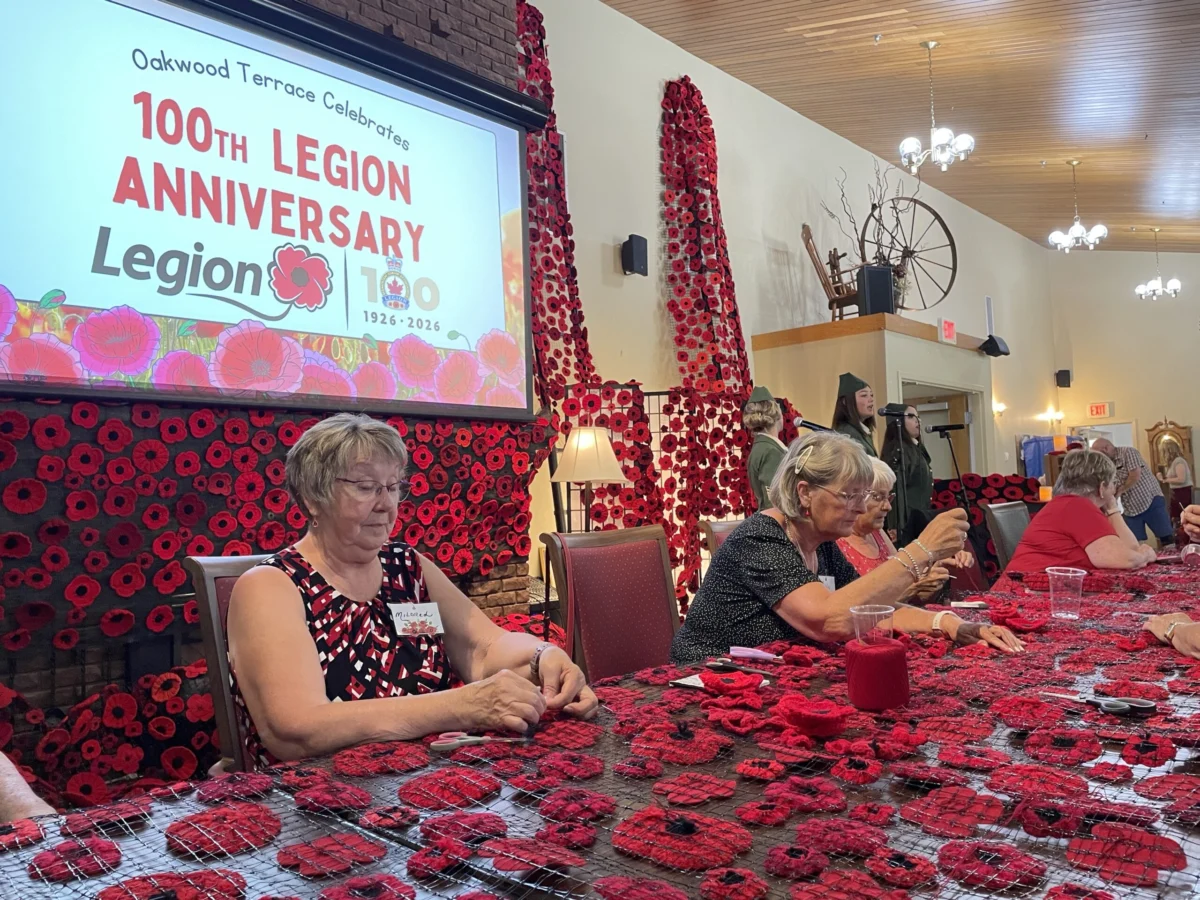
The Royal Canadian Legion’s centennial anniversary in 2026 has been marked with profound reverence and industrious community spirit in Nova Scotia, where a dedicated corps of volunteers is meticulously crafting and assembling an intricate poppy display for Sullivan’s Pond in Dartmouth. This cherished annual tradition, symbolizing national remembrance and gratitude, offers a compelling behind-the-scenes look at the collective effort required to honor Canada’s veterans and fallen soldiers, coinciding with the Legion’s remarkable 100-year milestone of service and advocacy.
The Heart of Remembrance: Crafting the Sullivan’s Pond Poppies
At the core of this poignant tribute is the tireless work of volunteers, whose nimble fingers transform individual handcrafted poppies into a sweeping tapestry of remembrance. The process, deceptively simple yet deeply meaningful, involves sewing each fabric poppy onto large netting sections. Lyn Kilroy, one of the dedicated volunteers, articulates the efficiency born of passion: "Oh, we can get through as a team a lot of poppies every week, and we really enjoy doing it." This commitment highlights not just a task, but a shared act of devotion. Each poppy, taking approximately three minutes to secure, contributes to a grander mosaic that captures the collective memory and respect of a community. The meticulous repair and re-stitching of existing poppies, alongside the creation of new ones, ensure the display’s integrity and growth year after year, transforming it from a mere decoration into a living, evolving testament to sacrifice.
A Century of Service: The Royal Canadian Legion’s Enduring Legacy
The Royal Canadian Legion, celebrating its 100th anniversary in 2026, stands as a cornerstone of veteran support and remembrance in Canada. Founded in 1926, the Legion emerged from a fragmented landscape of veteran organizations following the First World War, uniting various groups to create a powerful, unified voice for those who served. Its primary mission has always been to advocate for the rights and well-being of veterans, foster remembrance, and promote Canadian patriotism. Over its century of existence, the Legion has evolved, establishing a comprehensive network of branches across the country, providing essential services ranging from financial assistance and housing support to mental health programs and advocacy for improved veteran benefits.
The poppy campaign, a signature initiative of the Legion, is central to its fundraising efforts, with proceeds directly supporting veterans and their families. While the physical act of wearing a poppy symbolizes remembrance, the funds generated address critical needs within the veteran community. The Legion’s centennial is not merely an acknowledgment of its age but a celebration of its enduring relevance and its unwavering commitment to the principles of service and remembrance. David Crocker, president of the Atlantic Canadian Red Ensign History Association, underscores this point, stating, "The Legion is there to help support you… you should look up the history of those who served and gave us the freedom we have today, and that’s what the Legion represents." This sentiment resonates deeply within communities like Dartmouth, where local efforts directly contribute to the Legion’s broader mission.

The Enduring Symbol: A Historical Overview of the Remembrance Poppy
The poppy’s journey from a battlefield flower to a universal emblem of remembrance is steeped in history, primarily rooted in the landscapes of the First World War. The vivid red poppies that bloomed across the war-torn fields of Flanders, Belgium, and Northern France became an iconic image thanks to Lieutenant Colonel John McCrae, a Canadian military doctor. His poignant poem, "In Flanders Fields," written in 1915 after witnessing the death of a friend, immortalized the flower: "In Flanders fields the poppies blow / Between the crosses, row on row." This poem resonated deeply with the public, solidifying the poppy’s association with the sacrifice and bloodshed of the war.
The idea of adopting the poppy as an official symbol of remembrance is credited to Moina Michael, an American professor and humanitarian. Inspired by McCrae’s poem, she vowed in 1918 to wear a red poppy as a sign of remembrance and campaigned to have it adopted as a national symbol. Her efforts led to the American Legion adopting the poppy as its memorial emblem in 1920.
The tradition soon crossed the Atlantic. Madame Anna Guérin, a Frenchwoman, visited the United States in 1920 and learned of Michael’s work. She subsequently brought the idea to the United Kingdom and Canada. The Great War Veterans’ Association of Canada (one of the organizations that would later form the Royal Canadian Legion) officially adopted the poppy as its symbol in July 1921. The first "Poppy Day" in Canada was observed on November 11, 1921. Since then, millions of poppies have been distributed annually, becoming an indelible part of Canadian culture and a powerful, silent tribute worn by individuals from all walks of life in the weeks leading up to Remembrance Day. The handcrafted poppies for Sullivan’s Pond thus participate in a century-old tradition, linking local volunteerism to a global historical narrative of remembrance.
From Vision to Vast Display: The Sullivan’s Pond Project Timeline
The Sullivan’s Pond poppy project began with a modest yet ambitious vision in 2020. Initiated with the goal of creating 2,000 poppies, the display was intended to adorn the cenotaph at Sullivan’s Pond in Dartmouth, providing a visually striking and emotionally resonant backdrop for Remembrance Day ceremonies. The project quickly garnered local support, drawing in volunteers eager to contribute to this meaningful community endeavor.

What started as a response to a specific need for the 2020 ceremony has since blossomed into a continuous, year-round commitment. Six years later, in 2026, the project’s scope has expanded exponentially. Volunteers now work tirelessly throughout the year, not only creating new poppies but also meticulously repairing and refurbishing existing ones, ensuring the longevity and grandeur of the display. For the upcoming Remembrance Day ceremony in November 2026, the project has set an impressive target: 15,000 poppies. This five-fold increase from the initial goal underscores the project’s success, the volunteers’ unwavering dedication, and the community’s growing embrace of this unique form of remembrance. The long-term vision, articulated by Chantal Beaulieu, recreation programmer at Oakwood Terrace, extends even further, aspiring to reach 20,000 poppies in the years to come, demonstrating a commitment to continuously expand and share this powerful tribute.
Community Weaving: The Role of Oakwood Terrace Residents
A particularly heartwarming aspect of the Sullivan’s Pond poppy project is the active participation of residents from Oakwood Terrace, a nursing home in Dartmouth. Their involvement transcends mere craftwork; it fosters a vibrant social group and provides a profound sense of purpose. Chantal Beaulieu, the recreation programmer at Oakwood Terrace, emphasizes the multi-faceted benefits of this volunteer work. For the residents, it is a tangible way to celebrate and remember veterans, connecting their present activities to a significant national tradition. The act of creating and repairing poppies stimulates fine motor skills, encourages social interaction, and combats isolation, providing a therapeutic outlet that enriches their daily lives.
Beaulieu articulates the deeper meaning behind their continued commitment: "We continue this project because it’s so meaningful to so many and it’s important that as a community effort that we remember together the sacrifices, because we are so blessed to live in a country we enjoy freedom and peace." This statement highlights the project’s role in intergenerational remembrance, bridging the experiences of those who lived through periods of conflict with younger generations. The residents, many of whom have lived through wars or have personal connections to veterans, bring a unique perspective and a deep-seated understanding of the sacrifices made for freedom. Their participation ensures that the act of remembrance is not an abstract concept but a living, breathing tradition sustained by the very hands of the community.
Voices of Dedication and Legacy
The collective voice behind the Sullivan’s Pond poppy display echoes sentiments of pride, gratitude, and a steadfast commitment to preserving history.

"This centennial year of the Royal Canadian Legion is a powerful reminder of our enduring duty to those who served," stated a representative from the Nova Scotia/Nunavut Command of the Royal Canadian Legion, speaking on the significance of local initiatives like the poppy project. "The dedication shown by volunteers in Dartmouth, particularly those at Oakwood Terrace, exemplifies the spirit of community and remembrance that the Legion champions. Their handcrafted poppies are not just fabric and thread; they are threads of memory, woven together to honor sacrifices that secured the freedoms we enjoy today. We are immensely proud of these grassroots efforts which amplify our message of ‘Lest We Forget’ across generations."
A spokesperson for the Halifax Regional Municipality also weighed in, highlighting the project’s community impact. "The Sullivan’s Pond poppy display has become an iconic feature of Dartmouth’s Remembrance Day commemorations. It’s a powerful visual testament to our community’s respect for veterans and its commitment to ensuring their legacy endures. The collaboration between volunteers, residents, and local organizations demonstrates the profound civic pride and shared values that define our municipality. It transforms a public space into a sacred ground of reflection."
Dr. Eleanor Vance, a historian specializing in Canadian military history at a local university, provided academic context: "Tangible acts of remembrance, such as the crafting of these poppies, are crucial for historical continuity. They allow individuals to engage physically with the past, translating abstract historical events into concrete, personal contributions. For the residents of Oakwood Terrace, this is a form of active memory, reinforcing their connection to significant national narratives. For younger generations who visit the display, it offers a visual and emotional entry point into understanding the complexities and costs of war, making history resonate far beyond textbooks."
Lyn Kilroy, one of the project’s longest-serving volunteers, encapsulates the personal reward: "Oh, I feel proud and I bring my grandchildren down every year to take a look at what nanna does and it’s very rewarding to be part of this team and this project." Her words underscore the intergenerational aspect, where the act of remembrance becomes a shared family tradition, passing down values and historical consciousness.

Beyond the Stitch: The Broader Impact of Collective Remembrance
The Sullivan’s Pond poppy project transcends its immediate goal of creating a visual display; it serves as a powerful catalyst for broader societal impact. Firstly, it strengthens community bonds, drawing together diverse groups—from seniors in nursing homes to younger volunteers—in a shared, meaningful endeavor. This collective effort fosters social cohesion and a sense of shared responsibility for cultural heritage.
Secondly, the project plays a crucial role in historical preservation and education. By physically manifesting the symbol of the poppy on such a grand scale, it provides a vivid, immersive experience for visitors, particularly children. It prompts questions, encourages discussion about Canada’s military history, and instills an understanding of the sacrifices made. In an increasingly fast-paced world, such tangible acts of remembrance are vital for ensuring that the lessons of history are not forgotten and that the values of peace and freedom are continually appreciated.
Thirdly, it highlights the invaluable role of volunteerism in civil society. The project’s growth from 2,000 to 15,000 poppies is a testament to the power of dedicated individuals committing their time and skills to a cause greater than themselves. This level of sustained volunteer engagement contributes significantly to the social capital of the community, inspiring others to participate in civic life.
Finally, the increasing scale of the display carries a profound symbolic weight. Each additional poppy represents another life remembered, another sacrifice acknowledged. The aspiration to reach 20,000 poppies is not just an arbitrary number; it signifies a growing commitment to ensure that the memory of veterans remains vibrant and honored, standing as a silent, yet powerful, testament to Canada’s past and its hopes for a peaceful future.

The Future of Remembrance: Sustaining a Sacred Tradition
As the Royal Canadian Legion celebrates its centenary, the future of remembrance, as embodied by projects like the Sullivan’s Pond poppy display, remains bright. Chantal Beaulieu’s vision for 20,000 poppies reflects an unwavering commitment to not only sustain but also expand this sacred tradition. "I think we’ll reach it. I just want to continue growing it, but also finding new ways to share it," she affirmed, looking ahead to future Remembrance Days. This forward-looking perspective suggests an ongoing evolution of how communities engage with and express remembrance, ensuring its continued relevance for generations to come.
The project serves as a poignant reminder that while Remembrance Day is a specific annual event, the act of remembering is a continuous responsibility. It underscores the vital importance of never taking for granted the freedoms and peace that define Canadian society, freedoms hard-won through the sacrifices of countless individuals. Through the dedicated hands of volunteers and the symbolic power of each poppy, the legacy of Canada’s veterans will continue to bloom, year after year, at Sullivan’s Pond and in the hearts of a grateful nation.