admin
admin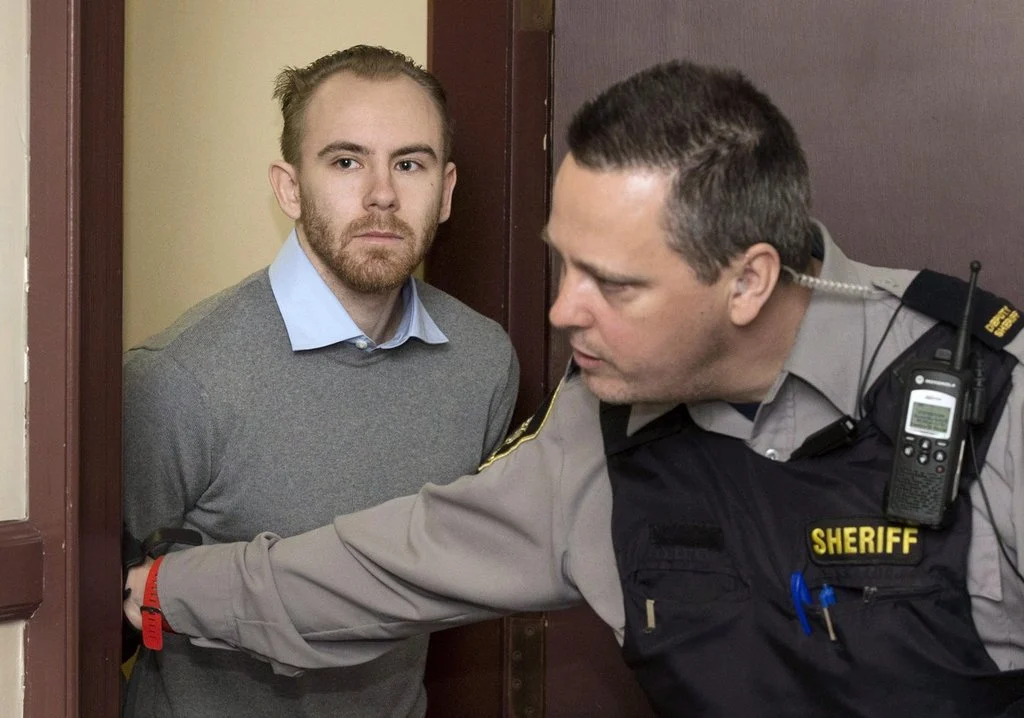
A convicted killer from Nova Scotia, William Sandeson, is actively pursuing a legal challenge to compel police authorities to return personal belongings confiscated during the exhaustive investigation that culminated in his life sentence for the murder of fellow Dalhousie University student Taylor Samson. This recent development, detailed in an affidavit filed with the Nova Scotia Supreme Court in February of this year, underscores the complex aftermath of a high-profile case marked by a missing body, financial intrigue, and protracted legal proceedings. Sandeson, currently incarcerated in a Quebec correctional facility, is seeking the retrieval of a range of items, from sentimental possessions to significant sums of cash, while simultaneously navigating a separate legal bid concerning his substantial cryptocurrency holdings.
The Convict’s Legal Gambit: A Bid for Personal Property
In his sworn affidavit, William Sandeson asserts his entitlement to reclaim specific personal items seized by law enforcement during the initial stages of the murder investigation in August 2015. Among the most notable items he is seeking is approximately $300 in American currency, which he states was taken from a safe located within his Halifax apartment. Beyond monetary assets, Sandeson is also requesting the return of various personal effects, which he intends to send to his immediate family members. He emphasizes the inherent value of these items, stating, "Most items of my personal property have, to varying degrees, sentimental value, monetary value and useful value to me and/or my immediate family." This assertion highlights a desire to retain a connection to his former life and provide tangible assets to his relatives despite his incarceration.
However, Sandeson’s request is not without specific exclusions. The affidavit explicitly states that he is not seeking the return of his handgun and associated ammunition, any narcotics or controlled substances discovered by police, or bloodstained Canadian currency that was found during the investigative process. These exceptions are crucial, as they directly relate to the instruments and evidence of the crime for which he was convicted, demonstrating a recognition of their evidentiary significance. Curiously, the affidavit also reveals Sandeson’s intention to transfer ownership of "any item considered a weapon (e.g. knives)" to an immediate family member who would recover this property on his behalf from the state. This particular request raises questions regarding the nature of the seized items and the implications of transferring ownership of potential weapons, even if not directly linked to the murder weapon itself.
A Case Rooted in Debt and Deception: The Murder of Taylor Samson
The tragic events leading to Sandeson’s conviction unfolded in August 2015, irrevocably altering the lives of two promising young men and their families. Taylor Samson, a 22-year-old physics student at Dalhousie University, vanished after arranging a drug transaction with Sandeson. At the time, Sandeson was a medical student at the same prestigious university, a detail that amplified the shock and disbelief surrounding the crime.
The prosecution’s case, meticulously presented during Sandeson’s retrial in 2023, painted a chilling picture of premeditated murder driven by dire financial straits. Court proceedings revealed that Sandeson had invited Samson to his apartment on Henry Street in Halifax with the purported intention of purchasing nine kilograms of cannabis, an illicit transaction valued at an estimated $40,000. The Crown argued forcefully that Sandeson, himself involved in drug dealing, had orchestrated the meeting not to complete a purchase, but to ambush Samson, steal the cannabis, and eliminate a witness. This desperate act, prosecutors contended, was motivated by Sandeson’s substantial debt, including a $78,000 line of credit, which he needed to service to continue his medical studies.
Sandeson, in his defense, maintained that the shooting was an act of self-defense, claiming a struggle ensued with Samson, who was described as physically larger than him. He told the court, "I pulled the trigger, but I never wanted to hurt anyone that night." However, the Crown’s evidence, including forensic analysis, suggested a different narrative: that Sandeson fired a bullet through the back of Samson’s head shortly after his arrival at the apartment. This detail contradicted the self-defense claim, suggesting an attack rather than a struggle.
Chronology of Justice: From Disappearance to Conviction
The legal saga surrounding William Sandeson has been protracted and complex, involving multiple trials and appeals, reflecting the gravity of the charges and the intricate nature of the evidence.

August 2015: Taylor Samson is reported missing. The subsequent investigation swiftly leads police to William Sandeson’s apartment. Sandeson is arrested and charged with first-degree murder. The disappearance of Samson, a university student, immediately garners significant media attention and public concern across Nova Scotia and beyond.
2017: First-Degree Murder Conviction: Following an extensive jury trial, William Sandeson is convicted of first-degree murder. The conviction carries an automatic life sentence with no eligibility for parole for 25 years. This initial verdict brings a sense of closure to Samson’s family, though the absence of his body remains a profound source of grief.
2019: Appeal and Overturned Conviction: Sandeson’s legal team successfully appeals the 2017 conviction. The Nova Scotia Court of Appeal rules that a key piece of evidence – an admission made by Sandeson to police during an investigative detention – should have been excluded from the first trial. This decision leads to the overturning of the first-degree murder conviction and the ordering of a new trial, sending shockwaves through the justice system and re-opening painful wounds for the victim’s family.
2023: Retrial and Second-Degree Murder Conviction: The retrial commences, once again bringing the harrowing details of the case into public view. During this second trial, Sandeson provides crucial testimony, confirming for the first time that he disposed of the 22-year-old’s body. He admitted to dumping Samson’s remains among garbage bags in a tidal river that feeds the Bay of Fundy, near Truro in central Nova Scotia. Despite the original charge remaining first-degree murder, the second jury ultimately convicts Sandeson of the lesser charge of second-degree murder. This conviction still carries a life sentence, though the period of parole ineligibility is typically between 10 and 25 years, to be determined by the judge. The sentencing in 2023 resulted in a life sentence with parole ineligibility set at 15 years, a reduction from the 25 years for first-degree murder, yet still a substantial period reflecting the severity of the crime.
February 2024: Sandeson files an affidavit with the Nova Scotia Supreme Court, initiating his current legal bid to recover seized personal items.
The Elusive Remains: An Unresolved Anguish
One of the most agonizing and enduring aspects of the Taylor Samson case is the fact that his body has yet to be found. Despite Sandeson’s admission during his retrial about the disposal location – "among some garbage bags in a tidal river that feeds the Bay of Fundy near Truro" – extensive search efforts by law enforcement, often involving specialized marine units and ground teams, have yielded no results.
The Bay of Fundy, renowned for having the highest tides in the world, presents immense challenges for recovery operations. Its powerful currents, vast mudflats, and constantly shifting aquatic environment make finding any submerged object incredibly difficult, let alone human remains that may have been exposed to the elements for years. The absence of Samson’s body profoundly impacts his family, denying them the closure and the dignity of a proper burial. It also leaves an unsettling void in the narrative of the crime, a tangible reminder of the perpetrator’s final act of concealment. For legal and emotional reasons, the recovery of a victim’s body is often a crucial component of justice, providing irrefutable evidence and offering solace to grieving families. Its absence in this case highlights the enduring trauma experienced by Samson’s loved ones.
Financial Facets: Cryptocurrency and Contested Assets
Beyond the items directly related to the murder investigation, William Sandeson is also embroiled in a separate, equally complex legal battle to recover a laptop computer. This laptop is not merely a piece of electronic equipment; it holds the digital keys to a substantial amount of cryptocurrency, specifically Bitcoin, a portion of which his family has reportedly been unable to access.

During a separate court hearing in 2024, judicial proceedings brought to light the impressive scale of Sandeson’s financial holdings at the time of his incarceration in 2015. A judge noted that Sandeson possessed at least $443,000 in Bitcoin and an additional $198,000 in cash. These figures paint a picture of significant wealth for a medical student, reinforcing the prosecution’s argument about his deep involvement in illicit drug dealing. The pursuit of the laptop and its associated cryptocurrency highlights the modern complexities of asset forfeiture and recovery in criminal cases, where digital assets introduce new challenges for law enforcement and legal teams. The total value of these assets, exceeding $640,000, underscores the immense financial stakes involved in Sandeson’s criminal enterprise and the ongoing efforts by his family to reclaim what they consider to be his property, even as he serves a life sentence.
Legal Precedent and Public Perception
The legal bid by a convicted killer to reclaim seized personal items, particularly those with "sentimental value" or potential for transfer to family, invariably sparks public debate and raises ethical questions. While individuals retain certain property rights even after conviction, the nature of Sandeson’s crimes and the lingering mystery of Samson’s unrecovered body amplify the scrutiny of such requests.
From a legal standpoint, police forces are generally required to return seized property once it is no longer needed for evidentiary purposes or for any ongoing investigations. However, exceptions are made for items that are illegal to possess (like controlled substances), dangerous (like the murder weapon), or are proceeds of crime. Sandeson’s explicit exclusion of his handgun, ammunition, narcotics, and bloodstained currency acknowledges these legal boundaries. His request to transfer other "weapons" like knives to family members, however, might face additional legal hurdles related to public safety and the responsible transfer of potentially dangerous items by a convicted felon. The court will need to weigh Sandeson’s property rights against the public interest, the need for justice, and the potential implications of returning certain items.
The optics of such a request can be challenging. For the family of Taylor Samson, who continue to grieve without the closure of recovering their son’s remains, the idea of his killer reclaiming possessions, especially those deemed to have "sentimental value," could be perceived as insensitive or even affronting. This case underscores the tension between an individual’s legal rights and the broader societal expectations of justice and accountability for heinous crimes.
The Path Ahead
William Sandeson’s current legal maneuvers represent the continuing fallout from a murder case that gripped Nova Scotia. The Nova Scotia Supreme Court will now consider his affidavit and the arguments for the return of his personal property. Each item will likely be assessed based on its evidentiary value, its legality of possession, and any potential public safety concerns. Meanwhile, the separate legal challenge for the laptop and cryptocurrency keys will proceed, navigating the complexities of digital asset recovery in a criminal context.
As these legal battles unfold, the underlying tragedy of Taylor Samson’s disappearance and murder remains. The absence of his body continues to haunt his family and the community, a poignant reminder of the unresolved dimensions of this high-profile case. The justice system, in its meticulous and often lengthy process, continues to grapple with the aftermath, attempting to balance legal rights with the profound human cost of crime. The outcomes of Sandeson’s various court bids will not only determine the fate of his personal possessions and financial assets but may also contribute to the evolving legal discourse surrounding property rights for convicted individuals in Canada.