admin
admin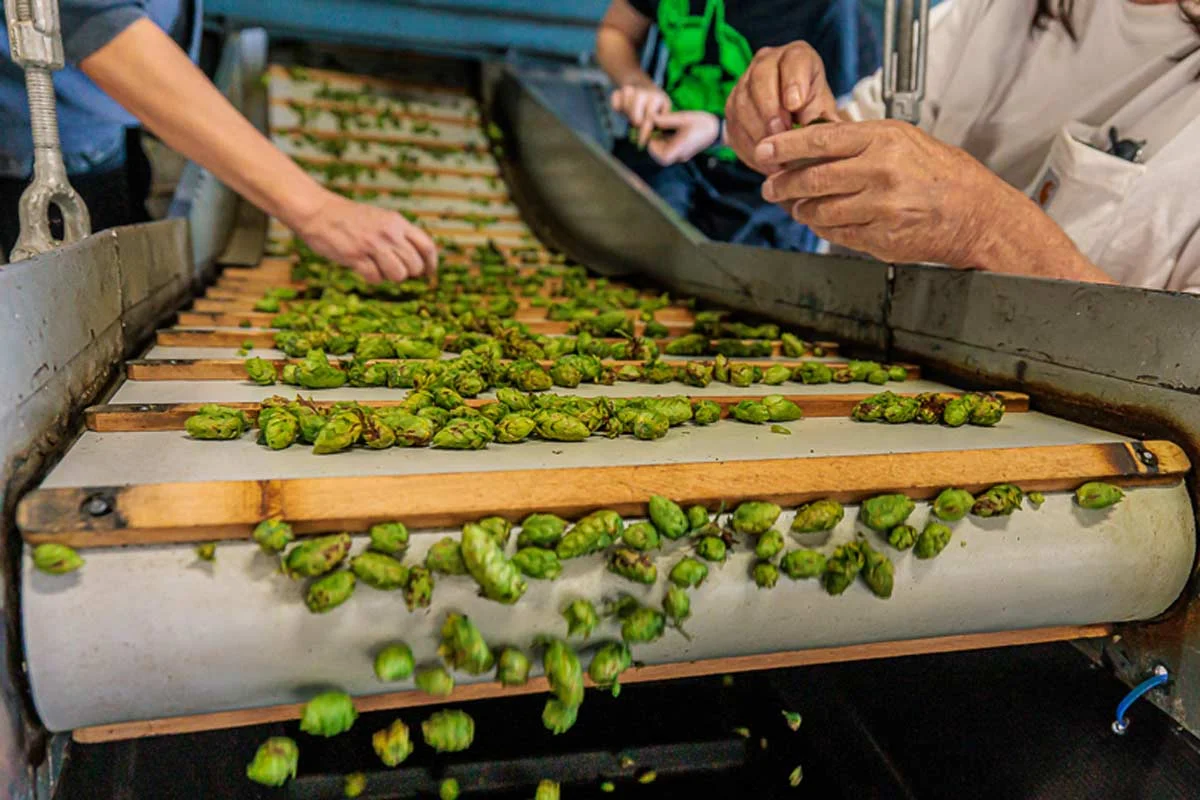
The agricultural landscape of Michigan has undergone a significant transformation over the last two decades, positioning the state as the premier hop-producing region in the Great Lakes and the fourth largest in the United States by total acreage. While the industry is often publicly associated with the brewers who utilize the final product, the foundational success of Michigan’s hop industry is increasingly driven by women who oversee every stage of production, from greenhouse propagation and integrated pest management to large-scale harvest coordination and land stewardship. Despite Michigan’s high national ranking, many of these female leaders remain behind the scenes, providing the technical expertise and labor necessary to maintain the state’s reputation for high-quality, aromatic hops.
The Geographic and Geological Advantage of the 45th Parallel
The resurgence of the Michigan hop industry is not a matter of chance but a result of precise geographic and geological factors that create an ideal environment for Humulus lupulus. Hops are notoriously high-maintenance perennials that require specific photoperiods to thrive. The 45th parallel, which bisects Northern Michigan, offers the long, sunny days required for vegetative growth and the cold winter temperatures necessary for the plants to enter a required state of dormancy.
Beyond climate, the state’s geological history provides the essential drainage required for hop cultivation. Ancient glacial movements left behind a variety of well-drained soil profiles, preventing the "wet feet" or root rot that can devastate hop yards in less permeable terrains. Unlike grapes, which grow on vines using tendrils, hops grow on bines. These bines utilize stiff, downward-pointing hairs to wrap clockwise around twine, climbing more than 20 feet into the air in a single growing season. This biological characteristic requires intensive manual labor and structural infrastructure, as the plants are both physically robust and physiologically delicate during their early growth stages.
A Chronology of the Michigan Hop Resurgence
The modern Michigan hop industry began its ascent around 2008, following a period of increased demand for local ingredients within the craft beer sector. Prior to this, the American hop market was almost exclusively dominated by the Pacific Northwest—specifically Washington’s Yakima Valley.
The timeline of Michigan’s growth reflects a shift from experimental backyard plots to professionalized, large-scale operations:
- 2008: Initial interest in local hops reignites; early propagators like Sandy Ridge Farms begin transitioning from ornamental plants to hop starter stock.
- 2010–2015: Rapid expansion of acreage across the Leelanau and Old Mission Peninsulas, as well as Southwest Michigan.
- 2017: The establishment of the Chinook Cup, a competition designed to highlight the unique terpene profiles of Michigan-grown Chinook hops.
- 2020–Present: The industry faces stabilization and contraction challenges, necessitating higher efficiency, better pest management, and climate-resilient farming practices.
Scientific Oversight and Integrated Pest Management
A critical component of Michigan’s success is the partnership between growers and Michigan State University (MSU) Extension. Erin Lizotte, MSU’s integrated pest management coordinator and senior statewide educator, has emerged as a central figure in the industry’s technical defense. In an era of shifting climate patterns, the threat of downy mildew, powdery mildew, and invasive pests like the potato leafhopper has intensified.
Lizotte’s work involves diagnosing emerging diseases and navigating the complex landscape of chemical approvals and organic alternatives. The collaboration between field educators and the MSU Plant and Pest Diagnostics lab provides growers with research-backed data to make informed decisions. This scientific infrastructure is particularly vital for small and independent growers who do not have the internal resources of large corporate farms. Industry experts note that Lizotte’s responsiveness and expertise have provided a level of confidence that has allowed the state’s acreage to expand even under adverse environmental conditions.
Propagation and the Clean Plant Protocol
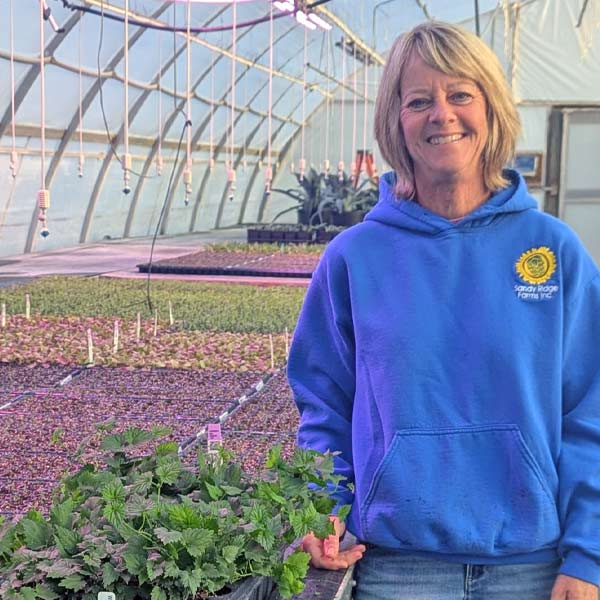
The health of a hop yard begins in the greenhouse, where the role of skilled propagators like Julie Kane of Sandy Ridge Farms is paramount. With over two decades of experience in the greenhouse industry, Kane took the lead when the state’s demand for hop plants spiked in 2008. Her work is defined by the "Clean Plant" protocol, a rigorous biosecurity measure designed to prevent the spread of viruses and viroids that can diminish yields and hop quality.
By starting with virus-free mother plants from the National Clean Plant Network, Kane ensures that the foundational stock is healthy. This process involves strict sanitation of tools, preventative fungicide applications, and annual testing through MSU. The importance of this work has been magnified by climate change; Kane reports that recent heat waves, with greenhouse temperatures exceeding 100 degrees, have required advanced cooling techniques and adjusted irrigation schedules to maintain plant viability. Her success in a historically male-dominated field has paved the way for other women to enter the technical side of horticulture.
Engineering Efficiency in the Hop Yard
The transition from growing to harvesting requires a shift from horticultural care to industrial orchestration. Mel Trowbridge of Top Hops Farm in Goodrich exemplifies this transition, bringing 40 years of experience as an automotive engineer and quality control specialist to the agricultural sector. Trowbridge has implemented process-driven operations that mirror the efficiency of a manufacturing floor.
Her approach includes:
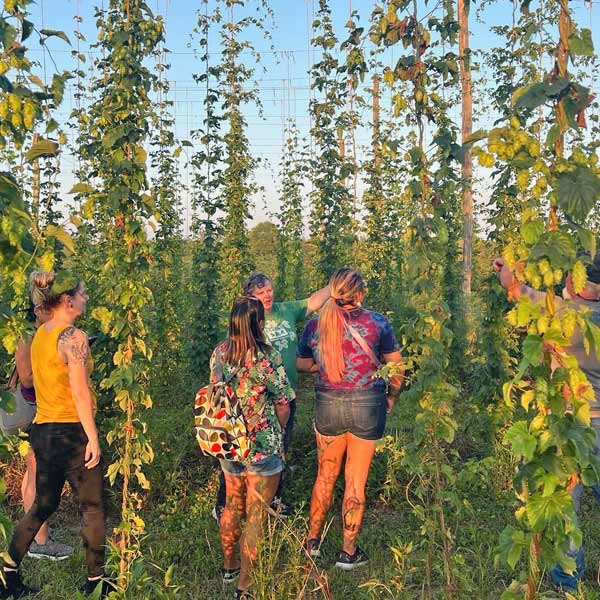
- Task Rotation: Ensuring all crew members are cross-trained to prevent bottlenecks during the high-pressure harvest window.
- Continuous Improvement: Implementing daily team debriefs to analyze workflow and adjust schedules in real-time.
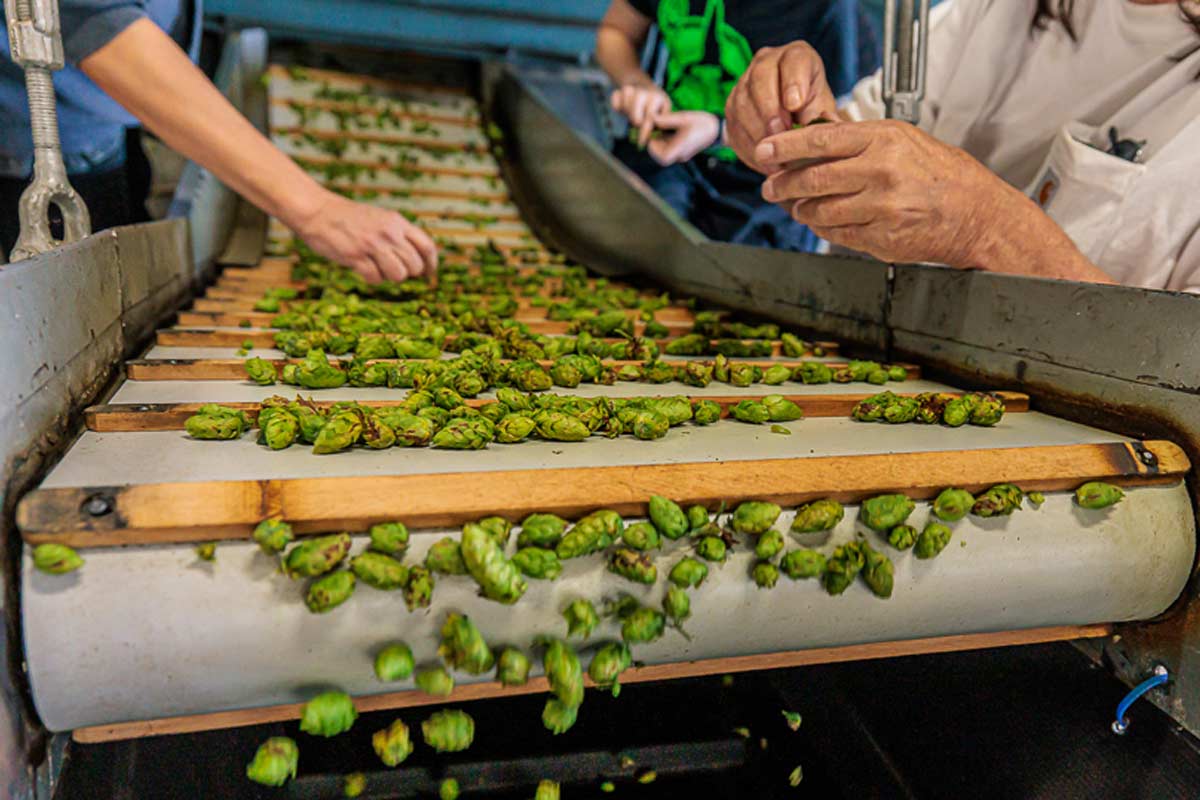
- Orchestration: Managing the logistical complexity of harvest, where timing is critical to ensuring the hop cones are picked at their peak alpha-acid and essential oil concentrations.
By applying Six Sigma-style rigor to the farm, Trowbridge demonstrates how diverse professional backgrounds are being utilized to professionalize the Michigan hop industry, ensuring it can compete with established Western markets on both quality and consistency.
Stewardship and Sensory Analysis at Bell’s Brewery
In the realm of brewery-led agriculture, Bonnie Steinman and Elizabeth Mullins of Bell’s Brewery represent the integration of land stewardship and brewing science. Steinman, a veteran horticulturist, oversees the brewery’s two-and-a-half-acre hop yard and broader sustainability initiatives. Her work emphasizes the sensory aspect of hop farming—the "rub and smell" method used to determine harvest readiness.
Under the mentorship of industry veterans like John Mallett, Steinman developed a deep understanding of how the aromatic profile of hops—such as the transition of the Chinook variety from grassy to fruity to resinous—dictates the final character of the beer. Mullins, specializing in pest management and field operations, works alongside Steinman to monitor the yard for threats. Their work extends beyond production to education, hosting groups like the Pink Boots Society to foster a more inclusive environment for women and nonbinary professionals in the beverage industry.
The Identity of Michigan Chinook
A major point of pride and a key market differentiator for the state is the Michigan Chinook. While Chinook hops grown in the Pacific Northwest are known for piney and resinous qualities, the Michigan-grown counterpart often expresses distinct notes of pineapple and citrus. This "terroir"—the influence of local soil and climate on the plant’s flavor profile—is the focus of the annual Chinook Cup.
Rose Stahl, co-owner of Mr. Wizard’s Hops, has been a central figure in organizing this competition through the Hop Growers of Michigan. Stahl’s entry into the industry was born of necessity after a catastrophic crop failure in her family’s cornfields. Her journey from asking "What are hops?" to becoming a leader in the state’s hop community highlights the resilience of Michigan’s family farms. The Chinook Cup not only provides bragging rights but also serves as a critical marketing tool to convince brewers nationwide that Michigan hops offer a unique and valuable flavor profile.
Broader Impact and Industry Implications
The stories of these women reflect a broader shift in the agricultural economy of the Great Lakes region. As the craft beer market matures and undergoes a period of contraction, the survival of independent hop farms depends on the very qualities these women have brought to the forefront: scientific precision, engineering efficiency, and a commitment to regional identity.
However, challenges remain regarding visibility. Amy Tennis of the Michigan Hop Alliance points out that while women often handle the essential "back-office" and field labor—including grant writing, bookkeeping, irrigation management, and bine training—they are frequently excluded from the public narrative of the farm.
The future of Michigan hops is currently being shaped by researchers like Nicole Shriner at MSU, who emphasizes that Michigan is not trying to replicate the Pacific Northwest but is instead carving out a unique identity. The data-driven success of the state’s hop industry, bolstered by the technical and leadership contributions of women, suggests that Michigan will remain a critical player in the global hop market. By focusing on quality over sheer volume and leveraging the state’s unique environmental advantages, these leaders are ensuring that "Michigan-grown" remains a mark of distinction in the brewing world.