admin
admin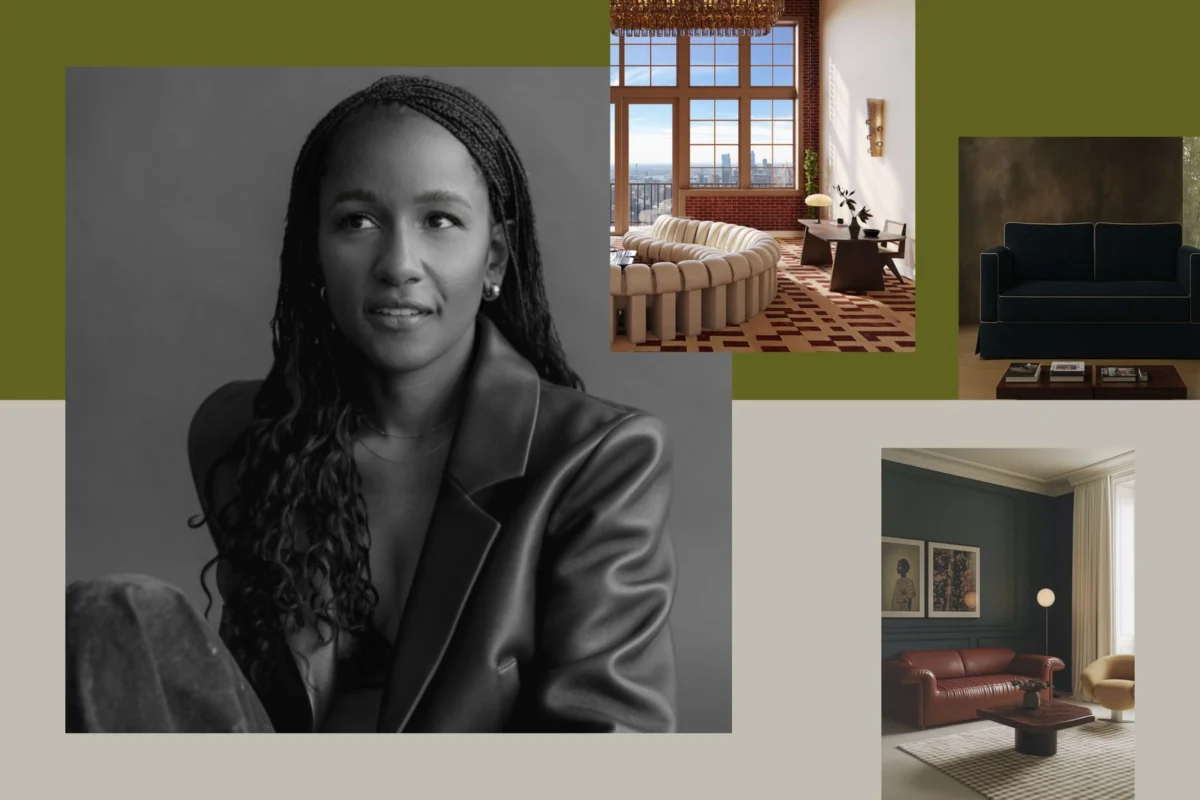
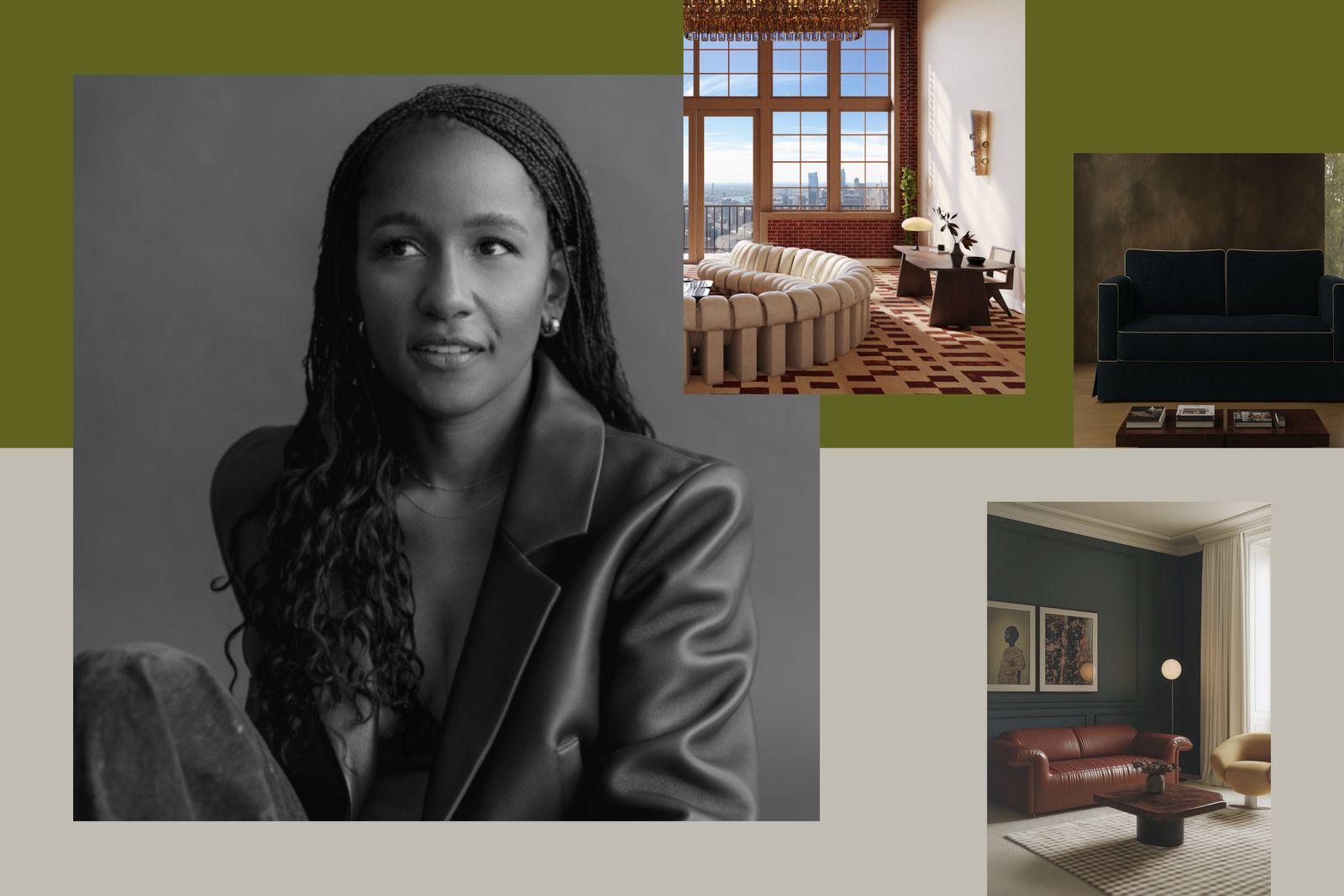
When Chicago- and Los Angeles-based interior designer Shane V. Charles began publishing her insightful observations on decor styles drawn from the African diaspora, she wasn’t just sharing ideas; she was articulating a visual language that had long existed but lacked formal recognition. Through her studio, Mild Sauce Studio, founded in 2019, Charles has emerged as a groundbreaking figure, introducing "interior identities" that resonate deeply with a broad audience seeking authentic cultural representation in their living spaces. Her forthcoming book, Interior Identity, tentatively slated for June 2026, promises to codify these styles, offering a comprehensive framework for understanding and applying Black design principles within a global context.
The Genesis of "Interior Identities": Articulating Unnamed Styles
Charles’s journey began with a profound observation: while distinct decor styles rooted in Black experiences were prevalent, they remained largely unnamed and unacknowledged within mainstream design discourse. Her early Instagram posts, which began to gain significant traction over the past year and a half, felt revolutionary to many. She coined terms like "Blaxploitation Glam," "Creole Grandmillennial," and "Pan-African Brutalism," providing both linguistic and visual references for styles she intuitively knew existed in Black homes but had yet to be formally documented. This initiative addressed a critical void, as Charles herself notes, "A lot of us didn’t grow up seeing ourselves in the way our homes and environments were designed." Her work is a direct response to this historical oversight, offering a mirror for individuals to see their heritage reflected in their domestic environments.
The impact of her work is evident in her rapidly growing digital footprint. With nearly 90,000 followers on Instagram and over 150,000 on TikTok, Charles has tapped into a significant demand for culturally specific design narratives. Her content offers a refreshing alternative to the often homogenous trends promoted in mainstream interior design, which historically have overlooked or superficially adopted elements from non-Eurocentric cultures without proper context or credit.
Defining a New Design Lexicon: Specific Styles and Their Cultural Tapestry
Charles’s "interior identities" are not mere aesthetic preferences; they are meticulously crafted styles, each steeped in specific cultural histories and influences. These styles offer concrete examples of how diverse Black experiences can translate into tangible design principles:
- Calypso Moderne: For those wishing to imbue their homes with Trinidadian heritage, Charles proposes Calypso Moderne. This style is characterized by a vibrant fusion of "Trinidadian carnival flair, Miami Art Deco curves, and the vibrant rhythm of calypso music." It’s a celebration of dynamism and color, reflecting the festive energy and unique architectural landscape of the Caribbean. The integration of Art Deco elements speaks to the transatlantic influences and shared aesthetic sensibilities that shaped urban centers in the early 20th century.
- Mississippi Delta Deco: This style is a nuanced blend of luxury and rustic charm, combining opulent golds and marble with the melancholic, soulful tones inspired by blues music. Charles describes it as "Chicago but also with a Southern twist," acknowledging the Great Migration and the cultural synthesis that occurred as Black communities moved from the rural South to urban centers in the North. It’s a sophisticated homage to resilience, memory, and the evolution of Black American identity.
- Haitian Revival: Drawing heavily on Taíno influences and West African spiritual traditions, Haitian Revival emphasizes earthy textures and hand-beaded textiles. Charles elaborates on its visual elements: "Think plastered walls and tobacco brown, beaded motifs, altarpiece coffee tables, and art as portal." This style transcends mere decoration, aiming to create spaces that are spiritual, grounded, and deeply connected to ancestral heritage, reflecting the profound syncretism of Haitian culture.
These examples illustrate Charles’s ability to articulate complex cultural narratives through design, offering a vocabulary that empowers individuals to connect with their heritage on a daily, tangible basis.
From Social Media Sensation to Scholarly Work: The Evolution of Mild Sauce Studio
Charles’s journey from social media influencer to author highlights a significant shift in how design authority is established and disseminated. Her initial posts quickly garnered attention, demonstrating a clear appetite for her unique perspective. This digital engagement fueled the growth of Mild Sauce Studio and laid the groundwork for her most ambitious project to date: Interior Identity.
The book, which will introduce 25 of her original interior design styles, is poised to become a foundational text in culturally inclusive design. Each style outlined within its pages will detail a distinct set of materials, palettes, and design principles, accompanied by crucial historical context. This structured approach moves beyond anecdotal observations, elevating these styles to a level of academic rigor previously reserved for Eurocentric design movements.
Addressing the Void: Canon-Building in Black Design
Charles’s work directly confronts a fundamental question rarely addressed in mainstream interiors: What does Black identity truly look like in design? Her response is not merely aesthetic; it’s a strategic act of canon-building. As she explains, "I think naming and structuring design creates this academic legitimacy and permanence. The canon-building shifts design from, like, trend cycles to teachable frameworks."
Historically, discussions around "Black design" have often been reductive, leaning towards thematic or trend-based approaches. Elements like Kuba cloth, while widely appreciated and utilized in Black households, often lack a formal interpretive framework within design education. Charles critiques this informal usage, questioning, "How does that relate to identity? It’s part of your everyday environment. How does it relate to you? And what’s the story?" Her work seeks to provide these missing narratives, offering a deeper understanding beyond mere aesthetic appeal or nostalgic association. Industry observers suggest that this formalization is crucial for elevating Black design from an often-marginalized niche to a recognized and respected field of study.
The Challenge of Credit and Cultural Appropriation
Charles’s professional experiences underscored the critical need for her work. She recalls an incident early in her career where a hospitality company introduced a "remixed version" of Kuba cloth in their furniture line. While the material’s impact was undeniable, the credit for its origin and cultural significance was notably absent. This observation solidified her resolve to advocate for proper recognition. "I didn’t necessarily see the credit. Not for myself, but for the usage of the material, referencing the material in that pattern for what it actually is, instead of the remixed version of it," she states. This lack of attribution, a common issue in the broader design industry, highlights the systemic problem of cultural appropriation where contributions from marginalized communities are absorbed without acknowledgment. Charles’s work aims to counteract this by firmly establishing the origins and contexts of these "interior identities," ensuring that credit is given where it is due and that the cultural richness is preserved rather than diluted.
Strategic Digital Engagement and Audience Growth
The exponential growth of Charles’s digital presence was not accidental but a result of strategic self-discovery and authentic expression. Initially, she attempted to replicate existing popular design content on platforms like TikTok and Instagram, finding it "extremely inauthentic and not a reflection of my creative self." After a brief hiatus, she pivoted, trusting her unique perspective. This shift proved transformative. A viral video proposing a redesign of the restaurant chain Red Lobster, reimagined through her distinct lens, "opened the floodgates." This moment underscored the power of authentic voice and niche content in a crowded digital landscape. By creating from her "own lens" and trusting that her work would resonate, Charles cultivated a highly engaged audience eager to learn more, leading to a surge in consultations and positive feedback. Her success exemplifies how social media can democratize design discourse, providing platforms for voices traditionally excluded from mainstream channels.
The Book: A Framework for Global Influence
Interior Identity is envisioned not merely as a catalog of styles but as a comprehensive guide, akin to established design philosophies like Bauhaus or wabi-sabi. Charles emphasizes that these universally recognized styles, whether drawing from Germany or Japan, are constant reference points due to their "globally influential structure." Her book aims to achieve the same for African diasporic design. "The styles in the book are crafted using the same methods, practices, research, and studies that were used to arrive at the influential structures we’re so used to referencing," she explains. This methodical approach is intended to provide the academic rigor necessary for these styles to gain widespread recognition and become enduring elements of global design education and practice.
Crafting Culturally Resonant Styles: Blending History and Aesthetics
Charles’s methodology for developing new styles involves a careful synthesis of historical movements and cultural nuances. Taking "Harlem Deco" as an example, she explains her thought process: "With Harlem Deco, I’m thinking about what happened during the Harlem Renaissance and how that influenced so much of who we are as a people in terms of textures and colors. Art Deco was relevant at that time, which is how I arrived at that name instead of calling it, like, Harlem Bauhaus."
Her approach is not about arbitrary combinations but about finding meaningful connections that lend substance and weight to the style. The integration of the Harlem Renaissance with the Art Deco movement creates a rich tapestry that reflects a specific historical period and its cultural impact on Black identity. She cautions against incongruous pairings, suggesting that while "people can do whatever they want," styles must "make sense and hold substance" to carry the same amount of weight and historical validity as established movements. This meticulous attention to historical and cultural context ensures the authenticity and longevity of her "interior identities."
Client-Centric Approach and Personalized Design
In her professional design practice, Charles emphasizes a deeply personalized, client-centric approach. Her consultations delve far beyond superficial preferences, exploring the client’s upbringing, cultural background, and the geographical context of the space. "It’s about learning more about the client or the environment that the space is in. What city or country is it in? What’s the background on this client? What’s their upbringing? What do they care about and not care about?" she outlines. This holistic understanding allows her to integrate subtle, or sometimes profound, historical contexts into the overall design direction, always guided by fundamental principles like spatial rhythm and color theory.
The impact of having named styles is particularly evident in client interactions. Charles recounts a project where a client specifically requested "Haitian Revival." This client, originally from Haiti, could articulate her desires precisely, saying, "Here’s how I want this to show up for me." This level of specificity contrasts sharply with generic requests like, "I’m Haitian. How do I bring in a Haitian flag and put it on my wall?" The named styles provide a sophisticated vocabulary, empowering clients to articulate their cultural heritage in design with depth and authenticity, moving beyond simplistic symbolism to nuanced expression.
Empowerment Through Recognition: Seeing Oneself in Design
For individuals encountering these terms for the first time, Charles harbors a powerful hope: "I hope they see themselves in the work. My hope is that it gives breath to everything that’s been missing, but also moves us toward taking up space and taking ownership of who we are as a culture and a people." This sentiment underscores the profound psychological and cultural impact of her work. In a world where dominant narratives often erase or marginalize Black experiences, seeing one’s heritage reflected and celebrated in a formal design lexicon can be incredibly validating and empowering. It offers a sense of belonging and cultural pride that extends into the most personal of spaces: the home.
Reclaiming Narrative, Building the Table: A New Paradigm for Design Inclusion
Charles’s work sparks a crucial debate: Is she reclaiming a lost narrative, or is she inserting Black people into a global design discourse from which they’ve been absent? Her response challenges the premise of insertion: "I think ‘inserting’ us in the narrative suggests that we have not been present. To me, this is like you’re building your own table and inviting the conversation in. It goes back to ownership."
This perspective is pivotal. It rejects the notion that Black design needs to be "added" to an existing, pre-defined canon. Instead, it asserts that Black design has always existed, vibrant and influential, but lacked the formal definitions and recognition. By "building her own table," Charles is not seeking permission or validation; she is establishing a parallel, equally valid framework that demands recognition on its own terms. Her work is an act of empowerment and self-determination, giving definition and permanence to styles that have long "lived and breathed" within Black communities.
Personal Connection and Legacy: The Designer’s Own "Interior Identity"
Among the diverse "interior identities" she has defined, two hold particular personal significance for Charles: Black Nouveau Fusion and Mississippi Delta Deco. Black Nouveau Fusion evokes nostalgic memories, referencing styles seen in films like ATL and prevalent in Black households during a specific era due to the "strong Asian presence in a lot of the furniture." This style speaks to the complex global influences that shaped Black aesthetic choices, often through unexpected avenues.
Mississippi Delta Deco, however, holds the deepest cultural resonance for her. It directly references the "ancestors’ migration from the South to the North," a journey her own mother undertook from Mississippi to Chicago. This style embodies the tangible cultural elements her family carried with them, transforming their living spaces with echoes of their Southern roots in their new Northern homes. These personal connections underscore the authenticity and deeply rooted nature of her work, illustrating how collective cultural experiences intertwine with individual family histories to shape unique design expressions.
Transforming Design Education: A Call for Inclusivity
The implications of Charles’s work extend directly to interior design education. She highlights the prevailing Eurocentric bias in current curricula, recounting how a junior designer and Parsons alum felt "stripped… of their creativity from a diasporic perspective" by their academic experience. Charles challenges this, advocating for a fundamental shift: "I think design schools would start to integrate curriculum from the diaspora, structured in a way that’s digestible and seamlessly integrated."
The integration of her "interior identities" into academic programs could revolutionize how future designers are trained, fostering a more inclusive and globally aware understanding of design history and practice. It would provide students with a broader palette of references and a deeper appreciation for the diverse origins of aesthetic principles. Charles firmly believes the "work is being done" to create this curriculum; the challenge lies in institutions’ willingness to "platform it." This change would not only enrich the educational experience but also better prepare designers to serve an increasingly diverse global clientele.
Broader Industry Impact and Future Outlook
Shane V. Charles’s pioneering efforts with Mild Sauce Studio and the upcoming Interior Identity mark a pivotal moment in the interior design industry. Her work not only provides a much-needed vocabulary for Black design but also sets a precedent for how cultural contributions can be formally recognized and celebrated. As global markets increasingly demand authenticity and representation, Charles’s framework offers a powerful model for other culturally specific design movements to emerge and gain legitimacy.
The potential impact is far-reaching: from empowering individual homeowners to fostering more diverse product development, informing architectural practices, and ultimately shaping a more equitable and inclusive global design narrative. Charles is not just naming styles; she is igniting a movement that challenges existing power structures, celebrates cultural heritage, and invites a richer, more diverse conversation into the heart of our homes and the broader design world. Her vision is clear: to ensure that the vibrant, historically rich "interior identities" of the African diaspora are not just seen but understood, respected, and permanently etched into the canon of global design.