admin
admin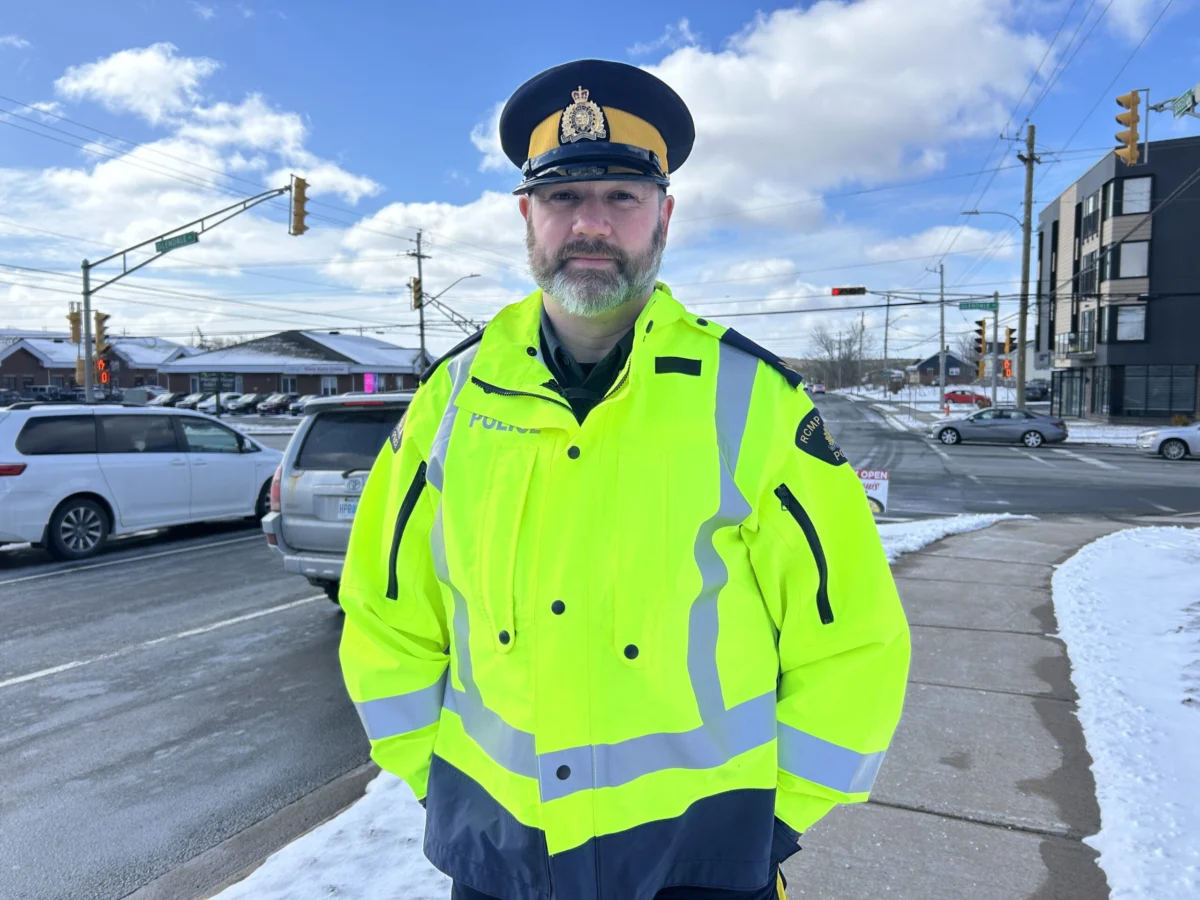
The Royal Canadian Mounted Police (RCMP) in the Halifax area have initiated a novel, albeit contentious, traffic enforcement strategy, deploying officers disguised as panhandlers at busy intersections to identify and ticket distracted drivers. This innovative approach, piloted in mid-March, has yielded significant results in terms of infractions detected but has simultaneously ignited a fervent public discussion regarding its ethical implications, particularly concerning the portrayal of vulnerable populations.
The Undercover Operation: Details and Immediate Impact
On March 18, 2026, the RCMP’s Halifax Regional Detachment Traffic Unit launched its covert operation, focusing initially on a high-traffic intersection in Lower Sackville before extending to Cole Harbour. The core of the strategy involved an officer, indistinguishable from a genuine panhandler, mingling with vehicles at the roadside, holding a sign, and observing driver behavior from an unpatrolled vantage point. This street-level perspective, according to authorities, provided an unparalleled ability to peer into vehicle interiors, where traditional patrol methods often fail to detect subtle but dangerous infractions.

Cpl. Bobby Bambury, speaking for the RCMP Halifax Regional Detachment Traffic Unit, elaborated on the methodology: "We had a traffic spotter. He was walking amongst the traffic. He was posing as a panhandler with a sign, and he was walking among the traffic, seeing into people’s vehicles to see them committing some of these offences." The efficacy of this direct observation was immediately apparent. The single-day operation in Lower Sackville alone resulted in 46 tickets issued, a testament to the prevalence of the targeted offenses and the effectiveness of the undercover approach. Officers subsequently stopped 33 vehicles in Lower Sackville that morning, before moving on to Cole Harbour to continue the initiative.
The infractions observed were diverse, ranging from clear violations of distracted driving laws, such as texting while driving, to non-compliance with basic safety regulations like not wearing seatbelts. Disturbingly, the operation also identified individuals driving with revoked licenses, highlighting the multifaceted dangers present on the roads. "We’ve seen a number of people committing traffic offences: they were not wearing seatbelts, they were texting and driving. And then we also caught some revoked drivers," Cpl. Bambury stated, emphasizing the breadth of unsafe behaviors intercepted.
A notable, and somewhat unexpected, aspect of the operation was the public’s compassionate response to the disguised officer. Several motorists, believing the officer to be genuinely in need, approached him to offer money, clothing, and food. In each instance, the officer broke cover, revealing his true identity and the purpose of the initiative. "And in all instances, he told the people, ‘I’m a police officer. I’m out here, I am doing a traffic initiative,’" Cpl. Bambury recounted, underscoring the delicate balance between maintaining the disguise and addressing public concern.
The Escalating Crisis of Distracted Driving in Canada

The deployment of such an unconventional tactic by the RCMP underscores the escalating public safety crisis posed by distracted driving across Canada, and particularly in Nova Scotia. Despite rigorous public awareness campaigns and increasing penalties, the problem persists, leading to a significant number of preventable collisions, injuries, and fatalities annually.
Statistics paint a grim picture. Transport Canada data consistently identifies distracted driving as a leading cause of collisions, often surpassing impaired driving in certain regions. While precise, up-to-the-minute figures for Nova Scotia specifically were not immediately available, national trends indicate that driver distraction contributes to approximately 21% of fatal collisions and 27% of serious injury collisions. The economic cost is also staggering, encompassing healthcare expenses, property damage, lost productivity, and insurance rate increases. Fines for distracted driving in Nova Scotia are substantial, starting at over $350 for a first offense and escalating with repeat violations, alongside demerit points that impact insurance premiums and driving privileges. Yet, these deterrents often prove insufficient against ingrained habits.
Traditional enforcement methods, involving marked patrol cars or officers on motorcycles, face inherent limitations. Drivers are often quick to spot police presence and modify their behavior temporarily, only to revert to dangerous habits once out of sight. The physical layout of modern vehicles, with tinted windows and increasing cabin privacy, further complicates the ability of officers to detect in-vehicle distractions from a standard patrol vantage point. It is against this backdrop of persistent danger and enforcement challenges that the RCMP has opted for a more surreptitious approach, seeking to level the playing field against drivers who knowingly flout safety laws.
Public Reaction: A Spectrum of Concern

While law enforcement agencies prioritize public safety, the chosen method of disguising officers as panhandlers has triggered a significant backlash from segments of the community, who deem it insensitive and ethically questionable. The criticism centers on the perceived trivialization of homelessness, a severe and growing social issue, by using it as a mere prop for police work.
Fabina Germain-Bajowa, a local resident, articulated this sentiment directly: "For the police to kind of use that as a costume to catch people using their phones while driving is not, is not great." This view resonates with many who feel that leveraging the image of vulnerability for enforcement purposes exploits a serious societal problem. Another resident, Charlene Kankunda, echoed this concern, stating, "It’s kind of offensive to choose to be a panhandler for a day when that’s someone’s everyday life."
Beyond the immediate offense, critics argue that such tactics could erode public trust in law enforcement. If citizens perceive police as willing to masquerade as the vulnerable, it might foster cynicism and reduce willingness to cooperate with authorities in other contexts. Homelessness advocacy groups, while not explicitly quoted in the initial reports, would likely voice concerns about the potential for such operations to further stigmatize or misrepresent individuals experiencing homelessness, making their already precarious situations even more challenging. The public’s willingness to offer assistance to the disguised officer, only to discover it was a police sting, also raises questions about the impact on spontaneous acts of charity and genuine community support for those in need.
Cpl. Bambury, in response to these criticisms, maintained the RCMP’s stance on the necessity of the operation, asserting that the onus lies squarely on drivers to adhere to traffic laws. "The only thing they have to do is obey the traffic laws and they will have no problems with us whatsoever," he stated, reiterating the primary goal of improving road safety.

Precedent and Comparative Approaches in Other Jurisdictions
While new to the Halifax area, the use of undercover officers in plain clothes for traffic enforcement is not without precedent in Canada. Cpl. Bambury confirmed that similar tactics have been deployed in the past by police forces in British Columbia and Saskatchewan. These historical applications suggest a recognition within Canadian policing of the need for innovative methods to combat persistent traffic violations, particularly those difficult to detect through conventional means.
Other Maritime police departments have adopted variations of plainclothes enforcement without resorting to the specific panhandler disguise. The Halifax Regional Police (HRP), for instance, confirmed to Global News that they employ a "variety of methods" to spot traffic infractions, including "putting officers in plain clothes." This broader description suggests a more generalized approach where officers might blend into pedestrian traffic without adopting a specific, socially charged persona.
The Fredericton Police Force offered a more detailed alternative. While their officers do not pose as panhandlers, they have utilized "plainclothes officers holding a sign such as ‘have a nice day,’ which allows for observation of driver behaviour." This method achieves a similar goal of inconspicuous observation but does so in a manner that avoids the ethical sensitivities associated with mimicking homelessness. The "have a nice day" sign provides a plausible, innocuous reason for an individual to be standing at an intersection, allowing for discreet observation without triggering the same level of public debate.

These comparisons highlight a spectrum of approaches to covert traffic enforcement, suggesting that while the underlying principle of inconspicuous observation is shared, the specific choice of disguise carries significant weight in terms of public perception and ethical implications.
Analysis: Balancing Effectiveness, Ethics, and Public Trust
The RCMP’s undercover panhandler tactic presents a classic dilemma in law enforcement: how to balance the clear mandate to ensure public safety with the ethical considerations and potential impacts on community relations.
From a purely operational standpoint, the tactic appears highly effective. The substantial number of tickets issued in a single day underscores its ability to detect violations that might otherwise go unpunished. Distracted driving is a dangerous behavior that causes real harm, and any method that effectively curtails it could be argued as justifiable in the pursuit of public safety. The "spotter" role offers a tactical advantage, providing an unobstructed view into vehicles, making it difficult for drivers to conceal their illicit activities.

However, the ethical cost must be carefully weighed. The decision to use homelessness as a "costume" is problematic on several fronts. It risks trivializing the plight of a highly vulnerable segment of society, potentially dehumanizing individuals who genuinely struggle with poverty and lack of shelter. This could inadvertently contribute to negative stereotypes or desensitize the public to the very real suffering of the homeless population.
Furthermore, the impact on public trust is a significant concern. Effective policing relies heavily on the cooperation and confidence of the community. Tactics perceived as deceptive, or as exploiting social vulnerabilities, can erode this trust. When citizens learn that their acts of kindness were directed at an undercover officer, it could foster a sense of betrayal or suspicion, potentially making them less likely to offer help to genuine panhandlers in the future. This unintended consequence could have broader negative implications for community cohesion and support networks for the truly disadvantaged.
Legal and civil liberties experts might also raise questions regarding the nature of such covert operations. While police are generally permitted to use deception in investigations, particularly in public spaces, the specific nature of the disguise and its social implications could draw scrutiny. The line between effective enforcement and methods that undermine community values is a fine one, and this tactic appears to push the boundaries for some.
Ultimately, the debate surrounding the RCMP’s undercover panhandler initiative is not merely about catching lawbreakers; it’s about the kind of society we wish to foster and the methods we deem acceptable for upholding its laws. While the immediate results in terms of tickets issued are undeniable, the long-term impact on public perception, community trust, and the societal understanding of homelessness warrants careful and ongoing evaluation. Police forces must continually assess whether the operational benefits of a tactic outweigh its potential ethical costs and whether alternative, less controversial methods could achieve similar safety outcomes without compromising public trust or social sensitivity. As this debate continues, it will undoubtedly shape future discussions on policing strategies in the face of evolving public safety challenges.