admin
admin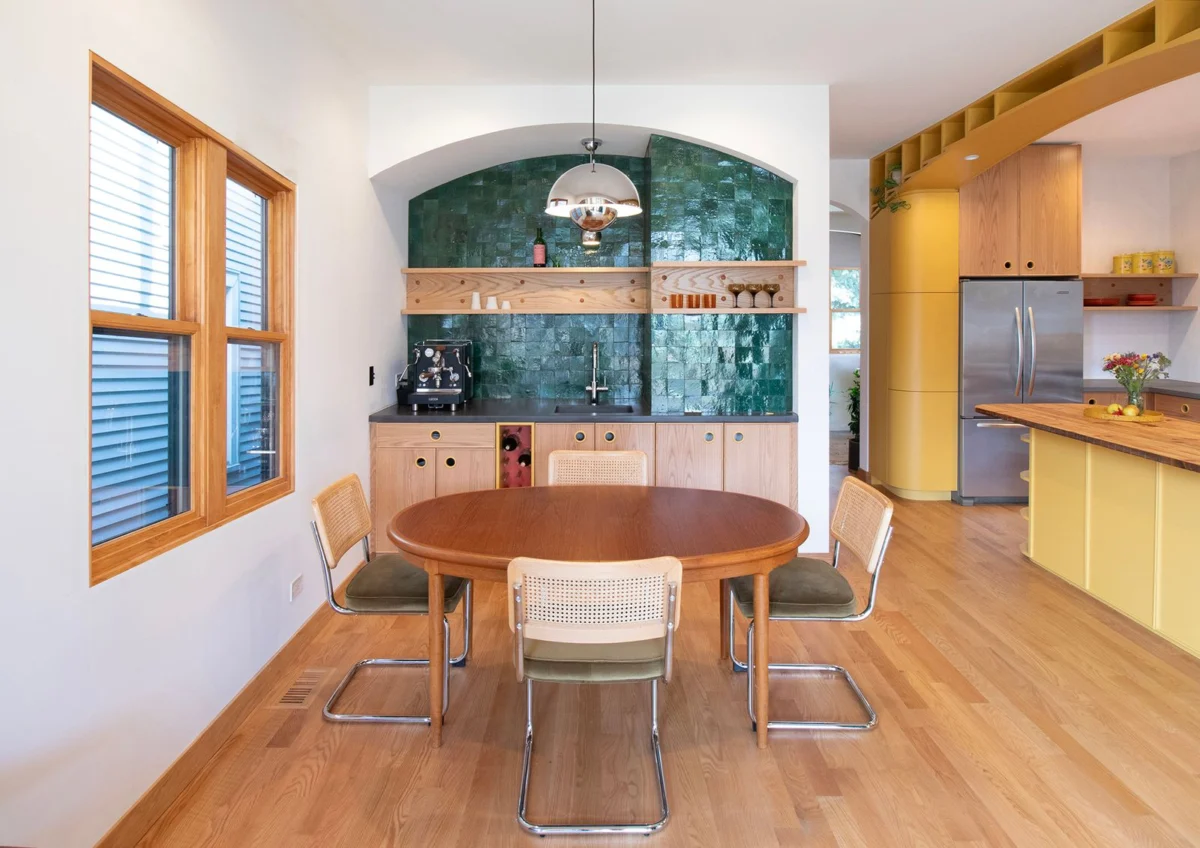
When Kris Rey and Kev Cahill initiated consultations with architectural firms in 2021 regarding a significant remodel of their Chicago bungalow, they brought with them several years of intimate experience living within its confines and a clear understanding of its inherent limitations. The structural and spatial constraints of the property, a common characteristic of many homes from its era, had become increasingly pronounced. The main floor, characterized by a series of compartmentalized, small rooms, offered a cramped living environment that was increasingly unsuitable for contemporary family life. Furthermore, the second floor, which initially housed two bedrooms—one occupied by the couple and the other shared by their two existing children—was rendered insufficient by the impending arrival of a new baby. This demographic shift within the family underscored the urgent need for additional private spaces. Below grade, the basement presented a unique challenge: a remnant of 1960s leisure culture, it functioned as an elaborate Tiki bar. While admittedly a source of amusement for occasional karaoke gatherings, its overall ambiance and utility were not aligned with the needs of a young family. As Kris Rey articulated, "Our daughter was too afraid to go down there," highlighting the space’s unsuitability for general family use.
The Enduring Legacy and Evolving Challenges of the Chicago Bungalow
The Chicago bungalow, a quintessential architectural typology of the city, emerged prominently in the early 20th century, particularly between 1910 and 1940. These sturdy, single-family homes, often constructed from brick or stone, were designed to provide affordable, yet respectable, housing for the city’s burgeoning middle and working classes. Characterized by their rectangular footprint, low-pitched roofs, and distinctive wide, overhanging eaves, an estimated 80,000 bungalows were built across Chicago, forming the backbone of numerous neighborhoods. Their enduring appeal lies in their robust construction, compact design, and often generous lot sizes.
However, as generations pass and societal living patterns evolve, the inherent design of these historic homes often presents significant challenges for modern families. Original layouts typically featured smaller, distinct rooms — a reflection of early 20th-century sensibilities where kitchens were purely utilitarian and formal dining rooms were commonplace. This contrasts sharply with today’s preference for open-concept living, integrated kitchen-dining-family areas, and flexible spaces that can adapt to various functions. Furthermore, the standard two or three bedrooms on the main or second floor, while adequate for smaller families of yesteryear, frequently fall short of the spatial requirements for larger families, multi-generational households, or those desiring dedicated home offices, playrooms, or guest accommodations. Energy efficiency, outdated plumbing and electrical systems, and a lack of natural light in some areas are also common issues that owners of these historic properties face.
A Family’s Growth Outpaces Its Home’s Capacity
For Kris Rey and Kev Cahill, their Chicago bungalow, while cherished for its history and location, had reached a critical juncture. The "pain points" they identified were not merely inconveniences but fundamental obstacles to their family’s comfort and functionality. The main floor’s cramped nature meant that everyday activities — cooking, dining, relaxation, and children’s play — were often confined and disjointed. Modern family life thrives on connectivity and flexibility, and the bungalow’s original design worked against this.
The most pressing concern was the bedroom situation. With two children already sharing a single bedroom on the second floor, the news of a third child transformed a minor inconvenience into an urgent spatial crisis. The demand for individual bedrooms for children, particularly as they approach adolescence, is a significant driver for home expansions or relocations. A shared room for three young children, while possible in the short term, rarely offers the privacy or personal space conducive to harmonious family living in the long run. This impending arrival served as the primary catalyst, pushing the couple to seriously consider a comprehensive architectural intervention rather than a superficial refresh.
Adding to the spatial dilemma was the basement. Its 1960s Tiki bar incarnation, complete with themed decor and perhaps even a dedicated bar area, represented a bygone era of entertainment. While Kris acknowledged its "fun" aspect for adult gatherings like karaoke parties, its lack of adaptability for family use was a stark reality. The quote from Kris Rey, "Our daughter was too afraid to go down there," speaks volumes about its unsuitability. Dark, perhaps dimly lit, and certainly not designed with children in mind, the basement became a forbidden or unwelcoming zone, representing a significant portion of the home’s square footage that was effectively lost to the family’s daily life. This underutilized space held immense potential for transformation into a vibrant, functional area that could alleviate pressure on the upper floors.
The Chronology of Transformation: From Concept to Construction
The decision to remodel rather than relocate was a conscious one, driven by the family’s attachment to their neighborhood and the inherent potential they saw in their existing structure. The process formally began in early 2021 when Rey and Cahill initiated their search for an architectural firm capable of understanding both the historical context of the bungalow and the contemporary needs of a growing family.
Q1 2021: Initial Consultations and Visioning
The initial phase involved extensive meetings with prospective architects. Rey and Cahill presented their challenges: the need for an open-plan main floor, an additional bedroom on the second story, and a completely re-envisioned, child-friendly basement. The architectural team’s primary task was to devise a design strategy that could achieve these goals while respecting the bungalow’s original character and navigating the complexities of Chicago’s building codes for historic structures. This involved careful consideration of structural modifications, potential additions, and the integration of modern amenities.
Q2-Q4 2021: Design Development and Permitting
Following the selection of an architectural partner, the design development phase commenced. This period was characterized by iterative discussions, sketch reviews, and 3D renderings, allowing the family to visualize proposed changes. Key design objectives included:
- Main Floor: Demolishing non-load-bearing walls to create a more expansive, fluid living-dining-kitchen area, improving natural light penetration and sightlines.
- Second Floor: Reconfiguring the existing two bedrooms and potentially adding a small extension or dormer to accommodate a third, adequately sized bedroom, along with an updated bathroom.
- Basement: Stripping out the Tiki bar elements to create a versatile family room, potentially a guest bedroom, and a functional laundry area, ensuring ample lighting and accessibility.
The architectural firm also undertook the rigorous process of preparing detailed construction documents and navigating the city’s permitting system, a phase often fraught with delays for significant remodels, particularly those involving older homes.
Q1 2022: Contractor Selection and Pre-Construction
With permits secured, the family moved to the contractor bidding and selection process. This critical step involved evaluating multiple bids, reviewing contractor qualifications, and establishing a realistic budget and timeline. Pre-construction meetings ensured alignment between the homeowners, architects, and the chosen contractor regarding project scope, materials, and communication protocols.
Q2 2022 – Q1 2023: Construction Phase
The physical transformation began. This phase involved demolition, structural modifications (such as installing new beams to support open-concept spaces), rough-ins for new electrical and plumbing systems, framing for the reconfigured rooms, and the construction of any additions. Challenges common to extensive renovations, such as unexpected structural issues, material supply chain delays (a persistent issue in the post-pandemic era), and budget adjustments, were meticulously managed by the project team. The second-floor expansion and the complete overhaul of the basement represented particularly complex undertakings, requiring specialized expertise in structural engineering and moisture management.
Q2 2023: Finishing and Completion
The final stages involved interior finishes, including drywall, flooring, cabinetry, paint, and fixture installations. Landscaping and exterior work completed the project, ensuring a cohesive aesthetic. The family’s input was crucial during these stages, particularly regarding material selections and color palettes, ensuring the renovated home truly reflected their taste and lifestyle. The project’s completion in mid-2023 marked a significant milestone, delivering a fully transformed residence ready to accommodate the now larger family.
Supporting Data: The Economics and Trends of Home Renovation
The Rey-Cahill family’s decision aligns with broader trends in the housing market, particularly concerning older homes. Data from the National Association of Home Builders (NAHB) consistently shows that remodeling activity remains robust, driven by a desire for improved functionality, increased space, and enhanced aesthetics. The average cost of a major home renovation in a city like Chicago can range significantly, often exceeding $100,000 for comprehensive projects that involve structural changes, kitchen and bathroom overhauls, and additions. According to a 2023 Houzz report, homeowners spent an average of $35,000 on renovations, with higher-end projects reaching well into six figures, especially in competitive markets.
For bungalows specifically, renovations often yield a strong return on investment (ROI). Projects like kitchen remodels and adding a bathroom typically see an ROI of 60-80%, while basement conversions can significantly increase usable living space and property value. In Chicago’s competitive real estate market, a well-executed renovation that modernizes an older home while preserving its charm can substantially boost its market appeal and resale value, often more so than purchasing a new build. This is particularly true for bungalows, which are highly sought after for their character and often prime locations.
Furthermore, the trend towards "aging in place" and designing homes that can adapt to evolving family needs underscores the value of thoughtful renovations. Rather than moving as family dynamics change, homeowners are increasingly opting to modify their existing properties, creating flexible spaces that can serve different functions over time – a playroom today, a teenage study space tomorrow, or a guest suite for aging parents.
Official Responses and Design Philosophy (Inferred)
While specific architects involved were not named in the initial report, the approach taken by the Rey-Cahill project reflects a common philosophy among design professionals working with historic structures. An architectural firm tasked with such a renovation would likely emphasize:
- Respect for Heritage: "Our primary objective was to breathe new life into this classic Chicago bungalow while meticulously preserving its architectural integrity. It’s about evolving the home, not erasing its history."
- Optimizing Flow and Functionality: "The challenge was to transform a series of disconnected, smaller rooms into a cohesive, open-concept living space that fosters family interaction and modern utility. We focused on creating clear sightlines and intuitive circulation."
- Maximizing Underutilized Space: "The basement presented a fantastic opportunity. By transforming a dated entertainment zone into a bright, versatile family area, we essentially added an entire floor of functional living space, significantly enhancing the home’s overall value and livability."
- Future-Proofing the Home: "We designed with the family’s future in mind. The additional bedroom and adaptable living areas ensure that this home can comfortably accommodate their growth for many years to come, reducing the need for future disruptive changes."
The contractors involved would have echoed sentiments about the unique challenges and rewards of working on older homes. "Every bungalow project is an adventure," a general contractor might state. "While you uncover unexpected structural elements or older infrastructure, the quality of construction from that era often means you’re building on a solid foundation. The satisfaction comes from seeing these homes adapt beautifully to contemporary demands."
Broader Impact and Implications of Thoughtful Renovation
The transformation of the Rey-Cahill bungalow exemplifies the broader impact of thoughtful architectural design and renovation. Such projects contribute significantly to:
- Enhanced Quality of Life: A home that aligns with a family’s needs reduces daily stress, improves functionality, and fosters a more harmonious living environment. The ability for children to have their own space, for parents to have a functional, open living area, and for the entire family to utilize all parts of their home, including a previously feared basement, directly translates into improved well-being.
- Preservation of Architectural Heritage: Rather than succumbing to demolition or neglect, well-executed renovations ensure that iconic architectural styles like the Chicago bungalow continue to thrive. They demonstrate that these homes are not just relics of the past but adaptable structures capable of serving modern purposes, thereby maintaining the unique character of Chicago’s neighborhoods.
- Economic Value and Community Stability: Renovations contribute to local economies through job creation in construction, design, and related trades. They also bolster property values, not just for the renovated home but for surrounding properties, fostering community stability and investment.
- Sustainability: Opting to renovate and adapt an existing structure is inherently more sustainable than new construction. It reduces waste, minimizes the environmental impact of new material production, and leverages the embodied energy already present in the existing building.
- Setting a Precedent: The success of projects like the Rey-Cahill remodel serves as an inspiration and blueprint for other homeowners facing similar challenges with their older properties. It showcases the potential for transformation and encourages others to invest in their existing homes, contributing to a cycle of renewal within established communities.
In conclusion, the journey of Kris Rey and Kev Cahill to reimagine their Chicago bungalow is more than just a personal home improvement story. It is a microcosm of a larger trend in urban living—the intelligent adaptation of historical architecture to meet the dynamic demands of the 21st-century family. By strategically addressing spatial constraints, modernizing antiquated layouts, and unlocking the full potential of every square foot, their transformed home now stands as a testament to how thoughtful design can not only accommodate growth but also enrich daily life, ensuring a beloved piece of Chicago’s heritage continues to thrive for generations to come.