admin
admin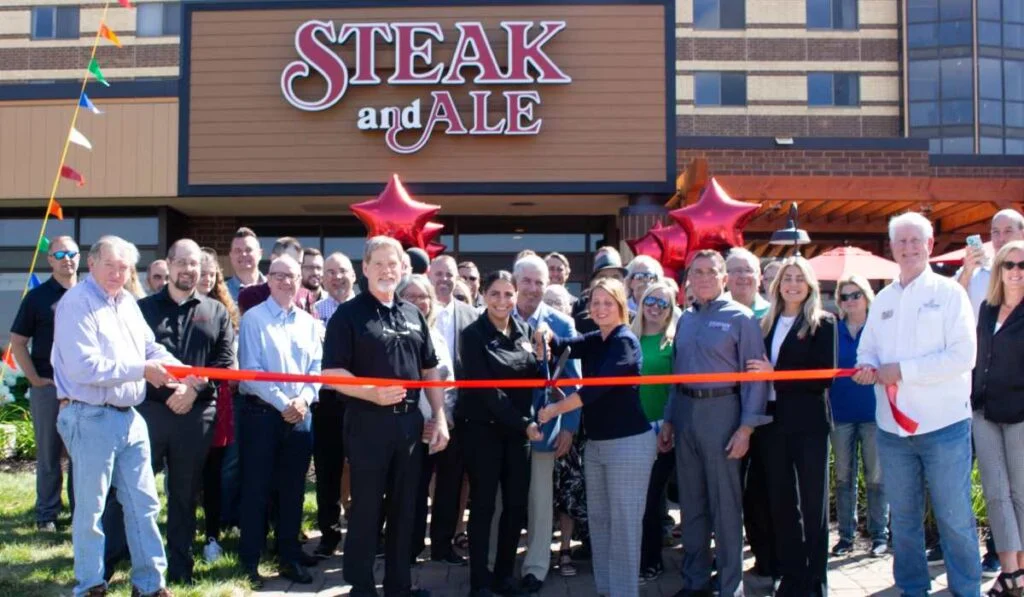
The landscape of American casual dining is currently witnessing one of the most improbable corporate resurrections in the history of the hospitality industry. Under the leadership of Paul Mangiamele, Chairman and CEO of Legendary Restaurant Brands, two of the most recognizable names of the 20th-century dining boom—Bennigan’s and Steak and Ale—are being systematically extracted from the "abyss" of brand extinction. This revival, characterized by Mangiamele as a blend of emotional equity and modern operational efficiency, marks a significant shift in how legacy brands navigate the volatile post-pandemic economy. The resurgence is anchored by the 50th anniversary of Bennigan’s and the highly publicized return of Steak and Ale, which recently opened its doors in Burnsville, Minnesota, after a 16-year absence from the American culinary map.
The Historical Context of the Collapse and the Path to Recovery
To understand the magnitude of the current revival, one must look back at the catastrophic failure that nearly erased these brands from existence. In 2008, amid the global financial crisis, S&P Restaurant Group (then the parent company of Bennigan’s and Steak and Ale) filed for Chapter 7 bankruptcy protection. Unlike Chapter 11 bankruptcy, which allows for corporate reorganization and the continuation of operations, Chapter 7 is a liquidation process. It typically signals the absolute end of a brand, as assets are sold off to pay creditors. At the time of the filing, the company shuttered over 150 corporate-owned Bennigan’s locations and all remaining Steak and Ale restaurants overnight.
Mangiamele, who took the helm of the brand’s parent company 15 years ago, faced a marketplace that had largely written off the concepts as relics of a bygone era. The casual dining segment was being squeezed from both ends: the rise of "fast-casual" pioneers like Chipotle and Panera Bread captured the lunch crowd, while high-end "polished casual" establishments dominated the evening market. For a brand to return from a Chapter 7 liquidation is historically unprecedented in the restaurant sector. Mangiamele’s strategy centered on the belief that while the corporate structure had failed, the brand equity—the intangible emotional connection consumers held with the names—remained intact.
The Concept of NEWstalgia and Emotional Connectivity
Central to the revival is Mangiamele’s proprietary philosophy of "NEWstalgia." This strategic framework involves preserving the core DNA of the brands—the elements that created deep-seated memories for Gen X and Baby Boomer consumers—while ruthlessly updating the physical and operational aspects to meet 21st-century expectations. For Bennigan’s, this means the retention of signature menu items like the World Famous Monte Cristo, a battered and fried ham, turkey, and cheese sandwich that has maintained a cult-like following for decades.
Mangiamele argues that in an increasingly transactional world, restaurants that offer an emotional experience gain a competitive moat. He posits that emotional connections lead directly to increased visitation frequency and sustained revenue generation. This is not merely a sentimental outlook but a data-driven approach to customer retention. By tapping into the "hospitality model" of the past—where service was personalized and the atmosphere was immersive—the brands are positioning themselves as an antidote to the sterile, tech-heavy environments of modern fast food.

Operational Transformation and the Death of the Big Box
One of the primary reasons for the original decline of casual dining giants was the "big box" real estate model. In the 1980s and 90s, it was standard for a Bennigan’s or Steak and Ale to occupy 8,000 to 10,000 square feet. In today’s economic climate, characterized by skyrocketing real estate costs, high property taxes, and rising utility rates, such footprints are no longer viable.
Legendary Restaurant Brands has pivoted toward a more efficient unit economic model. The new iterations of these restaurants feature smaller footprints that prioritize kitchen efficiency and high-margin bar areas while reducing the total square footage. This "smarter footprint" allows for better labor management and lower overhead, making the franchise more attractive to potential operators. Mangiamele has emphasized that the value of the company lies in the brand intellectual property rather than the physical real estate, allowing for flexible deployments in nontraditional venues such as airports, hotels, and "host kitchens."
A key component of this flexibility is "Bennigan’s On The Fly." This fast-casual and hybrid offshoot is designed for smaller spaces and delivery-centric markets. By the end of the current fiscal year, the company expects to have approximately 40 of these units in operation. This multi-tiered expansion strategy allows the brand to penetrate markets where a full-service, 5,000-square-foot restaurant might not be feasible, providing a diversified revenue stream that protects the parent company from localized economic downturns.
The Steak and Ale Milestone and Market Validation
The return of Steak and Ale on July 8, 2024, in Burnsville, Minnesota, served as a definitive litmus test for Mangiamele’s "NEWstalgia" theory. Before breaking ground, the company sought to quantify the latent demand for the brand. They launched a Facebook community for Steak and Ale enthusiasts, which rapidly grew to over 60,000 active members. This digital engagement provided the empirical evidence needed to move forward with the first new location in nearly two decades.
The Burnsville opening, led by franchisee Roy Arnold, showcased the modernized Steak and Ale. While the iconic salad bar and prime rib remain central to the offering, the service model has been updated. The concept now fits into the "polished-casual" category, offering a high-end experience at a competitive price point. Mangiamele highlighted a specific value proposition: a full meal featuring Hawaiian chicken, rice pilaf, sautéed broccoli, the signature salad bar, and scratch-made bread with honey butter, all for approximately $18. This pricing strategy is a direct response to the "value deficit" currently plaguing the American dining market.
The Narrowing Price Gap and the Rebirth of Casual Dining
The broader restaurant industry is currently navigating a significant price reset. Over the past three years, inflationary pressures on labor and commodities have forced quick-service restaurants (QSR) to raise prices aggressively. As the cost of a standard fast-food meal approaches $12 to $15, the price gap between a "value" meal at a drive-thru and a full-service experience at a casual dining restaurant has narrowed to a negligible margin.

Mangiamele views this as a "new frontier" for brands like Bennigan’s and Steak and Ale. When the price difference is only a few dollars, consumers are more likely to opt for the perceived value of a sit-down meal with table service, real glassware, and a higher quality of ingredients. However, Mangiamele cautions that this rebirth is only available to brands that offer a distinct value proposition. Operators who have simply passed on costs to the guest without improving the experience are seeing customer defections. Legendary Restaurant Brands has instead focused on "saving their way to profitability" through efficiency rather than compromising the guest experience.
Financial Independence and Global Expansion
A distinguishing factor in the management of Legendary Restaurant Brands is its financial structure. Unlike many of its competitors, which are owned by private equity firms or beholden to public shareholders, the company remains privately held and debt-free. This lack of outside investment allows Mangiamele and his team to prioritize long-term brand health over the pressure of meeting quarterly earnings targets.
This deliberate approach to growth has resulted in over 100 restaurants currently open or under contract globally. The international expansion has been particularly robust, with Bennigan’s finding success in diverse markets such as Mexico, Central America, and the Middle East. These international footprints often serve as the vanguard for the brand, proving its adaptability across different cultures and economic environments.
Broader Implications for the Hospitality Industry
The success of the Mangiamele-led revival offers several key takeaways for the wider hospitality sector. First, it demonstrates that brand equity has a much longer shelf life than previously thought, provided the brand can be modernized without losing its soul. Second, it highlights the necessity of operational flexibility; the transition from massive "big box" units to efficient, multi-format models is likely a permanent shift for the industry.
Furthermore, the emphasis on the "people-first" culture—what Mangiamele describes as a passion for the craft of hospitality—serves as a reminder that the restaurant business remains a service-oriented industry at its core. In an era where automation and kiosks are becoming the norm, the "Legendary" hospitality model provides a point of differentiation that is difficult for tech-focused competitors to replicate.
As Bennigan’s celebrates half a century of operation and Steak and Ale begins its second chapter, the trajectory of Legendary Restaurant Brands serves as a case study in strategic persistence. By focusing on emotional connectivity, operational efficiency, and a clear value proposition, Paul Mangiamele has not only brought two icons back from the brink but has also provided a blueprint for the future of the casual dining segment. The "Watch us" attitude that defined the early days of the comeback has evolved into a tangible reality, signaling that the era of the great American dining comeback is well underway.