admin
admin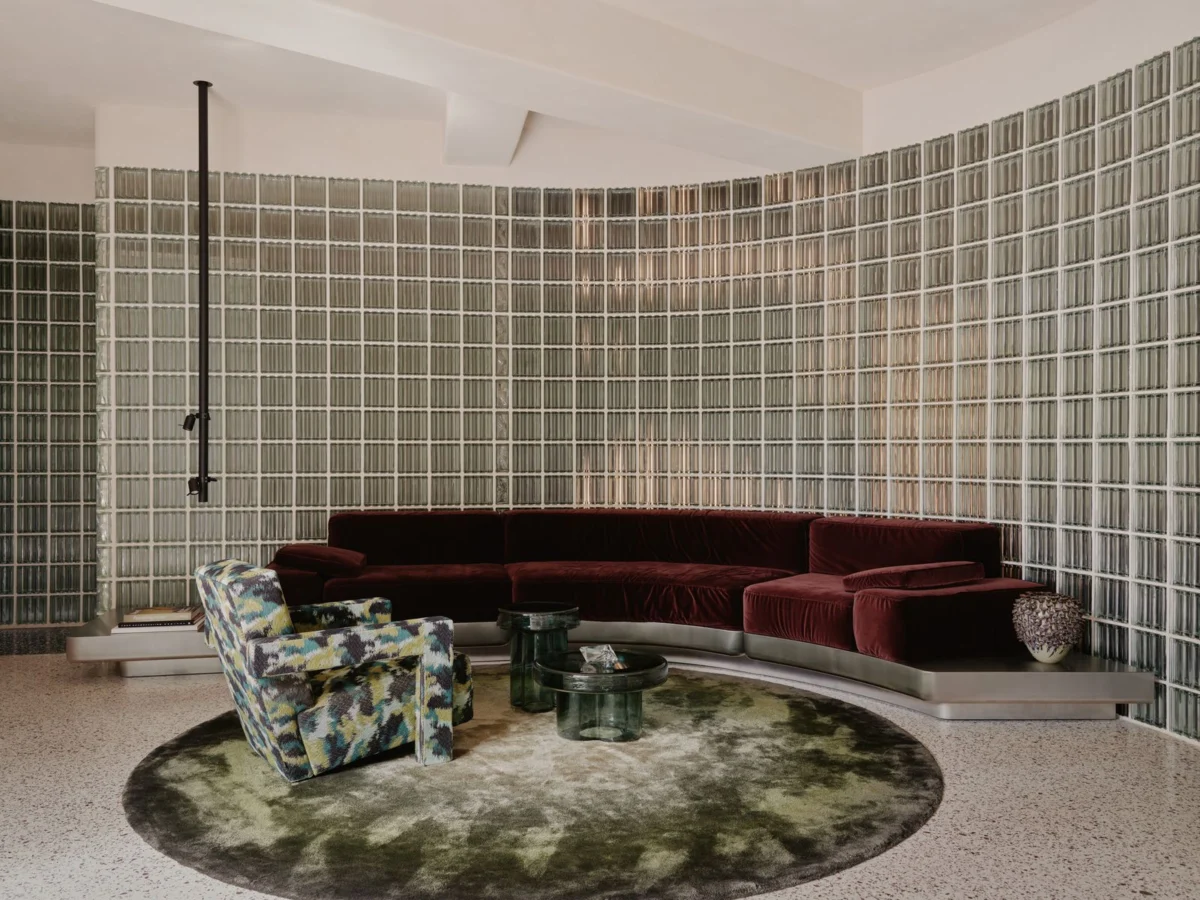
In a compelling testament to the evolving landscape of residential design, a secondary residence in Berlin’s vibrant Kreuzberg district has undergone a remarkable transformation, meticulously orchestrated by the renowned German architecture firm Studio Karhard. Commissioned by a German-American couple, the project aimed to distill the distinctive, raw, and technical atmosphere of one of Berlin’s most legendary nightclubs, Berghain—a space originally designed by Studio Karhard two decades prior—into a private, comfortable domestic setting. This ambitious endeavor not only expanded the apartment’s functional footprint but also forged a unique interior narrative, marrying industrial aesthetics with sophisticated comfort and a deeply personal touch.
The Genesis of an Icon: Berghain and Studio Karhard’s Legacy
To fully appreciate the design philosophy underpinning this Kreuzberg apartment, one must first understand the profound cultural and architectural significance of Berghain. Located in a former power plant in Friedrichshain, Berghain has, since its inception, transcended its identity as merely a nightclub to become a global mecca for electronic music and a symbol of Berlin’s techno subculture. Its imposing, brutalist architecture, characterized by raw concrete, exposed steel, and a deliberate sense of industrial grandeur, was crafted by Studio Karhard’s founders, Thomas Karsten and Alexandra Erhard, approximately twenty years ago. The club’s design is intrinsically linked to its immersive, almost sacred, atmosphere, where the spatial qualities contribute as much to the experience as the music itself. Studio Karhard’s reputation was significantly cemented by this project, establishing them as masters in creating highly atmospheric, experience-driven environments that blend the functional with the profoundly artistic. Their work on Berghain underscored a design ethos that embraces materiality, light, and the psychological impact of space, concepts they would later adeptly reinterpret for a residential context.
A New Canvas in Kreuzberg: Client Vision Meets Architectural Expertise
The German-American couple, clients for this unique residential project, were deeply drawn to the very "technical, raw atmosphere" that defined Berghain. Their decision to commission Studio Karhard for their secondary residence in Kreuzberg was a direct homage to the firm’s iconic club design. Kreuzberg itself provides a fitting backdrop for such a project. Known for its eclectic mix of bohemian charm, gritty urban edge, and a rich tapestry of cultural influences, Kreuzberg has long been a hub for artists, creatives, and those seeking an alternative urban lifestyle. Its historical buildings, often featuring high ceilings and robust structures, offer a versatile canvas for contemporary interventions. The clients’ brief went beyond mere aesthetics; they sought practical enhancements including more storage space and a generous kitchen, indicative of a lifestyle that values both intimate comfort and social entertaining. This presented Studio Karhard with the intriguing challenge of translating a public, high-energy aesthetic into a private, serene, yet equally characterful home. As architect Thomas Karsten articulated, the goal was to "turn that [raw atmosphere] into something cozy," a delicate balance requiring careful consideration of materials, light, and spatial flow.
Spatial Metamorphosis: From Two Rooms to a Dynamic Three-Room Dwelling
The initial assessment of the existing two-room apartment revealed inherent limitations. The original proportions, as Karsten noted, "didn’t quite work" for the clients’ vision and functional requirements. This necessitated a comprehensive approach, leading to a full renovation rather than a superficial redesign. The architects proposed a new spatial layout that ingeniously transformed the modest two-room dwelling into a more expansive and versatile three-room apartment. This involved reconfiguring internal walls and optimizing the footprint to carve out a separate bedroom and a dedicated workspace. This functional expansion was critical for the clients, providing them with distinct zones for rest, productivity, and leisure, enhancing the overall liveability and adaptability of their secondary residence. The strategic re-planning ensured that while the aesthetic inspiration remained bold, the fundamental principles of residential comfort and utility were meticulously addressed, laying the groundwork for the apartment’s unique character.
Sculpting with Light: The Central Curved Glass-Block Wall
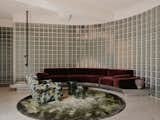
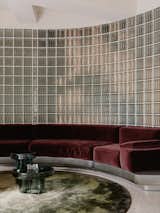
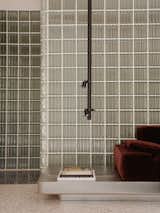
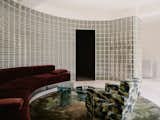
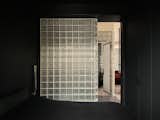
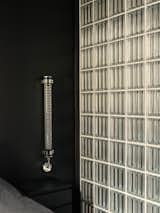
At the very heart of the apartment’s reimagined floor plan lies one of its most striking features: a gracefully curved glass-block wall. This element is far more than a simple partition; it is a central design statement that actively sculpts light and atmosphere within the space. Positioned to divide the entrance area from the main living space, the wall achieves a paradoxical feat: it creates clear spatial delineation without impeding the flow of natural daylight. Thomas Karsten emphasized, "Playing with light was one of our first ideas." The translucent quality of the glass blocks allows light to filter through softly, creating a diffused, ethereal glow that shifts throughout the day. Furthermore, the wall is "lit from within," transforming it into an illuminated beacon during evening hours. This internal illumination lends the space an "almost cinematic mood," as Karsten describes it, an effect "quite unusual for a Berlin apartment." The choice of glass blocks, often associated with industrial or mid-century modern architecture, also subtly echoes the robust, functional materials found in Berghain, but here, they are refined and imbued with a sense of warmth and artistic intent.
A Symphony of Contrasts: Materials, Textures, and a Milanese Echo
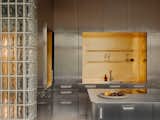
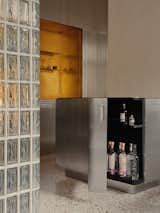
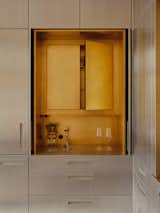
Studio Karhard’s mastery of materiality is vividly displayed throughout the apartment, where deliberate contrasts between "bright and dark zones" further structure the space and enrich its atmosphere. The architects employed a sophisticated palette that balances cool, industrial elements with warm, tactile textures. Metals such as polished stainless steel and patinated, untreated brass introduce a sleek, technical edge, reminiscent of Berghain’s raw infrastructure. These cool tones are expertly juxtaposed with surfaces that invite touch and convey comfort. Structured plaster, with its subtle imperfections and depth, adds an organic, handcrafted feel to the walls. Terrazzo flooring, a material celebrated for its durability and decorative aggregate patterns, grounds the space with a sense of timeless elegance, nodding to historical craftsmanship while remaining distinctly contemporary. Complementing these robust surfaces, rich velvet upholstery introduces a luxurious softness, offering a material counterpoint that enhances the "cozy" aspect of the design brief. Karsten points out that this blend of materials evokes "the Milanese style of the 1960s," a period known for its sophisticated material experimentation, where industrial innovation met high-end design, creating spaces that were both modern and opulent. This curated material dialogue is fundamental to the apartment’s layered aesthetic, asserting that "everything we do revolves around materials," as Karsten underscores. The interplay of classic substances with warm wall tones and sumptuous fabrics creates a dynamic yet harmonious environment.
The "Mystical" Homage: A Guest Bathroom Microcosm
Perhaps the most explicit, yet playfully executed, nod to the apartment’s club inspiration is found in the "mystical" guest bathroom. This miniature homage to the techno club experience is a masterclass in condensed atmosphere. It features a metal grid ceiling, instantly recalling the industrial infrastructure of Berghain, and is equipped with color-adjustable lighting. This customizable illumination allows the mood of the room to be dramatically altered, creating an "almost theatrical effect." Karsten humorously admits, "I briefly considered adding a fog machine," highlighting the intention to fully immerse the user in a futuristic, club-like micro-environment. This small but impactful space encapsulates the architects’ ability to translate abstract experiential qualities into tangible design features. It serves as a private, intimate echo of the larger-than-life club, demonstrating how even the most functional spaces can be infused with personality and a sense of narrative.
A Collaborative Journey: The Art of "Ping-Pong" Design
The success of this project is deeply rooted in the intensive collaboration between Studio Karhard and their clients. Thomas Karsten vividly described the process as "a game of ping-pong," a metaphor that underscores the continuous exchange of ideas, feedback, and mutual inspiration. This iterative approach allowed for a highly personalized outcome, ensuring that the final design truly reflected the German-American couple’s lifestyle and aspirations. Crucially, the clients afforded the architects significant creative freedom, fostering an environment where bold ideas could be explored and refined. This trust was complemented by Studio Karhard’s close working relationships with skilled craftsmen, a partnership essential for developing and executing tailor-made solutions. The bespoke nature of many elements, from the unique material finishes to the custom spatial configurations, speaks to the dedication of all parties involved. The result is an interior that is not only architecturally distinct but also profoundly personal, embodying the spirit of Berghain within a domestic realm, creating an atmospheric and layered living experience.
Broader Implications: Blurring Boundaries and Personalization in Modern Living
This Kreuzberg apartment renovation by Studio Karhard stands as a compelling case study in several significant contemporary architectural and design trends. Firstly, it exemplifies the increasing blurring of boundaries between public and private aesthetics. The confident appropriation of elements from a highly specific commercial, indeed iconic, space like Berghain for a residential context challenges conventional notions of home design. It suggests a growing desire among homeowners for spaces that tell a story, reflect their passions, and offer unique experiential qualities beyond mere functionality. This project pushes the conversation on how industrial, brutalist, or even "raw" aesthetics can be softened and integrated into comfortable, livable environments, moving beyond mere pastiche to create authentic, refined spaces.
Secondly, the intensive collaborative process highlights the paramount importance of personalization in modern architecture. In an age of mass production and standardized solutions, clients increasingly seek bespoke designs that are deeply resonant with their individual identities and lifestyles. The "game of ping-pong" described by Karsten underscores a client-architect relationship built on dialogue, trust, and shared creative vision, leading to a truly unique and meaningful home. This approach contrasts sharply with more prescriptive design methodologies, advocating for a fluid, responsive process that can adapt to evolving ideas and unforeseen opportunities.
Finally, the project contributes to the broader discourse on urban renovation and adaptive reuse. In dense urban centers like Berlin, the transformation of existing structures often represents a more sustainable and culturally sensitive approach than new construction. By taking an existing two-room apartment and completely re-envisioning its spatial layout and aesthetic, Studio Karhard demonstrates the immense potential for revitalizing older urban fabric. This project is not just about interior design; it’s about re-imagining how we live in and interact with our cities, bringing a piece of Berlin’s vibrant cultural pulse into the very fabric of its residential architecture. The apartment stands as a testament to the power of design to create spaces that are not only beautiful and functional but also deeply evocative and culturally significant, a true reflection of Berlin’s dynamic spirit.