admin
admin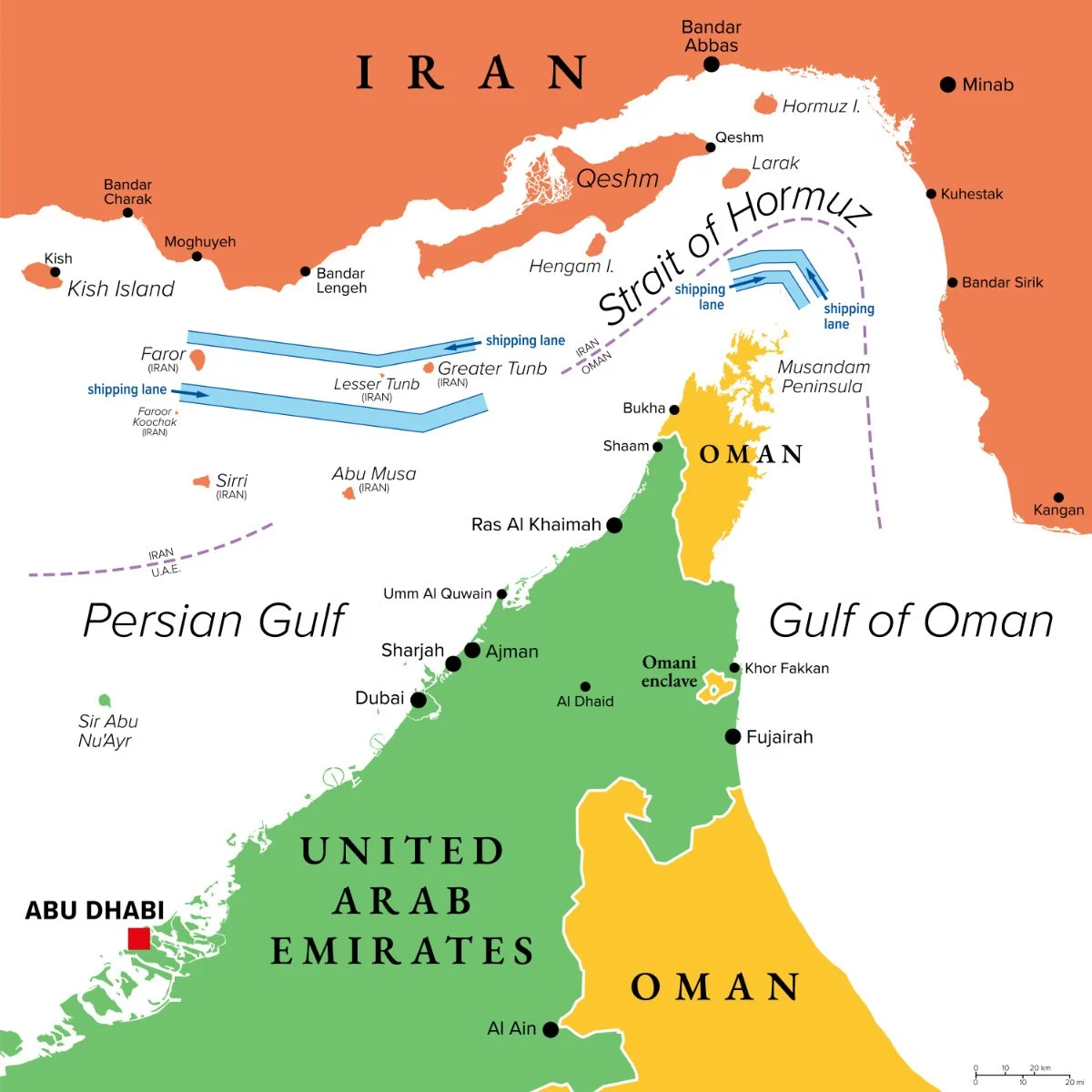
American farmers are currently grappling with an impending crisis as the critical spring planting season commences, marked by severe disruptions in the supply chain for essential agricultural inputs. Urea, phosphate, and nitrogen—the fundamental nutrients for staple crops like corn, wheat, and soy—are predominantly imported, with a staggering 30 percent of the global fertilizer trade transiting through the geopolitically volatile Persian Gulf. This dependency has created a profound vulnerability, threatening not only domestic food security but also global stability, as the ripple effects of geopolitical tensions in the Gulf translate directly into escalating food prices and potential shortages worldwide. The situation underscores a deeper, systemic issue: the global food system’s entrenched reliance on fossil fuels, a dependency that the fossil fuel industry itself appears intent on solidifying for the foreseeable future, even as the world faces unprecedented shocks.
The Anatomy of a Crisis: Geopolitical Chokepoints and Agricultural Inputs
The Strait of Hormuz, a narrow waterway just 21 miles wide at its most constricted point, serves as an indispensable chokepoint for global trade. Beyond its well-known role in facilitating the passage of roughly one-fifth of the world’s oil supply, it is equally critical for the international fertilizer trade. Key exporting nations such as Qatar, Saudi Arabia, Oman, and Iran, major producers of urea—the white granular fertilizer vital for crop growth—depend on this strait for their exports. The production of urea, a synthetic nitrogen fertilizer, is inherently linked to fossil fuels, as ammonia (its primary component) is manufactured by superheating natural gas. Alarmingly, 99 percent of the world’s synthetic nitrogen fertilizer supply is derived from fossil fuels, cementing an almost universal dependency across agricultural systems globally.
U.S. Agriculture Secretary Brooke Rollins articulated the gravity of the situation on Friday, March 13, 2026, informing reporters that the administration is actively exploring "every potential avenue" to mitigate rising fertilizer prices. "We are very close to having an announcement on some solutions on what that looks like," she stated, reflecting the urgency within federal circles. Just a week prior, on March 6, 2026, Secretary Rollins had emphasized the nation’s perilous reliance: "We are getting almost all of our urea, almost all of our phosphate, almost all of our nitrogen from other countries around the world, and that has to stop." While the imperative for self-sufficiency is clear, the immediate reality is that domestic producers lack the capacity to rapidly replace millions of tons of imported supply for the current planting season. Unlike strategic petroleum reserves, there is no comparable strategic reserve for nitrogen fertilizer, leaving farmers directly exposed to immediate supply disruptions.
Chronology of Vulnerability: Echoes of 2022 and Current Escalations
The current crisis is not without precedent. The global food system received a stark warning in February 2022, following Russia’s invasion of Ukraine. That conflict triggered an unprecedented surge in fertilizer prices, which tripled from their 2020 baseline. The mechanism behind this escalation was twofold: Russia and Belarus collectively accounted for approximately 40 percent of global potash exports, and Russia also stood as one of the world’s largest urea exporters. Western sanctions imposed in response to the invasion significantly disrupted these vital supply lines. Concurrently, Russia curtailed natural gas flows to Europe, leading to the shutdown of numerous European fertilizer plants that relied on inexpensive gas as a feedstock. This confluence of factors resulted in a dual shock to fertilizer markets, as detailed in reports like the International Panel of Experts on Sustainable Food Systems’ (IPES-Food) analysis, "Another Perfect Storm." Brazil, a major agricultural powerhouse, saw its fertilizer import bill nearly double. Consequently, the FAO Food Price Index reached an all-time high, pushing millions globally towards hunger, not due to a shortage of food itself, but because the essential inputs for its production became prohibitively expensive.

During this period of crisis and perceived "shared sacrifice," a massive transfer of wealth occurred. Farmers faced up to a 300 percent increase in fertilizer costs, while consumers contended with the highest food inflation in 40 years. However, intermediaries—including the "Big Four" meatpackers, global grain giants, and the fertilizer oligopoly—recorded unprecedented profits. A 2022 White House analysis, conducted during the Biden administration, revealed that the net income of the four largest meat processors soared by 500 percent since the onset of the pandemic. Furthermore, an analysis by the Institute for Agriculture and Trade Policy (IATP) found that the world’s nine largest fertilizer companies collectively nearly doubled their profits to $49 billion in 2022. CF Industries, for instance, saw its profits surge by 212 percent in 2022, even as its manufacturing costs increased by a comparatively modest 28 percent. This phenomenon was widely interpreted as market power exploiting conflict as a pretext for excessive profiteering. The pattern extended downstream, with a 2024 Federal Trade Commission (FTC) report indicating that food retail profit margins not only rose during the pandemic but remained elevated long after supply shocks had subsided, reaching markups of 7 percent over total costs by 2023. Research from the Economic Policy Institute, highlighted by Civil Eats, further underscored this trend, revealing that corporate profits accounted for 54 percent of food price increases between 2020 and 2021, a dramatic increase from the mere 11 percent observed in the preceding four decades.
The current geopolitical tensions in the Persian Gulf, particularly involving the Strait of Hormuz, are poised to trigger a similar, if not more severe, crisis in 2026. Given that eleven out of twelve months of the year witness a major importing country in its peak procurement window—from Australia and East Africa in February-March to India, Thailand, Pakistan, Bangladesh, Indonesia, and Brazil from April to June, and Brazil, Argentina, and Southern Africa through July-September—any prolonged disruption will have immediate and far-reaching consequences. Brazil alone, as the world’s largest fertilizer importer with an annual bill of $13.6 billion, represents a significant vulnerability. There is no "quiet moment" in the global fertilizer trade when a disruption would be consequence-free, meaning the cascading economic repercussions are already in motion.
The Intertwined Fate of Food and Fossil Fuels
The deep-rooted dependency of the modern food system on fossil fuels extends far beyond fertilizer production. The "Fuel to Fork" report by IPES-Food details this architecture, revealing that food systems consume at least 15 percent of total global fossil fuel use—a figure surpassing that of the steel industry. Approximately 40 percent of all petrochemicals produced worldwide are absorbed by food systems, primarily as synthetic fertilizers on farms and as plastic in food and beverage packaging.
When energy prices spike, as they invariably do during geopolitical crises affecting oil supply routes like the Strait of Hormuz, the entire food supply chain is impacted. Diesel costs rise, increasing trucking expenses and, consequently, the price of every item on supermarket shelves. Cooking fuel prices surge, forcing restaurants to pass these costs onto consumers. For example, Bloomberg reported on March 12, 2026, that a traditional thali meal platter in India had seen a 10 percent price increase that week alone, directly linked to the widening conflict in Iran. Processing and packaging, which together account for 42 percent of fossil fuel use within the food supply chain, become more expensive even before a single field is planted with less fertilizer. This intricate web ensures that fluctuations in food prices closely mirror those of oil prices, creating a systemic vulnerability that affects working families globally. A working-class family in Iowa facing higher costs at the pump and checkout, and a smallholder farmer in Kenya confronting a 50 percent spike in urea prices (as reported by Mansfield Energy on March 9, 2026, amid the Iran conflict), share a common plight. Both are downstream victims of a system designed to benefit a select few well-placed corporations.
Global Impact: Beyond American Farmlands
The crisis disproportionately burdens countries where food already constitutes the largest share of household spending. Sub-Saharan Africa, for instance, imports over 90 percent of its fertilizer, mostly from outside the continent. With fewer than a quarter of its smallholder farmers having access to formal credit, these communities are unable to stockpile inputs ahead of anticipated disruptions, leaving them acutely exposed. These are also the regions most severely impacted by the reported collapse of USAID and the World Food Programme (WFP) funding from Western donors by July 2025. While these institutions have faced criticism, their diminished capacity removes a vital short-term buffer against exactly these types of shocks, as highlighted by Oxfam America’s analyses on foreign aid cuts.

Even if the Strait of Hormuz were to reopen and the conflict subside immediately, restarting the complex global supply chain for fertilizers would take weeks, if not months. This delay, coupled with the year-round global demand, ensures that the repercussions will be felt across planting and harvesting seasons, leading to reduced yields and further price escalations.
The Fossil Fuel Industry’s Strategic Pivot
A more insidious long-term trend underlies these immediate crises. As the global clean energy transition gains momentum, reducing demand for fossil fuels in transport and power generation, the oil and gas industry is increasingly pivoting towards petrochemicals—particularly fertilizers and food-grade plastics—as its primary growth frontier. Petrochemicals are projected to become the single largest driver of oil demand growth, potentially accounting for nearly half of all growth by 2050. This strategic shift means that the food system, in essence, is where Big Oil plans to secure its future. This trajectory threatens to exacerbate the feedback loop between fossil fuel prices and food costs, creating even greater systemic dependencies and vulnerabilities. The corporations that profit from this system—both fossil fuel companies and the agrochemical giants reliant on them—have a powerful economic incentive to maintain and deepen this reliance, a reality starkly evidenced by the profiteering observed during the 2022 crisis.
Challenging "False Fixes": Scrutinizing Industry Solutions
In response to growing calls for sustainable alternatives, industry often promotes certain "greenwashed" solutions that warrant critical skepticism. "Green" ammonia, produced using hydrogen generated via electrolysis powered by renewable electricity combined with nitrogen from the air, theoretically offers a zero-carbon process. "Blue" ammonia, conversely, utilizes conventional natural gas production but integrates carbon capture and storage technologies to reduce emissions. While both are genuine technologies, neither is remotely at scale; less than one percent of global ammonia is currently produced through either pathway. Moreover, 95 percent of all ammonia projects currently planned in the United States remain based on conventional fossil fuels.
Converting global ammonia production to green ammonia would demand an estimated 24 times more electricity than current production—roughly five percent of global electricity—along with 30 times more land and 50 times more water. Furthermore, even if production were entirely decarbonized, 60 percent of fertilizer-related greenhouse gas emissions occur after the fertilizer is applied to fields, primarily in the form of nitrous oxide, a potent greenhouse gas 300 times more powerful than carbon dioxide. Thus, a production-centric fix fails to address the significant application problem.
Similarly, precision agriculture and AI-driven farming are often oversold as comprehensive solutions. A USDA field study, for instance, found that autosteered tractors can paradoxically increase fuel use. Algorithms designed to calibrate fertilizer applications are typically optimized for yield per hectare rather than for reducing overall fertilizer volumes. The data centers powering AI farm platforms are also projected to double their energy demands by 2030, raising questions about their net environmental impact.

Pathways to Resilience: Embracing Agroecology and Local Systems
The genuinely transformative alternatives are often less glamorous but are already proven, scalable, and immediately available. Their cost, crucially, is far lower than that of ongoing conflicts, such as the current Persian Gulf war, which is reportedly costing the U.S. military alone approximately $1 billion per day, with hundreds of millions more imposed daily on the rest of the world through elevated food and energy prices.
Agroecological farming represents a robust pathway to reducing and ultimately eliminating the need for synthetic fertilizers. This approach leverages biological nitrogen fixation, composting, diverse crop rotation, intercropping, and the careful integration of livestock to enhance soil fertility and crop resilience. Exemplary initiatives include India’s Andhra Pradesh Community Managed Natural Farming program, which is successfully transitioning six million farmers to agroecological practices. France has committed to a 50 percent reduction in pesticide use, demonstrating national-level commitment to such shifts. Historically, Cuba rebuilt its entire food system around agroecology in the 1990s after losing access to Soviet petrochemical imports, providing a powerful precedent for resilience in the face of external shocks.
Rebuilding local food supply chains is another critical step, directly reducing dependency on long-distance shipping routes that traverse vulnerable chokepoints. Simultaneously, reducing the consumption of ultra-processed foods offers a dual benefit: it cuts the most energy-intensive segment of the food chain (ultra-processed foods consume two to ten times more energy in production than whole foods) while also improving public health outcomes.
The most potent policy lever for enabling these transformations is the redirection of subsidies. Globally, fossil fuel subsidies have surged past $1 trillion annually. Concurrently, nearly 90 percent of the $540 billion in annual agricultural support continues to flow towards chemical-intensive commodity crop production. Redirecting even a fraction of these colossal sums towards agroecological transition, investment in renewable energy on farms, and the development of local food infrastructure would fundamentally reshape the agricultural landscape. It bears reiterating: the most direct and immediate way to combat global hunger is to halt conflict and redirect resources towards sustainable development.
The suffering emanating from the Persian Gulf conflict is real and immediate, with its effects reverberating globally. Every day that the conflict persists means continued choking of petrochemical flows through the Strait of Hormuz, unleashing cascading impacts on food prices from São Paulo to Nairobi to Dhaka, and on grocery bills and fuel costs from Des Moines to Detroit. The American working class and the African smallholder farmer are not, ultimately, on opposing sides of this crisis. They are both downstream beneficiaries or victims of a global food system built upon a finite substance and now controlled by a handful of states and corporations.
However, this architecture is not immutable. It can be transformed, not through speculative green ammonia projects or algorithms optimized solely for yield, but through the proven, scalable practices that millions of farmers are already implementing worldwide. The critical question facing global policymakers and societies is whether these resilient alternatives will be scaled rapidly enough before the next inevitable chokepoint closes, plunging even more millions into food insecurity and economic hardship.