admin
admin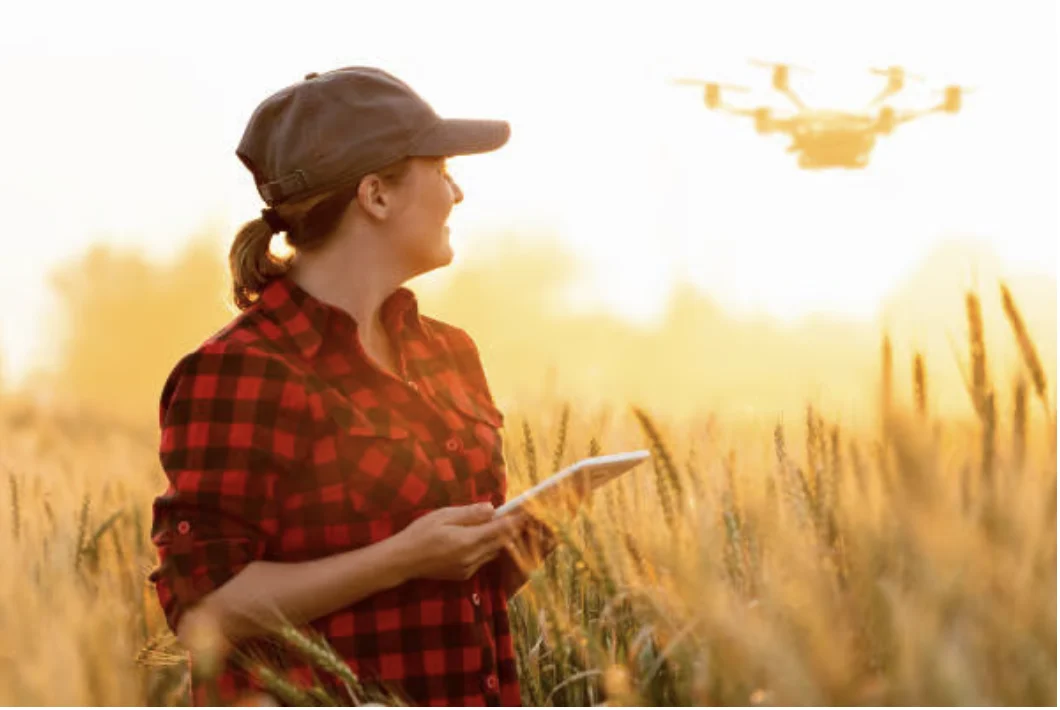
The pervasive influence of major technology corporations on the current federal administration is becoming increasingly undeniable, manifesting profoundly in policy-making and, subsequently, in the fundamental sectors of agriculture and aquaculture. President Donald Trump’s administration has consistently championed the acceleration of artificial intelligence research and development, viewing it as a critical pillar of American economic competitiveness and national security. This strategic embrace of AI began early in his first term, notably with an executive order issued on February 11, 2019, aimed at maintaining American leadership in AI. This foundational directive underscored the administration’s commitment to fostering a robust ecosystem for AI innovation, encompassing everything from funding basic research to developing ethical guidelines and preparing the American workforce for an AI-driven future.
Upon re-entering office in January 2025, President Trump swiftly reinforced this agenda. A subsequent executive order was issued, specifically tasking federal agencies with identifying and systematically removing any existing barriers to the widespread adoption of AI across various sectors. This proactive stance signaled a clear intent to streamline the integration of AI technologies, from regulatory hurdles to infrastructure challenges. Further solidifying this commitment, July 2025 saw the signing into law of the One Big Beautiful Bill Act (OBBBA). This landmark legislation, a testament to the administration’s aggressive pursuit of AI advancement, authorizes an unprecedented allocation of over $1 billion in federal funding specifically earmarked for AI projects. Such substantial financial backing underscores the government’s role in catalyzing AI development, often aligning with the strategic interests and technological roadmaps of the very "Big Tech" firms that frequently lobby Washington. The synergy between federal policy and corporate ambition paints a vivid picture of a future increasingly shaped by algorithmic intelligence and data-driven decisions, with significant implications for industries far beyond the traditional tech sphere.
The AI Invasion of Food Systems: A New Agricultural Revolution
The ripple effects of this federal push for AI are now extending deeply into the nation’s food systems, heralding what many proponents describe as an "AI revolution" in agriculture. This transformation is not a grassroots movement but rather a top-down initiative vigorously promoted by a powerful consortium of transnational corporations, global financial institutions, influential non-governmental organizations (NGOs), and governmental bodies. These entities stand to gain substantially from the increased efficiencies, data monetization, and market consolidation that AI promises. While the current physical footprint of autonomous agricultural machinery remains relatively small – with only an estimated 20 autonomous tractors operating in the U.S. as of 2025 – the trajectory is clear and ambitious. Agricultural giant John Deere, a key player in this shift, has publicly declared its intention to transition to fully driverless farming operations by 2030. This projected timeline suggests a rapid acceleration of automation, fundamentally altering the landscape of traditional farming and raising profound questions about the future of agricultural labor and land management.
Simultaneously, the seafood industry is experiencing its own tech-driven upheaval. Big Tech companies are actively spearheading efforts to expand offshore fish farming, a movement often dubbed the "Blue Revolution." This nomenclature deliberately echoes the "Green Revolution" of the mid-20th century, which industrialized agriculture between the 1950s and 1960s through the widespread adoption of high-yielding crop varieties, synthetic fertilizers, and pesticides. The Blue Revolution describes the dramatic and rapid growth of farmed seafood since the early 2000s, driven by technological advancements and increasing global demand for protein. Proponents of both the agricultural AI revolution and the Blue Revolution articulate a compelling vision: these shifts will lead to vastly more efficient food production systems, ultimately capable of feeding a burgeoning global population. However, history offers a cautionary tale. Just as with previous "revolutions" in food production, a critical and thorough investigation of these claims is imperative, scrutinizing not just the promised benefits but also the potential for unintended consequences and systemic vulnerabilities.
The Allure of Efficiency vs. The Reality of Data Control
Farmers across the nation are being presented with AI technologies as the ultimate tool for "future-proofing" their operations. The narrative is alluring: AI promises to boost yields, optimize resource allocation, and streamline labor-intensive processes, ultimately making farming more profitable and sustainable. From advanced sensors monitoring soil conditions to predictive analytics guiding planting and harvesting schedules, the technological toolkit appears boundless. Yet, the practical reality for many farmers is far more complex and often fraught with risk. A significant and growing concern revolves around data ownership and control. Farmers, eager to embrace the perceived advantages of these new tools, frequently sign complex "click-to-agree" contracts that effectively cede their data rights to the technology providers. These agreements, often buried in dense legal jargon, grant tech firms extensive access to, and control over, the invaluable operational data generated on the farm – from yield statistics and soil nutrient levels to livestock health metrics and equipment performance.
This data, once collected, is not merely used to enhance the farmer’s immediate operations. Instead, it becomes a valuable commodity in itself. The tech firms behind these AI tools often monetize this aggregated data by selling it to a network of powerful agricultural industry players. This network includes major seed suppliers, animal and fish feed conglomerates, and pharmaceutical companies. In a circular and often self-reinforcing economic model, these downstream corporations then leverage this data to refine their products and marketing strategies, ultimately selling their goods and services back to the very farmers from whom the data originated. This creates a system where farmers, in seeking efficiency, inadvertently contribute to their own dependency on a corporate supply chain that profits from their information. As a recent report from the HEAL Food Alliance highlights, this dynamic consolidates corporate power and can erode the economic autonomy of individual farmers, transforming them from independent producers into data-generating nodes within a larger, corporately controlled ecosystem.
The Blue Revolution’s Offshore Ambitions and Environmental Risks
In the realm of aquaculture, the influence of Big Tech is similarly pronounced and strategically directed. TidalX AI, an initiative launched by Alphabet, Google’s parent company, stands as a prominent example. TidalX AI is among the leading groups actively lobbying the U.S. government to enact policies that would, for the first time, open vast federal waters to large-scale industrial fish farming. This represents a significant policy shift, moving beyond traditional coastal aquaculture into deeper, more expansive marine environments. The technological backbone of this push is advanced AI, particularly in the form of underwater cameras and sophisticated analytical algorithms. These technologies are touted as essential for monitoring fish health, feed distribution, and environmental conditions in challenging offshore settings.
The rationale behind moving operations farther offshore often centers on mitigating localized environmental impacts and expanding production capacity. However, critics and recent scientific findings suggest that such a move can paradoxically increase risks and reduce the chances of early problem detection. Offshore environments are inherently more exposed to extreme weather events, powerful currents, and larger disease vectors, making them more volatile for aquaculture operations. Last year, researchers published findings in a prominent scientific journal reporting a worrying trend: more frequent and significantly larger mass die-offs on salmon farms. A contributing factor identified was the over-reliance on technologies designed to "optimize" production in these inherently riskier environments. While AI might offer tools for monitoring, it cannot fundamentally alter the ecological realities of offshore aquaculture, and the promise of optimization can sometimes lead to an overestimation of control in complex natural systems, with potentially devastating consequences for fish populations and marine ecosystems.
Jobs, Automation, and the Ethical Dilemmas of AI in Food
The promises of the AI revolution in food systems often include the creation of new, high-tech jobs. However, a stark counter-narrative exists, one that highlights the significant likelihood of widespread job displacement. Both the aquaculture and agriculture sectors face the prospect of AI replacing human labor with automated systems. Drones can monitor vast fields and inspect livestock, automated feeders can dispense precise amounts of feed to fish or poultry, and ground sensors, coupled with AI analytics, can determine the optimal timing and quantity of pesticides or fertilizers, eliminating the need for human discretion and labor. The concept of the "fully autonomous farm" is rapidly transitioning from science fiction to an impending reality. This technological trajectory, particularly when viewed against the backdrop of ongoing debates and actions concerning agricultural labor, such as mass arrests and deportations of farm workers, raises profound societal questions: If human labor is increasingly marginalized or removed from the food production equation, who will perform these essential tasks? And, more existentially, will robots truly feed us when human workers are no longer present or permitted to do so?
To critically assess whether AI will genuinely help feed humanity, it is instructive to examine previous technological shifts in food production. Historically, some technological tools have demonstrably increased yields. For instance, advanced feed-measuring and herd-monitoring tools have contributed to boosted output per cow on dairy farms, enhancing efficiency and productivity. Similarly, the continuous development of new pesticides and precision application methods has led to gradual but persistent increases in yields for staple crops like soy and corn over decades. These localized successes are often cited as evidence of technology’s inherent capacity to solve food security challenges.
However, a crucial distinction must be made: higher yields have not consistently translated into better access to nutritious food for all. The Green Revolution, while significantly increasing caloric output, also introduced widespread dependency among farmers in the Global South on synthetic chemicals, often supplied by the same corporations that provided the seeds. This dependency frequently came at a cost to soil health, biodiversity, and the nutritional quality of the food produced, while also contaminating ecosystems and posing long-term dangers to human health. Moreover, traditional small-scale producers, operating without the benefit of advanced AI or industrial inputs, have historically managed to feed a substantial portion of the global population – by some estimates, as much as 70 percent – despite cultivating as little as 25 percent of the world’s agricultural land. This highlights that productivity alone does not equate to equitable food access or sustainable food systems.
Consolidation, Costs, and the Climate Conundrum
The HEAL Food Alliance, a multi-sector, multi-racial coalition dedicated to transforming food systems towards greater equity and sustainability, recently published a comprehensive report examining "precision" technology and AI tools within food systems. The report identifies a consistent and concerning pattern: corporations consistently market these advanced technologies as serving the public good, often framing them as essential climate solutions or pathways to enhanced food security. In reality, the alliance argues, these technologies primarily serve to consolidate corporate power, funneling wealth and control into the hands of a few dominant players. Simultaneously, they often shift environmental costs and social burdens onto vulnerable communities and ecosystems.
This corporate-driven technological agenda, the report contends, diverts crucial resources and attention away from farmer- and fisher-led solutions. These localized, often agroecological approaches prioritize ecological integrity, support vibrant local economies, and strengthen food sovereignty by empowering communities to control their own food production. Food systems that are increasingly dominated by a handful of large corporations are inherently vulnerable to shocks, lack resilience, and are fundamentally unsustainable in the long term. Furthermore, the burgeoning infrastructure required to power the AI ecosystem itself carries a significant environmental footprint. The massive data centers that process and store the vast quantities of information generated by AI systems are voracious consumers of both land and water. These facilities often "gobble up farmland," diverting prime agricultural land for industrial use and placing additional strain on freshwater resources, thereby making it even harder for younger generations to enter the agricultural profession due to escalating land costs and resource scarcity.
The Fundamental Question: Food Security or Premium Markets?
As global economies grow and countries experience increasing wealth, there is a well-documented rise in the demand for animal proteins, specifically meat and seafood. This trend exerts immense pressure on existing food production systems and is frequently cited by proponents of AI and industrial expansion as a justification for ramping up production. However, this raises a fundamental and critical question that lies at the heart of the AI revolution in food: Will the dramatic increase in production capacity in both agriculture and aquaculture, driven by advanced AI and corporate investment, genuinely improve global food security and ensure equitable access to nutritious food for all? Or will it primarily serve to expand the supply for premium markets and fuel export-oriented industries, further entrenching inequalities and leaving vulnerable populations still struggling with food insecurity?
The answer to this question has profound implications for global development, environmental sustainability, and social justice. It demands a nuanced understanding of not just how much food can be produced, but for whom, at what cost, and with what long-term consequences for the planet and its inhabitants. The current trajectory suggests that without robust regulatory oversight, a focus on equitable distribution, and a re-prioritization of community-led food solutions, the AI revolution in food, like its predecessors, risks exacerbating existing disparities rather than solving the complex challenge of feeding a hungry world sustainably and justly.