admin
admin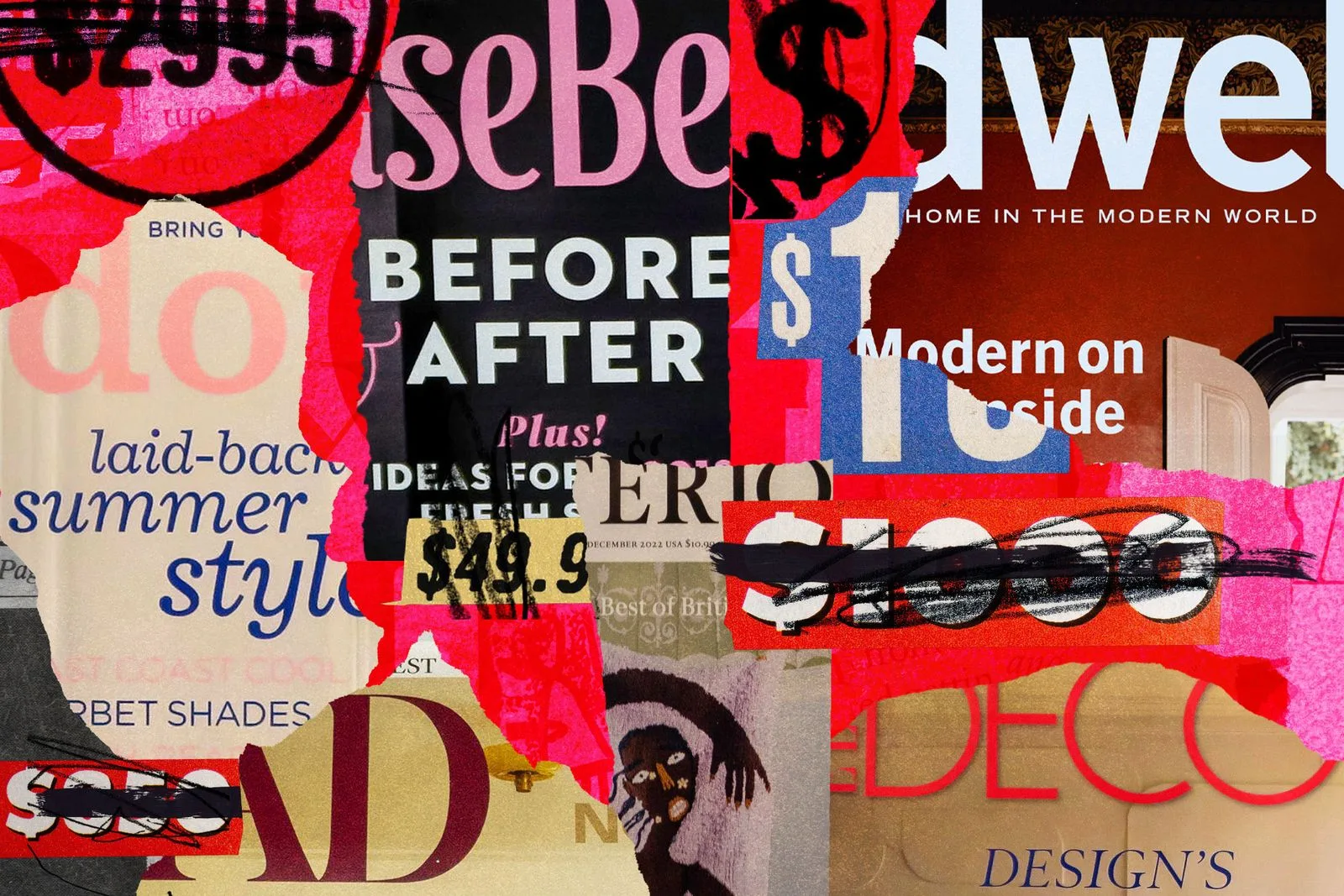
For decades, shelter magazines have walked a tightrope between aspiration and accessibility, particularly when it comes to the sensitive subject of money. A delve into the January 1980 issue of House & Garden reveals a carefully curated world of inviting spaces: "wide-open country kitchens" in California mountain homes, "sand-toned furniture" in converted barns, and plant-filled San Francisco Bay apartments. Yet, conspicuously absent from these glossy pages are explicit price tags. To glean any financial information, readers had to navigate to the back of the issue, to page 136, within a dedicated shopping section. Even then, detailed costs for entire homes or comprehensive renovation budgets were largely unheard of. While some content offered a glimpse into affordability, such as a guide to transforming a postwar apartment with $450 worth of flush doors or a feature on a passive-solar house built for $21.30 per square foot, even these budget-conscious inclusions began to disappear by the mid-1980s. This strategic omission was a deliberate part of an upscale rebranding effort, aiming to focus on glamorous estates worldwide, a shift epitomized by the unspoken rule: "honey, if you have to ask, you can’t afford it."
This intricate relationship between magazines and money, especially within the shelter genre dedicated to architecture, interior design, and homes, has long been complicated. Often, and particularly since the mid-20th century, these publications have traded in dreams and aspirations, tending to treat budgets with a certain discretion. This approach presents an ironic paradox, considering that in America, for many, a house is first and foremost a significant asset and investment. The evolution of how these publications address, or avoid addressing, the financial realities of homeownership offers a fascinating lens into changing cultural values, economic landscapes, and media strategies.
Early Advocacy: Education and Financial Prudence in the Pre-War Era
The current reticence around pricing was not always the norm. In the nascent days of shelter magazines, editors frequently adopted a more forthright stance on costs, viewing consumer education about the financial aspects of homeownership as a core part of their mission. A prime example is Ethel Power, who helmed House Beautiful from 1922 to 1933. Founded in 1896, House Beautiful holds the distinction of being America’s original and longest continually published shelter magazine. Under Power’s leadership, the magazine championed middle- and upper-middle-class homes, which were notably more modest than the grand turn-of-the-century mansions often featured in other publications. Power was particularly interested in promoting Cape Cod-style houses, which inherently eschewed the need for live-in help, reflecting a broader social shift.
The publication under Power often delved into practical topics such as construction costs. A September 1928 article, famously titled "How We Built Our $18,000 House for $28,500," offered a "brutally honest" account of budget overruns, a scenario still familiar to many homeowners today. As the article candidly noted, "The walls were the only large item that stayed within the estimate." While not every issue consistently provided specific, all-in prices for featured homes, the emphasis was clearly on fostering a comprehensive understanding of financial planning in home construction and renovation. Kathleen James-Chakraborty, a historian of modern architecture, explains this editorial philosophy: "What you do have is a concern for understanding budgets, understanding how to talk to your architect, understanding how to talk to your electrician and your plumber." This approach equipped readers with the knowledge to navigate the complexities of homebuilding, rather than merely presenting them with unattainable ideals.
Post-War Reconstruction: Empowering the Homebuyer Amidst Scarcity
The commitment to educating and empowering readers continued into the post-war era, notably under Elizabeth Gordon, who led House Beautiful from 1941 to 1964. Monica Penick, author of Tastemaker: Elizabeth Gordon, "House Beautiful," and the Postwar American Home, highlights Gordon’s early career as "an advocate for the homebuyer." Gordon even coauthored a book in 1937 titled More House for Your Money, signaling her long-standing dedication to value.
During her tenure, Gordon firmly believed that good design was not exclusively the domain of unlimited wealth. She actively sought to help consumers make astute choices, often including prices for featured objects within articles. The magazine’s influential Pace Setter House program, which annually showcased cutting-edge, House Beautiful-approved builds, typically included detailed cost information. Gordon’s leadership coincided with a severe national housing crisis, spanning the war years and extending into the early 1950s. This crisis, a direct consequence of the Great Depression’s economic fallout and wartime supply constraints that choked new construction, made the topic of cost a matter of urgent national concern and widespread public conversation. In this climate, a magazine that offered practical, cost-conscious advice resonated deeply with a readership grappling with scarcity and seeking achievable domestic comfort.
The Glamorous Shift: Opulence and Obscurity in the 1980s
By the 1980s, the landscape for both magazines and American culture had dramatically transformed. The magazine business itself was in a very different place, having endured years of intense competition from television. The heyday of mass-market publications, exemplified by the weekly editions of The Saturday Evening Post and Life which had ceased publication by the early 1970s, was long past. This era saw increased media segmentation, forcing publications to carve out specific niches and adhere strictly to them.
Culturally, America was experiencing a profound shift. The country, weary of President Jimmy Carter’s calls for energy conservation and "cardigan-wearing" austerity, embraced a new narrative of wealth and aspirational consumerism. The rise of figures like Ronald Reagan, with his promises of "morning in America" and trickle-down economics, ushered in an era of overt celebration of affluence. This cultural zeitgeist fueled the dominance of glamorous magazine publishers like Condé Nast, whose long-standing motto of "class not mass" was impeccably executed in the glossy pages of Vogue and Vanity Fair.
Within the shelter magazine sector specifically, the 1981–1982 recession significantly impacted the middle market. As Martin Filler, then an editor at House & Garden, observed in Magazine Age in October 1984, "It is apparent that magazines catering to the upper end of the category did well, as did the lower end." This market dynamic directly informed strategic decisions. House & Garden, for instance, underwent a stark rebrand, transforming into a far more upscale publication and deliberately shedding a substantial portion of its existing readership. This strategic pivot was also heavily influenced by the desire to emulate the success of the era’s most thriving shelter magazine, Architectural Digest. Under the editorship of Paige Rense, Architectural Digest had exploded from a relatively niche, L.A.-based trade journal (founded in 1920) into a veritable symbol of the lavish 1980s. The industry trend shifted decisively away from purposefully modest New England colonials or even prosperous postwar ranches, embracing instead lavish fantasy spaces: penthouses and country homes of celebrities and the ultra-wealthy. Every page of these publications seemed saturated with money, yet conspicuously devoid of explicit dollar figures. The unstated message was clear: these spaces were for those beyond the concern of mere budgets.
Niche Markets and Lingering Transparency: Exceptions to the Rule
Despite the overarching trend toward aspirational glamour and price opacity in the 1980s, not all shelter magazines fully abandoned price transparency. House Beautiful, for example, maintained robust shopping sections and a recurring feature titled "Decorating at Retail," demonstrating a continued commitment to connecting readers with purchasable items and their costs.
Similarly, Country Living, an up-and-coming publication at the time specializing in Americana, offered a monthly "Real Estate Sampler." This feature showcased farmhouses, Victorians, and other homes of interest, explicitly stating: "To give you an idea of what’s available, here’s an enticing sampling of great properties from around the country." Editor Rachel Newman, speaking to Magazine Age in September 1984, noted its unexpected popularity: "We started it as a filler, and now we can’t take it out." This feature, providing tangible property listings with implied or explicit price ranges, continues in the magazine to this day, illustrating a segment of the market that valued practical information over pure fantasy.
Perhaps the most frank about money was Metropolitan Home. Originally launched in 1969 as Apartment Life, the magazine rebranded in 1981 as the baby boomers matured, accumulated more capital, and sought to upgrade their living spaces. Dorothy Kalins’s editor’s letter in the April 1986 issue perfectly captured its ethos: "People are always saying to me: ‘You must live in a wonderful place.’ I know just what they’re picturing: a swank penthouse knee deep in Chinese vases and a view that goes on forever. Something out of—Architectural Digest. I laugh. The reason our staff does such a fine job putting together this magazine is that we live pretty much the way you do." Kalins humorously admitted to having to move bikes to access her filing cabinet, grounding the magazine in a relatable reality. Metropolitan Home featured a front-of-book column dedicated to celebrity home sales, complete with prices, and included guides on refinancing or features on "Great Little Houses" with price per square foot. There was an "endearingly yuppieish" quality to its directness—a desire for quality goods coupled with an unashamed willingness to scrutinize the price tag. The magazine even poked fun at its audience with a playful "Yuppie Laments" listicle in August 1986, reflecting on missed opportunities for valuable vintage finds. This approach highlighted a segment of the readership that appreciated both aspiration and practical financial guidance.
The 2000s Boom: Real Estate as National Obsession and the Rise of Digital
The 2000s ushered in a boom time for the shelter business, marked by a confluence of cultural and economic factors. Dwell magazine, launched during this period, rode the front edge of what became a tidal wave of new publications. A San Francisco Chronicle piece, citing the National Directory of Magazines, reported a staggering 57 percent increase in shelter magazine titles between 2002 and 2007, from 148 to 233, with nearly half of these (110 titles) added between 2005 and 2006 alone. It seemed any word could be appended with "Living" to create a viable publication, catering to increasingly granular market segments (e.g., Men’s Health Living, O at Home).
An overall cultural turn toward domesticity and comfort following the 9/11 attacks played a role, as people sought solace and security within their homes in a frightening world. However, even more significant was the burgeoning real estate boom. House prices became a national obsession. Nobel-winning economist Robert J. Shiller, in his book Irrational Exuberance, noted: "Newspapers launched whole sections devoted to homes or real estate, and in the United States, the housing boom led to the creation of an entire TV channel devoted to housing: HGTV."
Initially, shows like House Hunters, which premiered in 1999, skirted specific listing prices. However, as documented in Daniel McGinn’s House Lust (published in 2008, just as the market was collapsing), this frustrated Beth Burke, HGTV’s head of programming. When producers cited people’s reluctance to disclose prices, Burke issued an ultimatum: "If they won’t say the prices of the houses, they won’t be on the show." The inclusion of prices led to a surge in ratings, and soon cable television was awash with price-centric shows like My House Is Worth What? and Flip This House.
This shift was not confined to television. 2004 saw the launch of "The Hunt," The New York Times‘s long-running real estate column, lauded for its "remarkable candor about personal finances." Traditional shelter magazines also adapted. Architectural Digest, for example, began featuring luxurious estates for sale globally, selected by its editors. In 2005, inspired by the shopping-focused Lucky magazine, Condé Nast launched Domino. This publication, with its distinctive aesthetic, was more transparent about connecting readers with products they might want to purchase, directly addressing the commercial aspect.
The Digital Age: Forced Transparency and the Demise of Disbelief
The 2008 recession delivered a severe blow to the shelter magazine business and continues to cast a long shadow over the housing market. Compounding this economic downturn was the ascendance of the internet, which would fundamentally decimate traditional advertising sales and irrevocably transform the media industry.
Among the surviving publications today, there is a discernible, and often necessary, willingness to acknowledge costs. The American housing market is once again in a state of crisis, making the fantasy of unattainable luxury increasingly difficult to sustain. Magazines now compete with social networks that provide every conceivable detail, often with convenient purchase links—and even "dupes" (duplicates) available at significantly lower prices.
Dwell magazine, for instance, has actively embraced price transparency. It launched its "Budget Breakdown" column in 2018 and an annual "Money Issue" in 2023, which explicitly details how good design can be achieved across a wide spectrum of budgets. This reflects a broader trend: the primary point of contact for many readers with a shelter magazine is now through its digital channels. Here, brands are often quite direct about specific products and their price points, driven by the increasing importance of affiliate marketing to media companies’ bottom lines.
The Enduring Tension: A Hybrid Future for Home Media
Even in this era of unprecedented digital transparency, a fascinating dichotomy persists. If one flips through the physical, printed pages of contemporary shelter magazines—House Beautiful, Architectural Digest, and even Dwell—many spreads still feature exquisite spaces without explicit price tags. However, the context has profoundly shifted. In previous decades, discovering the ultimate sale price of a property often required considerable effort: a trip to the county clerk’s office, diligent research, or a discreet inquiry at a cocktail party. Today, the public has access to an unparalleled volume of information.
The collective consciousness has been shaped by countless episodes of House Hunters and the candid financial disclosures of "The Hunt." Moreover, platforms like Zillow have become so ubiquitous and influential that they are now cultural touchstones, even satirized on Saturday Night Live. The previous lack of prices in shelter magazines was a deliberate choice, intended to preserve an aspirational illusion and uphold a certain discretion for homeowners opening their residences to the public. In the current media landscape, where detailed information is often just a click or tap away, sustaining such a suspension of disbelief is simply no longer viable. The modern shelter magazine, therefore, navigates a hybrid reality, offering curated fantasy in print while embracing financial pragmatism and transparency in its digital manifestations, reflecting the complex and ever-evolving relationship between dreams, design, and dollar signs in the American home.