admin
admin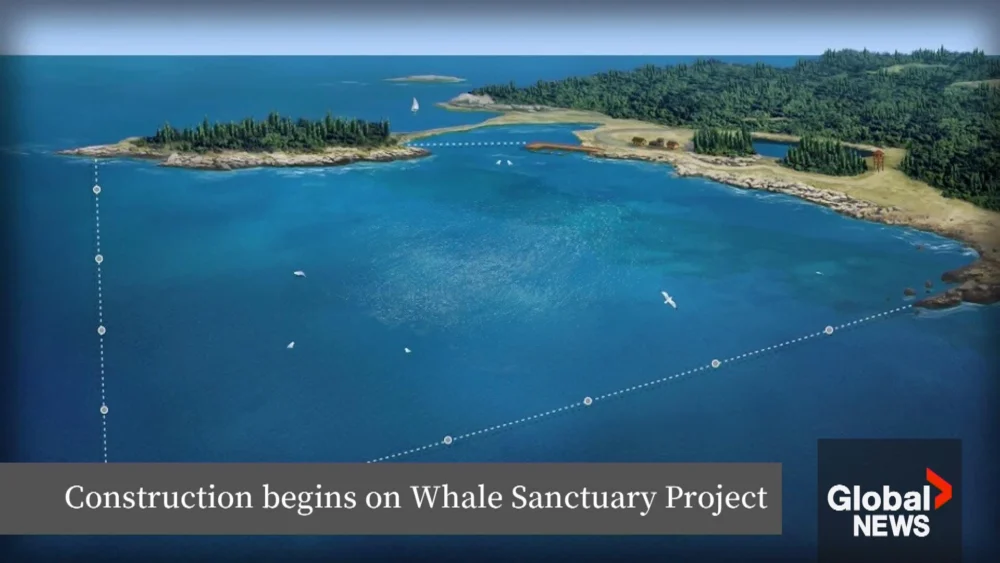
Wine Harbour, N.S. – A significant stride has been made towards the creation of North America’s first seaside sanctuary for captive whales, as the U.S.-based Whale Sanctuary Project (WSP) confirms it has commenced initial land-clearing activities on its 12-hectare property near Wine Harbour, Nova Scotia. This marks a pivotal pre-construction milestone for the ambitious project, situated approximately 200 kilometres east of Halifax on the province’s picturesque eastern shore. The project aims to provide a naturalistic, expansive environment for whales retired from marine parks and aquariums, offering them a long-term home in a protected ocean bay.
The Whale Sanctuary Project has announced the engagement of a general contractor, a crucial step in translating years of planning and advocacy into tangible development. Security fencing has also been erected around the designated land-based operational zone, signalling the formal commencement of site preparation. According to Charles Vinick, CEO of the Whale Sanctuary Project, these initial steps are foundational for the subsequent phases, which include the vital reconstruction of a wharf on the western side of Indian Harbour, a critical piece of infrastructure for accessing the future sanctuary’s marine enclosure.
The Vision: A Sanctuary Born from Shifting Ethics
The concept of seaside sanctuaries for cetaceans has gained considerable momentum globally, driven by evolving scientific understanding of whale cognition and social complexity, coupled with a growing public ethical concern regarding the welfare of marine mammals in traditional captive environments. The Whale Sanctuary Project, initially announced six years ago, emerged from this paradigm shift, envisioning a more humane alternative for whales and dolphins currently residing in concrete tanks.
Wine Harbour was selected after an exhaustive multi-year search across North America, evaluating numerous sites based on stringent criteria. Key factors included water quality, depth, currents, protection from storms, remoteness to minimize human disturbance, and a supportive local community. The chosen location boasts a naturally sheltered bay with depths suitable for large cetaceans, offering a dynamic and complex environment far superior to conventional aquarium tanks. The 40-hectare underwater net enclosure, designed to safely house up to 10 whales, will allow these animals to experience natural ocean conditions, including tides, currents, and the presence of wild marine life, for the first time in many years for some individuals. The sanctuary is primarily intended for beluga whales and orcas, species frequently found in marine entertainment facilities.

Chronology of a Landmark Conservation Effort
The journey to this groundbreaking moment has been a protracted one, marked by extensive scientific research, community engagement, and regulatory navigation.
- 2020 (Approximate): Project Announcement: The Whale Sanctuary Project publicly launched its initiative, outlining its mission to create a permanent, protected seaside sanctuary for whales and dolphins retired from entertainment facilities. This announcement followed years of preliminary studies and expert consultations.
- 2020-2023: Site Selection and Environmental Assessments: A rigorous, multi-phase site selection process was undertaken, involving marine biologists, veterinarians, engineers, and local community liaisons. Hundreds of potential locations were narrowed down to a handful, with Wine Harbour ultimately emerging as the most suitable due to its unique combination of environmental attributes and community receptiveness. Detailed environmental impact assessments were initiated to understand the potential effects of the sanctuary on the local ecosystem.
- 2023-2025: Community and Indigenous Consultations: Extensive consultations were held with local residents, businesses, and Indigenous communities, including the Mi’kmaq, whose traditional territory encompasses the project area. These discussions aimed to build consensus, address concerns, and ensure the project aligned with local values and economic aspirations.
- October 2025: Nova Scotia Government Lease Approval: A critical hurdle was cleared when the Nova Scotia government granted a 20-year lease to the Whale Sanctuary Project. This lease covers 83 hectares of Crown lands and coastal waters, providing the necessary legal framework for the marine enclosure and associated land-based facilities. This provincial endorsement underscored the project’s alignment with Nova Scotia’s environmental stewardship goals and potential for sustainable economic development.
- March 2026: Commencement of Land-Based Work: The current phase marks the physical commencement of work on the land-based support infrastructure, including the initial clearing, contractor mobilization, and site security. This precedes the marine construction phase.
- Future Phases (Expected 2026-2028): The immediate next steps involve the reconstruction of the existing wharf, which will serve as a vital logistics hub. Following this, the construction of the marine enclosure system, including specialized nets and mooring infrastructure, will begin. Concurrently, land-based facilities for veterinary care, rehabilitation, research, and administration will be developed. The project anticipates a multi-year construction period before the first whales can be introduced.
Financing the Future: A Multi-Million Dollar Endeavor
The realization of this groundbreaking sanctuary comes with a substantial financial commitment. The privately funded project requires an estimated $15 million for construction alone. This capital cost encompasses the marine enclosure, land-based veterinary clinics, rehabilitation pools, administrative buildings, staff housing, and specialized equipment for whale transport and care. Beyond construction, the annual operating costs are projected to be approximately $1.5 million, covering staff salaries (veterinarians, marine mammal specialists, animal care technicians, researchers), food, medical supplies, maintenance of infrastructure, and ongoing environmental monitoring.
The Whale Sanctuary Project relies heavily on philanthropic donations, grants from foundations, and public fundraising campaigns. The sustained financial support underscores the global interest in and commitment to providing a better life for captive cetaceans. The project’s long-term financial viability will depend on a diversified funding model, including endowments and ongoing donor engagement. While a significant financial undertaking, proponents argue that the ethical imperative and the potential for scientific advancement and public education far outweigh the costs.
Stakeholder Perspectives and Reactions

The Whale Sanctuary Project has garnered a diverse range of responses from various stakeholders, reflecting the complex interplay of animal welfare, environmental concerns, and socio-economic factors.
- Charles Vinick, CEO, Whale Sanctuary Project: Vinick expressed profound satisfaction with the progress, stating, "Reaching this pre-construction milestone is incredibly validating for our team and our supporters worldwide. It signifies the tangible beginning of a new era for captive whales, moving from concept to reality. Our commitment to providing the highest standard of care in a natural environment is unwavering, and we are grateful for the support from the Nova Scotia government and the local community." He emphasized the meticulous planning and scientific rigor guiding every step of the development.
- Local Community of Wine Harbour and Area: The project has generally been met with a mix of cautious optimism and enthusiasm from residents in the immediate vicinity. While some initial concerns regarding potential environmental impact, increased traffic, or noise during construction were raised, ongoing community consultations have largely addressed these. The promise of local job creation during construction and operation, along with potential for increased eco-tourism, is seen as a significant economic boost for a rural area. Local businesses anticipate a ripple effect, benefiting from increased demand for services and supplies.
- Environmental and Animal Welfare Organizations: Major environmental and animal welfare groups have largely lauded the project as a pioneering effort. Organizations such as the World Animal Protection and the Marine Mammal Protection Coalition have voiced strong support, highlighting the sanctuary as a model for the ethical treatment of cetaceans. They advocate for rigorous environmental oversight throughout construction and operation to ensure minimal disruption to the existing marine ecosystem and to protect local wild populations. The project is seen as a crucial step in the broader movement to end the display of cetaceans in captivity.
- Federal Government (Fisheries and Oceans Canada – DFO): While the provincial government approved the land and water lease, the federal Department of Fisheries and Oceans (DFO) retains jurisdiction over marine mammal permits and environmental regulations. The WSP still requires federal permits, which involve detailed assessments under the Fisheries Act and the Species at Risk Act. DFO’s role is to ensure the sanctuary’s design and operational protocols comply with all federal laws protecting marine life, including provisions for whale health, transport, and potential interactions with wild populations. A DFO spokesperson, speaking on background, indicated that all applications would undergo thorough scientific review to ensure the highest standards of marine mammal welfare and environmental protection are met.
- Tourism Industry: The sanctuary is anticipated to become a unique educational and conservation-focused attraction. While the WSP emphasizes that the primary purpose is animal welfare, not entertainment, controlled educational visits and responsible ecotourism opportunities could emerge, attracting visitors interested in marine conservation. This could contribute to Nova Scotia’s growing reputation as a destination for sustainable tourism.
Ecological Considerations and Design Principles
The design of the Wine Harbour sanctuary is predicated on a deep understanding of cetacean biology and ecology. The 40-hectare enclosure will be defined by specialized netting systems, engineered to withstand the harsh Atlantic weather conditions while being environmentally benign. These nets are designed to prevent whale escape and to deter entanglement of wild marine life.
Environmental monitoring will be a continuous process, tracking water quality, currents, sediment health, and the presence of local marine species. The sanctuary’s operations will include protocols to prevent the spread of diseases between resident and wild whales and to manage any potential interactions. On land, a state-of-the-art veterinary clinic will provide comprehensive medical care, including diagnostic capabilities and emergency treatment. Dedicated rehabilitation pools will facilitate the acclimatization of new arrivals and provide a controlled environment for medical procedures. The entire facility is being designed with sustainability in mind, aiming to minimize its carbon footprint and ecological impact.
Broader Implications and Global Precedent
The Whale Sanctuary Project in Wine Harbour stands as a beacon of change in the global discourse on marine mammal captivity. Its successful establishment and operation will set a significant international precedent, offering a viable, ethical alternative to traditional marine parks. It demonstrates that it is possible to provide a "retirement home" for whales that prioritizes their welfare, allowing them to live out their lives in a more naturalistic and enriching environment.

Furthermore, the sanctuary will serve as an invaluable research hub. Scientists will have unprecedented opportunities to study the behavior, health, and adaptation of formerly captive whales in a semi-wild setting. This research can contribute critical data to our understanding of cetacean biology, informing future conservation efforts and further shaping public policy on marine mammal management.
The project also signifies a cultural shift, reflecting growing societal awareness and compassion for non-human animals. As public opinion continues to move away from the exploitation of intelligent and social creatures for entertainment, facilities like the Wine Harbour sanctuary offer a path forward that aligns with modern ethical sensibilities. It challenges the long-held assumption that large marine mammals cannot thrive outside of tightly controlled, artificial environments.
While the path ahead involves considerable fundraising and regulatory approvals, particularly from the federal Fisheries Department, the recent groundbreaking in Wine Harbour represents a tangible leap forward. It underscores a collective commitment to providing a better future for whales, embodying a hopeful vision where humanity’s relationship with these magnificent creatures is defined by respect, conservation, and compassion. The world watches with anticipation as Nova Scotia takes the lead in this transformative journey for marine mammal welfare.