admin
admin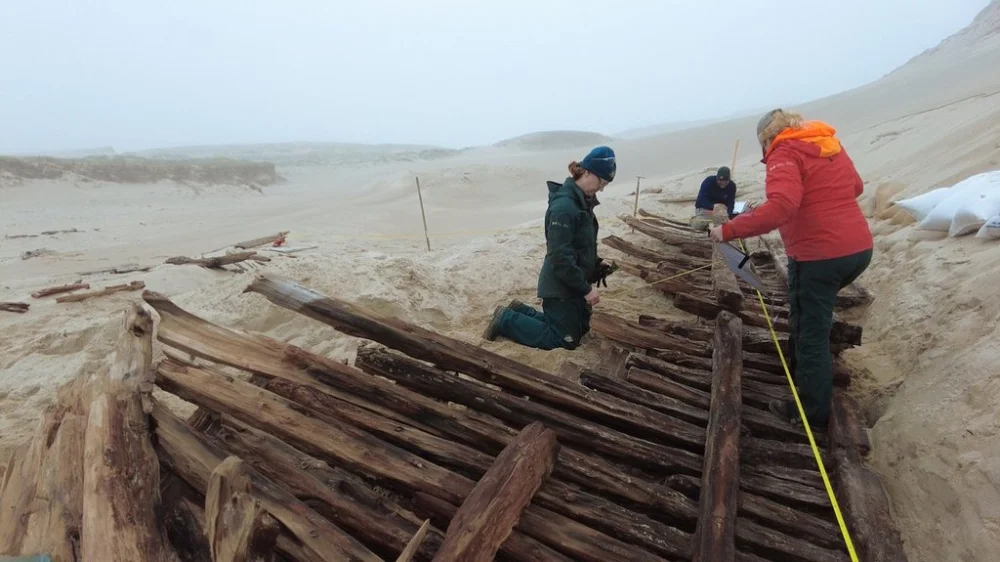
A partial shipwreck discovered two years ago on the shifting sands of Sable Island, a remote and treacherous crescent of land often dubbed the "Graveyard of the Atlantic," is now confidently believed to be the remains of the Swift, a speedy Bermuda sloop laden with rum that succumbed to the perilous waters during the War of 1812. This remarkable identification marks a significant breakthrough in maritime archaeology, providing a tangible link to a specific historical event on an island notorious for claiming hundreds of vessels but rarely revealing their identities. Parks Canada archaeologist Brandy Lockhart, a lead figure in the investigative team, highlighted the immense challenge of such a find, stating, "We can find lots of different shipwreck remains or fragments throughout Sable Island, but having an identifying feature on it is rare. Being able to actually identify a wreck and align it with historic documentation is very rare." The arduous process of piecing together historical accounts with physical evidence underscores the dynamic nature of Sable Island, located approximately 300 kilometres southeast of Halifax, Nova Scotia, where the ceaseless movement of sand and powerful ocean currents conspire to conceal and reveal remnants of over 350 recorded shipwrecks since the late 1500s.
The Unfolding Discovery: A Chronology of Clues
The journey to identify the Swift was a painstaking process, stretching over several years and involving multiple expeditions to the remote island. The initial physical evidence emerged in 2024, when a portion of a well-preserved upper deck was spotted just beneath the sandy surface of Sable Island’s North Beach. This discovery, unearthed by the relentless forces of erosion, provided the first tangible clue, though its rotted timbers initially offered no immediate indication of its origin or name. Lockhart described the phenomenon, noting, "It had kind of been uncovered from one of the (eroding) dunes. Sable Island is very dynamic. The sand and the dunes shift and move, and (shipwreck) fragments will be uncovered. And then, within days or weeks, they might be covered back up again." The fleeting nature of these exposures necessitates rapid archaeological response and meticulous documentation.
A critical turning point arrived in 2022 when a researcher on the island unearthed a small pulley bearing a distinctive marking: a tiny arrow stamped into a metal plate, known historically as a broad arrow. This particular mark was widely recognized as property of the British Royal Navy, a stamp of ownership and a crucial piece of forensic evidence. Subsequent searches in the vicinity yielded other similarly marked wood and copper fragments, strongly suggesting a connection to a British naval vessel. This finding immediately drew the attention of archaeologists to documented British losses in the area.
Initially, the team hypothesized that the wreck might be HMS Barbadoes, a 28-gun Royal Navy frigate that had foundered off the island’s north shore in September 1812. Historical records indicated that the Barbadoes was en route to Halifax, carrying a significant consignment of silver intended to pay British sailors, and had even captured an American vessel, taking its crew as prisoners of war, before its demise. The scale and historical importance of HMS Barbadoes made it a compelling candidate.

However, a more thorough examination conducted in May of the previous year by a dedicated team of Parks Canada archaeologists began to shift the prevailing theory. Upon closer inspection of the exposed partial deck, its dimensions appeared too small to correspond with a 43-meter warship like the Barbadoes. This discrepancy prompted further investigation and a crucial analytical step: dendrochronological analysis and wood identification. The analysis determined that the wood used in the vessel’s construction was Bermuda cedar, a highly distinctive and durable timber. This finding proved to be the linchpin, leading researchers to conclude that the mystery ship was, in fact, the Swift, a single-masted Bermuda sloop. Historical accounts confirmed that the Swift was part of the same British convoy as the Barbadoes, heading towards Newfoundland when it met its unfortunate end. The correlation between the unique cedar and the historical record of a Bermuda-built vessel provided the strong verification needed.
Sable Island: The Graveyard of the Atlantic
Sable Island’s reputation as the "Graveyard of the Atlantic" is well-earned. This narrow, crescent-shaped sandbar, approximately 42 kilometers long and 1.5 kilometers wide at its broadest point, is perpetually sculpted by wind and waves. Its position at the convergence of powerful ocean currents, combined with frequent fogs, shifting sandbars, and violent storms, has historically made it a nightmare for mariners. Since the late 1500s, over 350 ships have officially been recorded as wrecked on or near its shores, though the true number is undoubtedly higher. The island’s dynamic nature means that wrecks are rarely static; they are buried, uncovered, and reburied by the ever-moving sands, often scattering debris across vast areas. This constant geological flux presents both a challenge and an opportunity for archaeologists, as new fragments can emerge unexpectedly, offering fleeting glimpses into the past. The island is also famous for its wild horses, descendants of those introduced in the 18th century, which have adapted uniquely to its harsh environment, often interacting with the archaeological sites themselves, as Lockhart humorously noted, "They like to use the shipwrecks as scratching posts."
The War of 1812 and Maritime Conflict
The War of 1812 (1812-1815) was a pivotal conflict between the United States and Great Britain, along with its Indigenous allies, fought largely over maritime rights, impressment of American sailors, and territorial disputes. The war significantly impacted transatlantic shipping and naval operations. British North America, particularly Nova Scotia, served as a crucial naval base and staging point for British forces. Convoys of merchant ships, often escorted by naval vessels, were common, ferrying troops, supplies, and goods across the Atlantic. These voyages were fraught with peril, not only from enemy privateers and warships but also from the unforgiving natural elements of the North Atlantic, particularly around notorious maritime hazards like Sable Island. The Swift‘s sinking during this period underscores the dangers faced by even well-organized convoys. Merchant vessels like the Swift, often carrying valuable cargo such as rum, were prime targets for enemy capture or, as in this case, victims of the sea itself. The loss of a Bermuda sloop, known for its speed and agility, highlights the indiscriminate nature of Sable Island’s destructive power.
The Swift: A Bermuda Sloop’s Tale
The identification of the Swift as a Bermuda sloop provides critical insights into the vessel’s construction and capabilities. Bermuda sloops were renowned for their speed, maneuverability, and seaworthiness, making them highly prized for both trade and naval auxiliary roles in the 18th and early 19th centuries. Characterized by their distinctive single mast, deep keel, and gaff rig, they were typically built from durable Bermuda cedar (Juniperus bermudiana), a wood highly resistant to rot and shipworms, which explains the remarkable preservation of the deck fragments. These vessels played a vital role in Caribbean and North Atlantic commerce, carrying goods such as rum, molasses, and other provisions. During wartime, their speed made them ideal for dispatch, privateering, and often, as supply vessels within naval convoys. The Swift‘s cargo of rum, a common commodity in the triangular trade and a staple aboard ships for both crew consumption and trade, further solidifies its identity as a merchant or supply vessel. The specific circumstances of its sinking as part of a British convoy during the War of 1812 paint a vivid picture of the maritime landscape of the era, where danger lurked not only from enemy ships but from the very forces of nature.
Archaeological Endeavor: Challenges and Triumphs
The archaeological work on Sable Island is far from a conventional excavation. Brandy Lockhart recounted the extreme conditions faced by the teams. "On the first day of a two-week trip, strong winds whipped up stinging curtains of sand," she described. "As you’re trying to excavate, the sand is just filling everything in. You stand up and get a faceful of sand blasted at you." These challenging conditions mean that fieldwork is often a race against time and the elements, requiring specialized equipment and robust methodologies. Despite the environmental hardships, there are moments of unexpected comfort, as Lockhart recalled, "But in 2024, we were working in T-shirts."

The methodologies employed in this identification were multifaceted. Initial visual surveys of exposed fragments were followed by precise GPS mapping. The recovery of the broad arrow pulley was a critical moment, prompting a deep dive into British naval records from the War of 1812. Wood analysis, including species identification (Bermuda cedar) and potentially dendrochronology (tree-ring dating), provided the definitive link to the vessel’s origin and construction. Correlating these physical findings with detailed historical documents – naval logs, shipping manifests, and casualty reports – allowed the team to cross-reference potential wrecks with the characteristics observed on the island. The painstaking process of elimination, from initially considering the larger HMS Barbadoes to ultimately identifying the smaller Swift, demonstrates the rigor of modern maritime archaeology.
Broader Significance and Future Prospects
The verified discovery of the Swift marks a rare and significant occasion for maritime archaeology in Canada. As Parks Canada stated, it "marks a rare occasion of researchers correlating a shipwreck site on Sable Island with a documented historical wreck event from before the 20th century." For centuries, Sable Island has held its secrets tightly. Identifying a specific vessel from a particular historical conflict provides invaluable data for understanding naval logistics, trade routes, shipbuilding techniques, and the human experience of maritime travel during the War of 1812. It moves beyond generic shipwreck statistics to a personal story of a vessel and its crew.
The implications extend to broader historical research. This identification can shed new light on the specific movements of the British convoy in 1812, the types of cargo being transported, and the vulnerabilities of even well-organized fleets. It adds a tangible piece to the puzzle of the War of 1812’s impact on Atlantic Canada. Furthermore, the techniques used, particularly the combination of opportunistic surface finds, detailed historical research, and scientific analysis of materials, provide a model for future archaeological endeavors in dynamic environments like Sable Island.
Parks Canada’s ongoing commitment to exploring and preserving the cultural heritage of Sable Island National Park Reserve ensures that such discoveries will continue to be sought out and studied. While the Swift itself will likely remain partially buried, subject to the island’s endless cycles of exposure and reburial, the knowledge gained from its identification is now permanently etched into the historical record. The continued work will focus on monitoring the site, potentially recovering additional diagnostic artifacts if they emerge, and further enriching the narrative of this remote and historically significant island. The Swift now stands as a testament to both the perils of the sea and the enduring power of archaeological investigation to bring forgotten histories to light.