admin
admin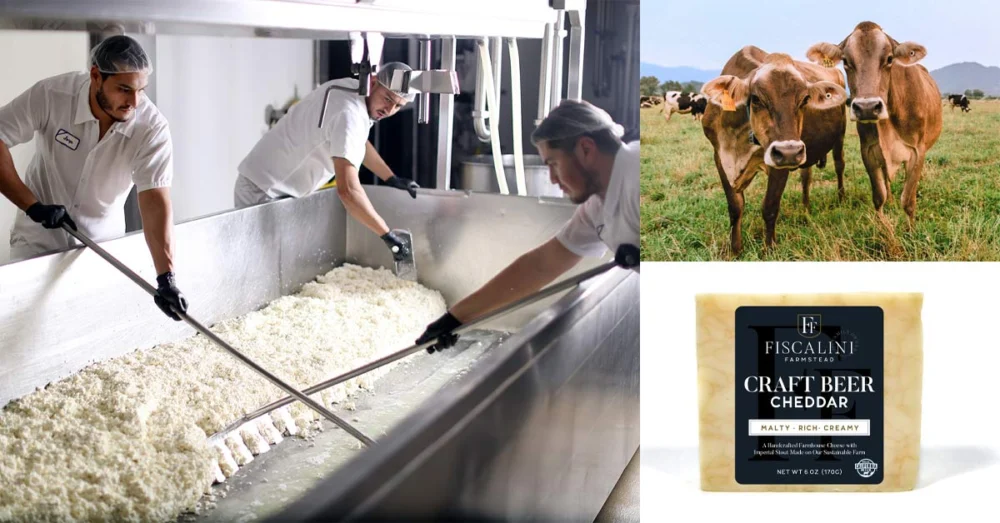
The landscape of American specialty food is currently witnessing a sophisticated transformation of a mid-century classic: beer cheese. While once defined exclusively as a sharp, spreadable dip served in Kentucky taverns, a new generation of farmstead cheesemakers and craft brewers is redefining the category. This evolution represents a shift from using beer as a secondary flavoring agent in finished cheese to integrating it as a primary ingredient during the foundational stages of the cheesemaking process. By merging the microbiological sciences of brewing and fermentation, these artisans are creating a new class of "beer cheese" that emphasizes terroir, traceability, and complex flavor profiles rather than mere heat and tang.
The Historical Foundations of American Beer Cheese
The origins of beer cheese in the United States are rooted in the 1940s in Clark County, Kentucky. The product is widely attributed to Johnny Allman, who served the pungent, golden-orange spread at his namesake restaurant on the banks of the Kentucky River. Historically, beer cheese was born of necessity and sustainability. Kathy Gorman Archer, president of Howard’s Creek Authentic Beer Cheese—the successor to the Allman legacy—notes that the original recipes were designed to utilize surplus ingredients, specifically leftover sharp cheddar and flat beer.
The traditional Kentucky style is characterized by a heavy hand of spices, including cayenne pepper and garlic, reflecting a "Southwestern flair" that was popular in the mid-20th century. In 2013, the Kentucky Commonwealth officially recognized Clark County as the birthplace of beer cheese, establishing a "Beer Cheese Trail" to celebrate the regional specialty. However, for nearly seventy years, the product remained largely a condiment—a high-moisture spread intended for pretzels and crudités. The modern era of beer cheese has moved away from this utilitarian origin toward a culinary collaboration where the beer is treated with the same reverence as the milk.
The Pacific Northwest and the Rise of Infused Cheddars
Oregon and California have become epicenters for this artisanal shift, led by legacy dairies looking to innovate. Rogue Creamery, established in 1953 and famous for producing the first cave-aged blue cheese west of the Mississippi, has been a pioneer in this space. While often confused with Rogue Ales due to their shared name and geography, the two entities remained distinct, though they maintained a decades-long partnership.
Rogue Creamery’s approach to beer cheese involves a sophisticated infusion process. For their Chocolate Stout Cheddar, developed in partnership with Portland’s Hopworks Brewery, the beer is introduced to the vat just as the whey begins to separate from the curd. This timing allows the malted sugars and roasted notes of the stout to permeate the curd, resulting in a marbled aesthetic and a balanced, sweet-malty finish.
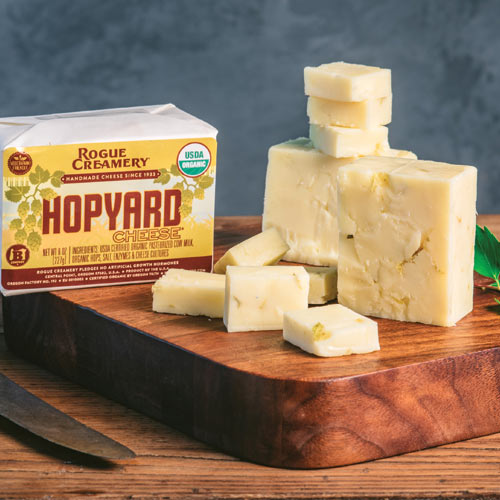
Furthering this experimentation, Rogue developed "Hopyard," a cheddar that bypasses the liquid beer entirely and instead incorporates fresh, Northwest-grown hops directly into the curds. Marguerite Merritt, a certified sommelier and brand manager for Rogue Creamery, explains that this method captures the floral bitterness and citrus notes of a West Coast IPA within the fatty structure of the cheese. This technique highlights a broader trend in the industry: using the raw ingredients of beer to enhance the botanical complexity of dairy.
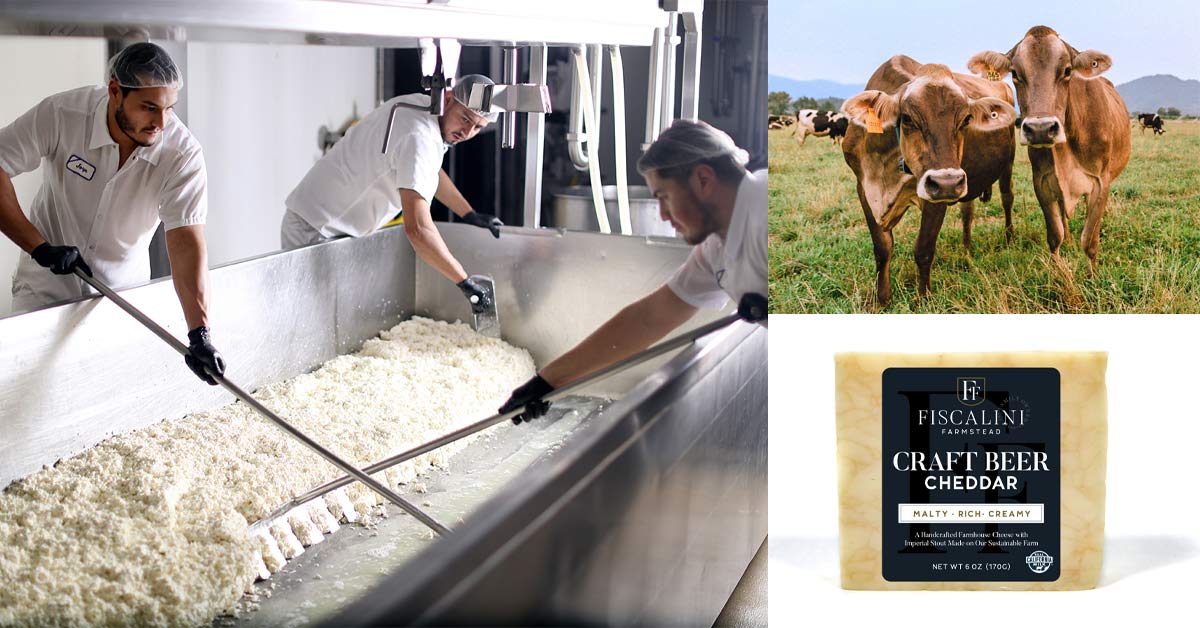
In Modesto, California, Fiscalini Farmstead has followed a similar path of regional traceability. A fourth-generation dairy operating since 1914, Fiscalini produces its "Craft Beer Cheddar" using Black Blizzard Imperial Stout from the nearby Dust Bowl Brewing. According to owner Laura Genasci, the process involves pressing the beer-infused curds into 40-pound blocks overnight. This pressure ensures that the roasty, coffee-forward notes of the stout are distributed evenly throughout the cheese’s crystalline structure.
The Chemistry of Collaboration: pH and Fermentation
The integration of beer into cheesemaking is not merely a matter of mixing liquids; it is a delicate exercise in chemistry. Rynn Caputo, co-founder of Pennsylvania-based Caputo Brothers Creamery, emphasizes that the success of a beer-infused cheese depends heavily on pH management.
Milk typically maintains a pH between 6.4 and 6.8. During the cheesemaking process, if the acidity levels are not precisely managed—specifically if the pH remains too high (above the low 5s)—the curds will fail to bind into a cohesive wheel. Conversely, if the acidity is too high (a pH below 4), the resulting cheese becomes rubbery and unpalatable. Caputo Brothers, which originally specialized in Italian-style cheeses, entered the beer cheese market at the request of Giant Food Stores, partnering with Tröegs Independent Brewing.
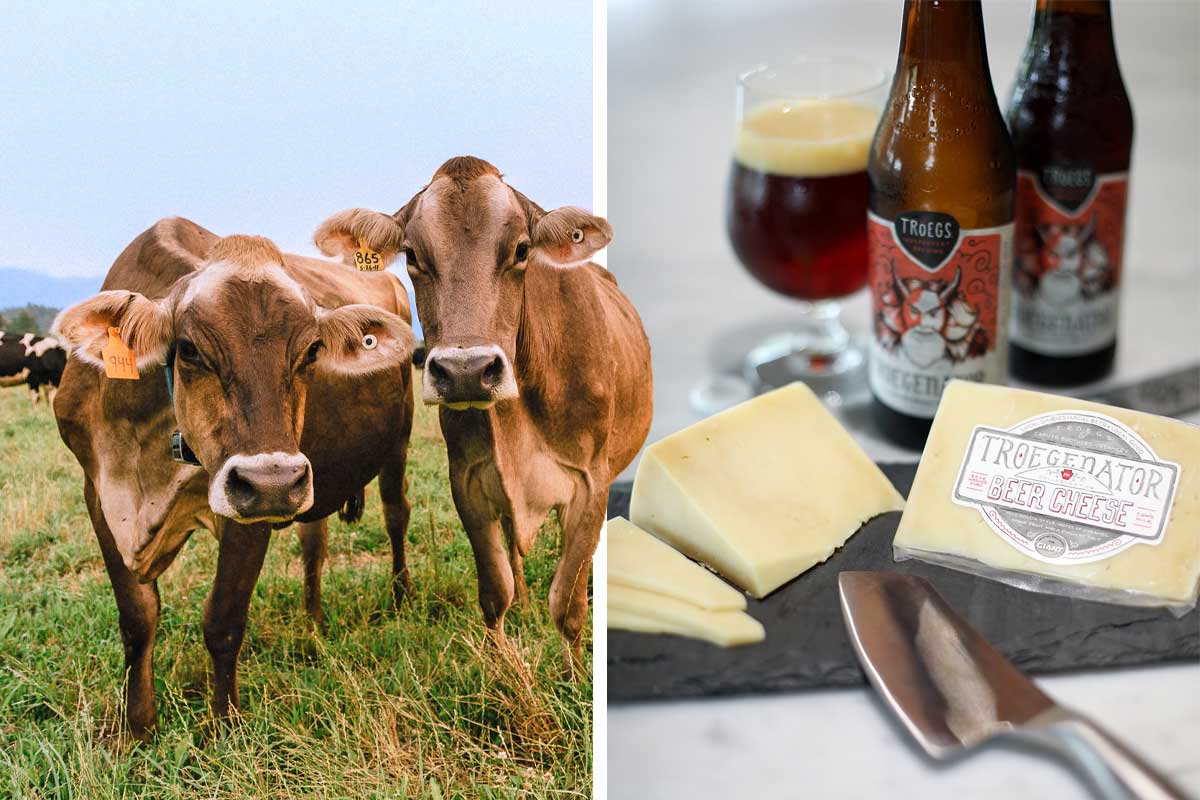
Their collaboration resulted in cheeses like the "Troegenator," a Gouda-style cheese made with a legendary double bock. The process is intensive; an entire keg of beer is used for a single batch of cheese. For their "Perpetual Beer Cheese," they utilize a "dry-hopping" technique for the milk itself, using Citra hops to create an "intense hop milk" before the rennet is added. This level of technical integration has led to the creation of "Custom Cheesemakers," a subsidiary of Caputo Brothers that provides scientific consulting and production for breweries nationwide seeking to turn their flagship beers into artisanal dairy products.
Regional Variations and the Washed-Rind Technique
While many producers focus on internal infusion, others utilize the "washed-rind" method, a traditional European technique adapted for the American craft beer palate. Tulip Tree Creamery in Indianapolis, Indiana, employs this method to create a bridge between Dutch cheesemaking traditions and Midwestern brewing.
Rather than adding beer to the vat, Tulip Tree washes the exterior of its cheese wheels with a solution of brine, bacterial cultures, and local craft beer. This process encourages the growth of Brevibacterium linens, which creates a pungent aroma and a creamy interior. Tulip Tree has collaborated with several local breweries, including Sun King and 3 Floyds, to create rotating seasonal offerings. Co-owner Laura Davenport notes that for washed-rind cheeses, lower-bitterness beers like pilsners or porters often perform better than high-IBU (International Bitterness Units) IPAs, as the concentrated resins on the rind can become overly astringent during the aging process.
In the urban setting of Cincinnati, Ohio, Urban Stead Cheese has revived the "Kentucky style" but with a focus on fresh, high-volume production. Unlike aged cheddars that may sit for 20 months, Urban Stead’s beer cheese is a fresh, Quark-style farmer’s cheese. Using Braxton Brewing’s Storm Golden Cream Ale, the creamery produces a spread that balances the spicy hop presence of the ale with the lactic tang of fresh curd. This model provides a crucial economic benefit: fresh beer cheese can be produced and sold within days, providing immediate cash flow that supports the long-term aging of their clothbound cheddars.
Economic Implications and Industry Outlook
The rise of artisanal beer cheese is more than a culinary trend; it is a strategic response to shifts in the American dairy and brewing industries. As of 2023, the United States is home to over 9,500 craft breweries and a rapidly expanding specialty cheese market valued at several billion dollars. Collaborations between these two sectors offer several distinct advantages:
- Shared Marketing Channels: Breweries and creameries often share the same consumer demographic—individuals who prioritize local sourcing and artisanal quality. Collaborative products allow both brands to tap into each other’s loyal fan bases.
- Value-Added Dairy: For dairy farmers, converting raw milk into a high-value, branded beer cheese offers significantly higher profit margins than selling fluid milk into the commodity market.
- Sustainability: Modern producers are returning to the original ethos of Johnny Allman by utilizing "side-stream" products. This includes using "spent grain" from breweries as cattle feed for the dairies, creating a circular agricultural economy.
The evolution of beer cheese from a simple tavern snack to a sophisticated farmstead product reflects the broader maturation of the American palate. By focusing on the science of pH, the nuances of hop profiles, and the integrity of farmstead milk, these producers have elevated beer cheese into a respected category within the global cheese community. As regional collaborations continue to proliferate, the category is expected to diversify further, moving beyond cheddar and gouda into beer-washed blues, alpine-style cheeses, and even beer-infused soft-ripened varieties.
The success of these products suggests that the future of specialty food lies in "culinary collisions"—where the boundaries between different fermentation crafts are blurred to create something entirely unique to its geography and its makers. For the consumer, this means that beer cheese is no longer just a dip for a pretzel; it is a complex, savory expression of local agriculture and brewing artistry.