admin
admin
The intersection of Indigenous identity and the Canadian craft beer industry remains one of the most complex cultural landscapes in the nation’s modern beverage sector. In March 2021, a collective known as the Indigenous Brew Crew (IBC) launched the "Celebrating Sisters" campaign, a nationwide initiative designed to support Indigenous women through the medium of craft beer. While the campaign was initially met with enthusiasm from the craft beer community, it quickly became a lightning rod for a much deeper, more painful conversation regarding the historical trauma associated with alcohol in Indigenous communities. The resulting controversy, which eventually led to the dissolution of the IBC, underscored a fundamental tension: the struggle to reconcile the pursuit of Indigenous economic sovereignty with a legacy of colonial exploitation and systemic harm.
The Legislative Foundation of Exclusion: A Chronological Overview
To understand the current friction within the industry, it is necessary to examine the legislative framework that governed Indigenous access to alcohol for over a century. The Indian Act of 1876 served as the primary vehicle for federal control over First Nations, Inuit, and Métis peoples. Under this Act, and various preceding colonial ordinances, Indigenous people were systematically excluded from the production, sale, and consumption of alcohol.
Between the late 19th century and the mid-20th century, the Canadian government enforced strict prohibition for Indigenous people, even while the rest of the country moved toward regulated sales. Non-alcoholic beer, often derogatorily referred to as "Indian Beer," was the only legal option available to many. This was not merely a matter of public health; it was a tool of social control. Simultaneously, alcohol was frequently used by settlers and traders to disrupt traditional Indigenous economies and governance structures, facilitating the seizure of land and resources.
A significant shift occurred in 1951 when the Indian Act was amended to allow Indigenous people to possess and consume alcohol in public places, though provincial laws and individual band councils often maintained their own restrictions. It was not until the late 1960s and 1970s that many of the most restrictive federal prohibitions were fully repealed. However, the damage of "forced prohibition" followed by "forced dependency" was already rooted in the intergenerational trauma caused by the Residential School system and the "Sixties Scoop," where alcohol often became a coping mechanism for those suffering from the loss of family, culture, and identity.
The 2021 "Celebrating Sisters" Controversy and Its Aftermath
The "Celebrating Sisters" campaign brought these historical wounds to the digital forefront. The project featured labels designed by prominent Indigenous artists, including Anishinaabe artist Chief Lady Bird, whose artwork for the campaign—a blackbird set against a woodland background—became a focal point for both praise and intense criticism.

Critics argued that associating Indigenous art and identity with alcohol was a betrayal of the communities still struggling with high rates of alcohol-related harm. Proponents, however, viewed the campaign as an act of reclamation—a way for Indigenous entrepreneurs to take up space in an industry that had legally excluded them for generations. Chief Lady Bird notably engaged in a public dialogue regarding these concerns, acknowledging the difficulty of reconciling the project with Canada’s history of exploitation.
The eventual dissolution of the IBC in late 2021 led to a period of public silence on the issue, but it did not stop the growth of Indigenous participation in the industry. Instead, it shifted the focus toward individual breweries and the specific ways they navigate their heritage.
Economic Sovereignty and the Indigenous Entrepreneurial Spirit
Despite the historical weight of alcohol, a growing number of Indigenous-led businesses are viewing the craft beer industry through the lens of economic self-determination. According to data from Indigenous Tourism BC and various Métis business federations, the push for "Indigenous Sovereignty" includes the right to participate in any sector of the economy, including those previously barred by the Indian Act.

Darnell Stager of Indigenous Tourism BC describes the legal status of many Indigenous people as "wards of the state" under the Indian Act, noting that self-determination is essential for true reconciliation. This sentiment is echoed by Matthew Sabourin, co-owner of La Brasserie Nonsuch Brewing Co. in Winnipeg. Sabourin emphasizes that his business focuses on the quality of the product and the celebration of community experiences rather than mass consumption. For many Métis entrepreneurs, the "hustle" required to succeed in business is a direct response to the government’s historical theft of Métis lands in the 1870s, which forced many into a state of perpetual economic adaptation.
Profiles in Modern Indigenous Brewing
The landscape of Canadian craft beer is being reshaped by individuals who integrate their cultural values into their business models.
- Locality Brewing (Langley, BC): Co-owned by Melanie MacInnes, a Métis woman, Locality Brewing focuses on the ethical use of land and the "farm-to-glass" philosophy. MacInnes initially hesitated to identify her business as Indigenous-led, fearing the responsibility and potential backlash. However, after winning the Best Indigenous-Led Business award at the 2022 BC Food & Beverage Awards, she has embraced the role as a way to show that Métis culture is thriving.
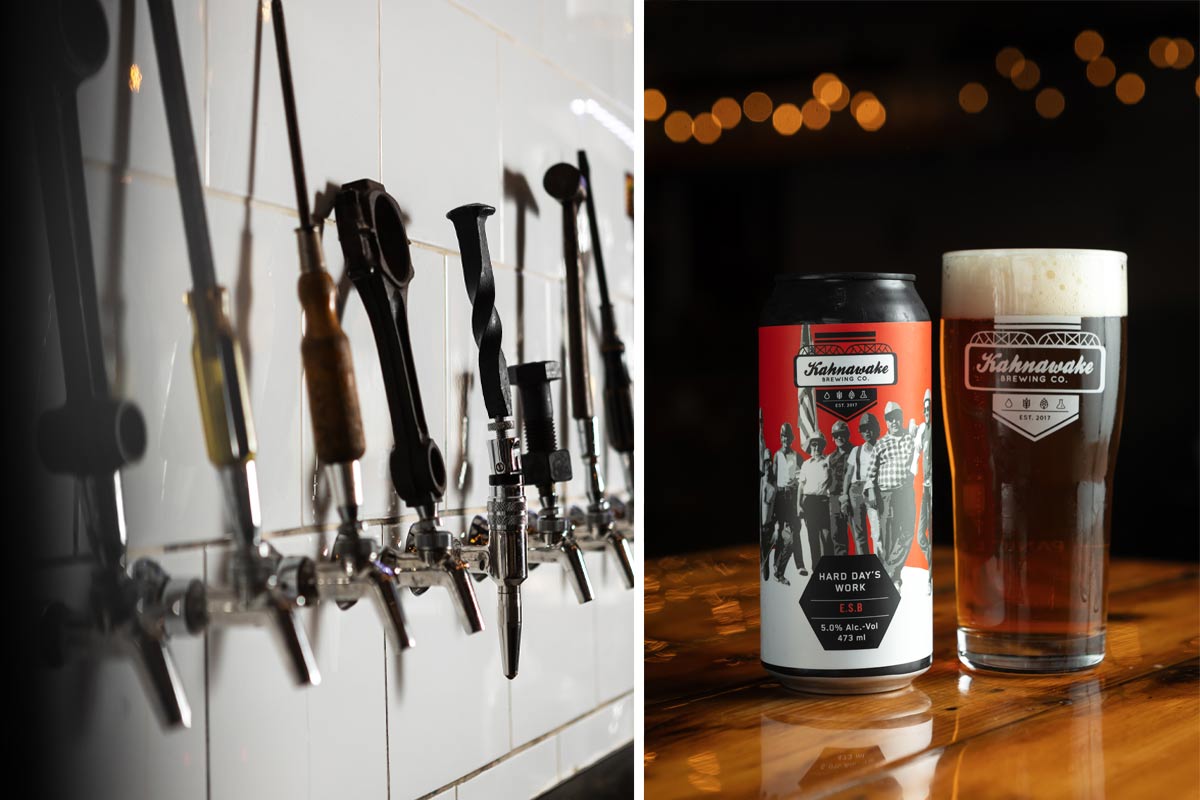
- Kahnawake Brewing Company (Kahnawake, QC): Located on Mohawk territory, this was the first openly Indigenous-owned craft brewery on Indigenous land in Canada. Co-owner Fred Leblanc, a former ironworker, has built a brand that honors local history—specifically the "Black Bridge" (the Saint-Laurent Railway Bridge) built by Mohawk ironworkers in 1900. The brewery has achieved critical success, winning multiple medals at the Canada Beer Cup in 2024 and 2025.
- Red Tape Brewery (Toronto, ON): Owned by Inuit brewer Sarabeth Holden, this brewery specializes in bespoke beers. Holden incorporates traditional elements into her recipes, such as her Paunnat (dwarf fireweed) Saison and an amber ale brewed with orange pekoe tea, a staple in Northern hunting and fishing culture.
- Two Loons Brewing (Toronto, ON): Head brewer Jason Tremblay, who is Métis, advocates for more Indigenous representation across the entire supply chain, from malt production to hop farming. Tremblay acknowledges the privilege of being "white-passing" in a colonial society and uses his platform to challenge stereotypes regarding Indigenous people and alcohol.
Redefining "Indigenous Beer" Through Land and Tradition
The question of what constitutes an "Indigenous beer" is central to the industry’s evolution. For many, it is not just about ownership, but about the relationship with the land and the ingredients used.

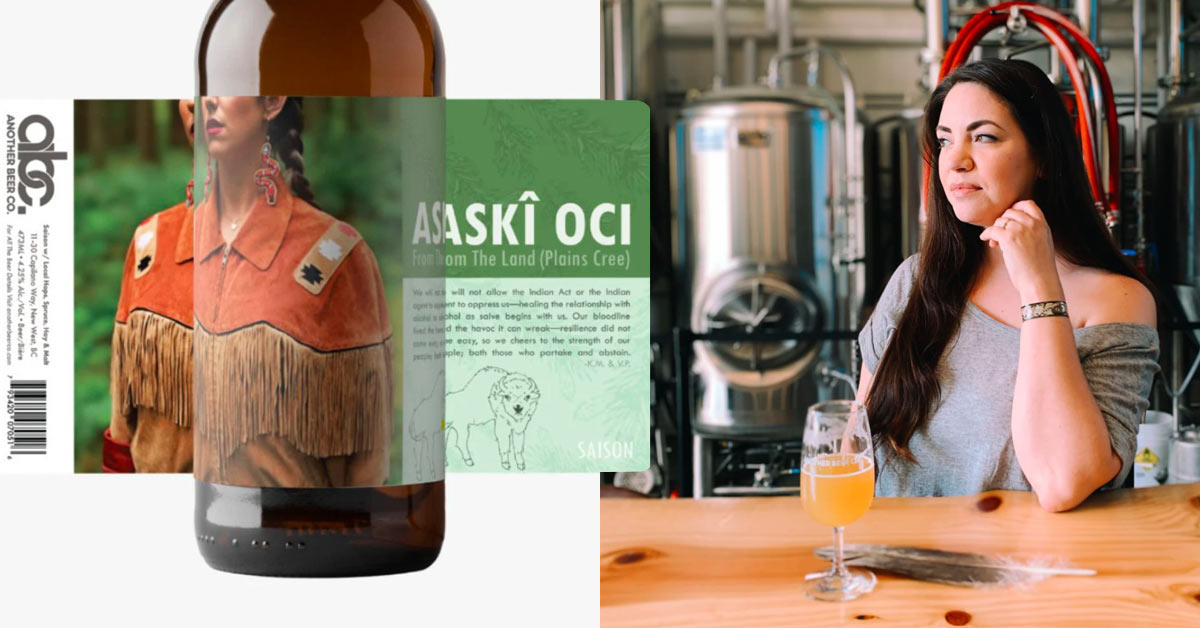
Nadine Jopson, a member of the Cree Nation and founder of Heartberry Soda (formerly of Another Beer Co.), developed the Askî Oci saison, which utilized alfalfa and spruce tips. The beer’s label explicitly addressed the Indian Act, stating that healing the relationship with alcohol begins with Indigenous people themselves. This "medicinal" or "earth-based" approach to brewing aligns with the teachings of Anishinaabe professor Niigaan Sinclair, who notes that while alcohol has been a "violent intrusion," it is ultimately derived from natural elements that Indigenous people must find a way to relate to on their own terms.
The Path Toward Reconciliation in the Beverage Sector
For the broader Canadian craft beer industry, inclusion requires more than symbolic gestures. Inez Cook, co-founder of the Indigenous restaurant Salmon n’ Bannock, suggests that breweries must move beyond "land acknowledgments" and engage in direct, personal relationships with local tribal nations. Cook advocates for a "people-first" business model, where non-Indigenous breweries actively seek out Indigenous suppliers and partners.
The Truth and Reconciliation Commission’s Call to Action 92 specifically calls upon the corporate sector in Canada to adopt the United Nations Declaration on the Rights of Indigenous Peoples. This includes ensuring that Indigenous peoples have equitable access to jobs, training, and education opportunities in the corporate sector and that they provide a business environment that is respectful of Indigenous history and culture.
Analysis of Implications and Future Trends
The rise of Indigenous-led brewing suggests a shift from "harm reduction" as a sole focus to a dual focus on "harm reduction and economic empowerment." While the trauma of the past cannot be erased, the reclamation of the brewing process allows Indigenous entrepreneurs to control the narrative around alcohol in their communities.
Data indicates that Indigenous-owned businesses are growing at a rate five times faster than the Canadian average. As this trend continues, the craft beer industry will likely see:
- Increased Sourcing Transparency: More breweries will prioritize ingredients harvested from Indigenous-managed lands.
- Collaborative Governance: A shift toward business models that involve local Band Councils or Métis Federations in the planning and revenue-sharing stages.
- Cultural Education: Taprooms serving as spaces for cultural exchange, such as the "Beer Bannock" experiences at Nonsuch Brewing, where history is taught alongside the beverage.
The evolution of Indigenous brewing in Canada is a microcosm of the larger national struggle for reconciliation. It is a journey marked by the breaking of silence, the acknowledgment of deep-seated pain, and the assertion of the right to participate in the country’s economic future. By prioritizing people over profits and respecting the complex history of the land, the craft beer community may find a sustainable path forward that honors both the past and the future of Indigenous sovereignty.