admin
admin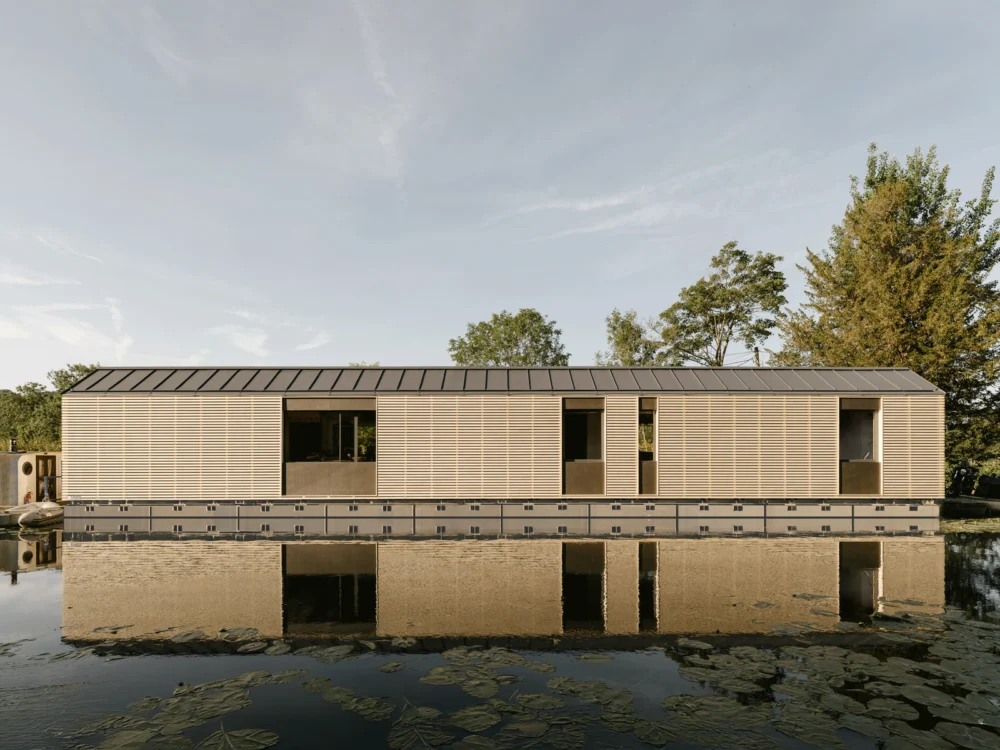
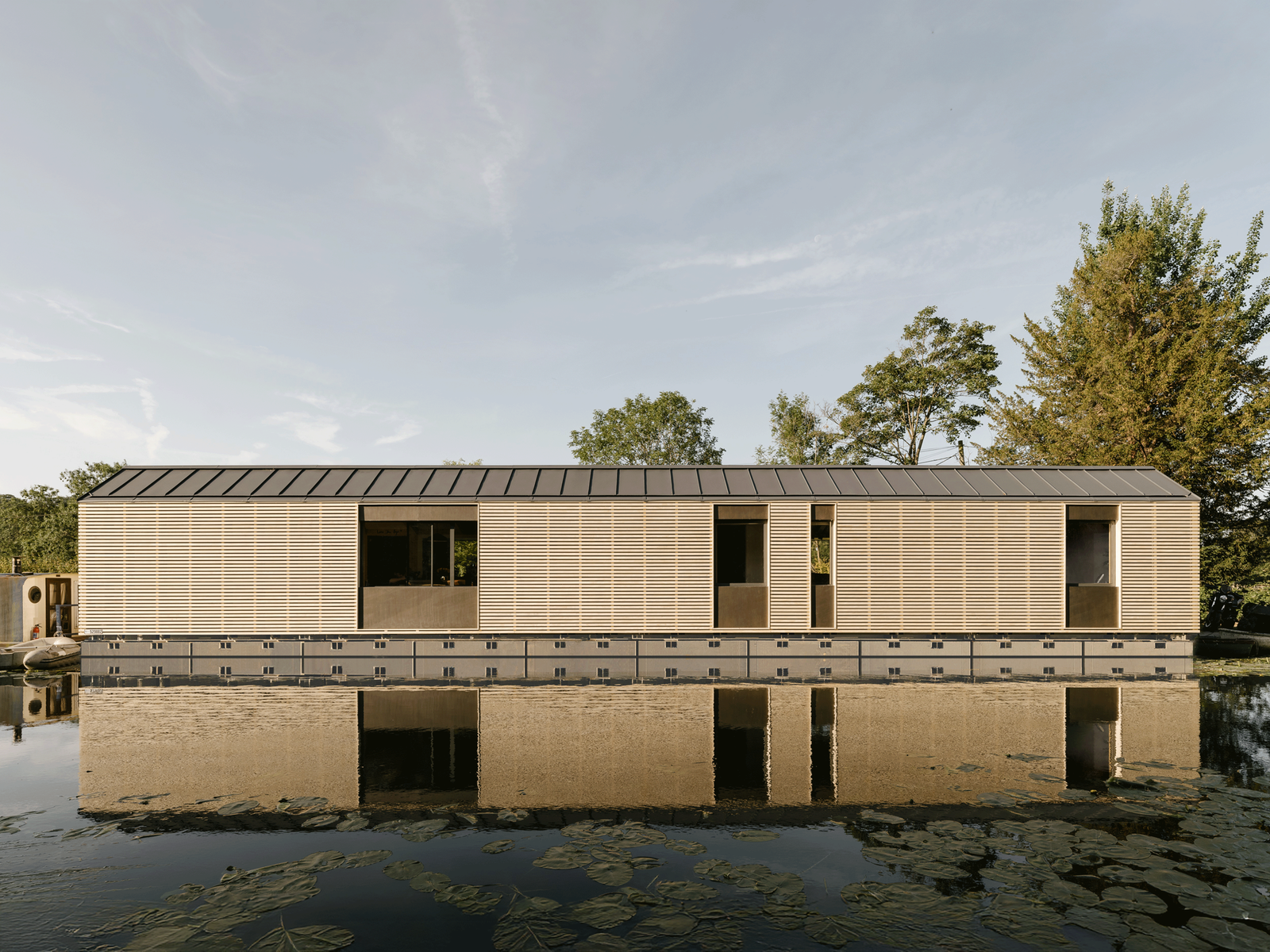
TiggColl architects has successfully completed "The Float House," an innovative modular floating residence situated on the Grand Union Canal in Ruislip, northwest London. This project marks a significant advancement in contemporary waterway living, delivering a spacious and accessible family home that seamlessly integrates modern design with advanced construction technology. The commission for The Float House arose from a client’s urgent need to replace their existing canal barge, which had become inadequate in terms of living space and failed to meet the evolving accessibility requirements of a growing family with specific health considerations. Central to the design brief was the imperative for future-proof level access, a critical departure from traditional canal barges where internal floor levels typically sit below the waterline, often leading to cold, damp, and less comfortable living conditions. Furthermore, the family expressed a strong desire to remain within their established community, a cooperative of 35 houseboats located at a private residential mooring at Hampton Hall Farm, a picturesque yet logistically challenging site.
The Evolution of Canal Living: Addressing Modern Demands
For centuries, Britain’s extensive network of canals has served as vital arteries for trade and transport, eventually evolving into unique residential environments. Living on a canal barge offers a distinct lifestyle, characterized by a close connection to nature and a sense of community. However, traditional barges, while charming, often present inherent limitations that can be challenging for contemporary family life. Confined spaces, restricted natural light, and the perpetual issue of internal floor levels being below the water line contribute to environments prone to dampness and cold, impacting comfort and health. Moreover, the inherent design of many barges poses significant accessibility barriers, making them unsuitable for individuals with mobility challenges or for families anticipating future needs.
The client’s predicament perfectly encapsulated these modern challenges. As their family expanded and health needs evolved, their existing barge could no longer provide the necessary space or accessibility. Their request to TiggColl architects was not merely for a new home but for a reimagining of canal living – one that offered the comforts and conveniences of a land-based dwelling while retaining the unique appeal of a waterfront location. This project underscores a growing demand within urbanized areas like London for innovative housing solutions that maximize limited space, integrate seamlessly with existing infrastructure, and prioritize resident well-being and inclusivity. London alone boasts over 100 miles of navigable waterways, representing a significant, yet often underutilized, potential for residential development.
Navigating Unprecedented Challenges: A Masterclass in Engineering and Design
The development of The Float House was not without its formidable logistical and engineering hurdles. The chosen site at Hampton Hall Farm, while idyllic, presented significant constraints. Its private residential mooring meant that any new construction had to integrate harmoniously with an existing, close-knit community of 35 houseboats, necessitating a construction approach that minimized disruption. More critically, the Grand Union Canal in this particular stretch is characterized by low bridges both upstream and downstream, effectively isolating the mooring from larger sections of the canal network. This geographical limitation rendered traditional methods of houseboat construction and maintenance, such as removal by crane or towing to a dry dock or quayside, entirely unfeasible.
To overcome these seemingly insurmountable obstacles, TiggColl architects embarked on an intensive collaborative process. They partnered with a specialized marine and structural engineering firm to devise a truly innovative solution: a unique modular system comprising ten interlocking steel hulls. These individual hull sections are ingeniously secured together by a gantry, forming the foundational floating chassis of the home. The brilliance of this design lies in its maintainability; each hull section can be individually floated away from the gantry and lifted onto the canal bank for routine inspection or repair. This groundbreaking approach negates the need for extensive, costly, and disruptive infrastructure like dry docks or large cranes, making maintenance straightforward and manageable within the confined site.
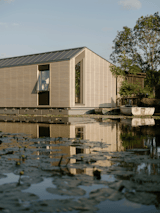
Parallel to the marine engineering innovation, TiggColl collaborated with Bucklands Timber to develop the expressed internal structural frame. Adopting a similar systematic and modular approach to construction, the skeleton structural frame was pre-fabricated and then installed on-site once the floating chassis was assembled and launched onto the water. This strategic off-site fabrication and systematic on-site assembly significantly minimized the duration and intensity of construction activities directly on the water, thereby reducing noise, traffic, and general disruption to the peaceful canal boat community, a testament to TiggColl’s thoughtful and considerate design philosophy.
Architectural Vision and Interior Sophistication
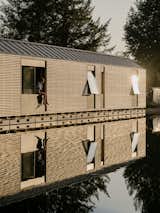
The architectural philosophy behind The Float House is a harmonious blend of contemporary aesthetics and functional practicality. The design prioritizes maximizing internal space and harnessing natural light, creating an open, airy, and inviting atmosphere rarely found in traditional canal dwellings. Expansive windows are strategically positioned to offer stunning, uninterrupted views of the water and the verdant surrounding landscape, fostering an immediate and profound connection to the aquatic environment. Crucially, these large glazed areas are balanced with considerations for privacy and security, ensuring that the residents can enjoy their unique setting without compromise.

The exterior elevations of The Float House are clad with horizontal Accoya timber slats. Accoya, a high-performance modified wood, is renowned for its exceptional durability, stability, and waterproofing qualities, making it an ideal material for a waterfront structure. Its sustainable sourcing and ability to weather naturally over time ensure that the home will age gracefully, developing a dynamic appearance that works in perfect harmony with the adjacent bank and natural surroundings. This choice reflects a commitment to both aesthetic excellence and environmental responsibility.
Inside, the home exudes a contemporary yet warm and natural feel. The exposed timber internal structural frame provides visual continuity and contributes to a pared-back aesthetic that is both sophisticated and inviting. The interior fit-out features high-quality, understated materials and finishes, selected for their longevity and elegance. Engineered oak flooring provides a robust and timeless base, while the sleek black painted kitchen, equipped with Dekton worktops and appliances by Hacker, offers a striking contrast and embodies modern luxury. Dekton, an ultra-compact surface, is celebrated for its extreme resistance to scratches, stains, UV rays, and heat, making it a highly practical and durable choice for a busy family kitchen in a unique environment. These material selections underscore the architects’ dedication to creating a home that is not only visually appealing but also exceptionally functional and resilient.
Broader Implications for Urban Development and Sustainable Living
The completion of The Float House carries significant implications, extending beyond its immediate success as a bespoke family residence. In an era of escalating urban density and persistent housing crises, particularly in global cities like London, innovative housing solutions are paramount. Floating homes, once considered niche or unconventional, are increasingly being recognized as a viable and sustainable option for urban expansion. The Float House demonstrates how underutilized waterways can be transformed into high-quality, desirable living spaces, effectively unlocking new dimensions for urban development without encroaching on scarce land resources.
Furthermore, the project sets a new benchmark for accessibility in waterway architecture. The client’s initial brief for future level access highlights a crucial need within the housing market for designs that are inclusive and adaptable to changing life circumstances. By successfully integrating universal design principles, The Float House serves as a powerful model for how floating homes can cater to a diverse demographic, ensuring comfort and independence for all residents, regardless of mobility. This approach could significantly broaden the appeal and market for waterway properties, moving them beyond specialized niches into mainstream consideration.
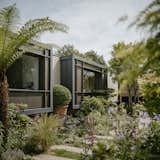
The careful selection of sustainable materials, such as Accoya timber, coupled with the modular construction methodology, underscores a commitment to environmental stewardship. Modular construction, often involving off-site pre-fabrication, typically results in reduced waste, improved quality control, and a smaller carbon footprint during the construction phase. The ability to perform maintenance on individual hull sections without major disruption also speaks to the long-term sustainability and resilience of the structure, minimizing environmental impact over its lifecycle.
Industry and Community Reactions
The architectural community and stakeholders in waterway development have reacted positively to the completion of The Float House. A spokesperson for TiggColl architects stated, "This project represents a triumph of innovative design over complex logistical and environmental challenges. It pushes the boundaries of what is possible in waterway architecture, setting a new benchmark for accessible, sustainable, and truly contemporary floating homes. We believe it offers a compelling vision for the future of urban canal living."

The clients, now residents of The Float House, expressed immense satisfaction. "Our previous barge was a beloved home, but it simply couldn’t keep pace with our family’s needs. TiggColl architects not only understood our desire to stay within this wonderful canal community but delivered a home that perfectly blends modern living with the unique charm of canal life. The space, the light, and especially the level access have transformed our daily lives. We are thrilled."
While specific statements from local authorities or waterway trusts are not publicly available regarding this particular private commission, projects of this nature often inspire broader conversations. It is logically inferred that such an exemplary development would be viewed favorably by organizations like the Canal & River Trust, which manages many of the UK’s waterways. They would likely commend "innovative solutions that enhance the quality of life on our canals while respecting the unique character of these precious environments. Developments like The Float House demonstrate how thoughtful, modern architecture can sensitively integrate with and elevate our historic waterways, offering viable, high-quality living solutions for the 21st century."

A Blueprint for Future Floating Architecture
The Float House by TiggColl architects is more than just a residence; it is a proof-of-concept for the future of floating architecture. Its intelligent modular design, proactive approach to accessibility, and sensitive integration within a challenging environment offer invaluable lessons for urban planners, architects, and developers worldwide. As global populations continue to concentrate in urban centers and the imperative for sustainable and adaptable housing solutions grows, the principles demonstrated by The Float House – innovative engineering, user-centric design, and environmental consciousness – provide a compelling blueprint. This project not only enriches the lives of its inhabitants but also contributes significantly to the evolving narrative of how we can live harmoniously and sustainably on water, particularly within the constrained yet vibrant contexts of historic urban waterways.