admin
admin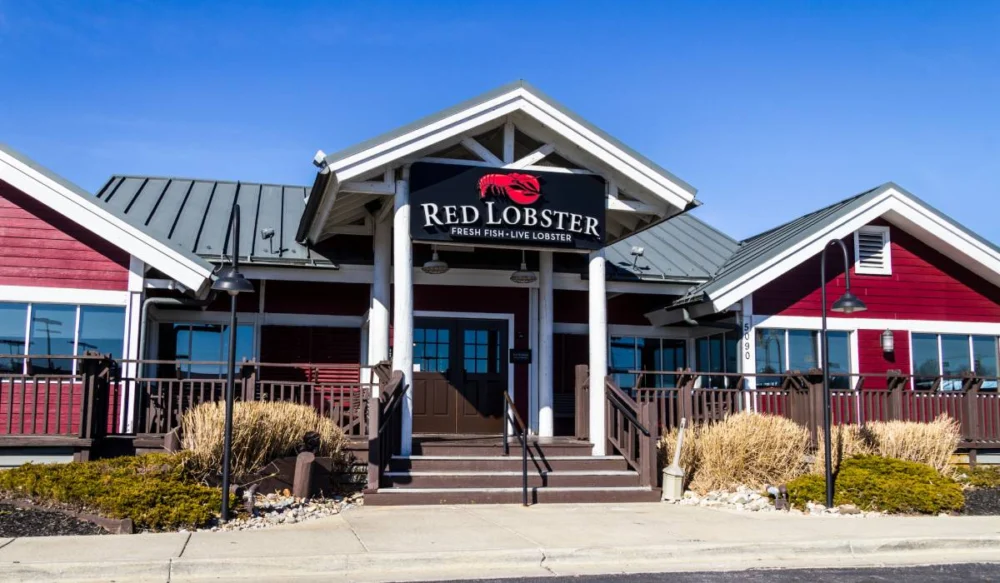
The American full-service restaurant industry is approaching a critical juncture as shifting consumer habits, persistent inflationary pressures, and emerging health trends converge to threaten the viability of thousands of establishments. According to a recent report by Black Box Intelligence, a leading provider of hospitality data and insights, approximately nine percent of full-service restaurants across the United States are currently classified as "at risk" of permanent closure. This classification stems from a rigorous analysis of unit-level performance, which reveals that these establishments have seen their annual sales plummet by more than 30 percent relative to their highest recorded levels since 2019.
As the industry moves through 2025 and prepares for the 2026 fiscal year, the divide between high-performing brands and struggling independent or legacy chains is widening. The data suggests that for a significant portion of the casual dining and fine dining sectors, the "new normal" of the post-pandemic era is proving unsustainable. While some segments of the hospitality industry, such as quick-service and fast-casual, have managed to find a growth trajectory, the full-service segment remains mired in a volatile macroeconomic environment that leaves little room for operational inefficiency.
Defining the "At Risk" Threshold and the Scale of the Crisis
The determination that nine percent of the industry is at risk is based on a specific set of financial indicators monitored by Black Box Intelligence. For a restaurant to fall into this category, it must have experienced a revenue contraction exceeding 30 percent from its peak annual sales achieved between 2019 and 2024. This drop is not merely a seasonal fluctuation but a systemic loss of market share and foot traffic.
Even more concerning is the subset of restaurants that have fallen further behind. Victor Fernandez, Vice President of Insights and Knowledge at Black Box Intelligence, highlighted a particularly vulnerable group: the three percent of full-service locations that lost more than 50 percent of their peak sales by the end of 2025. For these units, Fernandez suggests that the outlook is no longer a matter of potential recovery but of imminent exit. "The question for 2026 isn’t if they will close, but when," Fernandez noted, underscoring the severity of the financial hemorrhaging occurring at the bottom tier of the market.
This decline is reflected in the broader unit growth statistics for the industry. Since 2022, the casual-dining segment has seen its total unit count decline by 3.3 percent. This contraction stands in stark contrast to the quick-service restaurant (QSR) and fast-casual segments, which have expanded by 5.8 percent and 15.5 percent, respectively, during the same period. The data indicates a fundamental shift in how Americans consume food away from home, favoring speed and value over the traditional sit-down experience.
The Inflationary Burden and the Erosion of Profitability
The primary driver behind this wave of potential closures is the cumulative effect of inflation on operating costs. While the rate of inflation has slowed compared to its 2022 peak, the "cumulative" nature of these costs means that operators are paying significantly more for labor, ingredients, and utilities than they were five years ago.

According to Black Box Intelligence, cumulative inflation has increased the cost of operating a restaurant by approximately one-third (33 percent) since 2019. This surge in expenses has fundamentally altered the break-even point for full-service units. In a business model traditionally characterized by thin margins—often ranging from 3 to 10 percent—a 30 percent drop in top-line sales, combined with a 33 percent increase in costs, creates a mathematical impossibility for survival.
"These growing expenses make it virtually impossible for a unit to remain viable after losing 30 percent or more of its peak sales," Fernandez explained. When sales drop, fixed costs like rent and insurance become a larger percentage of total revenue, and variable costs like labor cannot always be cut deeply enough to compensate without compromising service quality and further alienating guests.
The GLP-1 Factor: A New Challenge to Demand
In a novel development for the industry, Black Box Intelligence identified a correlation between specific geographic trade areas and the adoption of GLP-1 weight-loss medications, such as Ozempic and Wegovy. The firm noted that geographies with the highest concentration of "at-risk" restaurants often overlap with regions experiencing high diabetes rates and, consequently, high GLP-1 adoption.
The impact of these medications on the restaurant industry is two-fold. First, they suppress appetite, leading to a direct reduction in the volume of food consumed. Second, they often alter consumer preferences, steering individuals away from high-calorie, high-fat, and processed foods—the very items that are often the high-margin staples of casual dining menus, such as appetizers, desserts, and alcoholic beverages. In trade areas where a significant portion of the population is utilizing these medications, full-service restaurants are seeing a noticeable dip in "check averages" and total visits, further straining their financial stability.
Consumer Sentiment and the Tightening of Wallets
The macroeconomic pressure is not only felt by operators but is also drastically altering consumer behavior. A survey of 1,340 U.S. adults conducted by YouGov provides a sobering look at the mindset of the American diner heading into 2026. The survey found that 28 percent of respondents expect their personal financial situation to worsen in the coming year, while 53 percent have actively set a strict budget for their household spending—a significant increase from the 46 percent who did so in 2025.
Perhaps most critically for the hospitality sector, two-thirds of those who foresee a financial decline plan to cut back specifically on dining out. This discretionary spending is often the first to be eliminated when households feel the squeeze of high housing costs, interest rates, and general cost-of-living increases. The "value" proposition of a full-service meal is being re-evaluated by consumers who now view a $60 to $100 dinner for two as a luxury rather than a weekly routine.
Strategic Realignment: The "Traffic Transfer" Strategy
Faced with these daunting statistics, industry experts are urging restaurateurs to move away from reactive management and toward proactive portfolio optimization. Fernandez recommends that large chains and multi-unit operators "clean up" their portfolios by identifying underperforming units early and closing them strategically rather than waiting for an inevitable bankruptcy.

The goal of a strategic shutdown is to facilitate a "traffic transfer." By closing a struggling unit, an operator can often migrate loyal customers to a nearby, higher-performing location within the same brand. This consolidation allows the brand to stop subsidizing its bottom 10 percent of units, which often drain capital and management resources.
"The silver lining here is that a leaner portfolio often becomes a stronger one," Fernandez said. "When a brand stops subsidizing its bottom 10 percent of units, it can reallocate capital, management attention, and marketing spend to the units with the highest growth potential." This approach has already been adopted by several major national players. TGI Fridays, Red Lobster, and Denny’s have collectively shuttered hundreds of underperforming locations over the past 24 months as part of broader efforts to realign their physical footprints with current market demand.
Execution vs. Economy: Benchmarking for Survival
One of the most vital pieces of advice for operators in this volatile climate is to distinguish between external economic pressures and internal operational failures. Fernandez suggests that operators should judge their unit-level performance against local competitors rather than relying solely on internal historical data.
If a restaurant is losing traffic while the local market and surrounding competitors are growing, the issue is likely execution—ranging from poor service and declining food quality to a lack of cleanliness or outdated decor. However, if an entire trade area is saturated and traffic is down across all competitors, it indicates a fundamental shift in the local economy or consumer base. In the latter scenario, strategic closure and consolidation of volume into top-performing sites is the most viable path forward.
Broader Implications for the Industry and Real Estate
The potential closure of nine percent of full-service restaurants will have ripple effects throughout the broader economy. For the commercial real estate market, a wave of closures could lead to increased vacancies in suburban strip malls and urban dining districts. However, this also presents an opportunity for emerging brands and quick-service concepts to secure prime locations at more competitive lease rates.
For the labor market, these closures could lead to temporary displacement for thousands of service workers. However, in a market that has struggled with a chronic labor shortage since 2021, the consolidation of the industry may actually help stabilize the workforce. Survivors in the full-service space will likely find it easier to recruit and retain talent as the pool of available workers increases and competition for that labor among employers slightly eases.
Ultimately, the predicted shakeout of 2026 represents a "right-sizing" of an industry that expanded rapidly in the decade leading up to the pandemic. While the loss of local establishments is a blow to communities, the restaurants that emerge from this period of volatility will likely be those that have mastered the balance of value, execution, and operational efficiency. For the remaining players, the prize is a larger share of the market and a more sustainable path to profitability in an increasingly complex economic landscape.