admin
admin
As the restaurant industry convenes for pivotal events like Pizza Expo, operators are inundated with pitches for novel ingredients promising menu transformation and customer queues. While the allure of new products is undeniable, Mike Bausch, owner of the twelve-location Andolini’s Pizzeria in Tulsa, Oklahoma, advocates for a strategic and rigorous evaluation process. His insights, born from extensive operational experience, underscore the critical importance of make-line speed, cross-utilization, and meticulous marketing, particularly in an era increasingly dominated by third-party delivery platforms. The overarching message for restaurateurs is clear: innovation must be tempered with operational pragmatism, supply chain resilience, and a deep understanding of customer experience.
The Evolving Landscape of Restaurant Operations and Digital Visibility
The digital revolution, spearheaded by third-party delivery applications, has fundamentally reshaped the operational priorities for pizzerias and restaurants alike. What was once primarily a focus on in-house dining speed now extends to the efficiency of the entire order fulfillment process, from kitchen preparation to driver pickup. Bausch highlights a stark reality: these platforms actively rank restaurants based on driver wait times. Restaurants that consistently demonstrate faster service are rewarded with higher visibility, preferential driver assignment, and ultimately, more orders. Conversely, delays lead to algorithmic downgrades, reduced exposure, and a potential loss of business.
This digital imperative means that every new ingredient considered for the menu is no longer just a culinary decision; it is a strategic choice with direct implications for a restaurant’s digital footprint and profitability. An ingredient that adds complexity or time to the preparation process can inadvertently sabotage a pizzeria’s online standing, impacting revenue more significantly than its perceived culinary benefit might justify. Industry data from QSR Magazine indicates that even a one-minute increase in average wait time can lead to a 5-7% decrease in customer satisfaction and a measurable drop in repeat orders through delivery apps. Therefore, the pursuit of menu innovation must align seamlessly with the imperative for operational agility.
Strategic Ingredient Evaluation: Andolini’s Model for Success
Andolini’s Pizzeria approaches new ingredient adoption with extreme caution, prioritizing speed and efficiency. This philosophy translates into a stringent checklist designed to maximize utility and minimize waste.
Cross-Utilization as a Core Principle: A cornerstone of Bausch’s strategy is the extensive cross-utilization of ingredients. If an ingredient is destined for only one menu item, it must be exceptionally premium—a "star of the show" like speck, prosciutto, or a rare olive—to justify its singular existence and higher cost per plate. Otherwise, new additions are expected to integrate across multiple menu categories, appearing on pizzas, salads, calzones, and Strombolis. This multi-application approach not only spreads the cost of the ingredient but also reduces inventory holding, simplifies ordering, and significantly mitigates waste. According to a 2022 ReFED study, food waste costs the U.S. food service industry an estimated $25 billion annually, with a significant portion originating from spoilage and inefficient inventory management. Cross-utilization directly addresses this challenge, transforming potential waste into profitable menu diversity.
A Comprehensive Due Diligence Checklist: Before committing to any new ingredient, Bausch advises a thorough vetting process:
-
Dependable Sourcing: The reliability of supply is paramount. A new ingredient, once integrated into the menu and marketed to customers, must be consistently available not just today but for the foreseeable future. Supply chain disruptions, exacerbated by global events such as the COVID-19 pandemic and geopolitical conflicts, have demonstrated the fragility of ingredient procurement. A 2023 report by the National Restaurant Association highlighted that 85% of restaurant operators experienced supply chain delays or shortages in the past year. Ensuring a stable supply chain involves vetting suppliers for their logistical capabilities, track record, and contingency plans.
-
Backup Supplier Identification: The adage "don’t put all your eggs in one basket" holds true for ingredient sourcing. What happens if the primary vendor faces an unforeseen issue, like a crop failure, transportation strike, or warehouse fire? Identifying and establishing relationships with backup suppliers is a critical risk mitigation strategy. This proactive approach ensures continuity of service and prevents abrupt menu changes that can disappoint customers and damage brand reputation.
-
Shelf Life and Volume Matching: Many beautiful, specialty ingredients, while culinarily appealing, possess short shelf lives. Bausch recounts instances of operators purchasing delicate items like squash blossoms only to discard half due to insufficient volume turnover. This represents not just wasted product but wasted money, labor for prep, and lost potential revenue. A careful analysis of an ingredient’s shelf life against the restaurant’s projected sales volume is crucial to avoid spoilage-related losses, which can significantly erode profit margins.
-
Natural Complementarity Across the Menu: An ingredient’s versatility should stem from genuine enhancement, not forced integration. The question is not merely "how many items can this go on?" but "does this ingredient genuinely improve these items?" Forcing an ingredient into a dish where it doesn’t naturally fit can lead to an uninspired menu and potentially negative customer feedback. True cross-utilization means the ingredient elevates multiple dishes, offering a cohesive and appealing flavor profile across the menu.
Internal Innovation: Unlocking Value Within Your Own House

Beyond sourcing new items, Bausch champions a philosophy of "looking in your own house first." This involves a systematic review of existing inventory for underutilized potential. Andolini’s discovered this strategy when seeking a lemon element for their chicken piccata pizza. Instead of sourcing new lemons, they realized their bar already stocked them. This epiphany led to a broader re-evaluation of all existing ingredients.
This approach yielded significant benefits. The San Marzano tomatoes, a staple for their pizzas, were successfully integrated into a Bloody Mary cocktail. This internal cross-utilization circumvented the complexities of new vendor relationships, minimum order concerns, and waste issues. It exemplifies smarter resource management, transforming existing assets into new revenue streams without incurring additional procurement costs or operational overhead. A restaurant consultant specializing in operational efficiency, speaking anonymously, noted that "conducting an annual ingredient audit can uncover significant savings and unlock hidden menu potential, often leading to more authentic and cohesive menu development than external sourcing alone."
The Strategic Advantage of In-House Production
Taking internal innovation a step further, Andolini’s has embraced in-house production for certain ingredients, notably their smoked mozzarella. By purchasing standard mozzarella bricks and smoking them themselves, they achieve complete control over quality, timing, and cost. This house-smoked mozzarella then features across multiple pizzas and salads, demonstrating exemplary cross-utilization.
The benefits of in-house production are manifold:
- Quality Control: Direct oversight of the production process ensures consistent quality standards, a critical factor for maintaining brand reputation.
- Cost Control: Eliminating the middleman and leveraging existing labor and infrastructure can significantly reduce ingredient costs.
- Supply Independence: Reduces reliance on external vendors, mitigating risks associated with supplier shortages or price fluctuations.
- Customization and Differentiation: Allows for unique flavor profiles and product variations that distinguish the restaurant from competitors.
- Waste Minimization: Production can be scaled precisely to demand, virtually eliminating waste from over-ordering or spoilage of pre-made ingredients.
While not every ingredient lends itself to in-house production due to equipment, labor, or expertise requirements, for items that do, it offers a powerful competitive advantage.
A Structured Approach to Menu Item Launch: The Andolini’s Blueprint
Once an ingredient passes the rigorous evaluation, its launch as a new menu item demands a structured, systematic approach. Andolini’s follows an approximate two-month process, designed to ensure a seamless and successful introduction:
- Concept Development and Recipe Testing (Weeks 1-2): This initial phase involves brainstorming potential dishes, developing recipes, and conducting multiple rounds of testing with the culinary team. Focus is on flavor balance, visual appeal, and operational feasibility.
- Costing and Pricing Analysis (Week 3): Detailed analysis of ingredient costs, labor, and overhead to determine appropriate pricing that ensures profitability while remaining competitive. This also involves assessing potential impact on food cost percentages.
- Supplier Finalization and Inventory Planning (Week 4): Confirming sourcing channels, negotiating terms, and establishing initial inventory levels based on projected sales. This includes verifying lead times and minimum order quantities.
- Staff Training – Preparation and Service (Weeks 5-6): Comprehensive training for kitchen staff on preparation techniques, portion control, and plating standards. Front-of-house staff are educated on the new item’s ingredients, flavor profile, and selling points to effectively communicate with customers.
- Marketing Strategy Development (Weeks 6-7): Crafting marketing messages, designing in-store promotional materials, planning digital campaigns (social media, website updates), and coordinating with delivery platforms for accurate menu listings and pricing.
- Pilot Launch/Soft Opening (Week 8): Introducing the new item on a limited basis or at a specific location to gather real-world feedback from customers and staff. This allows for final adjustments before a full rollout.
- Feedback Collection and Refinement (Throughout Pilot): Actively soliciting input from both customers and staff regarding taste, presentation, operational flow, and perceived value. This data is crucial for iterative improvements.
- Full Launch and Performance Monitoring (Post-Pilot): Officially adding the item to all menus and continuously monitoring sales performance, customer reviews, and operational efficiency to ensure its ongoing success.
Bausch emphasizes that skipping any of these steps inevitably leads to a "sloppy launch, confused staff, inconsistent pricing across platforms, and a new item that never gets the chance to succeed." This meticulous planning minimizes operational friction and maximizes the item’s potential for market acceptance.
Navigating Failure: The Duck Confit Lesson
Not every innovation, despite the best intentions and rigorous planning, will be a winner. Bausch openly shares Andolini’s experience with duck confit. The team was convinced it would be an elevated, distinguishing offering, yet after multiple attempts, they couldn’t achieve the desired results. The lesson, Bausch states, is not to avoid taking risks but to recognize when to "cut your losses." Persisting out of ego rather than objective performance data can lead to prolonged financial drain and operational inefficiencies. A business strategist commented that "successful innovation isn’t just about creating new things; it’s also about having the discipline to pivot or discontinue initiatives that aren’t performing, thereby freeing up resources for more promising ventures."
Strategic Engagement at Pizza Expo and Beyond
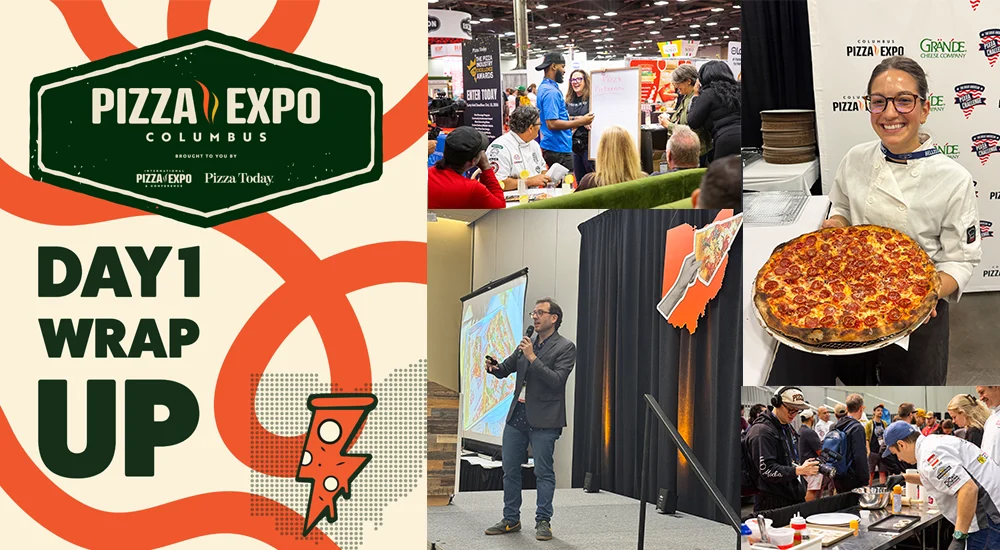
For attendees of industry events like Pizza Expo, Bausch’s advice serves as a crucial filter for the myriad of tempting new products on display. Rather than being swayed by initial excitement, operators are urged to approach vendors with a strategic mindset. Key questions should revolve around minimum orders, shelf life, supply consistency, and, critically, how the ingredient can be cross-utilized across the existing menu.
Ultimately, the most impactful innovations for a pizzeria may not be the flashiest new ingredients showcased on a trade show floor. Instead, they might be found within the existing inventory, through clever cross-utilization, or via strategic in-house production. By prioritizing operational speed, supply chain resilience, waste reduction, and a disciplined launch process, pizzerias can ensure that their menu innovations contribute meaningfully to profitability and long-term success, rather than becoming operational liabilities. The best "new" ingredient, in many cases, is the one that has been waiting to be discovered and optimized within the restaurant’s own four walls.