admin
admin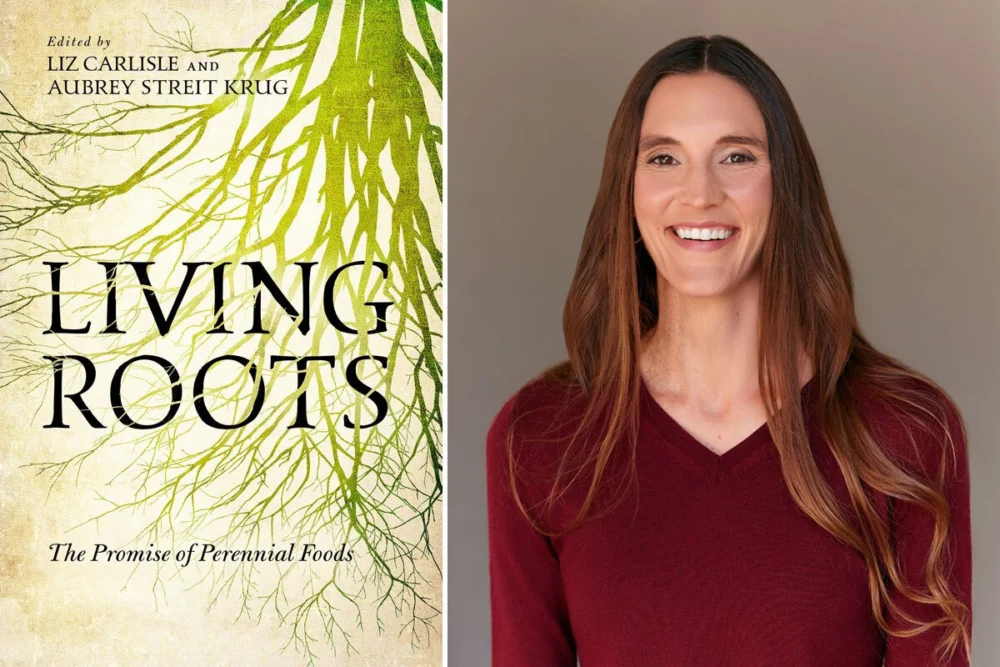
With the escalating urgency of climate change at the forefront of global discourse, a groundbreaking collection of essays, Living Roots, edited by agroecologist Liz Carlisle and Aubrey Streit Krug, presents an alternative, long-term vision for agriculture rooted in perennial crops—plants that endure and produce year after year. This seminal work, featuring insights from 34 Indigenous leaders, farmers, scientists, and chefs, meticulously builds a compelling case for integrating perennial crops as foundational elements of our farming systems and daily diets. The book positions perennials not merely as an agricultural alternative but as a comprehensive strategy for addressing environmental degradation, enhancing food security, and fostering community resilience.
The Ecological Imperative of Perennial Systems
Perennial crops, encompassing a diverse range from fruit and nut trees like pawpaws and hazelnuts to forage grasses and innovative grains such as Kernza, offer a suite of ecological benefits that directly counter the detrimental impacts of conventional annual monoculture farming. Their defining characteristic—deep, robust root systems—is central to their environmental efficacy. These extensive root networks enable perennials to sequester substantial amounts of atmospheric carbon dioxide, drawing it deep into the soil where it can be stored for extended periods. This natural carbon capture mechanism is a critical tool in the global effort to mitigate greenhouse gas emissions and stabilize the climate.
Beyond carbon sequestration, perennial systems play a vital role in enhancing soil health and stability. Their continuous ground cover and deep root penetration significantly reduce soil erosion, a pervasive problem in annual crop fields that leads to nutrient loss and waterway pollution. Furthermore, perennials contribute to a steady increase in soil organic matter, improving soil structure, water retention capacity, and overall fertility. This enhanced soil health creates a more resilient agricultural landscape, better equipped to withstand extreme weather events such as droughts and heavy rainfall. The ecological advantages extend to biodiversity, as perennial farms often provide more stable habitats for pollinators, beneficial insects, and wildlife, thereby boosting overall ecosystem health and resilience. From a human health perspective, integrating a wider variety of perennial fruits, nuts, and grains into diets can offer diverse nutritional benefits, moving away from the limited staple crops that currently dominate global food systems.
A Mosaic of Perennial Innovations
Living Roots vividly illustrates the diverse applications and cultural significance of perennial agriculture through the experiences of its contributors. The narratives span a broad geographical and cultural spectrum, showcasing the tangible impact of perennial approaches. For instance, Indigenous communities are at the forefront of restoring ecological balance, with efforts such as the reintroduction of buffalo herds onto the native grasslands of the Cheyenne River Reservation in South Dakota. This initiative not only revitalizes a culturally significant species but also restores the ecological function of perennial grasslands, fostering biodiversity and soil health. Similarly, studies on the sacred serviceberry on Blackfeet land in Montana highlight the deep spiritual and practical connections Indigenous peoples maintain with perennial plant systems.
The book also features contemporary innovations in urban and rural settings. In Southeast Atlanta, the development of an urban food forest exemplifies how perennial systems can transform neglected urban spaces into productive, community-sustaining ecosystems. These food forests, typically composed of fruit and nut trees, berry bushes, and perennial vegetables, offer local food sources, green infrastructure, and educational opportunities. In rural Minnesota, a farmer demonstrates the synergistic benefits of agroforestry by raising chickens under a protective canopy of hazelnut trees, illustrating how integrated perennial systems can enhance animal welfare and diversify farm income. Research efforts are also highlighted, including ecologists studying the ecological effects of prairie strips—perennial patches strategically integrated within annual crop fields to provide habitat and reduce runoff—and scientists diligently developing perennial versions of staple crops like rice, sorghum, and the oilseed silphium, aiming to bring the benefits of perenniality to globally significant food sources.
Liz Carlisle on Responding to Intersecting Crises
Liz Carlisle, an agroecologist and associate professor at the University of California, Santa Barbara, and co-editor of Living Roots, frames the book as a direct response to the confluence of urgent global crises. Carlisle’s prior works, including Lentil Underground, Grain by Grain, and Healing Grounds, have consistently explored the promise of organic and regenerative agricultural systems. Living Roots builds upon this trajectory by spotlighting perennial agriculture as a comprehensive solution capable of addressing multiple challenges simultaneously.
"Working on this project has been about trying to respond to this moment," Carlisle recently stated. "I’m feeling the weight of so many crises at once. There’s the urgent need to slow emissions but also the urgent need to adapt to the climate change that’s already here—and then at the same time, the urgent need to address the deep divisions and inequity in our society that are making it difficult to tackle collective challenges like climate change." Carlisle asserts that the perennial movement possesses the inherent capacity to help society tackle these interconnected issues. By fostering resilient ecosystems, supporting diverse local economies, and promoting communal engagement, perennial systems offer a pathway toward a more equitable and sustainable future.
The selection of contributors for Living Roots was a deliberate effort to create a holistic and representative dialogue within the nascent perennial movement. Carlisle explained, "Groups that have been working hard for a long time—on things like agroforestry or regenerative grazing or breeding perennial grains—are starting to come together into a broader perennial movement. We wanted the book to offer a behind-the-scenes. What would it be like to host an awesome potluck with all these people working on perennials in different ways?" The aim was to showcase the diversity of perennial foods, their varied geographies primarily across North America but with some global perspectives, and the wide array of roles people play in advancing this vision, from scientific researchers to on-the-ground practitioners and policymakers.
Carlisle’s personal connection to the perennial movement also deeply informs her work. She emphasizes the profound joy and community building inherent in perennial food cultures, whether through planting fruit trees in a community orchard or exploring global culinary traditions centered around perennial ingredients. This personal engagement fuels her broader efforts as a researcher and educator, reinforcing her belief in the power of perennials to inspire collective action. She notes, "one of the most exciting things for me is experiencing what a powerful rallying point perennials are for people from different parts of the political spectrum. When you start talking about planting a tree to benefit future generations, that’s something a lot of people can get behind, together." This ability to bridge ideological divides speaks to the universal appeal of long-term thinking and environmental stewardship that perennials embody.
Overcoming Roadblocks: Policy, Markets, and Tenure
Despite the well-documented environmental benefits and growing scientific understanding of perennial agriculture, its widespread adoption by farmers remains challenging. Currently, 60 to 80 percent of global cropland is dedicated to annuals, a stark contrast to the potential of perennial systems. Several systemic barriers impede this transition, primarily stemming from deeply entrenched agricultural policies, market structures, and land tenure issues.
One of the most significant impediments highlighted by contributors to Living Roots, such as Iowa farmer Wendy Johnson, is the structure of federal farm policy. Crop insurance programs, a cornerstone of agricultural risk management, are often heavily biased towards annual commodity crops like corn and soy. These policies provide a safety net that disincentivizes diversification into less established perennial crops, which may have longer maturation periods and less predictable market channels. Farmers are often reluctant to risk losing insurance coverage or subsidies by deviating from conventional practices, effectively locking them into annual monocultures.
Market structures further complicate the transition. Farmers considering perennials often face a lack of clear, established markets for their produce. Unlike the robust supply chains for corn, wheat, or soy, the infrastructure for processing, distributing, and selling perennial fruits, nuts, and specialized grains like Kernza is often nascent or non-existent. This uncertainty about market access and profitability presents a significant deterrent for farmers contemplating a long-term investment in perennial crops.
In regions like California, land tenure issues pose another substantial barrier. Many farmers operate on short-term leases, typically one to three years. The investment required to establish perennial crops—which may take several years to become productive—is simply not feasible under such insecure tenure arrangements. Farmers need long-term security to justify the initial investment and reap the benefits of perennial systems, making policy reforms around land leasing and ownership critical for promoting perennial adoption.
A recent setback illustrates the precariousness of support for perennial initiatives. The cancellation of USDA’s Climate Smart Commodities funding in April 2025, a program that had previously provided a substantial boost to perennial projects, dealt a significant blow to ongoing efforts. Carlisle cited the example of Jesse Smith’s elderberry project in Santa Barbara, which aimed to develop native blue elderberry as a viable commercial crop across coastal California. The loss of this funding stalled exciting progress not only on the farms but also in crucial areas like developing processing facilities, which are essential for creating a sustainable market. This sudden withdrawal of support underscored the vulnerability of innovative agricultural projects to policy shifts and funding uncertainties.
Moreover, the transition to perennial or more broadly regenerative methods represents a substantial learning curve for farmers. It requires acquiring new knowledge about crop selection, varietal suitability, spacing, pest management, and long-term care unique to perennial systems. The recent pullback of USDA staff, who traditionally provided vital technical assistance and extension services, has exacerbated this challenge. Farmers seeking to perennialize their operations now face reduced access to the expert guidance and support necessary to navigate these complex transitions effectively.
Opportunities Amidst Chaos: Community, Knowledge, and Climate Urgency
Despite the significant challenges, the perennial movement is witnessing a surge of momentum driven by robust community-level initiatives and the increasing imperative of climate change. Carlisle identifies several unique opportunities that are accelerating the adoption of perennial agriculture.
A burgeoning network of community-based organizations and movements is providing critical support and resources to farmers. Organizations like the Savanna Institute, dedicated to advancing agroforestry in the Midwest, offer research, education, and direct assistance to farmers interested in integrating trees and shrubs into their farming systems. Simultaneously, Indigenous-led efforts, such as the Indigenous buffalo restoration initiatives, are revitalizing traditional land management practices that inherently incorporate perennial landscapes. These movements represent a growing pool of knowledge, experience, and peer-to-peer mentorship, making it easier for farmers to find guidance and support during their transition to perennial systems. Conferences, workshops, and farmer-to-farmer networks are becoming increasingly common, fostering a collaborative environment for learning and innovation.
Crucially, the escalating impacts of climate change are themselves becoming a powerful catalyst for change. For many farmers and farming communities, continuing with conventional annual farming methods under current climate and market circumstances is becoming increasingly difficult, if not unsustainable. The growing frequency and intensity of droughts, floods, extreme temperatures, and unpredictable weather patterns are making annual crop yields more volatile and input costs higher. This "chaos," as Carlisle describes it, is compelling a growing number of farmers to actively seek alternatives that offer greater resilience, stability, and long-term viability. The robust community efforts and accumulated knowledge within the perennial movement are well-positioned to receive and support these farmers as they look for more sustainable pathways.
The Enduring and Spiritual Resonance of Perennials
A recurring theme throughout Living Roots is the deep personal and even spiritual significance that perennials hold for many contributors. This profound connection extends beyond mere agricultural utility, touching upon fundamental aspects of human existence, our relationship with nature, and our responsibility to future generations.
Perennials, by their very nature of enduring through seasons and years, embody resilience, continuity, and long-term vision. Unlike annuals, which demand replanting and significant annual inputs, perennials offer a sense of permanence and a slower, more deliberate rhythm of cultivation. This long-term perspective naturally encourages a deeper connection to the land and a focus on intergenerational stewardship. Planting a fruit tree or a perennial grain is an act of faith in the future, a commitment that will benefit not just the planter but also their children and grandchildren. This inherent characteristic fosters a sense of responsibility and connection that resonates deeply with people from diverse backgrounds.
For many Indigenous communities, perennial plants and ecosystems are intrinsically linked to cultural identity, spiritual practices, and ancestral wisdom. The sacred serviceberry, for example, is not merely a food source but a symbol of sustenance, community, and spiritual well-being. This deep, reciprocal relationship between people and perennial nature offers a powerful antidote to the often extractive and short-sighted practices of industrial agriculture. It reminds us of the profound joy and beauty in working harmoniously with natural systems, fostering a sense of belonging and purpose. This spiritual dimension of perennials—their ability to connect us to cycles of life, to community, and to the long arc of time—is what makes them such a powerful rallying point, capable of inspiring collective action and hope in an era of unprecedented challenges.
Broader Implications and Future Outlook
The vision articulated in Living Roots carries profound implications for the future of agriculture, food systems, and environmental policy. A widespread transition to perennial-based agriculture would not only mitigate climate change and enhance ecological resilience but also foster more equitable, localized, and nourishing food economies. Such a shift demands integrated policy reforms that realign incentives away from annual monocultures and towards diversified, perennial systems. This includes restructuring crop insurance, developing robust market infrastructure for perennial crops, and implementing land tenure policies that support long-term investment.
Continued research and development are also crucial, particularly in breeding new perennial varieties of staple crops that can thrive in diverse environments and meet global food demands. Simultaneously, expanding extension services and farmer education programs will be essential to equip producers with the knowledge and skills needed for this transition.
Ultimately, Living Roots serves as a powerful testament to the transformative potential of perennial agriculture. It is a call to action, urging society to embrace a long-game perspective, invest in ecological wisdom, and foster a deeper connection to the living systems that sustain us. The burgeoning perennial movement, driven by scientific innovation, Indigenous knowledge, and community passion, offers a tangible and hopeful path towards a more sustainable, resilient, and equitable future for all.