admin
admin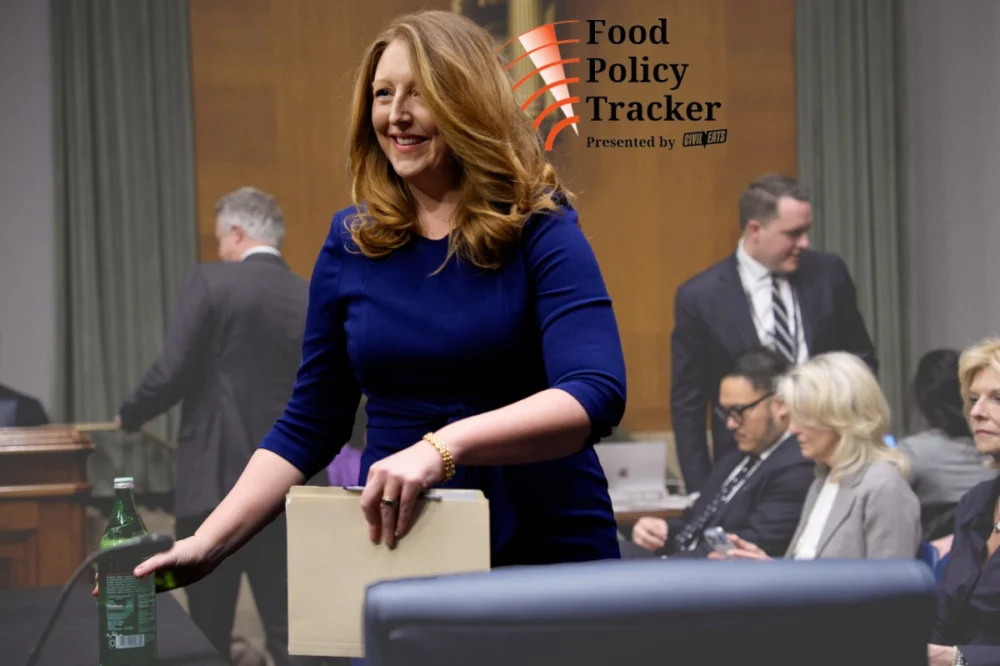
February 26, 2026 – Dr. Casey Means, President Donald Trump’s nominee for U.S. Surgeon General, appeared before the Senate Committee on Health, Education, Labor and Pensions (HELP) on Wednesday, articulating a vision for the nation’s top public health office that would heavily prioritize warning American consumers about the pervasive dangers of ultra-processed foods. Her confirmation hearing, however, quickly became a complex tapestry of policy debates, ideological clashes, and a spotlight on the evolving landscape of public health discourse under the current administration.
A Delayed Hearing and a Vision for "Make America Healthy Again"
Dr. Means, a prominent health entrepreneur and a key leader in the "Make America Healthy Again" (MAHA) movement, was initially nominated by President Trump in May 2025. Her original confirmation hearing, scheduled for October, was postponed when she went into labor shortly before the meeting, adding an unusual personal note to the high-stakes political process. The MAHA movement, championed by Dr. Means and her brother, Calley Means—currently a senior adviser for the Department of Health and Human Services—advocates for a radical shift in American health, emphasizing individual food choices and reform in agricultural practices. If confirmed, Dr. Means’s position as Surgeon General would grant her a powerful platform to elevate these MAHA tenets, transforming them from a movement’s ideology into a national public health mandate.
The Surgeon General, while not possessing direct policy-making authority, serves as the nation’s chief medical spokesperson, wielding significant influence over public perception and health priorities. Historically, the office has been instrumental in shaping national health campaigns, most famously when Surgeon General Luther Terry issued his landmark report on smoking in 1964, fundamentally altering public understanding and policy towards tobacco. Dr. Means’s stated intention to focus intensely on ultra-processed foods suggests a similar ambition to redefine a major public health challenge.
Ultra-Processed Foods: A New Public Health Frontier?
During her testimony, Dr. Means was unequivocal about her commitment to tackling ultra-processed foods (UPFs). "I think you’ll be frustrated by how much I will be talking about ultra-processed foods," she told the senators, indicating a sustained and robust campaign if confirmed. This focus marks a significant departure from previous Surgeons General, few of whom have specifically targeted food policy or, more granularly, the category of UPFs.
Ultra-processed foods, characterized by multiple industrial ingredients and additives (such as artificial flavors, colors, sweeteners, and emulsifiers), have become a dominant part of the American diet. According to numerous studies, over half of the average American’s daily caloric intake comes from UPFs. Research consistently links high consumption of these products to an increased risk of obesity, type 2 diabetes, cardiovascular disease, certain cancers, and mental health issues. The economic burden of diet-related chronic diseases in the United States is staggering, estimated to be hundreds of billions of dollars annually, encompassing direct medical costs and lost productivity. Dr. Means highlighted concerns not only about the inherent nutritional deficiencies and harmful additives in these foods but also about their pervasive marketing, particularly to vulnerable populations, through channels like television advertisements.
Nutritionist and author Marion Nestle, a respected authority on food policy and a member of the Civil Eats advisory board, underscored the unique opportunity Dr. Means would have. "The surgeon general has a fabulous opportunity to push the ‘Eat real food, limit ultra-processed food’ message," Nestle told Civil Eats, adding that the true test would be whether Means could translate this message into tangible public health promotion and policy advocacy.
Navigating Contentious Issues: Vaccines and Reproductive Health
While her stance on ultra-processed foods found some bipartisan resonance, Dr. Means faced rigorous questioning from Democratic senators on other contentious public health issues, particularly vaccines and birth control. These lines of inquiry delved into her past public statements, reflecting a broader political and scientific divide that has characterized health debates in recent years.
Democrats on the HELP Committee expressed concern over Dr. Means’s previously articulated skepticism regarding vaccine safety. During the hearing, she notably declined to outright reject disproved claims suggesting a link between vaccines and autism. This position stands in stark contrast to the overwhelming scientific consensus from leading global health organizations, including the World Health Organization (WHO) and the U.S. Centers for Disease Control and Prevention (CDC), which have definitively concluded that there is no causal link between vaccines and autism. Public health experts warn that such equivocation from a high-ranking medical official could fuel vaccine hesitancy, posing a significant threat to community immunity and the control of preventable infectious diseases.
Similarly, senators challenged Dr. Means on a 2024 appearance she made on the Tucker Carlson Show, where she controversially claimed that birth control pills are prescribed "like candy." This statement sparked alarm among reproductive health advocates and medical professionals. Birth control pills are a widely used and effective method of contraception, prescribed to millions of American women for family planning and the management of various gynecological conditions. Critics argue that characterizing their prescription as casual or excessive undermines established medical practice and could contribute to misinformation about essential reproductive healthcare.
Dr. Means’s responses to these questions were carefully worded, attempting to bridge the gap between her past statements and the expectations of a position that traditionally champions evidence-based public health. However, her reluctance to fully endorse mainstream scientific positions on these issues is likely to be a significant factor in the committee’s eventual vote.
Food Policy and the Latest Dietary Guidelines
Beyond the specifics of ultra-processed foods, Dr. Means articulated a broader vision for promoting "whole, healthy foods" across America. She enthusiastically celebrated the latest "Dietary Guidelines for Americans," released in January 2026 under the Trump administration, describing them as a crucial tool for increasing access to nutritious options. These guidelines, which emphasized animal protein and dairy, were presented by the administration as a pathway to reshape federal nutrition programs and improve the nation’s diet.
However, the guidelines and Dr. Means’s vision face significant criticism regarding their practical implementation. Critics, including food justice advocates and economists, argue that the "whole, healthy foods" encouraged by the guidelines remain financially inaccessible for a substantial portion of the American population. A report published in January 2026 highlighted that food prices had increased significantly during the Trump administration’s first year, exacerbating food insecurity for millions. This economic reality means that even with the best intentions, promoting dietary changes without addressing systemic issues of affordability and access could prove ineffective, especially for low-income communities who disproportionately rely on federal nutrition programs like SNAP and WIC.
The Delicate Balance: Pesticides and Agricultural Policy
The hearing also touched upon another sensitive area: agricultural practices and the use of pesticides. Given the Surgeon General’s potential to influence public perception and health messaging, several senators pressed Dr. Means on her stance on these issues. Dr. Means has historically been critical of pesticide use in American agricultural systems, aligning with a growing movement that advocates for more organic and regenerative farming methods.
However, under direct questioning, her approach appeared to soften, reflecting the complex economic and political realities of the agricultural sector. "I have the utmost respect for the American farmer," Means stated, acknowledging the critical role of agriculture in national food security. "Obviously changing anything overnight would be devastating to the American farmer and the American consumer." This nuanced position mirrors a similar stance taken by Health Secretary Robert F. Kennedy Jr., particularly in the wake of President Trump’s executive order in February 2026 to boost domestic production of glyphosate, a widely used herbicide whose long-term health effects remain a subject of scientific and regulatory debate.
Dr. Means assured the committee that the administration is committed to investigating the cumulative impacts of chemical exposures, including pesticides and herbicides, on human health. This commitment, while broad, suggests an acknowledgment of public concerns without necessarily endorsing immediate, radical shifts in agricultural policy. The balancing act between promoting healthier food systems and supporting the economic viability of American farmers will be a significant challenge for any Surgeon General, particularly one aligned with an administration that has often prioritized industrial agricultural output.
Broader Implications and the Path Forward
Dr. Casey Means’s confirmation hearing has laid bare the intricate connections between individual health choices, systemic food policies, and the broader political landscape. If confirmed, her appointment could signal a significant shift in the focus of the Surgeon General’s office, potentially elevating dietary quality and ultra-processed foods to the forefront of national health dialogues. This could lead to increased public awareness campaigns, greater scrutiny of food industry marketing practices, and a renewed push for integrating nutrition education into public health initiatives.
However, her confirmation would also likely intensify ongoing debates surrounding vaccine efficacy and reproductive rights, areas where her past statements diverge from mainstream medical consensus. The political implications are substantial, potentially deepening the ideological fault lines within public health discourse and presenting challenges for building a unified national health strategy.
The Senate Committee on Health, Education, Labor and Pensions will now deliberate on Dr. Means’s nomination, which requires a majority vote from the panel before proceeding to a full Senate vote. The timing of these votes remains unclear. The outcome will not only determine the next Surgeon General but also offer a barometer of the current political appetite for a public health agenda that challenges deeply entrenched dietary habits and confronts long-standing scientific and ideological disagreements. The journey from a delayed hearing to a potential national health leadership role for Dr. Casey Means is a narrative that intertwines personal conviction, scientific debate, and the powerful machinery of American politics.