admin
admin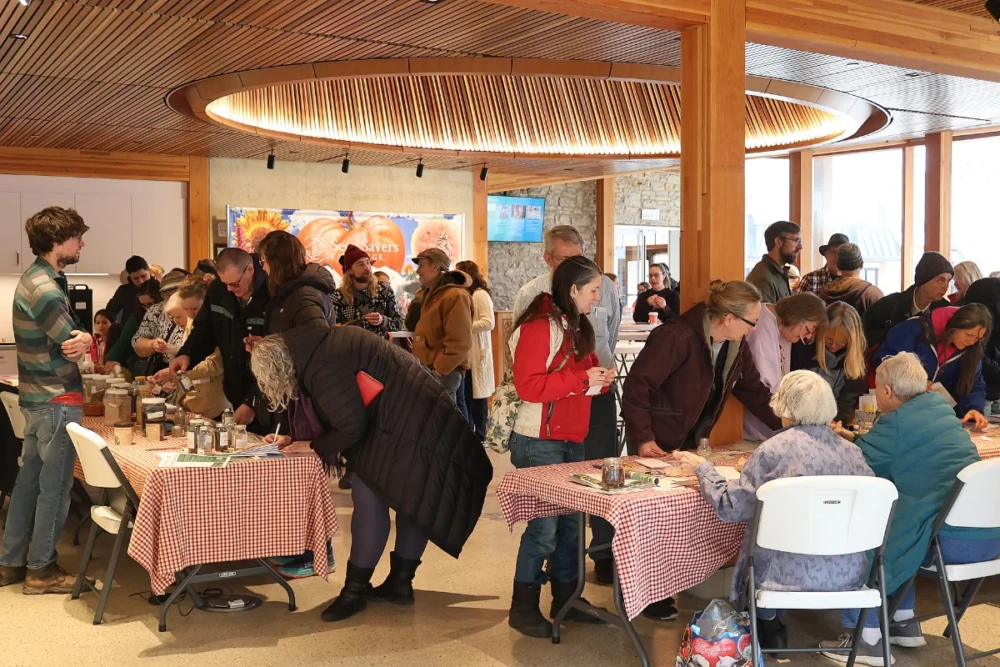
On the last Saturday in January, the Vesterheim Norwegian-American Museum in Decorah, Iowa, became a vibrant hub for agricultural preservation as Natalie Aird and Josie Flatgard meticulously arranged an array of open-pollinated and heirloom seeds for National Seed Swap Day. Tables throughout the historic venue showcased a diverse collection, from packets of grayish-brown French Breakfast radish seeds and delicate arrow-shaped Prairie Blazing Star wildflower seeds to a large glass jar brimming with pink-speckled Mayflower bean seeds. This meticulously organized display by Seed Savers Exchange representatives set the stage for an event that underscores a crucial movement in modern agriculture: the grassroots effort to reclaim and protect invaluable seed diversity.
Hours later, the museum buzzed with activity as farmers, enthusiastic children, dedicated plant enthusiasts, and community gardeners streamed in, shaking snow from their boots. They fanned out across the room, eager to contribute their own genetic treasures—spiky marigold seeds, glossy multi-colored flint corn, flat squash seeds, and tiny round broccoli seeds—and, crucially, to acquire new varieties for their own gardens and farms. This annual exchange is more than a simple transaction; it is a vital act of communal stewardship, fostering resilience in local food systems and safeguarding agricultural heritage.
The Imperative of Seed Diversity in a Changing World
The significance of events like the Decorah seed swap is magnified by a stark reality: the alarming decline in global seed diversity over the past century. Industrial agriculture, driven by the pursuit of uniformity, high yield, and patentable hybrid varieties, has inadvertently led to a catastrophic loss of genetic material. Estimates suggest that the United States alone lost a staggering 93 percent of its seed diversity between 1903 and 1983. This dramatic reduction in genetic breadth leaves agricultural systems vulnerable to pests, diseases, and the unpredictable impacts of climate change, compromising food security for future generations.
Open-pollinated and heirloom seeds stand in stark contrast to the dominant hybrid varieties. Open-pollinated seeds are those that are naturally pollinated by insects, birds, wind, or human intervention. Crucially, they "breed true to type," meaning that seeds saved from an open-pollinated plant will produce offspring with characteristics identical to the parent plant. This genetic stability is fundamental to seed saving and adaptation. Heirloom seeds are a specific category of open-pollinated varieties that have been passed down through generations, often for 50 years or more, carrying with them not just genetic information but also rich cultural and historical narratives.
Ira Wallace, often celebrated as "the godmother of Southern seeds" and a member of Southern Exposure Seed Exchange, a worker-run cooperative dedicated to preserving open-pollinated varieties adapted to the Southeast, articulates the broader implications: "Seed swaps are one of the activities that pulls people back into maintaining seeds themselves and not having all the controls be by big multinational companies offering a more limited range of what type of seeds and food is available to you." Her statement highlights the economic and political dimensions of seed control, where a handful of multinational corporations increasingly dominate the seed market, narrowing choices for farmers and gardeners.

Seed Savers Exchange: A Legacy of Preservation
The Decorah event was orchestrated by Natalie Aird, Seed Savers Exchange’s inventory coordinator, and Josie Flatgard, the exchange coordinator. Based in Decorah, Iowa, Seed Savers Exchange is a venerable nonprofit with a profound dedication to preserving heirloom seeds, plants, and their associated stories. Founded in 1975 by Kent Whealy and Diane Ott Whealy, the organization began with a small collection of just 15 varieties of heirloom seeds, primarily from their grandparents’ gardens. Today, its vast collection at the Heritage Farm in Decorah safeguards over 20,000 rare, open-pollinated varieties of vegetables, fruits, and other plants, making it one of the largest non-governmental seed banks in the United States.
Seed swaps are a direct extension of Seed Savers Exchange’s mission, serving as critical touchpoints for sharing their extensive collection and specialized knowledge with the broader community. These free events provide a unique platform for participants to exchange their own seeds and plants, alongside invaluable stories, traditional recipes, and practical growing tips. This communal exchange of information and genetic material reinforces the network of grassroots seed savers, empowering individuals to become active participants in agricultural biodiversity.
One compelling example of an heirloom’s journey is the "Angelica’s Little Diablo" pepper. This spicy pepper variety was brought to the United States in the 1970s from Oaxaca, Mexico, by Angelica and her mother, whose family had cultivated it for over a century. Angelica later shared these precious seeds with gardener Norma Ortiz, who, in turn, donated them to the Seed Savers Exchange around 2020. Since then, "Angelica’s Little Diablo" has proliferated in home gardens, a testament to the power of community sharing and the enduring legacy of heirloom varieties. Each seed carries a story, a history of human cultivation, adaptation, and cultural significance.
The Mechanics and Momentum of Community Swaps
Seed and plant swaps are intentionally designed to be inclusive, welcoming participants regardless of their gardening or seed-saving experience. Beginners are not required to bring anything, making these events an accessible entry point into the world of sustainable gardening. Aird and Flatgard often ensure a plentiful supply of popular, easy-to-save crops like beans, tomatoes, cucumbers, squash, and radishes, which are ideal for newcomers. Flatgard recalls with enthusiasm, "It’s so cool to see people nerd out about seeds. The little kiddos were so excited to be involved." This intergenerational engagement is crucial for passing down essential knowledge and fostering a love for gardening and conservation.
The ripple effect of these events is profound. A memorable instance involved a young family, new to seed saving, who enthusiastically selected several beginner-friendly varieties, including cowpeas—a delicious, drought-tolerant, and easy-to-grow legume. "Lo and behold, we saw them again in August when we had another swap," Aird recounted. "They had grown the cowpeas, saved the seeds, and brought them to share with other gardeners. It was a full-circle moment. This is the whole point of us sharing the seeds: So people can grow them out, enjoy them, and then bring the extras to share." This anecdote perfectly encapsulates the self-sustaining nature of seed swaps and their ability to cultivate new generations of seed stewards.
While organizations like Seed Savers Exchange and Southern Exposure Seed Exchange offer extensive experience and vast collections, both are firm advocates that anyone can initiate and run a successful swap in their local community. Indeed, this decentralized model has led to an explosion of such events. Today, hundreds to thousands of seed and plant swaps take place across the United States each winter and spring, many of which began as small, grassroots community gatherings. These events thrive on human connection, as Flatgard aptly notes, "Seed swaps are such a special way to join in community with other gardeners, farmers, and fellow seed savers."

Establishing a Thriving Community Seed Swap
For those inspired to cultivate seed diversity in their own locales, establishing a community seed swap involves several key steps:
Gathering the Seeds
The foundation of any successful swap is, naturally, the seeds themselves. Ira Wallace advises organizers to reach out to local seed companies, established seed-saving groups, or gardening clubs in the fall or early winter. These organizations can often provide initial seed donations and, importantly, send speakers to deliver educational presentations on the fundamentals of seed saving. "I like to arrange it so that someone at the beginning talks a bit about seed saving and how it can give you personal independence and the possibility of carrying family heirlooms into the future," Wallace emphasizes, highlighting the empowering aspect of the practice.
A powerful example of family heirloom preservation is Southern Exposure’s flagship tomato, Radiator Charlie’s Mortgage Lifter. M.C. Byles, known as "Radiator Charlie," bred this resilient tomato variety in the 1930s, ultimately selling seedlings in the 1940s to pay off his mortgage during the Great Depression. Its story embodies resilience and the tangible benefits of seed saving. To ensure a robust collection, Aird encourages organizers to solicit donations from small seed companies or local nurseries. Any surplus seeds, especially from large donations, can be directed to community gardens or local sustainable agriculture nonprofits, extending the reach of the swap’s benefits.
Finding the Site
Securing an accessible and appropriate venue is crucial. Seed Savers Exchange, leveraging its established partnerships, utilizes larger institutions such as the Vesterheim Museum or its own Seed Savers Heritage Farm in Decorah. They also collaborate with entities like PBS Wisconsin for swaps in Madison. For smaller, community-led initiatives, a wealth of local organizations can provide space: public libraries, churches, farmers’ markets, food co-ops, master gardener groups, and community gardens. These venues often serve as natural gathering points and can help promote the event. Additionally, valuable resources and guidance for organizing swaps can be found on the websites of Southern Exposure Seed Exchange and Seed Savers Exchange, as well as in foundational books like Seed to Seed by Suzanne Ashworth and Seedswap: The Gardener’s Guide to Saving and Swapping Seeds by Josie Jeffery.
Setting and Sharing Guidelines
While seed swaps vary in their format, establishing clear guidelines is paramount for a smooth and successful event. Some swaps encourage direct interaction, with participants sitting beside their offerings to share information and monitor exchanges. Others adopt a less formal approach, with seeds and plants spread on communal tables for selection.
Seed Savers Exchange strongly recommends transparent guidelines regarding the types of seeds and plants participants may bring. They typically encourage open-pollinated seeds, locally saved varieties, excess purchased seeds, and donated seeds from reputable companies. Conversely, they advise against bringing seeds or plants that are illegal (federally or state-specific), genetically engineered (GMOs), F1 hybrids, poisonous, noxious, controlled, or patented varieties, or unknown seeds from volunteer plants.

The exclusion of F1 hybrids is particularly important. These are first-generation crosses from two distinct parent varieties. While F1 hybrids often exhibit desirable traits like uniformity and vigor (known as hybrid vigor), they do not produce "true to type" offspring in subsequent generations. Seeds saved from F1 hybrids will yield plants with inconsistent characteristics, undermining the goal of stable genetic preservation. Similarly, preventing the exchange of noxious or controlled plants, such as invasive species like kudzu or purple loosestrife, is vital for protecting local ecosystems. Organizers can consult state or federal agricultural agencies for comprehensive lists of such prohibited plants. Whatever rules are decided upon, they must be clearly communicated through promotional materials and reiterated in person at the event. Providing extra labeling supplies and examples of well-labeled packets encourages proper documentation. "For people I know are coming, I like to send them a little sheet in advance about how to label their seeds," Ira Wallace suggests, underscoring the importance of preparation. A good starting point is around 25 seeds per packet, labeled with the variety name, date grown, grower’s information, location, and any unique growing tips.
Setting a Date and Promoting Your Event
Once a location and partners are secured, setting a date and promoting the event extensively are the next steps. Advertising at least a month in advance maximizes participation. Winter swaps are ideal for seeds that require early indoor starting, such as peppers and tomatoes. Spring swaps are better suited for trading plants that can be transplanted immediately. Leveraging community partners’ social media networks and local gardening groups is highly effective. Traditional flyers posted at food co-ops, health food stores, community gardens, libraries, and bulletin boards also remain valuable promotional tools.
Hosting Your Swap
On the day of the event, the physical setup should facilitate both educational components and social interaction. If a presentation is planned, dedicate a comfortable space for it, while also ensuring easy access to seed tables for those not attending. Creating a welcoming atmosphere is key; offering snacks and drinks, perhaps through a budget-friendly potluck, encourages participants to relax, connect, and share stories, strengthening the community bonds that are central to these events.
Staying Connected and Building a Movement
Organizing a single seed swap is a commendable start, but sustained engagement is vital for cultivating a thriving plant community. Hosting an annual swap at a consistent location fosters predictability and encourages participants to proactively save seeds throughout the growing season, knowing they have a dependable venue for exchange. The story of the young family and their cowpeas is a powerful testament to this long-term vision. Their return, having successfully grown and saved seeds from the cowpeas they acquired, perfectly illustrates the full-circle journey of seed stewardship. It is through these continuous cycles of planting, harvesting, saving, and sharing that the profound work of preserving agricultural biodiversity truly flourishes, ensuring that a rich tapestry of plant life endures for generations to come.