admin
admin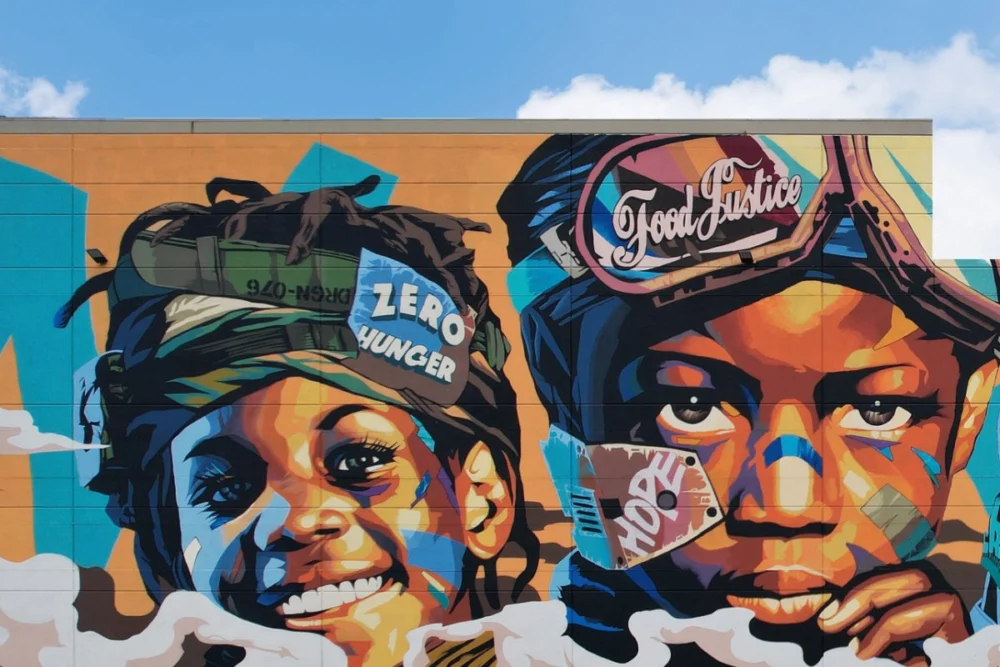
The food justice movement, which has its roots firmly planted in the transformative social movements of the 1960s, has consistently championed comprehensive reform of the food system and advocated for improved dietary health across communities. This established movement, represented by influential organizations such as the HEAL Food Alliance, Community Food Advocates, Food Chain Workers Alliance, and the National Black Food and Justice Alliance, has pursued broad objectives. These include fostering greater collective power to shape food policies, advocating for sustainable food and farming practices to mitigate pollution and carbon emissions, and ensuring equitable access to healthier food choices, particularly for people of color. Alongside these national efforts, local campaigns have secured tangible victories, such as implementing healthier and free school lunch programs for all children and enhancing job benefits for low-wage food workers, who often operate at the front lines of a demanding industry.
However, a new and rapidly growing phenomenon, referred to as the MAHA movement, has emerged, presenting both striking commonalities and profound divergences with the established food justice paradigm. While both movements articulate similar critiques of the prevailing U.S. food system and its detrimental effects on public health, their foundational philosophies, proposed solutions, and evidentiary standards differ significantly. This complex landscape has prompted calls for food justice advocates to develop a clearer understanding of these overlaps and divergences, urging a more defined strategy for interaction with MAHA, discerning which of its messages to amplify and which to subject to critical public discourse. The prevailing sentiment among some analysts is that successful movements bolster their influence by attracting new constituencies toward shared objectives, suggesting that the potential for forging a shared action plan, despite inherent risks, warrants serious exploration.
The Enduring Legacy of the Food Justice Movement
The food justice movement is a critical offshoot of broader civil rights, environmental justice, and labor movements, recognizing that food access, quality, and production are inextricably linked to social equity and systemic power structures. Its genesis in the 1960s marked a shift from simply addressing hunger to interrogating the root causes of food insecurity and diet-related diseases, particularly within marginalized communities. Proponents argue that the industrial food system disproportionately impacts communities of color and low-income populations, contributing to "food deserts"—areas with limited access to affordable, nutritious food—and "food swamps"—areas saturated with unhealthy, processed options.
Organizations like the HEAL Food Alliance advocate for a holistic transformation of the food system, emphasizing ecological sustainability, fair labor practices, and community self-determination. The Food Chain Workers Alliance champions the rights of the millions of individuals who harvest, process, distribute, prepare, and serve food, many of whom face low wages, hazardous working conditions, and limited benefits. Their work directly addresses the economic inequities embedded within the food supply chain. Meanwhile, the National Black Food and Justice Alliance focuses on reclaiming Black food sovereignty, advocating for land access, sustainable farming, and culturally relevant food systems as a means of achieving racial and economic justice. These efforts are often underpinned by extensive academic research and community-based participatory studies, forming an evidence base that informs policy recommendations aimed at systemic change rather than merely individual behavioral adjustments.
Key achievements of the movement underscore its impact:
- Healthier School Meals: Campaigns have successfully pushed for federal and local policies to improve the nutritional content of school lunches, recognizing the vital role schools play in the health of children, particularly those from low-income households. Data from the Centers for Disease Control and Prevention (CDC) consistently show that access to healthy school meals can significantly reduce rates of childhood obesity and improve overall student health outcomes.
- Worker Protections: Advocacy has led to increased minimum wages, better benefits, and improved working conditions for food service and agricultural workers, challenging the notion that cheap food must come at the expense of human dignity. The Economic Policy Institute frequently highlights the precarious financial situation of many food chain workers, making these gains critical for economic justice.
- Addressing Food Apartheid: Local initiatives work to dismantle systemic barriers to healthy food access, promoting community gardens, farmers’ markets in underserved areas, and policies that incentivize grocery stores to open in food deserts.
The MAHA Movement: A New Contender with Diverse Roots
In contrast to the long-standing, institutionally focused food justice movement, the MAHA movement appears to be a more recently galvanized force, characterized by a broad and sometimes contradictory coalition of interests. While the exact origins of the MAHA acronym are not detailed in the available information, its public profile has surged, particularly in recent years. This movement shares the food justice movement’s fundamental concern that the current U.S. food system contributes significantly to poor health outcomes, positioning the nation unfavorably against other developed countries in terms of diet-related chronic diseases, obesity, and preventable illness. Both camps agree that the aggressive profit-seeking and marketing strategies employed by food and beverage corporations, fast-food chains, and marketers actively exacerbate these public health crises. They also find common ground in demanding changes to marketing practices, particularly those targeting children, and advocating for stricter limits on chemicals, artificial dyes, and additives in food products. Furthermore, both movements see value in reforming school food regulations and federal food assistance programs as avenues for improving diets and health nationwide.
However, the MAHA movement’s composition and operational tactics set it apart. It encompasses a wide array of stakeholders, from genuinely concerned activist parents striving to improve school food and reduce pesticide exposure, to prominent wellness industry influencers and entrepreneurs like Calley and Casey Means, and even politically charged figures associated with anti-vaccination sentiments. Notably, the movement has attracted significant political and corporate backing, including figures like former President Donald Trump and Robert F. Kennedy Jr., who has been appointed Secretary of Health and Human Services.
The financial muscle behind MAHA is substantial, as evidenced by its super-PAC, the MAHA Alliance. In 2024, the largest contributor to this PAC was Elon Musk and his SpaceX, collectively donating a reported $6 million. This year, the MAHA Center, led by Tony Lyons, a significant financial supporter of RFK Jr.’s presidential campaign, reportedly funded the controversial $8 million Mike Tyson "Eat Real Food" Super Bowl advertisement. This high-profile, celebrity-backed campaign aimed to promote healthier eating choices, reflecting MAHA’s strategy of leveraging public figures and large-scale media campaigns to disseminate its message. This blend of grassroots parental activism, wellness entrepreneurship, political endorsement, and billionaire funding creates a "big lumpy tent" that, as food writer Michael Pollan observed of earlier food movements, can sometimes lead to factions working at cross-purposes.
Navigating the Ideological Divide: Collective vs. Individual Responsibility
The most significant ideological chasm between the food justice and MAHA movements lies in their fundamental approach to addressing food and health problems. Food justice activists primarily emphasize the imperative for collective and public action, viewing systemic inequities in healthy food access as a top priority. They posit that profit-driven markets are a core driver of the nation’s food and health crises, necessitating regulatory interventions, public investment, and structural reforms to ensure equitable outcomes. Their focus is on dismantling oppressive systems that deny certain populations access to nutritious food and fair wages.
In stark contrast, MAHA followers predominantly underscore the importance of individual and parental responsibility for diet and health. While acknowledging external factors, their messaging often places the onus on personal choices, even for disadvantaged individuals. Furthermore, while the food justice movement critiques the inherent flaws of profit-driven markets, many MAHA leaders—though perhaps not all rank-and-file supporters—tend to endorse market-based solutions. This often translates into advocating for consumer choice, encouraging companies to voluntarily adopt healthier practices, or supporting new market entrants in the wellness sector, rather than advocating for stringent government regulation.
The Epistemological Conflict: Science vs. Narrative
Another critical point of divergence is the movements’ approach to evidence and policy-making. The food justice movement and the broader scientific community largely rely on established scientific processes, peer-reviewed research, and data from independent investigators as the basis for policy recommendations. This includes extensive epidemiological studies, nutritional science, and public health research.
The MAHA movement, however, often expresses a deep distrust of established science and, by extension, the institutions that uphold it. Instead, it frequently champions personal narratives and the "lived experience" of individuals, particularly "mom influencers," as valid forms of evidence. This approach often involves disseminating information gathered by non-mainstream investigators or promoting anecdotal accounts over rigorous scientific consensus. By doing so, MAHA taps into a broader public skepticism toward institutional authority and mainstream scientific narratives, a phenomenon that has gained traction in recent years amidst concerns about corporate influence in research and perceived failures of public health institutions. This reliance on alternative sources of information poses a substantial challenge for any potential collaboration, as shared policy goals typically require a shared understanding of what constitutes credible evidence.
The Call for Dialogue: Opportunities and Perils
Despite these profound differences, a compelling argument is being made for food justice advocates to actively engage with MAHA activists. The rationale is strategic: to build power, movements must expand their constituencies and forge alliances where common goals exist. Analysts suggest that the potential for a shared action plan, even if limited, is worth pursuing. To this end, six specific actions have been proposed for food justice advocates:
- Talk to MAHA activists: Create structured forums and spaces for open, respectful discussion of commonalities and differences, free from insult or disrespect. This initial dialogue is posited as a prerequisite for exploring shared objectives.
- Argue with respect: Acknowledge the inherent risks in attempting to collaborate with MAHA supporters. While some differences may remain irreconcilable, necessitating "agreeing to disagree," others may require forceful, public debate. The key is to maintain a focus on common goals and conflicting values, listening carefully to MAHA arguments to better understand their worldviews and identify opportunities for joint action.
This approach echoes Michael Pollan’s observation that the food movement is a "big lumpy tent." While the MAHA movement is itself a heterogeneous entity—housing activist parents, wellness entrepreneurs, anti-vaxxers, and political figures—this very diversity could present an opportunity for strategic engagement. The question remains whether it is genuinely possible to build on commonalities given the deep ideological differences and the pervasive sectarianism and political polarization of the current era.
Implications and Future Challenges
The prospect of collaboration between the food justice and MAHA movements carries significant implications for public health, social justice, and political advocacy.
Potential Benefits:
- Broader Public Awareness: A united front, even on limited issues, could amplify messages about the need for food system reform, reaching new audiences that might not typically engage with traditional food justice advocacy.
- Increased Political Leverage: A larger, more diverse coalition could exert greater pressure on policymakers to enact changes related to school food, food additives, and corporate marketing practices.
- Shared Policy Wins: Focusing on areas of clear agreement, such as improving school lunch quality or reducing harmful chemicals in food, could lead to tangible legislative or regulatory victories benefiting a wider population.
Significant Risks and Challenges:
- Dilution of Core Message: Food justice advocates risk diluting their systemic critique and equity-focused message if they align too closely with a movement that prioritizes individual responsibility and market-based solutions.
- Legitimization of Misinformation: Engaging with a movement that distrusts established science could inadvertently lend credibility to anti-scientific narratives, potentially undermining public trust in evidence-based health policies.
- Internal Friction: The ideological chasm could lead to internal conflicts within any attempted alliance, making sustained, coherent action difficult.
- Co-option by Corporate/Political Interests: Given the significant corporate and political backing of certain MAHA factions, there’s a risk that food justice concerns could be co-opted or overshadowed by agendas driven by private interests or partisan politics. The influence of billionaires like Elon Musk and wellness entrepreneurs raises questions about whose interests will ultimately take precedence within the MAHA "tent."
- Damage to Credibility: Aligning with elements perceived as anti-science or politically extreme could damage the long-term credibility and public standing of the food justice movement.
The proposed engagement is a delicate balancing act. It requires food justice advocates to skillfully navigate a complex landscape, identifying genuine allies among MAHA’s diverse constituents while rigorously challenging narratives that undermine public health or perpetuate systemic inequities. The success of such an endeavor will depend on the ability to maintain intellectual integrity, uphold core values, and engage in dialogue that is both strategic and deeply principled. As the nation grapples with escalating public health crises linked to its food system, the strategic decision facing the food justice movement—whether and how to interact with the burgeoning MAHA movement—will undoubtedly shape the future trajectory of food advocacy in America.