admin
admin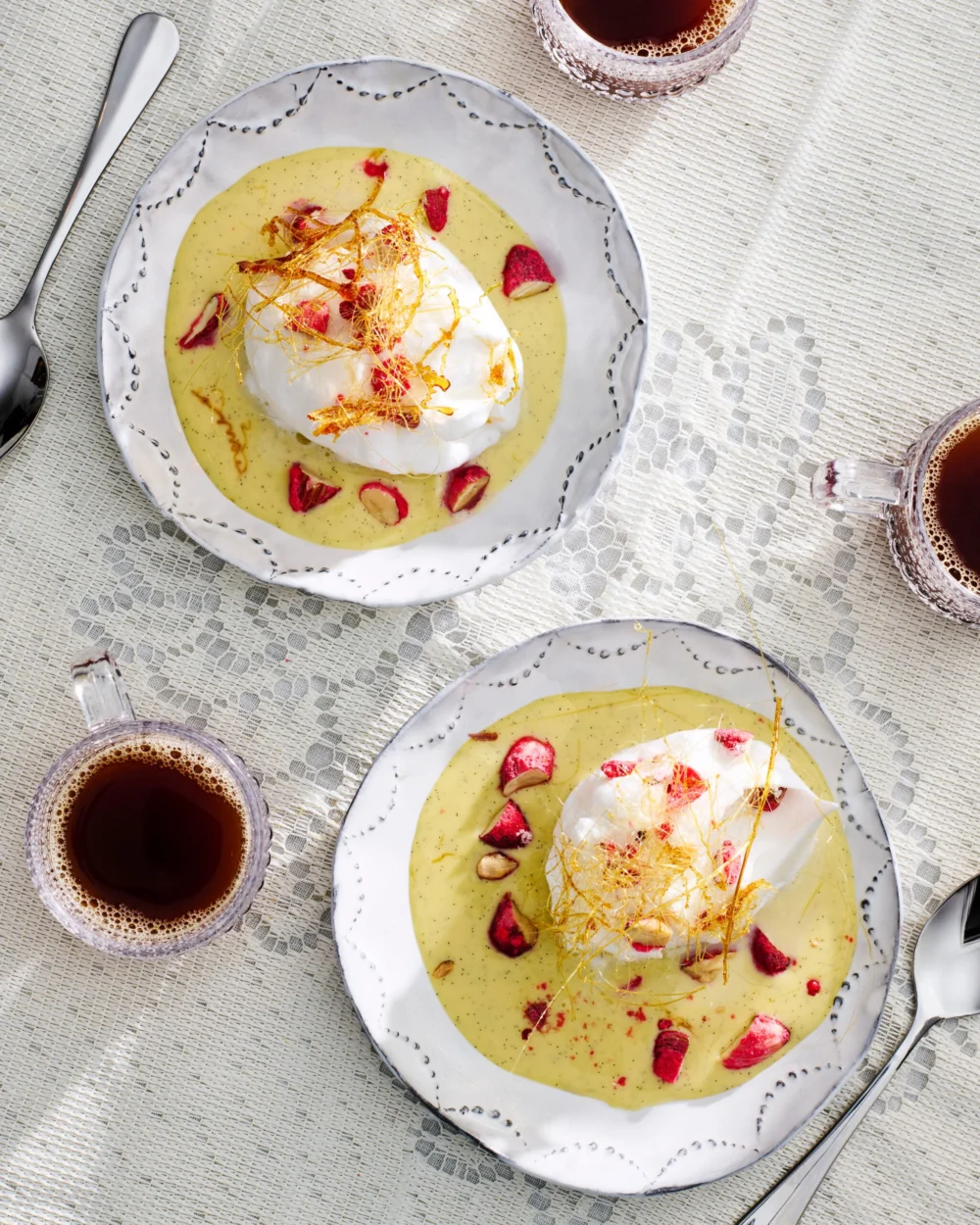
The delicate dance of transforming simple ingredients into an ethereal dessert was on full display this past week as culinary artisans showcased the intricate process of creating poached meringues, a technique that demands both patience and an unwavering commitment to precision. This culinary exploration, rooted in classic French patisserie, highlights a method that, while seemingly straightforward, requires a deep understanding of ingredient interactions and temperature control to achieve its signature lightness and nuanced flavor. The foundational element of this dessert is the crème anglaise, a custard sauce that serves as the creamy canvas upon which the meringue cloud rests. Its creation involves a careful tempering of egg yolks with hot milk, a process that, if rushed or improperly executed, can lead to a scrambled outcome rather than a silken texture.
The Genesis of Crème Anglaise: A Symphony of Simplicity
The journey begins with the meticulous preparation of the crème anglaise, a testament to the adage that the simplest ingredients, when handled with expertise, can yield extraordinary results. The process commences with heating milk infused with a vanilla bean, its fragrant essence slowly permeating the liquid as it approaches a gentle simmer. Concurrently, a separate bowl sees the whisking of sugar and cornstarch with egg yolks, creating a stable base for the forthcoming emulsion. The critical juncture arrives with the gradual incorporation of the hot milk into the egg yolk mixture, a process known as tempering. This slow addition of heat is paramount to prevent the delicate egg yolks from coagulating prematurely. Once tempered, the entire mixture is returned to the heat, where it is stirred continuously with a silicone spatula. The objective is to thicken the custard to a point where it coats the back of the spatula, a visual cue that signifies its readiness. This stage typically takes approximately fifteen minutes, a period demanding constant attention to ensure an even cooking and prevent scorching.
Halting the Cook and Enhancing the Flavor
Immediately following the thickening of the crème anglaise, the cooking process must be arrested with swift action. The hot custard is strained through a fine-mesh sieve into a bowl set within an ice bath. This rapid cooling not only halts the cooking but also ensures the custard remains smooth and free of any residual cooked egg bits. The scraped seeds from the vanilla bean pod are then stirred in, intensifying the aromatic profile, followed by the addition of cream, which lends richness and a velvety mouthfeel. The custard is then left to cool to room temperature, a brief ten-minute interlude before being transferred to the refrigerator. This preparation can be completed up to three days in advance, provided it is stored in an airtight container, underscoring the versatility of this foundational component.
The Art of the Poached Meringue: A Delicate Transformation
The true artistry unfolds with the creation of the poached meringues. A poaching liquid is prepared by bringing milk, a portion of sugar, and a significant volume of water to a boil. The heat is then reduced to a medium-low simmer, maintaining a gentle warmth where the sugar can fully dissolve. This subtle poaching environment is crucial for the delicate transformation of the meringue.
Simultaneously, the meringue itself is crafted. Egg whites are beaten with cream of tartar, an acidic stabilizer that aids in creating a robust foam. As soft peaks begin to form, sugar is gradually introduced, first a small amount to incorporate and then the remainder, beaten until stiff, glossy peaks are achieved. This stage signifies the successful aeration and stabilization of the egg white protein structure.
The meringue is then carefully portioned, often into half-spheres or quenelles, using a measuring cup or spoon. These delicate dollops are gently introduced into the simmering milk mixture. The poaching process, lasting between three to four minutes, allows the meringues to firm up on the exterior while retaining their airy interior. They are then carefully removed with a slotted spoon, blotted to remove excess moisture, and set aside. This method of poaching, a less common but highly effective technique for meringue, results in a unique texture that is both tender and yielding, a stark contrast to the often brittle nature of baked meringues.
The Alchemical Creation of Spun Caramel
The final flourish in this culinary composition is the spun caramel, a testament to the transformative power of heat on sugar. This intricate process begins with inverting a heatproof bowl onto a suitable surface and lightly greasing its underside. Sugar and a small amount of water are combined in a pot and brought to a boil over medium-high heat. The critical step here is to avoid stirring; instead, the inside of the pot is wiped down with water to prevent sugar crystallization. The sugar syrup is cooked until it achieves a deep amber hue, a visual indicator of its caramelization. The pot is then gently swirled off the heat to slightly thicken the caramel. The true artistry lies in the drizzling: using a spoon or the tines of a whisk, the molten caramel is rapidly and carefully drizzled over the inverted bowl, creating incredibly fine threads. The caramel sets almost instantly, forming a delicate, edible nest. This process requires speed and dexterity, as the caramel can quickly become too stiff to work with. The spun caramel, once formed, is transferred to a dry plate and can be re-melted once or twice if it solidifies prematurely.
The Grand Finale: Assembly and Presentation
The culmination of these meticulously prepared elements occurs in the final assembly. The chilled crème anglaise is divided among six shallow bowls, forming the luxurious base. Two poached meringues are then carefully placed atop the custard, their ethereal lightness a visual counterpoint to the creamy sauce. A sprinkle of praline roses adds a textural crunch and a floral note, while the nest of spun caramel provides a dramatic, architectural element and a delightful crispness. The dessert is then served immediately, allowing diners to experience the harmonious interplay of textures and flavors – the smooth, cool custard, the tender, airy meringue, the sweet crunch of the praline, and the delicate crispness of the caramel.
The Culinary Context and Historical Significance
The preparation of poached meringues, as demonstrated, is not merely a recipe; it is a culinary discipline that speaks to a broader history of dessert making. While baked meringues have been popular for centuries, dating back to the 17th century, the technique of poaching them is a more nuanced approach, often employed to achieve a specific, melt-in-your-mouth texture. This method, while less common in home kitchens, is a staple in professional patisseries where precision and control over texture are paramount. The crème anglaise itself is a cornerstone of French patisserie, a versatile sauce used in countless desserts, from trifles to crème brûlée. Its preparation requires a fundamental understanding of custard science, a knowledge base that has been passed down through generations of chefs.
The use of milk as a poaching liquid for meringues is an interesting deviation from traditional water-based poaching. Milk, with its fat content and proteins, contributes a subtle richness and can aid in creating a more tender meringue. This choice reflects an evolution in culinary techniques, seeking to enhance both flavor and texture through thoughtful ingredient selection.
Industry Observations and Expert Commentary
Chefs and culinary instructors who practice and teach these techniques often emphasize the educational value of such detailed preparations. "Mastering the crème anglaise is about understanding emulsification and heat transfer," noted Chef Antoine Dubois, a veteran pastry instructor at the renowned Le Cordon Bleu Paris. "It’s a foundational skill that unlocks a world of possibilities. The poached meringue, in particular, challenges the baker to think beyond the oven, to control texture through immersion and gentle heat. It’s a more refined approach, yielding a result that is incredibly delicate and satisfying."
The emphasis on precision in each step, from tempering the eggs to the rapid cooling of the custard and the careful poaching of the meringue, underscores a commitment to quality that defines high-level patisserie. The spun caramel, too, is an example of transforming a simple ingredient through a dramatic physical change, requiring both technical skill and an artistic eye.
Broader Implications and Culinary Trends
The continued exploration and appreciation of classic techniques like poached meringues can be seen as a counter-trend to the rapid innovation and often deconstructed nature of modern gastronomy. While avant-garde techniques have their place, there is a growing resurgence of interest in perfecting and understanding the origins of beloved desserts. This focus on foundational skills ensures that culinary heritage is preserved and appreciated, while also providing a solid grounding for future innovation.
The meticulous nature of this dessert preparation also speaks to a broader societal appreciation for craftsmanship and slow food principles. In an era of instant gratification, the deliberate and time-consuming process involved in creating such a dessert highlights a value placed on skill, patience, and the inherent beauty of transforming raw ingredients into something extraordinary. The ability to execute such a dessert flawlessly can be seen as a mark of culinary sophistication, both for the creator and the consumer.
The inherent challenges in achieving the perfect crème anglaise and the delicate balance required for the poached meringue mean that this dessert is not commonly found on every menu. Its presence often signifies a restaurant or establishment dedicated to a high standard of pastry, where the execution of classic techniques is a point of pride. As culinary education continues to evolve, the emphasis on these fundamental skills remains critical, ensuring that future generations of chefs possess the knowledge and dexterity to create desserts that are not only delicious but also deeply rooted in culinary history and artistry. The poached meringue, therefore, stands as a beacon of this enduring culinary tradition, a testament to the power of precision, patience, and the timeless allure of expertly crafted sweets.