admin
admin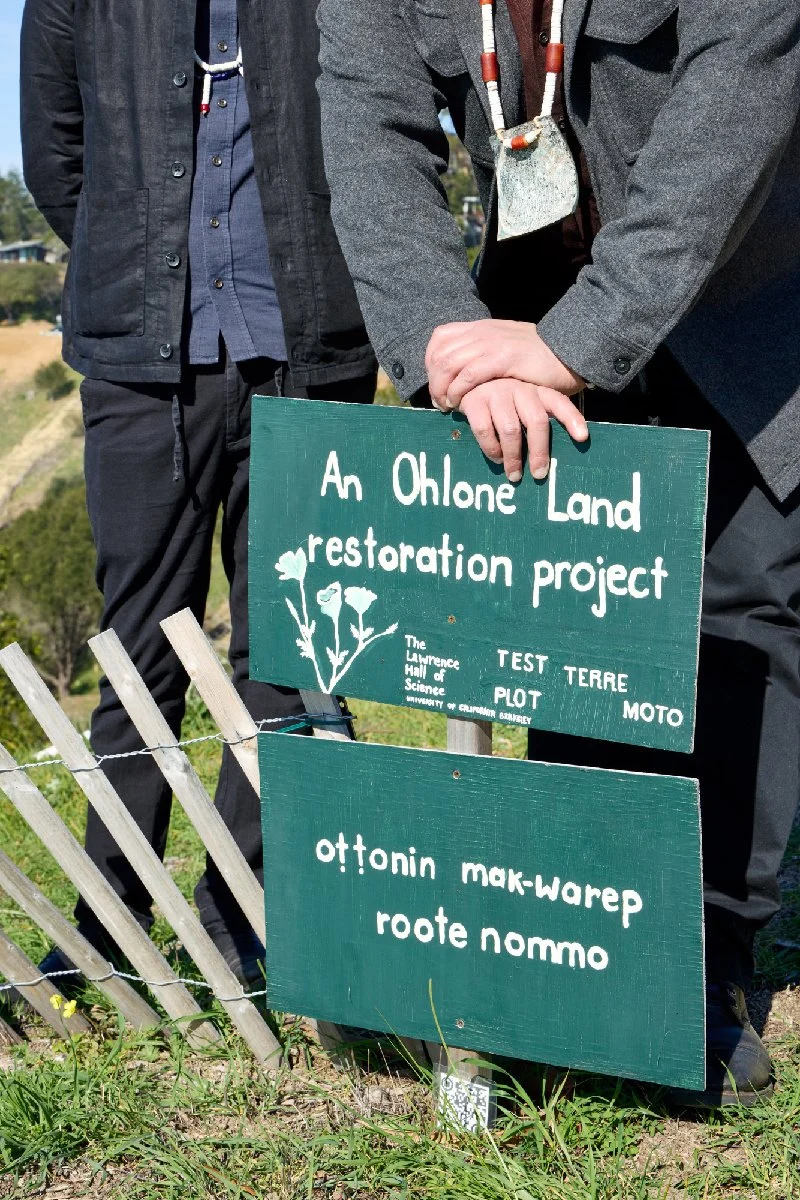
In a powerful testament to resilience and cultural revitalization, Ohlone leaders Vincent Medina and Louis Trevino are spearheading a multifaceted initiative to reclaim their heritage, land, and culinary traditions in the San Francisco East Bay. Through their groundbreaking ammatka Cafe at the University of California, Berkeley's Lawrence Hall of Science, the mak-amham food program, and the mak-waré p Ohlone Land Conservancy, Medina and Trevino are not only reintroducing ancient flavors but also actively correcting historical narratives and fostering institutional reconciliation. Their work directly confronts a century-old declaration by UC Berkeley that the Ohlone people were "extinct," demonstrating the vibrant and enduring presence of a culture that has thrived in its homeland for millennia.
A Partnership Forging Repair: The ottoy Initiative andammatka Cafe
The ammatka Cafe, which translates to "the dining room" in the Chochenyo language, is a cornerstone of the broaderottoy initiative, meaning "to repair." Situated high in the East Bay hills at the Lawrence Hall of Science, the cafe symbolizes a pivotal moment in the relationship between the Ohlone people and UC Berkeley. For decades, the university’s anthropology department, under figures like Albert Kroeber, played a direct role in the marginalization and dispossession of the Ohlone by declaring them "extinct for all practical purposes" in 1925. This erroneous declaration had devastating consequences, leading to the denial of federal recognition, federal funding, and critical land rights for the Ohlone people.
Today, the ottoy initiative seeks to acknowledge and rectify this historical harm. It encompasses various efforts, including exhibits within the museum, other campus-wide initiatives, and partnerships concerning university-associated land tracts. The central mission is to build knowledge of and respect for the living Ohlone culture, affirming their rightful presence in a region from which they were systematically erased in official narratives. Theammatka Cafe, with its panoramic views of the East Bay hills, flatlands, and the San Francisco Bay, serves as an immersive classroom. Diners are invited to connect with the landscape, understanding its rich biodiversity and the deep, enduring relationship the Ohlone people have maintained with it for thousands of years.
Vincent Medina, an Ohlone from halkin in the San Francisco East Bay, grew up in his ancestral homeland, where his family’s roots run generations deep. His partner, Louis Trevino, also Ohlone from the East Bay, shares this profound connection, dedicating himself to Medina’s vision for their people and land. Their joint leadership is critical to the success of these reparative endeavors.

Chronology of Dispossession and Resilience
The Ohlone people, a collective term for approximately 50 distinct tribal groups, have inhabited the region from the San Francisco Bay to the lower Salinas Valley for at least 10,000 years. Their history is one of sophisticated ecological stewardship, rich cultural practices, and profound resilience in the face of relentless colonial pressure.
- Pre-Contact Era (Before 1769): Ohlone communities flourished, maintaining a sustainable relationship with their environment through practices like controlled burns and careful resource management, leading to extraordinary biodiversity and abundance. Historical accounts and archaeological evidence indicate robust populations and intricate social structures.
- Spanish Mission Period (1769-1834): The arrival of Spanish missionaries initiated a period of forced conversion, labor, and cultural suppression. Ohlone people were forcibly removed from their lands and confined to missions like San Jose and Dolores, leading to devastating population declines due to disease, violence, and cultural disruption. Despite this, many cultural practices and knowledge systems were secretly preserved.
- Mexican Rancho Period (1821-1848): Following Mexico’s independence from Spain, the rancho system further dispossessed Indigenous communities of their ancestral lands, with large tracts granted to Mexican citizens.
- California Gold Rush and State-Sanctioned Genocide (1848 onwards): The discovery of gold triggered an immense influx of non-Native settlers, leading to widespread violence against Indigenous populations. Peter Burnett, California’s first American governor, infamously stated in 1851 that "a war of extermination will continue . . . until the Indian race became extinct." This period saw the legalization of genocide against California Indians, accelerating the displacement and decimation of Ohlone communities.
- Verona Band and Land Rights (1860s-1927): Amidst this violence, Medina’s family sought refuge in the interior valleys of Sunol, approximately 35 miles southeast of Berkeley, successfully securing land rights as the Verona Band of Alameda County. This period, from the 1860s to the late 1920s, allowed for a continued flourishing of traditional culture.
- The Morrill Act and UC Berkeley’s Founding (1862, 1868): The Morrill Act of 1862 established land-grant institutions by allocating federal lands to states for the creation of colleges focused on agriculture and mechanical arts. Much of this "federal land" was unceded Indigenous territory. UC Berkeley, founded in 1868, directly benefited from this system, further entrenching the dispossession of Indigenous peoples like the Ohlone.
- Kroeber’s Declaration of Extinction (1925): In a calamitous blow, Albert Kroeber, the first head of anthropology at UC Berkeley, declared the Verona Band "extinct for all practical purposes." This academic pronouncement, made in 1925, was instrumental in the subsequent loss of federal recognition and land rights for the Ohlone people two years later, effectively erasing their legal existence.
- Modern Re-emergence and Advocacy (2017-Present): Despite these systemic efforts at erasure, Ohlone culture persisted through the tenacity of generations. In 2017, Medina and Trevino launched mak-`amham, leading to the current initiatives at UC Berkeley, marking a century after Kroeber’s declaration.
The Landscape as a Living Story: East Bay’s Abundance
The natural environment of the East Bay is central to the Ohlone narrative. Before colonization, the bay shore teemed with life: Olympia oysters, California mussels, abalone, Washington clams, and vast sea otter colonies. White sand dunes interspersed with pickleweed marshes and tiny red California beach strawberries dotted the coastline, while gray whales and salmon moved through the Golden Gate. These narratives, passed down through generations, paint a picture of an extraordinarily rich ecosystem.
Moving inland, willow thickets provided materials for the exquisite baskets for which Ohlone people are renowned. Redwood forests offered a bounty of mushrooms like chanterelles, porcini, and candy caps. The interior valleys were dominated by oaks, providing acorns, the staple food. Mount Diablo, the mountain of Ohlone creation, rises majestically, symbolizing the spiritual connection to the land.
This relatively small geographical area supported immense biodiversity, a testament to thousands of years of Ohlone stewardship. Traditional ecological knowledge, including small, controlled burns, consistently regenerated plant communities, enriched the soil with ash, and fostered stronger, healthier ecosystems. This knowledge, passed down through the hardest times of colonization, has never been lost.

Mak-`amham: Rekindling Culinary Traditions
Medina and Trevino began their culinary journey in 2017 with mak-`amham, Chochenyo for "our food." This program was initially designed for the Ohlone community, offering cooking classes, gathering trips, dinners for elders, food deliveries, and language classes. The core motivation was to reconnect with "old-time knowledge and old-time taste preferences." Elders, who deeply missed the traditional foods made inaccessible by development, privatization, and gathering restrictions in park districts, became invaluable guides.
"Auntie Dottie," Medina’s 95-year-old great-aunt, vividly recalls a time when acorn, "the bread of life," was a staple at every family gathering. She spoke of delicate wild greens, layered with nuts, fruits, and berries to create rich, full flavors. Among these greens was rooreh, historically mislabeled as "miner’s lettuce." Medina championed changing this nomenclature, highlighting that Ohlone people had cultivated and consumed it for thousands of years, long before miners briefly adopted it. His advocacy, including a compelling video, led to the Jepson Herbarium officially changing the plant’s common name to rooreh, a significant act of decolonization in botanical classification.
Louis Trevino recounts Auntie Dottie’s experience growing up in Alvarado (now Newark/Union City) during the Great Depression. Despite the economic hardship, her mother’s knowledge of plants, mushrooms, and fruits ensured the family never felt a sense of lack. Their home became a haven where others could find a meal, demonstrating the communal spirit embedded in Ohlone foodways.
Historic records from the Sunol Rancheria in the 1920s further preserved Ohlone language, stories, and detailed recipes from the 1800s. These included acorn bread wrapped in sycamore leaves and muyyen, seed cakes made from toasted and ground chia, California amaranth, tarweed, and sometimes lupin seeds. These slender cakes, rich in good fats, protein, and fiber, showcased the diverse flavors of each seed—some tasting like anise, others like burnt popcorn—all complementing each other in an ultra-nutritious form.
The success of mak-amham led to the establishment of Cafe Ohlone in 2019, serving almost entirely pre-contact foods, which garnered national attention before closing in 2020 due to the pandemic. Their occasional seasonal restaurant,ottoytak, also at UC Berkeley near the Hearst Museum, continues to operate, alongside the new `ammatka Cafe.

`ammatka Cafe: Blending Tradition with the Contemporary
At `ammatka, the culinary team faces the challenge of standardizing traditional cooking methods. Elders often cook without precise measurements, relying on instinct and experience, such as Louis Trevino’s grandmother Mary Lou Yamas, who measures seasonings by the "size of the circle it makes" on her palm. The culinary directors are adapting these time-honored techniques for a modern cafe setting, while preserving the authentic flavors.
Ingredients are sourced from local markets and farms, augmented by an Indigenous garden co-led with the Native American Student Development center at UC Berkeley. This garden grows native onions, berries, and watercress specifically for the cafe.
While the original Cafe Ohlone focused on pre-contact foods, `ammatka Cafe embraces a "very 2026" (assuming a contemporary rather than future date) approach, integrating traditional ingredients into contemporary dishes. For instance, tater tots, popular with younger generations, are served with an herbed aioli featuring native tarragon, native onion, and sage, dried and made into a flour.
The menu also boasts an Ohlone salad, combining watercress from the Indigenous Garden with native onions, blackberries, gooseberries, dried California strawberries, edible flowers, pickleweed from the marshes, and purslane. A smoked-duck sandwich, honoring the traditional duck hunting practices of the bay shore, is paired with house-made rose-hip jam and Mt. Tam triple-cream cheese.
A popular item, Louis Trevino’s Ohlone brownies, exemplify this fusion. Developed for mak-`amham to introduce acorn, chia, and hazelnut flours to Ohlone youth, they initially included chocolate. Despite Trevino’s plans to phase out the chocolate, elders adored them, insisting they remain. This anecdote underscores a crucial philosophy: traditional and contemporary can coexist, reflecting a living culture that evolves on its own terms, rather than being frozen in time.

Mak-waré p Ohlone Land Conservancy: Restoring the Earth
Beyond food, Medina and Trevino are also leading the mak-waré p ("our land") Ohlone Land Conservancy, dedicated to restoring East Bay lands using traditional knowledge and land stewardship practices. This work is critical for ecological health and food sovereignty.
Current projects include planting three 1-acre gardens at the Russell Research Station in Lafayette: a basketry garden, a medicinal garden, and a culinary garden. These will provide readily available Ohlone foods and materials for the older generation, who deeply crave them.
The Conservancy is also actively developing its relationship with East Bay Regional Parks, advocating for full gathering permits and access throughout the park district—a significant step given that gathering in parklands was criminalized until recently. Collaborations with organizations like Hog Island Oysters and the Wild Oyster Project aim to restore native West Coast Olympia oysters within their lifetimes, revitalizing a historically abundant food source and ecological cornerstone.
Perhaps one of the most significant advancements is the return of cultural fire burns. After two generations, the Ohlone community conducted its first cultural burn last October (referring to a recent past year, e.g., 2023), working with Cal Fire to plan more. This ancient practice, which prevented overgrowth, enriched soil, and fostered biodiversity, was so effective that the Chochenyo language has no word for famine, but a word for abundance: yowwini.
Broader Implications and a Vision for the Future

The work of Vincent Medina and Louis Trevino carries profound implications, not just for the Ohlone people but for broader dialogues on Indigenous rights, environmental stewardship, and institutional reconciliation. Their initiatives highlight:
- Food Sovereignty: By re-establishing access to traditional foods and knowledge, they are empowering their community to control their own food systems, promoting health and cultural identity.
- Cultural Revitalization: The cafes, language classes, and land projects are breathing new life into Ohlone culture, ensuring its transmission to future generations and challenging historical narratives of extinction.
- Environmental Justice: The return of traditional land stewardship practices like cultural burns demonstrates the efficacy of Indigenous ecological knowledge in addressing contemporary environmental challenges, such as wildfire management and biodiversity loss.
- Institutional Accountability: UC Berkeley’s partnership in the `ottoy initiative sets a precedent for land-grant institutions and other entities to acknowledge past harms, engage in reparative action, and foster genuine partnerships with Indigenous communities. This partnership demonstrates a shift from declarations of extinction to active recognition and support.
- Economic Empowerment: Creating Ohlone-led businesses and land conservancies provides economic opportunities and self-determination for the community.
Medina and Trevino’s ultimate vision for an ideal food future involves policy changes that enable the reacquisition of land. Land ownership would allow for the full implementation of traditional stewardship practices, from cultural burns to irrigation and coppicing methods, ensuring the flourishing of diverse native plants.
Their aspiration is for the Ohlone people to be respected as a central force in the East Bay culinary landscape. They envision a future where, when people think of the East Bay, they immediately think of Ohlone cuisine, tasting the landscape through foods like chanterelles from redwood forests, pickleweed from the bay shore, and acorn from oak woodlands. This doesn’t seek to negate other culinary traditions in the cosmopolitan East Bay but to center the Indigenous, fostering an inherent acceptance of the Ohlone presence in their homeland. When place-based knowledge is tasted and celebrated, it uplifts culture, builds respect, and enriches everyone involved, Ohlone or not. The journey to repair, rooted in food and land, is a powerful demonstration of enduring strength and permanence.