admin
admin
The landscape of the Canadian craft beer industry is undergoing a profound transformation as Indigenous brewers and entrepreneurs navigate a fraught historical relationship with alcohol. This evolution, marked by both cultural controversy and economic empowerment, reached a pivotal moment in March 2021 with the launch of the "Celebrating Sisters" campaign. Spearheaded by the Indigenous Brew Crew (IBC), the initiative was designed to support Indigenous women through the medium of craft beer. However, the campaign’s reception highlighted a deep-seated divide within Indigenous communities, reflecting the enduring scars of colonial legislation and the ongoing struggle for self-determination in a sector from which Indigenous people were systematically excluded for over a century.
The 2021 Catalyst and the Dissolution of the Indigenous Brew Crew
The "Celebrating Sisters" campaign was intended as a celebration of Indigenous resilience and a fundraiser for social causes. It featured collaborations with artists such as Chief Lady Bird, an Anishinaabe creator who designed a beer label depicting a blackbird against a woodland backdrop. While the project received significant praise for its visibility and charitable goals, it also faced immediate and visceral backlash from members of the Indigenous community who viewed the promotion of alcohol as an affront to those suffering from intergenerational trauma.
Critics pointed to the devastating role alcohol has played in the colonization of North America, arguing that its presence in Indigenous spaces—even in a craft or artisanal context—remained too painful to reconcile. Chief Lady Bird and the IBC engaged in public discourse, acknowledging the difficulty of balancing cultural pride with the legacy of exploitation. Despite these efforts to foster dialogue, the controversy proved insurmountable for the collective. By late 2021, the IBC dissolved, and the campaign ceased, leaving a silence that many in the industry are now seeking to fill with more nuanced approaches to Indigenous representation and ownership.
A Century of Legislative Exclusion: The Indian Act and "Indian Beer"
To understand the current tension within the industry, it is necessary to examine the legal framework that governed Indigenous access to alcohol in Canada. The Indian Act of 1876 served as the primary vehicle for what the 2015 Truth and Reconciliation Commission (TRC) described as "cultural genocide." This legislation did more than just control land and identity; it specifically criminalized the possession and consumption of alcohol by Indigenous people.
Under Sections 94 through 103 of the Indian Act, it was illegal for "Indians" to purchase or consume liquor, and it was equally illegal for anyone to sell it to them. These prohibitions were framed by the Canadian government as protective measures, but in practice, they served to infantilize Indigenous populations and provide a pretext for increased policing and state intervention. During this era, non-alcoholic beer was often mockingly referred to as "Indian Beer," the only fermented beverage Indigenous people could legally obtain.

While the government enforced prohibition for Indigenous people, settlers frequently used alcohol as a tool for economic subversion. In the fur trade and land negotiations, alcohol was deployed to upend traditional Indigenous trading systems, often leading to cycles of dependency that were exacerbated by the trauma of the residential school system and the "Sixties Scoop." It was not until the mid-20th century, specifically through amendments to the Indian Act in 1951 and subsequent provincial changes into the 1980s, that Indigenous people were granted the same legal rights to consume and sell alcohol as other Canadian citizens.
The Modern Economic Context: Indigenous Entrepreneurship in Canada
Despite this dark history, Indigenous entrepreneurship is currently one of the fastest-growing sectors of the Canadian economy. According to data from the Canadian Council for Aboriginal Business (CCAB), there are more than 50,000 Indigenous-owned businesses in Canada, contributing over $30 billion annually to the national GDP. The craft beer industry, while a small subset of this growth, represents a significant move toward economic sovereignty.
Indigenous brewers today are increasingly asserting their right to participate in all sectors of the economy, rejecting the notion that their history with alcohol should preclude them from the business of brewing. This movement is supported by financial infrastructures such as Farm Credit Canada and the Manitoba Métis Federation, which provide the capital necessary for Indigenous entrepreneurs to compete in a capital-intensive industry.

Profiles in Sovereignty: Indigenous Leadership in Craft Beer
The emergence of Indigenous-owned breweries across Canada demonstrates a diverse range of philosophies regarding the intersection of culture and alcohol.
Locality Brewing and the Responsibility of Identity
Melanie MacInnes, a Métis woman and co-owner of Locality Brewing in Langley, British Columbia, exemplifies the internal conflict many Indigenous owners face. MacInnes initially hesitated to define her business through her heritage, fearing the weight of representation. However, after winning the award for Best Indigenous-Led Business at the 2022 BC Food & Beverage Awards, she embraced the role. For MacInnes, the brewery is an extension of her family’s land, utilized as a place for gathering and growth. Her business model prioritizes the ethical use of the earth, a value she views as inherently linked to her Métis identity.
Kahnawake Brewing: Reclaiming Land and Trade
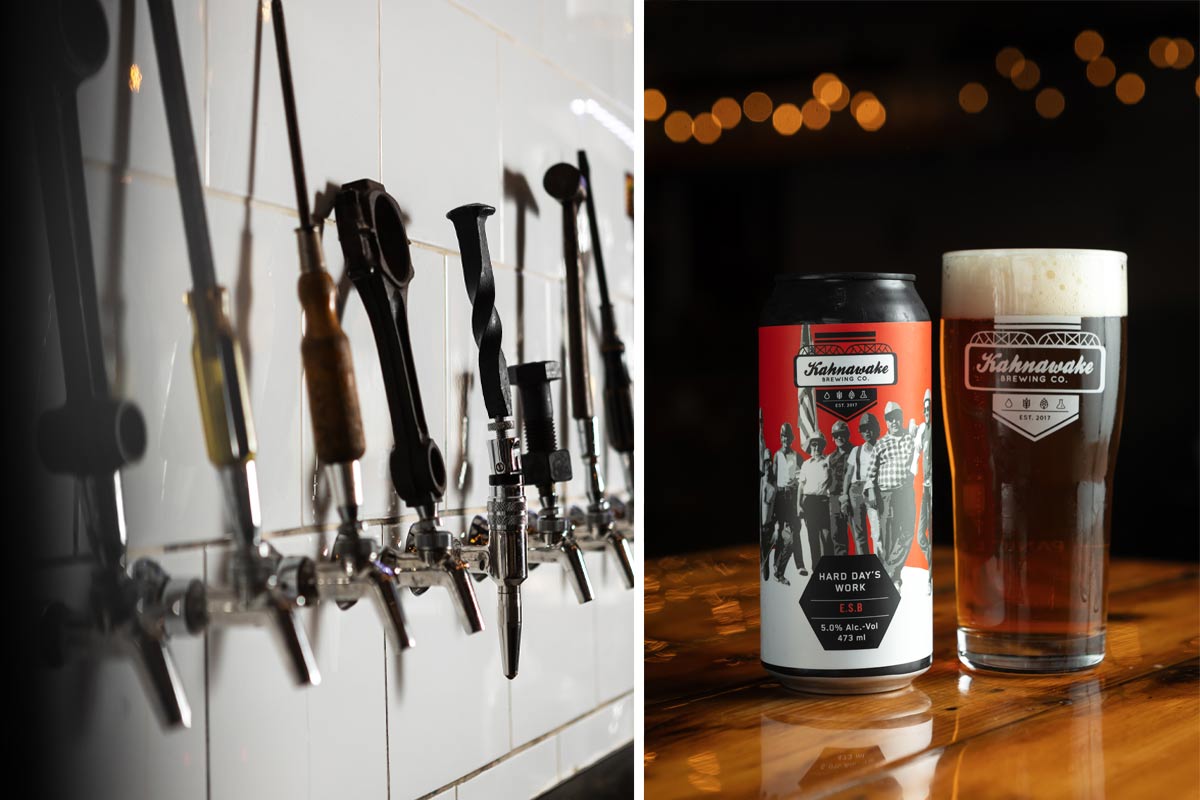
In Quebec, the Kahnawake Brewing Company stands as a landmark as the first Indigenous-owned craft brewery located on Indigenous land. Co-owner Fred Leblanc, a former ironworker, draws on local history—specifically the "black bridge" (the Saint-Laurent Railway Bridge)—to ground the brewery in the Mohawk tradition of labor and community building. The brewery’s success at the Canada Beer Cup in 2024 and 2025 serves as a testament to the quality and viability of Indigenous-led enterprises.

Nonsuch Brewing and the Celebration of Experience
Matthew Sabourin of La Brasserie Nonsuch Brewing Co. in Winnipeg focuses on the social and cultural aspects of the craft. By hosting "Beer Bannock" experiences, the brewery educates patrons on Indigenous history, including the legacy of Louis Riel, while promoting a culture of moderation and appreciation rather than overconsumption. Sabourin’s approach aims to shift the narrative from alcohol as a substance of abuse to beer as a component of a sophisticated culinary and historical experience.
Defining "Indigenous Beer": Sourcing, Ingredients, and Ethics
A central question facing the industry is what constitutes an "Indigenous beer." For many brewers, it is not merely about ownership but about the entire supply chain.
- Sourcing and Collaboration: Inez Cook, founder of the Indigenous restaurant Salmon n’ Bannock, emphasizes the importance of Indigenous-to-Indigenous business partnerships. Her choice of Locality Brewing as a partner is a deliberate act of economic solidarity.
- Traditional Ingredients: Sarabeth Holden, an Inuit brewer and co-owner of Red Tape Brewery in Toronto, incorporates ingredients that reflect the Northern experience. Her use of orange pekoe tea and Paunnat (dwarf fireweed) in her ales and saisons serves as a tribute to Inuit hunting and gathering traditions.
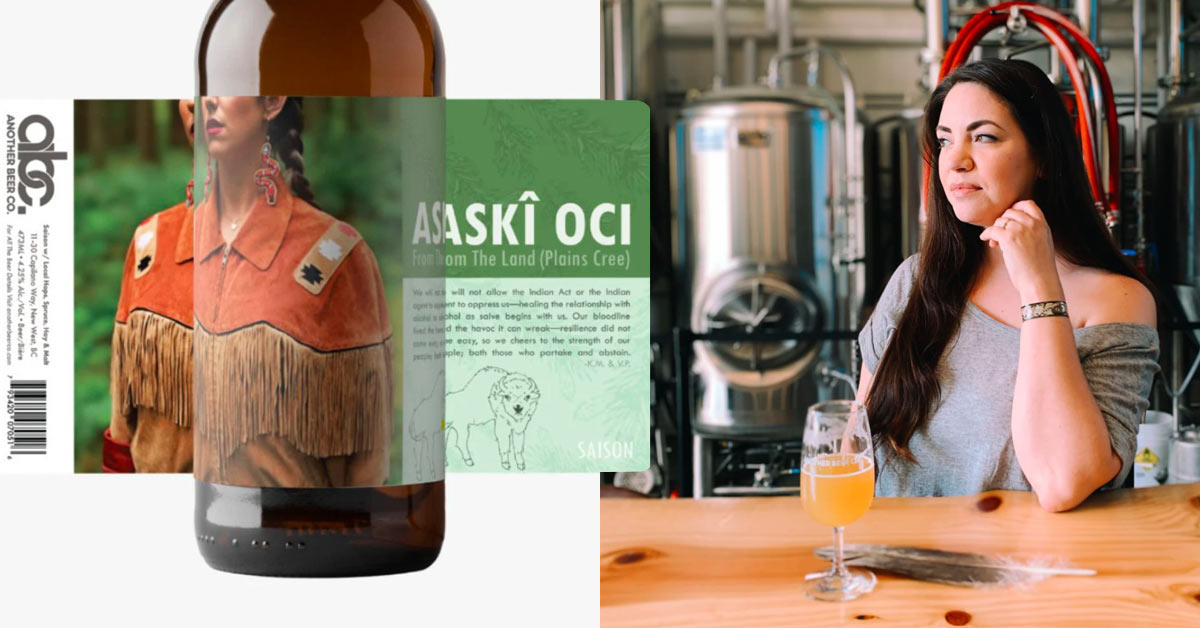
- Symbolic Recipes: Nadine Jopson, a member of the Cree Nation, developed the "Askî Oci" saison for the now-defunct Another Beer Co. The beer, brewed with alfalfa and spruce tips, featured a label that explicitly addressed the Indian Act, stating that healing the relationship with alcohol begins with Indigenous self-determination.
Challenges and the Path Toward Genuine Inclusion
While progress has been made, Indigenous brewers continue to face systemic barriers. Sarabeth Holden has noted instances of being dismissed by tradespeople or feeling out of place in liquor retail environments, highlighting the persistent "look" of the industry that often excludes Indigenous women. Furthermore, Jason Tremblay of Two Loons Brewing points out the "white-passing" privilege that some Métis brewers may hold, noting that First Nations brewers often face more direct discrimination and "side-eye" from both the public and the industry.
For the craft beer industry to achieve true reconciliation, experts and participants suggest several key shifts:
- Visibility Throughout the Supply Chain: Kevin Symington, who has worked with Fernie Brewing and Crannog Ales, argues that Indigenous people must be visible at every level, from hop farming and malting to logistics and corporate leadership.
- Relationship-Based Business: Inez Cook suggests that breweries operating on traditional territories should proactively introduce themselves to local tribal nations, moving beyond transactional relationships to personal ones.
- Sovereignty as Responsibility: Niigaan Sinclair, an Anishinaabe professor, notes that while Indigenous people have the right to self-determination in the alcohol industry, that sovereignty comes with the responsibility to minimize harm. He suggests that because beer is derived from natural elements, Indigenous people must "figure out a relationship" with it that respects both its medicinal origins and its potential for destruction.
Conclusion: Breaking the Silence
The evolution of Indigenous involvement in Canadian craft beer is a microcosm of the broader movement toward Indigenous sovereignty. It is an industry that must balance the celebration of entrepreneurship with a profound respect for a traumatic history. By breaking the silence surrounding alcohol and the Indian Act, Indigenous brewers are not only creating award-winning beverages but are also reclaiming an economic space that was once used as a tool for their marginalization.
As the Canadian craft beer sector faces its own economic challenges, the values championed by Indigenous brewers—respect for the land, community-centric business models, and the prioritization of people over profits—may offer a sustainable path forward for the entire industry. The transition from "Indian Beer" as a label of exclusion to Indigenous-owned craft beer as a symbol of excellence marks a significant, albeit complex, chapter in Canada’s journey toward reconciliation.