admin
admin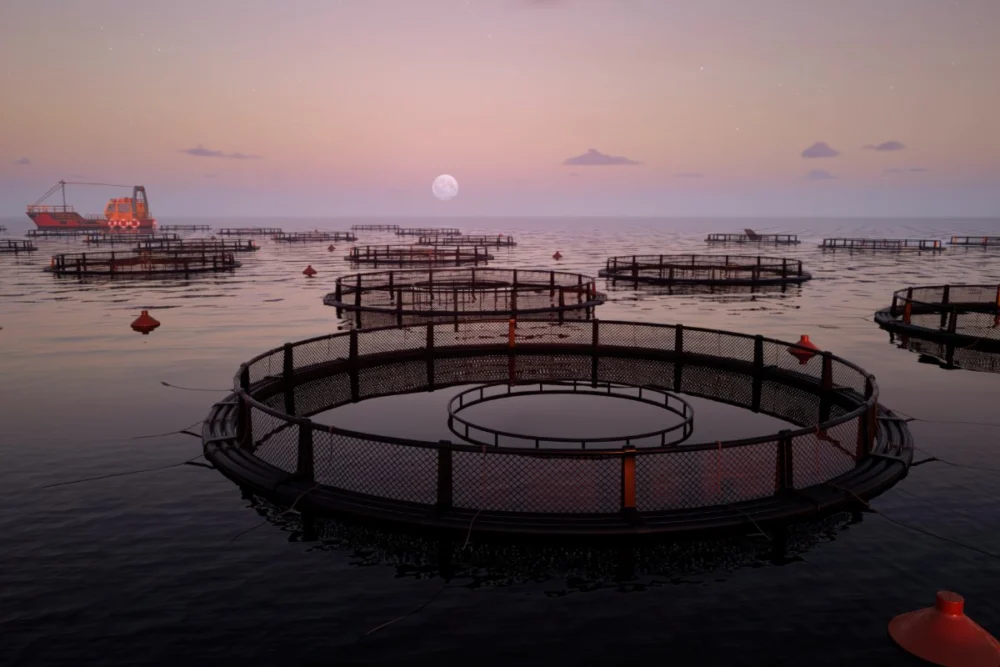
The United States is on the cusp of a significant shift in its approach to seafood production, with a new bipartisan legislative effort, the Marine Aquaculture Research for America (MARA) Act, gaining substantial traction. This proposed law aims to establish a clear regulatory pathway for the research and development of deep-ocean aquaculture, moving beyond traditional coastal farming methods. With strong bipartisan backing, the bill is anticipated to advance in the Senate as early as March, signaling a potential turning point for domestic seafood supply and environmental stewardship.
A New Era for U.S. Aquaculture? Addressing Import Dependency
The United States currently imports a staggering 90 percent of the seafood it consumes, with approximately half of this being farmed. This heavy reliance on foreign sources not only raises concerns about food security but also means that the U.S. has limited involvement in ensuring the sustainability of much of the seafood on its plates. Experts argue that this dependency is exacerbated by a significant decline in domestic seafood processing infrastructure, which often sees U.S.-caught fish exported for processing and then re-imported.
Globally, the U.S. lags far behind in aquaculture production, contributing a mere 0.2 percent to the world’s total. This is a striking figure, considering the nation boasts the largest Exclusive Economic Zone (EEZ) globally, extending 200 nautical miles around its entire coastline. This vast maritime territory represents an enormous untapped potential for domestic seafood production. Advocates of the MARA Act, such as Maddie Voorhees, U.S. aquaculture campaign director for the Environmental Defense Fund (EDF), emphasize the opportunity for the U.S. to become a leader in sustainable aquaculture, guided by scientific principles. Michael Coogan, a research assistant professor at New Hampshire University’s Center for Sustainable Seafood Systems, echoes this sentiment, highlighting the "insane" underutilization of the country’s extensive marine resources.
Navigating the Regulatory Labyrinth: The Need for Clarity
One of the primary drivers behind the MARA Act is the existing convoluted and fragmented regulatory framework governing offshore aquaculture. Presently, the sector is burdened by more than 60,000 regulations set by a multitude of agencies, a figure estimated to be 3 to 70 times higher than in other food production sectors, including beef and wild-caught fish. This regulatory quagmire, as documented by doctoral research from Margaret Hegwood at the University of Colorado at Boulder, effectively stifles innovation and investment in U.S. aquaculture.
Unlike wild-capture fisheries, which are governed by a consolidated piece of legislation like the Magnuson-Stevens Act, aquaculture lacks a singular, clear pathway. This regulatory vacuum is precisely why there are currently no commercial aquaculture producers operating in federal waters, despite a few pioneering projects, such as Ocean Rainforest’s kelp farm off Santa Barbara and Velella Epsilon’s red drum producer in the Gulf of Mexico, being deep into the permitting process. The MARA Act seeks to rectify this by streamlining and clarifying the regulatory process, thereby creating a predictable environment for research and development.
A Chronology of Legislative Efforts and the MARA Act’s Distinction
The push to advance U.S. aquaculture in the open ocean is not new; it represents a decades-long drive, largely spearheaded by industry groups like the Stronger America Through Seafood Coalition. This coalition includes major players in feed businesses such as Cargill and JBS, food service giant Sysco, and U.S. aquaculture companies like Taylor Shellfish and Ocean Era.
Previous legislative attempts, such as the 2020 AQUAA Act and the 2023 SEAfood Act, failed to garner sufficient support or overcome strong opposition. These bills often faced criticism for potentially fast-tracking industrial-scale fish farming without adequate environmental safeguards. The MARA Act, introduced last fall, distinguishes itself by incorporating more robust provisions for researching the ecological and economic viability of offshore aquaculture operations before fully authorizing them. In essence, it proposes a pathway for permitting pilot systems, allowing them to be deployed and rigorously studied under criteria laid out by the law, with substantial stakeholder oversight. This "research-first" approach is seen as a critical compromise designed to address past criticisms and build a more informed foundation for future development. The bill has swiftly moved through congressional channels and is expected to be considered in the Senate in March.
Core Provisions of the MARA Act: A Science-Driven Approach
The MARA Act is designed to enable commercial-scale demonstration projects for all types of aquaculture—seaweed, shellfish, and finfish—in federal waters. A crucial environmental safeguard stipulates that only species native or "historically naturalized" to U.S. waters are eligible for cultivation, explicitly preventing, for instance, the farming of Atlantic Salmon in the Pacific.
Central to the act is its mandate for the National Oceanic and Atmospheric Administration (NOAA) to establish a comprehensive 10-year program. This program, overseen by external research institutions, including the esteemed National Academies of Science, will rigorously study the ecological impacts and economic potential of these pilot farms. The act further clarifies and codifies NOAA’s authority over aquaculture, strengthening the agency’s existing strategic plan for aquaculture development. This science-based framework has garnered the backing of influential organizations like the Environmental Defense Fund (EDF) and its Coalition for Sustainable Aquaculture, who have joined forces with the Stronger America Through Seafood Coalition in a letter of support signed by 140 representatives from research institutions, aquaculture, and food companies.
The Blue Ocean Mariculture Model: A Glimpse into the Future
A compelling example often cited as a model for the MARA Act’s vision is Blue Ocean Mariculture, located half a mile off the Big Island in Hawaii. Operating in swift currents and depths reaching 200 feet, it is currently the United States’ sole open-ocean, commercial finfish farm, raising kanpachi (Seriola rivoliana), a native Hawaiian yellowtail.
While modest in comparison to massive coastal Norwegian salmon farms, which export 1.2 million tons annually, Blue Ocean Mariculture produces about 1,100 tons of fish each year. Its net pens are submerged 30 to 130 feet underwater, protecting them from surface disturbances. The company’s commitment to conservation has earned it a "yellow" ranking from Seafood Watch, indicating a good alternative to endangered species, though not quite the "green" standard for highly sustainable seafood like farmed mussels. Blue Ocean kanpachi is a versatile, mild-flavored fish found on menus across the country, from Mama’s Fish House in Maui to Sugarfish in New York and California.

Taylor Korte, vice president of marine operations at Blue Ocean Mariculture, explains that the company carefully selected its site based on hydrology, ensuring efficient dispersal of nutrients. The farm uses submersible high-tension nets engineered to withstand storms and can descend deeper to avoid severe weather, reducing risks like escapes. Critically, the company does not use antibiotics or pesticides, relying on hydrogen peroxide to treat skin flukes. For nearly two decades, Blue Ocean Mariculture has been collecting environmental data, including on marine mammal interactions, with plans to publish this valuable research in collaboration with university partners this year.
Regarding economic viability, Korte notes that the company is "cash positive on different months" and is in a "slow growth phase" to prove its economics and market acceptance. While no large-scale expansion is planned for the Hawaii site, the company envisions developing similar farms elsewhere in the U.S., aiming for 1,650 tons by the end of 2028 as an economically and ecologically viable model. Aquaculture economist Carole Engle confirms that small-scale producers can be profitable by building effective business models that account for higher production costs in their marketing plans.
Advocates Champion Economic Growth and Food Security
Proponents of the MARA Act articulate several key arguments for its necessity. Beyond reducing reliance on imports, they highlight the potential for significant economic growth, job creation, and the establishment of a robust domestic seafood industry. As Voorhees points out, the U.S. already consumes a vast amount of farmed seafood, and the act would allow the country to actively participate in regulating its sustainability rather than passively consuming imports.
Furthermore, offshore aquaculture is presented as a crucial component of a broader strategy to scale up ocean-based proteins to feed a growing global population. Seafood generally boasts a lower greenhouse gas footprint compared to land-based proteins like beef, offering a more sustainable dietary option. The open ocean itself provides distinct advantages: more expansive space and a more stable environment compared to congested coastal waters, which face numerous competing uses and are more vulnerable to storm surges. Michael Coogan emphasizes that "the shallower the water, the smaller the body of water, the larger the impacts are going to be" from major storms, making deep-water systems a more resilient option.
Environmental Concerns and Industry Skepticism
Despite the strong backing, the MARA Act faces fierce opposition from environmental groups and some fishing communities who raise significant concerns about the potential negative impacts of industrial fish farming. James Mitchell, policy director of Don’t Cage Our Oceans, a campaign led by the North American Marine Alliance (NAMA), argues that there is already ample scientific evidence documenting the "myriad problems" associated with finfish aquaculture. He cites issues such as fish escapes, which can introduce disease and genetic weaknesses into wild populations; the spread of disease within concentrated farm environments; reliance on antibiotics; waste accumulation beneath pens; and the heavy impact on wild fisheries due to the demand for fish-based feed. Mitchell points to a special 2024 issue of Science Advances, which included ten articles and essays documenting these negative impacts. NAMA, in turn, sent a letter of opposition to Congress signed by 420 fishing groups, food advocacy and conservation organizations, farmers, chefs, and tribal groups.
Opponents view the bill not as a genuine research initiative but as an "industry giveaway," a means for large corporations to gain a foothold in federal waters. Mitchell asserts, "The MARA Act is not ‘Let’s study everything first.’ It’s putting them in the water, letting them get a foothold, and then later saying, ‘What are some best practices we can learn from this?’"
Commercial fishing communities also voice concerns. Eric Brazer, deputy director of the Gulf of America Reef Fish Shareholders’ Alliance, worries about farm-raised products out-competing wild-caught species, citing red snapper as a critical Gulf fishery that should not be farmed. Fisher organizations also express apprehension about competition for NOAA’s limited resources, fearing that the agency’s capacity to regulate wild fisheries will be strained by the demands of overseeing a new aquaculture sector. Brazer notes that his organization generally supports offshore aquaculture when stakeholders like commercial fishermen are involved, as they were in NOAA’s process for siting aquaculture opportunity zones in the Gulf, emphasizing that "if it’s done right, you can have sustainable offshore finfish aquaculture and sustainable wild harvest fisheries living together."
However, the "chicken and egg" problem articulated by Halley Froehlich, associate professor of aquaculture and fishery sciences at the University of California Santa Barbara, encapsulates a central tension: critics demand data on impacts before permitting, yet permits are necessary to generate that data. Froehlich also expresses concern that under an administration perceived as dismantling regulations, NOAA’s ability to set and enforce strong criteria for demonstration projects could be compromised, stating, "The MARA Act looks great in normal times, but what we are experiencing is not normal right now." Even industry insiders like Neil Sims acknowledge that while the reporting requirements and university oversight are "a lot heavier regulation" than he might prefer, it’s "probably what’s needed at this stage—complete transparency."
Beyond Finfish: Diversifying Aquaculture
A significant aspect often overlooked in the public discourse is the diversity within aquaculture itself. The MARA Act covers not only finfish but also shellfish and seaweed farming, which often have different environmental profiles. Smaller-scale operations, such as the Ocean Rainforest kelp project or Michael Coogan’s experimental mussel and scallop farm 2.7 miles offshore (a 130-acre site at 150 feet depth), demonstrate the variety of what could be developed in federal waters.
Froehlich stresses that public misunderstanding often lumps all aquaculture together as "bad," failing to recognize its diversity. "Just like any kind of food system, it will have an impact, but the relative amount is dictated by who is doing it, how it’s being overseen, how it’s monitored, and where that data goes," she explains. She highlights recent advancements in aquaculture, such as more efficient feed production, that are actively addressing historical challenges, arguing against an "all or nothing" perspective.
The Broader Economic and Ecological Implications
The MARA Act represents a pivotal moment for U.S. seafood policy. Its passage could either establish the United States as a global leader in sustainable, science-driven offshore aquaculture, or it could, as opponents fear, pave the way for industrial-scale operations that replicate the environmental problems seen in other parts of the world. The legislation’s emphasis on research and pilot projects aims to gather crucial data to inform future decisions, yet the scale and eventual expansion of these projects remain a point of contention. While Blue Ocean Mariculture is cited as a sustainable model, concerns persist about the economic viability of small farms needing to grow to achieve profitability, potentially leading to increased environmental impact and consolidation, as observed in the salmon industry.
Ultimately, the success of the MARA Act will hinge on NOAA’s capacity to set and enforce rigorous criteria for the demonstration projects, ensuring robust scientific oversight and genuine transparency. The ongoing debate underscores the complex balance between fostering economic opportunity, enhancing food security, and safeguarding marine ecosystems. Engaging all stakeholders, from environmental advocates to commercial fishermen and indigenous groups, will be paramount in shaping a future for U.S. aquaculture that is both productive and responsible. The outcome will define not just the future of seafood on American plates, but also the health of the nation’s vast and invaluable ocean resources.